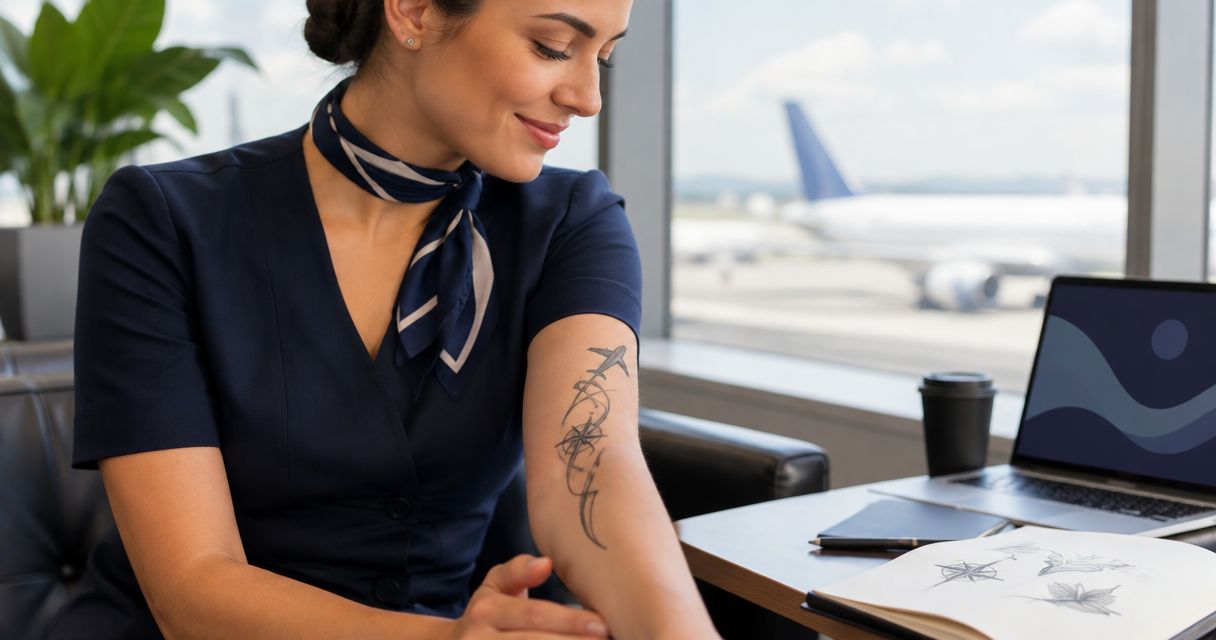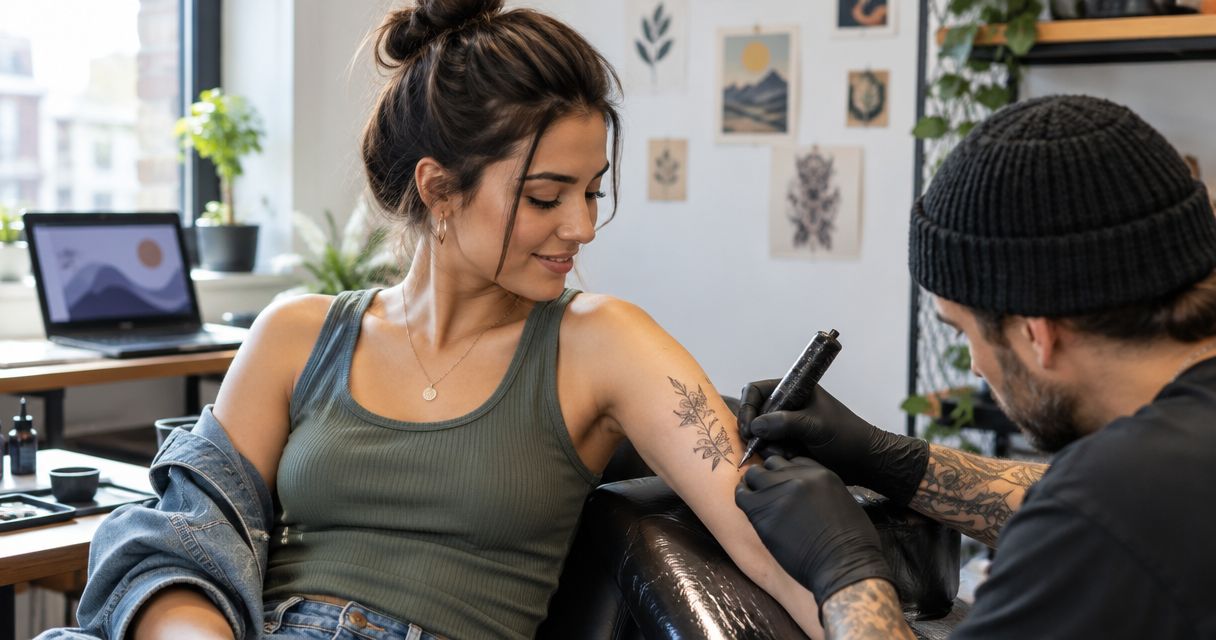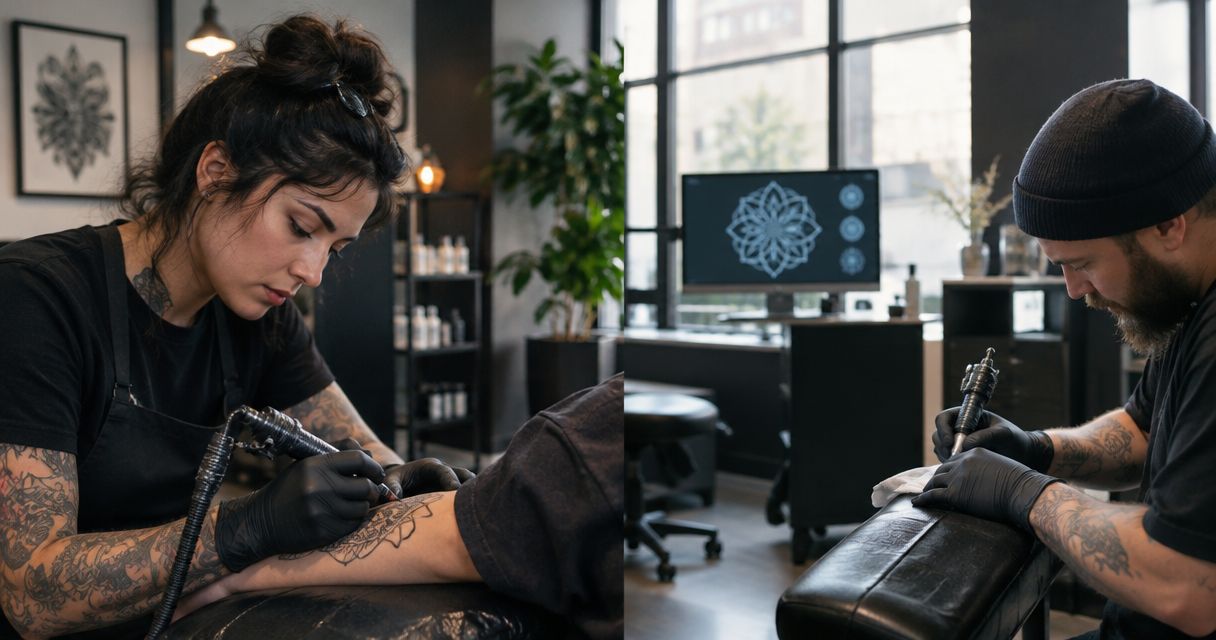
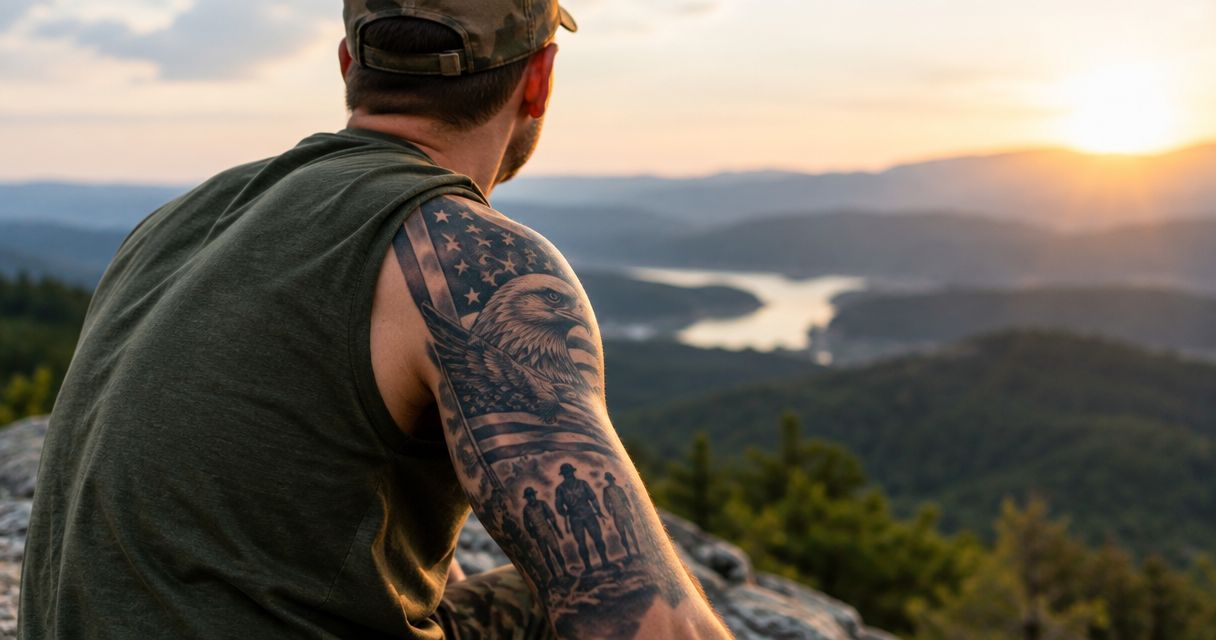
Military veteran tattoo design is custom body art that records service, remembrance, or life after the military with the aim of expressing what matters to you. The strongest tattoo designs for military veterans begin with a specific meaning, then use verified symbols, readable detail, and placement that fits your life in 2026.
- Tattoo designs for military veterans work best when personal meaning leads and verified military symbols support the design.
- Illuminati Tattoo Co. is best for Las Vegas veterans seeking custom tattoo design rather than a ready-made military motif.
- Choose lettering, memorial tattoos, or unit imagery around readable detail—not the smallest possible footprint.
- Review existing tattoos, scars, placement, and aftercare before approving the final stencil.
Why tattoo design matters for military veterans
A military tattoo can communicate pride, loss, belonging, or a chapter you have finished. Those meanings deserve different designs. A branch emblem celebrates affiliation; a memorial portrait centers a person; a quiet landscape can hold a service memory without announcing it to strangers.
Choose what the tattoo means before choosing what it depicts. You do not need combat imagery, a flag, or a branch insignia to make the piece recognizably yours.
For a local custom-design starting point, Illuminati Tattoo Co. offers tattoo services in Las Vegas, including fine line work and cover-ups. Bring the story you want represented, along with anything you do not want included.
A useful 2026 design brief should also reflect your current life. Work clothing, family preferences, existing tattoos, and your comfort discussing military service all belong in the placement conversation. Your tattoo does not need to explain your history to everyone who sees it.
How to plan a military veteran tattoo
Define the meaning before collecting imagery
Write a 1-sentence brief that finishes this thought: this tattoo represents something I want to remember, recognize, or carry forward. Keep that sentence plain. An artist can translate a clear idea into imagery more effectively than an unrelated collection of military graphics.
Decide whether the subject is your own service, a shared experience, a specific person, or your transition into civilian life. Combining those themes is possible, but giving each equal emphasis can leave the design without a clear focal point.
You can prepare this brief yourself using a notebook and reference photographs. Leave room for the artist to suggest a different visual solution; your initial sketch is a conversation starter, not a construction plan.
- Name the central meaning in ordinary language.
- Choose a primary subject rather than several competing symbols.
- List imagery you want excluded.
- Decide whether the meaning should be public or private.
- Identify anything you want to add later.
Verify every symbol and personal detail
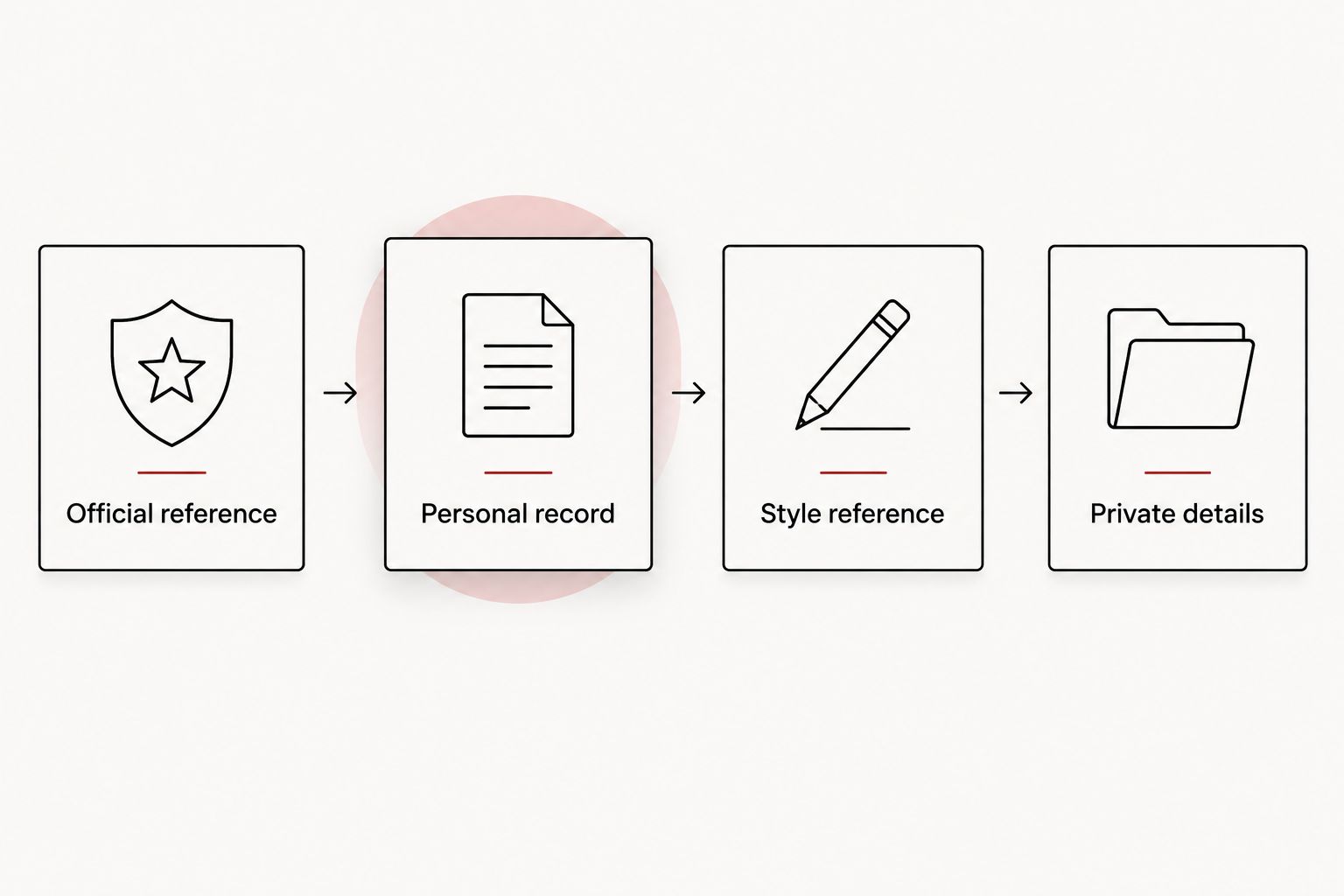
Build a small reference folder before the design appointment. Start with 3 reference images: the exact emblem or object, an example of the visual style you like, and a placement example. Label what you like about each so the artist does not have to guess.
For military insignia, use your own service materials or official branch references rather than an unattributed social-media image. Confirm the version that matches your experience. A visually similar patch is not necessarily the right patch.
For memorial work, verify names, initials, dates, and quotations against records you trust. If you are planning the tattoo in 2026, distinguish the appointment date from any historical date included in the artwork. Never add a date simply to fill empty space.
- Official reference: confirm the exact insignia or emblem.
- Personal record: verify names, dates, and spelling.
- Style reference: show the line work or shading you prefer.
- Private details: remove information you do not want displayed.
Match the design approach to the story
Begin by comparing drawings and healed tattoo examples, not by choosing a style name alone. Look at how the artist handles lettering, facial features, fabric folds, or fine lines—the details your design actually needs.
A simplified emblem puts recognition first. A landscape gives a place more visual space. A portrait makes likeness central, while lettering puts the burden on exact wording and legibility. None is automatically the right choice because you are a veteran.
Illuminati Tattoo Co. offers custom tattoo design, fine line work, and cover-ups. Its custom-design service gives Las Vegas veterans a way to develop the idea with an artist rather than finalize every detail alone. The trade-off is that a custom concept still needs decisions about scale, placement, and what to leave out.
- Ask to see relevant healed work when available.
- Match the artist's examples to your intended subject.
- Separate essential details from optional decoration.
- Ask what needs simplifying at your preferred size.
- Keep the final composition personal rather than copying another veteran's tattoo.
Choose placement around visibility and readable detail
Treat placement as part of the drawing, not an empty space to fill. A detailed emblem and a short line of lettering have different layout needs. Let the artist show what fits clearly before committing to a small footprint.
Ask to inspect the stencil from 2 viewing angles: your own view and a straight-on view in a mirror. Check it with the body relaxed and moving naturally. A drawing that looks balanced on flat paper still needs to work on a curved surface.
For your 2026 appointment, bring or describe the clothing that determines visibility. A work sleeve, watch strap, or uniform requirement can matter more than a placement photograph online. If you still serve, verify current rules with your branch before deciding.
- Compare concealed and visible placements.
- Check the stencil while standing naturally.
- Review how clothing covers or crosses the design.
- Keep lettering large enough for a clear stencil review.
- Discuss space for future additions.
Review existing tattoos, scars, and the appointment process
Show the artist the actual area before approving a cover-up or scar-related design. A photograph helps start the conversation, but it does not replace an assessment of the skin and existing ink. The new composition has to respond to what is already there.
A cover-up is not simply a fresh design placed over an old one. Ask which parts can be redirected into the new artwork and which will limit the result. For scars, seek medical advice when healing or skin health is uncertain; do not use a tattoo consultation as medical clearance.
Illuminati Tattoo Co. provides owner-operated service in a clean, hygienic studio. Ask how the appointment and aftercare work, and raise any access or comfort needs before the session. Clear expectations matter more than feeling obliged to proceed.
- Share clear photographs of existing ink in advance.
- Identify scars or areas of uncertain healing.
- Disclose relevant health concerns and medications.
- Ask about hygiene procedures and aftercare instructions.
- Discuss positioning, breaks, and communication preferences.
Approve the stencil and protect the finished work
The stencil review is the moment to stop and check, not to rush. Read every word yourself. Compare symbols against the reference, confirm orientation, and look at the overall balance before examining small details.
Do not approve a tattoo because you feel uncomfortable asking for a change. A respectful consultation leaves room to correct spelling, adjust placement, or simplify an element. If the core idea still feels wrong, pause the decision.
Plan the healing period around your actual schedule in 2026. Discuss swimming, exercise, sun exposure, clothing friction, and travel with the artist, then follow the written aftercare instructions. Contact a healthcare professional about suspected infection or other medical concerns rather than relying on online comments.
- Read all lettering directly from the stencil.
- Confirm emblem orientation against your reference.
- Check placement before tattooing begins.
- Ask questions about anything you do not understand.
- Keep the written aftercare instructions accessible.
Discuss Your Custom Tattoo
Explore a service tribute, memorial, or cover-up with a Las Vegas tattoo studio.
Compare military veteran tattoo design options
Choose the option that makes your central meaning clear without forcing extra detail into the design. The table compares creative directions, not a ranking of military experiences. Each approach has a useful strength and a limitation worth discussing with your artist.
| Design option | Best for | Main strength | Key limitation |
|---|---|---|---|
| Branch or unit imagery | Veterans who want recognizable affiliation | Makes the service connection explicit | Requires an accurate reference and enough room for identifying details |
| Memorial lettering | Honoring a person through a name or phrase | Keeps the message direct | Spelling and layout errors become central to the piece |
| Memorial portrait | Veterans who want a loved one's likeness | Makes the person the focal point | Depends on a suitable reference and relevant portrait work |
| Service landscape | Remembering a place without prominent insignia | Allows a quieter, personal interpretation | The military connection is not obvious without explanation |
| Fine line symbol | Veterans seeking a restrained visual tribute | Keeps the composition visually spare | Complex emblems need simplification rather than miniature detail |
| Reworked existing tattoo | Veterans updating an older service piece | Connects the new design to existing artwork | Existing ink constrains the new composition |
Illuminati Tattoo Co. is best for Las Vegas veterans seeking custom tattoo design rather than a ready-made military motif. Its stated services include fine line work and cover-ups; discuss your specific concept before assuming every style or existing tattoo is a fit.
For a first tattoo, a clear symbol with limited supporting detail is a practical starting point—not a requirement. For an established collection, consider how the new piece relates to neighboring tattoos. Neither approach requires making the military connection more visible than you want.
Common mistakes military veterans make with tattoo designs
Treating military imagery as mandatory
A veteran tattoo does not need an eagle, weapon, flag, or set of dog tags. If the meaningful subject is a mountain, a handwritten note, or a shared object, start there. Personal accuracy matters more than instant recognition.
Compressing a full service history into a small piece
Multiple units, dates, locations, names, and mottos compete for space. Choose a focal point and save secondary details for a later addition or a separate tattoo. Ask the artist what remains clear at the size you actually want.
Copying an insignia without checking the source
Decorative adaptations can omit or alter details. Bring the exact reference instead of asking the artist to reconstruct it from memory. Review the finished drawing against that reference, even when the symbol feels familiar.
Expecting a memorial tattoo to resolve grief
A memorial tattoo can express remembrance; it is not a treatment for grief or trauma. Give yourself permission to postpone the appointment if the design decision feels overwhelming. You do not owe anyone a permanent public expression of loss.
Planning the artwork but not the visit
A good drawing does not answer questions about access, positioning, aftercare, or travel. Before visiting a Las Vegas studio, confirm the current location and get directions through its official information. Explain what you need to feel informed and comfortable during the appointment.
FAQ
What's the best tattoo design for a military veteran?
The best military veteran tattoo design expresses a specific personal meaning with accurate imagery and readable detail. Start with whether you want to represent service, a person, a place, or life after the military, then choose the visual approach.
Do veteran tattoos have to include a flag or military insignia?
No, a veteran tattoo does not have to include a flag or military insignia. A landscape, personal object, handwritten phrase, or abstract symbol can represent your experience without making the military connection public.
How do I choose a tattoo artist for a military memorial?
Choose an artist whose relevant work matches the memorial you want, such as lettering, portraits, or symbolic designs. Bring a reliable reference and ask to see healed examples when available, rather than choosing on military imagery alone.
Can an old military tattoo be covered or redesigned?
An old military tattoo needs an individual assessment before an artist can recommend a cover-up or redesign. Existing ink, placement, and the proposed artwork constrain the options; a new design cannot simply ignore the old one.
Can I get a tattoo over a military-related scar?
Tattooing over a scar requires an individual assessment of the area rather than a universal waiting period. Ask a healthcare professional about healing concerns and let the tattoo artist assess the design separately; a tattoo does not remove a scar.
Where should I place a military veteran tattoo?
Place a military veteran tattoo where the design remains readable and the visibility suits your daily life. Compare the stencil with your normal clothing, and verify current branch rules if you still serve.
What should I bring to a custom veteran tattoo consultation?
Bring a short explanation of the meaning, accurate visual references, and any names or dates you want included. Illuminati Tattoo Co. offers custom tattoo design in Las Vegas; discuss placement, existing ink, and aftercare needs before approving the artwork.
One last thing
Ask yourself what the tattoo should mean if nobody recognizes the military reference. That question separates an image you like from a story you want to carry. For a 2026 design, keep the answer with your reference folder and return to it when choosing what stays in the final drawing.