Best overall: inner forearm. Best for discreet placement: upper thigh. Best for a small, visible accent: outer wrist. These fine line tattoo placement ideas for 2026 help you choose where a custom design belongs before you commit to its shape and scale.
- Inner forearm leads these fine line tattoo placement ideas for an easy-to-see custom design.
- Upper thigh suits discreet body art; outer wrist suits a small, visible accent.
- Shoulder blade and outer upper arm give botanical tattoos room to follow your body.
- Illuminati Tattoo Co. offers custom tattoos and fine line work in Las Vegas.
Why placement matters
A fine line tattoo needs more than an attractive reference picture. Its placement determines how you see it, how clothing covers it, and how the design reads when your body moves. A narrow branch, a word, and a compact symbol need different layouts.
Illuminati Tattoo Co. is a Las Vegas option for clients seeking custom fine line tattoos. Start with Illuminati Tattoo Co. to explore the studio, then bring your placement questions when you visit. A custom design should fit your body rather than reproduce a photograph without adjustment.
For your 2026 tattoo, separate two decisions: where you want the artwork and how much detail that location can accommodate. Choosing the smallest possible version first puts the design ahead of its readability.
What makes the best fine line tattoo placement?
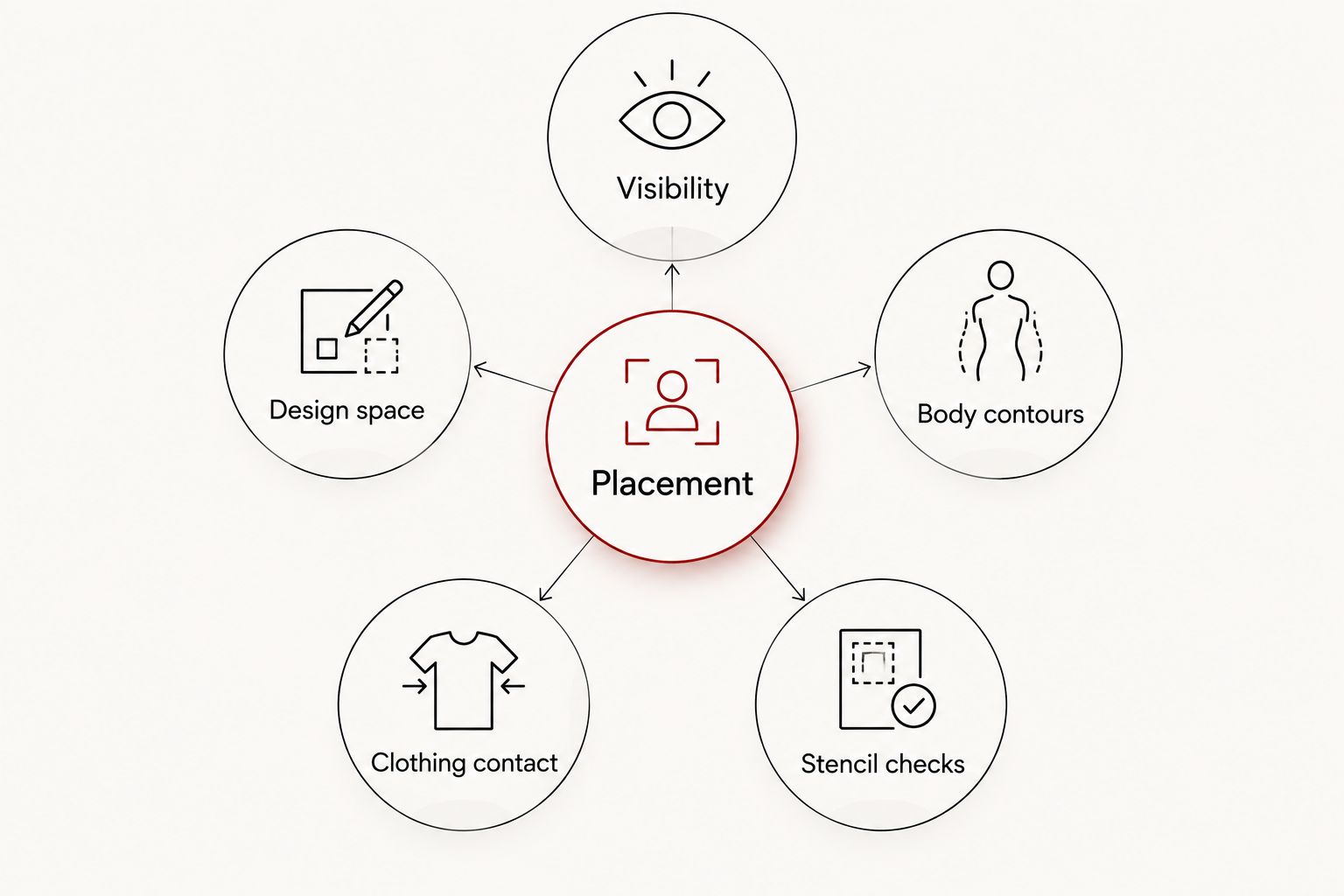
Use these criteria before choosing from the ranked list:
- Visibility: Decide whether you want to see the tattoo yourself, show it regularly, or keep it covered.
- Design space: Give separate lines and lettering enough room to remain distinguishable.
- Body contours: Match the composition to the direction and shape of the placement.
- Clothing contact: Consider waistbands, cuffs, straps, and footwear during healing.
- Stencil checks: Examine the proposed placement in relaxed and moving positions before approving it.
These criteria matter more than a placement trend. If your preferred location requires removing detail or changing the shape, make that adjustment before tattooing begins.
Fine line tattoo placements at a glance
The order reflects practical design flexibility and distinct uses, not a promise about pain, healing, or permanence. Every placement needs an individual assessment.
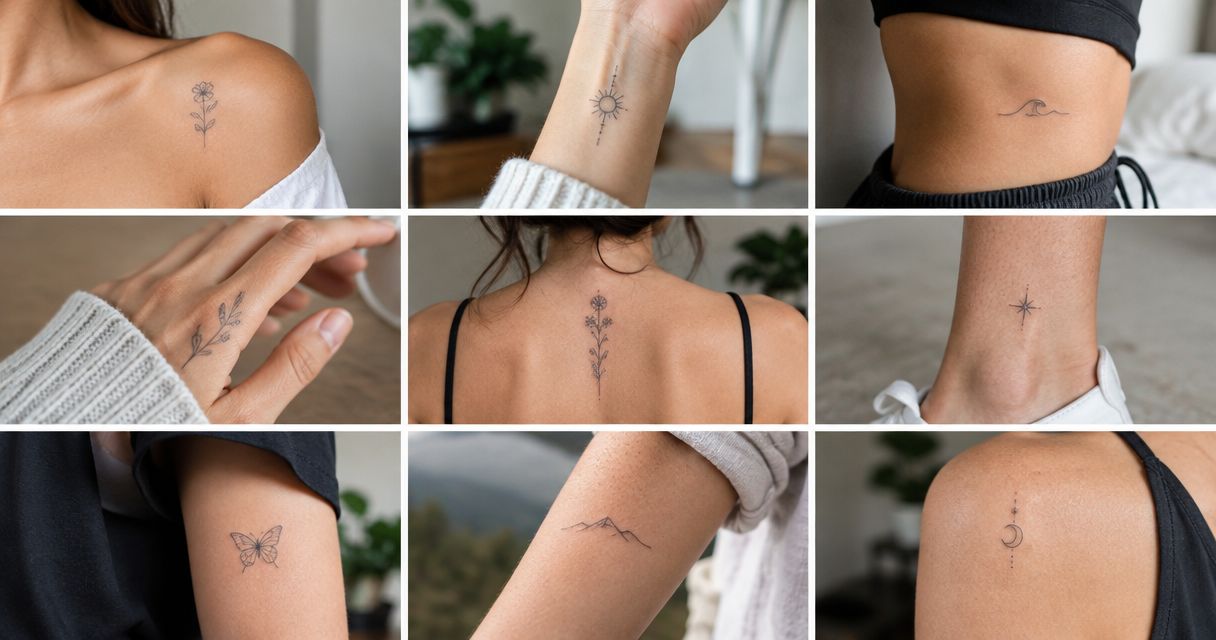
| Placement | Best for | Standout feature | Key limitation |
|---|---|---|---|
| Inner forearm | Viewing your own tattoo | Accessible sightline and lengthwise layout | Short sleeves expose it |
| Outer upper arm | Expandable compositions | Space for a design that wraps or grows | Side placement needs several viewing angles |
| Upper thigh | Discreet larger designs | Clothing coverage and composition space | Shorts and swimwear change visibility |
| Shoulder blade | Flowing botanical artwork | Broad area for curved compositions | Difficult to inspect directly |
| Outer wrist | Small visible accents | Easy-to-see placement | Limited room near the wrist joint |
| Inner ankle | Subtle vertical motifs | Narrow placement for upright designs | Socks and footwear need planning |
| Collarbone area | Neckline-framing designs | Strong directional relationship to the shoulders | Necklines and straps affect exposure |
| Rib side | Private elongated artwork | Lengthwise space along the torso | Movement changes how the design appears |
| Behind the ear | Concealable miniature symbols | Hair can cover the placement | Very limited design space |
1. Inner forearm: best for seeing your tattoo every day
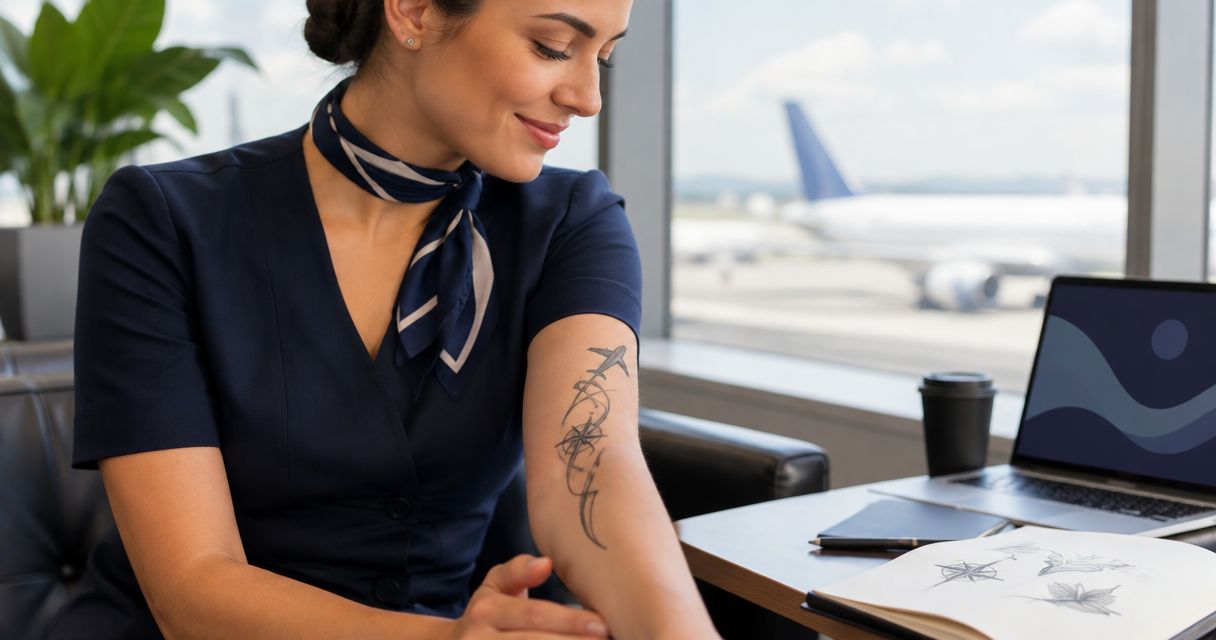
The inner forearm is the default choice when you want to enjoy the artwork yourself. It supports a lengthwise composition without requiring a mirror, making it useful for a botanical stem, simple line drawing, or carefully spaced lettering.
For a 2026 design, check orientation with your arm relaxed. A tattoo facing you and a tattoo facing someone standing opposite you are different choices; neither should happen by accident.
Inner forearm pros:
- You can inspect the tattoo directly.
- The placement accommodates lengthwise designs.
- Longer sleeves offer coverage.
Inner forearm cons:
- Short sleeves leave the artwork visible.
- Rotating your arm changes its presentation.
Best for: A personal design you want to see regularly.
Verdict: Buy into this placement if everyday visibility is your priority.
2. Outer upper arm: best for an expandable composition
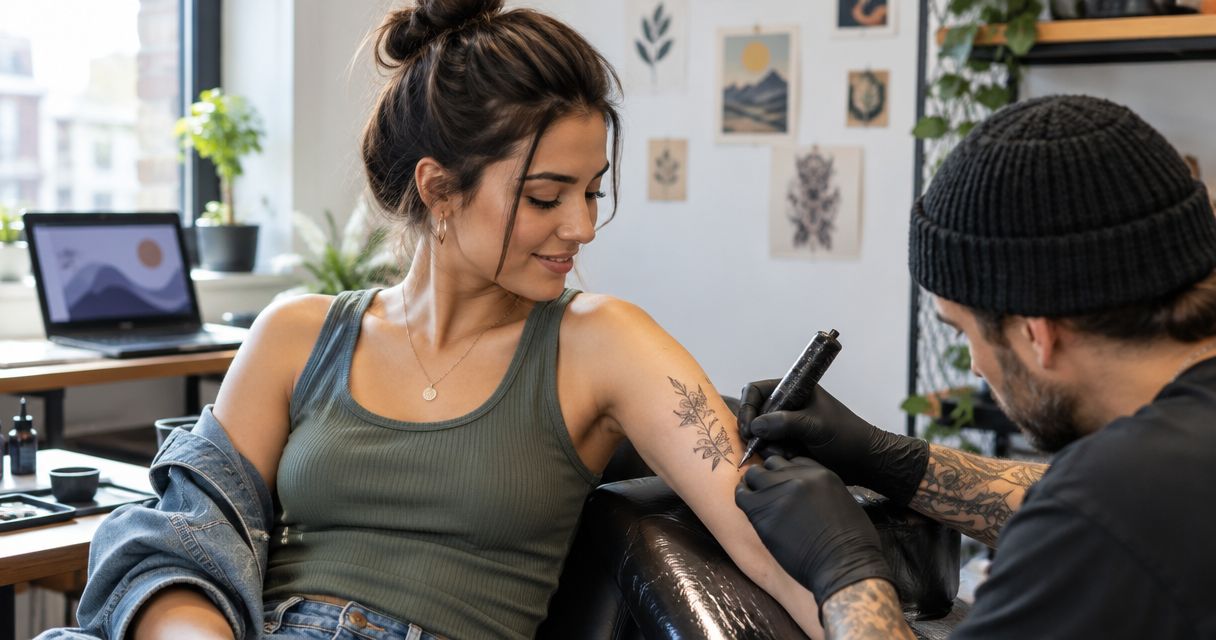
The outer upper arm suits a fine line design that needs more room than a wrist symbol. A floral arrangement, animal outline, or abstract composition can follow the arm's curve rather than sit inside an unnecessarily small rectangle.
Decide whether this is a standalone tattoo or the beginning of a larger arrangement. Future artwork needs intentional space, even when you are not ready to choose it yet.
Outer upper arm pros:
- Offers room for a broader composition.
- Allows artwork to follow the arm's curve.
- Many sleeve styles cover the area.
Outer upper arm cons:
- A curved surface changes the view from different angles.
- Sleeve length determines how much shows.
Best for: A custom design with room for future additions.
Verdict: Buy if you want composition space; hold if your future layout is undecided.
3. Upper thigh: best for a discreet larger design
The upper thigh lets you choose a more substantial composition without making the tattoo part of every outfit. It suits clients who want privacy but do not want to compress detailed artwork into a miniature placement.
Bring your usual clothing choices into the decision. A location covered by trousers can become visible in shorts, and a hemline can cut across the artwork rather than frame it.
Upper thigh pros:
- Accommodates broader designs.
- Everyday trousers provide coverage.
- Gives you flexibility in composition direction.
Upper thigh cons:
- Shorts and swimwear change the coverage.
- Seams and close-fitting clothing need consideration during healing.
Best for: A private tattoo that benefits from more design space.
Verdict: Buy if discretion matters more than seeing the tattoo throughout the day.
4. Shoulder blade: best for flowing botanical artwork
The shoulder blade suits branches, floral outlines, and other compositions that follow a gentle curve. The design can relate to the shoulder rather than look like an isolated image placed without reference to your anatomy.
Ask to see the stencil with your arms resting naturally. Shoulder movement changes the surface, so a single posed photograph is not enough to judge the placement.
Shoulder blade pros:
- Provides space for curved artwork.
- Works with back-framing compositions.
- Many everyday tops cover it.
Shoulder blade cons:
- You need a mirror to inspect it.
- Straps can cross the chosen location.
Best for: Botanical artwork designed around the shoulder's shape.
Verdict: Buy if the body contour supports the design; hold until strap placement is checked.
5. Outer wrist: best for a small visible accent
The outer wrist suits a restrained symbol or uncomplicated line drawing. Treat it as a compact placement, not a way to fit an elaborate design into the smallest possible space.
In 2026, the useful question is not whether tiny tattoos are fashionable. It is whether your chosen lines remain clearly separated at the size you approve. Ask your artist to simplify the artwork when the available space cannot support the original detail.
Outer wrist pros:
- Easy to see without a mirror.
- Suits compact, simple artwork.
- Works as a standalone accent.
Outer wrist cons:
- Offers limited composition space.
- Watches, bracelets, and cuffs need planning.
Best for: A simple design you are comfortable displaying.
Verdict: Buy for simplicity; skip this location for densely detailed miniature artwork.
6. Inner ankle: best for a subtle vertical motif
The inner ankle works for an upright stem, narrow symbol, or short vertical composition. Its appeal is the relationship between a modest design and the lower leg, not an assumption that every small tattoo belongs there.
Check the stencil with your foot resting naturally and while standing. Include the shoes and socks you wear regularly in the conversation, especially when discussing aftercare.
Inner ankle pros:
- Suits narrow vertical designs.
- Trousers can cover the placement.
- Keeps a small motif visually separate from upper-body artwork.
Inner ankle cons:
- Footwear and sock edges can overlap it.
- Limited width restricts wider compositions.
Best for: A subtle upright motif with uncomplicated detail.
Verdict: Buy after checking footwear contact; hold if your routine makes aftercare difficult.
7. Collarbone area: best for framing a neckline
The collarbone area suits artwork that relates to the shoulder line: a light botanical curve, a short phrase, or a balanced arrangement. Placement above or below the collarbone changes the result, so describe the effect you want rather than requesting a location by name alone.
Try the stencil with a neckline you actually wear. A design that looks balanced on uncovered skin can sit awkwardly against a shirt edge.
Collarbone area pros:
- Creates a clear relationship with the neckline.
- Suits directional, shoulder-following artwork.
- Lets clothing frame the composition.
Collarbone area cons:
- Some necklines leave it consistently visible.
- Straps and shirt edges can interrupt the design.
Best for: A deliberate neckline-framing composition.
Verdict: Buy if visibility is intentional; hold until your everyday neckline is checked.
8. Rib side: best for private elongated artwork
The rib side accommodates a long composition along the torso. It suits a branch, an extended line drawing, or lettering that needs more vertical space than the wrist or ankle provides.
Check how the stencil reads when you stand normally, not only when you raise your arm. Breathing and posture change the surface. Choose the layout that works with those changes rather than relying on a single flattering pose.
Rib side pros:
- Supports elongated compositions.
- Everyday tops usually cover it.
- Leaves visible arm placements untouched.
Rib side cons:
- Posture changes the artwork's presentation.
- Clothing contact needs an aftercare plan.
Best for: Private artwork with a strong vertical direction.
Verdict: Buy if privacy and length are priorities; hold until the relaxed-position stencil works.
9. Behind the ear: best for a concealable miniature symbol
Behind the ear suits a simple motif with a clear outline. The available space makes it a selective placement: the design should work because it is simple, not because detailed artwork has been reduced until it fits.
Hair can conceal the tattoo, but that depends on your hairstyle. Check the placement with your hair both raised and resting as you normally wear it.
Behind-the-ear pros:
- Suits a restrained standalone symbol.
- Longer hair can provide coverage.
- Keeps the artwork separate from larger compositions.
Behind-the-ear cons:
- Offers very little design space.
- You cannot inspect it directly without a mirror.
Best for: A simple symbol whose visibility depends on your hairstyle.
Verdict: Buy for a clear miniature motif; skip intricate lettering or crowded detail here.
How these placements were ranked
Inner forearm leads because it combines direct visibility with useful lengthwise design space. The remaining placements each serve a different priority: expansion, discretion, body-following artwork, compact accents, or controlled exposure.
This 2026 ranking does not assign pain scores or predict a tattoo's lifespan. Those would oversimplify individual anatomy, technique, design, and care. The practical test is whether the artwork fits the location without sacrificing the details that matter to you.
Which fine line tattoo placement should you choose?
Choose the inner forearm if you are undecided and want to see your tattoo regularly. Choose upper thigh if coverage is your main concern, or outer upper arm if the composition needs more room.
At Illuminati Tattoo Co., frame your fine line tattoo conversation around the design, visibility, and daily routine. Bring references to explain your preferences, not to lock your artist into an unsuitable size.
Before approving the stencil, make 3 checks: relaxed posture, natural movement, and clothing coverage. Use 2 viewing distances—close up and in a mirror from farther away—and examine 2 arm positions, relaxed and raised, for shoulder or upper-arm artwork. These are decision checks, not guarantees about the finished tattoo.
Plan your custom tattoo
Explore the Las Vegas studio before visiting to discuss your design and placement.
FAQ
What's the best placement for a first fine line tattoo?
The inner forearm is the default choice when you want to see the design yourself and have room for a lengthwise composition. Choose a covered placement instead if everyday visibility does not suit you.
Where can I put a fine line tattoo that stays hidden?
Upper thigh, rib side, and shoulder blade are covered by many everyday outfits. Check your actual clothing, because shorts, open backs, and swimwear change what shows.
Is the wrist better than the forearm for a fine line tattoo?
The wrist suits a small, simple accent; the forearm suits artwork that needs more length or separation between details. Choose based on the design rather than assuming smaller is better.
Can a fine line tattoo be too small?
Yes, a proposed size can leave too little space between separate lines or letters. Ask your artist whether enlarging or simplifying the design would improve readability.
Does fine line tattoo placement affect pain?
Placement is one factor in tattoo discomfort, but no location guarantees a pain-free experience. Discuss your concerns and the planned placement with your artist rather than relying on a universal pain ranking.
Should matching fine line tattoos go in the same place?
Matching tattoos do not need identical placement. Keep a shared design element while allowing each person's anatomy, clothing preferences, and desired visibility to guide the location.
Where can I discuss custom fine line tattoos in Las Vegas?
Illuminati Tattoo Co. offers custom tattoo design and fine line work in Las Vegas. Bring your references and discuss how the design should fit your preferred placement before committing.
One last thing
A tattoo does not need to face you to be meaningful, and it does not need to face other people to look intentional. Choose orientation as deliberately as placement. For your 2026 design, ask to compare the stencil in both directions before approving lettering or a directional symbol.