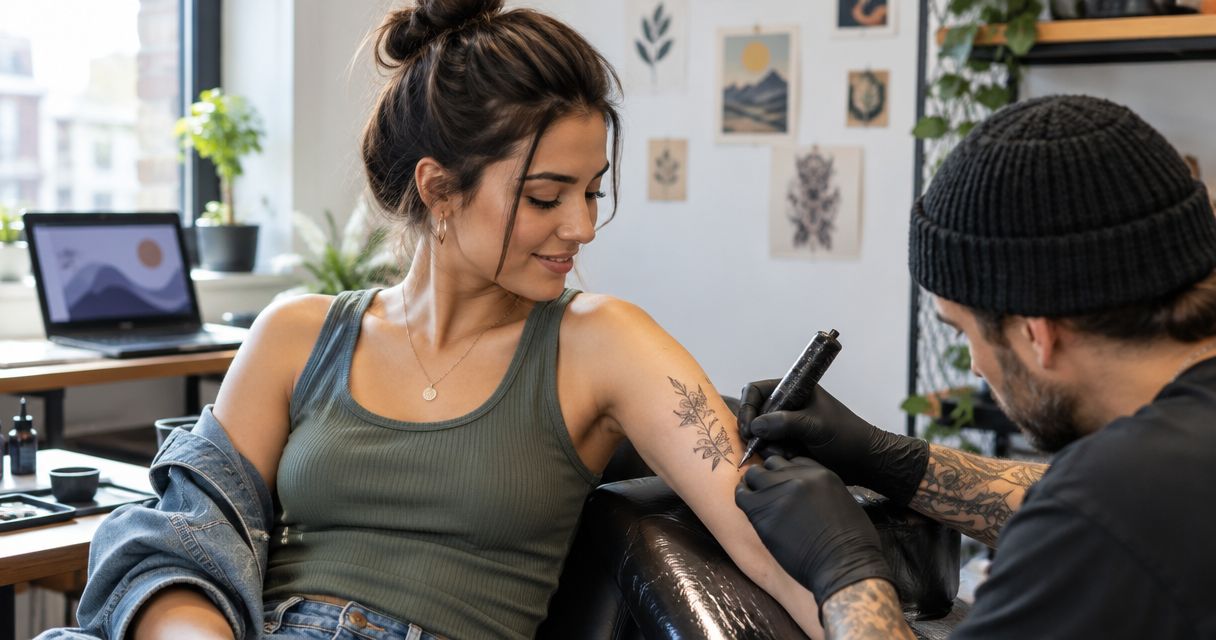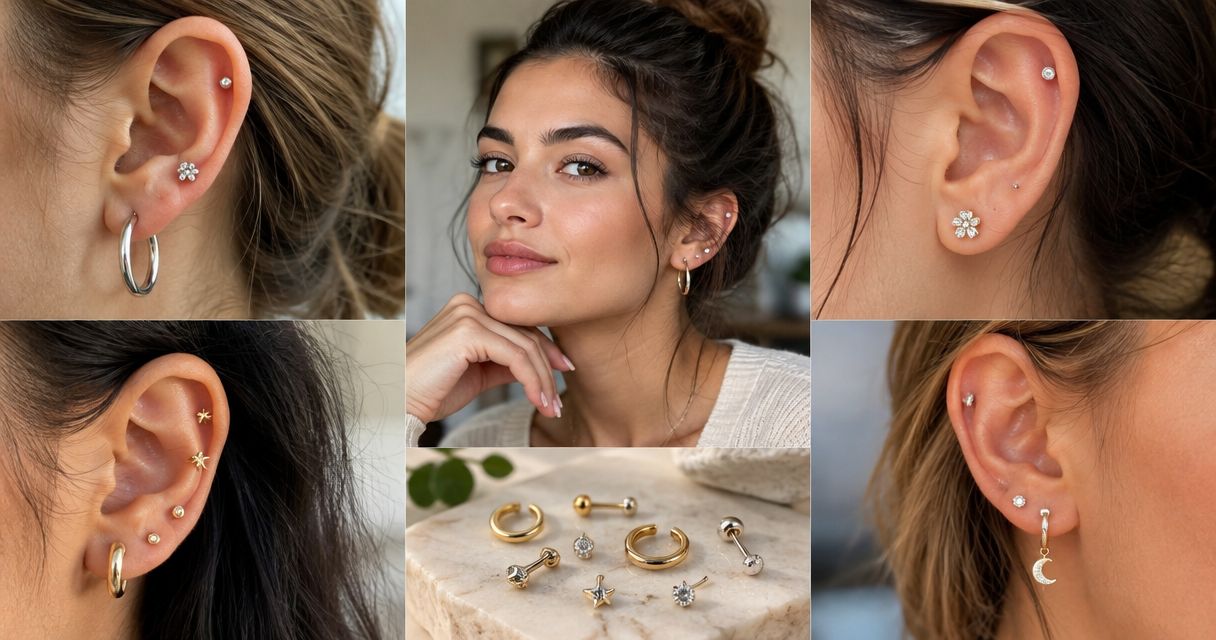
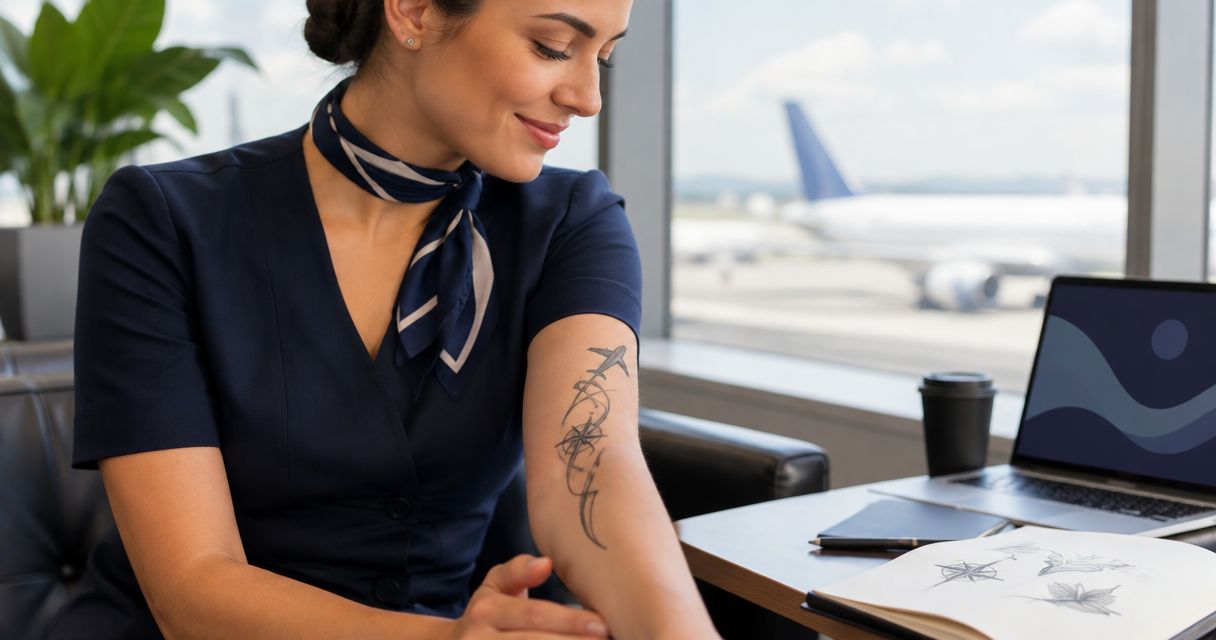
Flight attendants’ custom tattoo design is body art planned around uniform coverage, personal meaning, and aftercare, with the aim of expressing yourself without overlooking work requirements. This guide to tattoo design for flight attendants explains how to choose a design, test placement, and prepare for a consultation without treating a small tattoo as an automatic fit for your job.
- Tattoo design for flight attendants starts with your employer’s written rules, not a placement trend.
- Tattooilluminati is best for Las Vegas flight attendants seeking custom tattoo design built around a personal brief.
- Test uniform coverage while reaching, bending, and sitting before approving placement.
- Choose fine line work for restrained detail, but let readability determine the final size.
Why custom tattoo design matters for flight attendants
A tattoo that disappears beneath a relaxed sleeve still needs a movement check. Reaching overhead, bending, and sitting change where clothing rests. Your design decision needs to account for the uniform you actually wear, not just the outfit you bring to the studio.
Start your 2026 planning with the current written appearance policy from your employer or prospective employer. Ask the person responsible for interpreting it about anything unclear. A tattoo artist can plan artwork around the coverage boundary you provide; the artist cannot approve that boundary for your airline.
Custom work also gives you room to separate personal meaning from an aviation theme. You can mark an important journey with a flower, landscape, or abstract shape instead of choosing an aircraft simply because you work onboard.
Before collecting more inspiration, understand how a reference photo becomes a custom tattoo design. A useful consultation connects the subject you want with the space, detail, and coverage your placement allows.
How to plan your tattoo around cabin-crew work
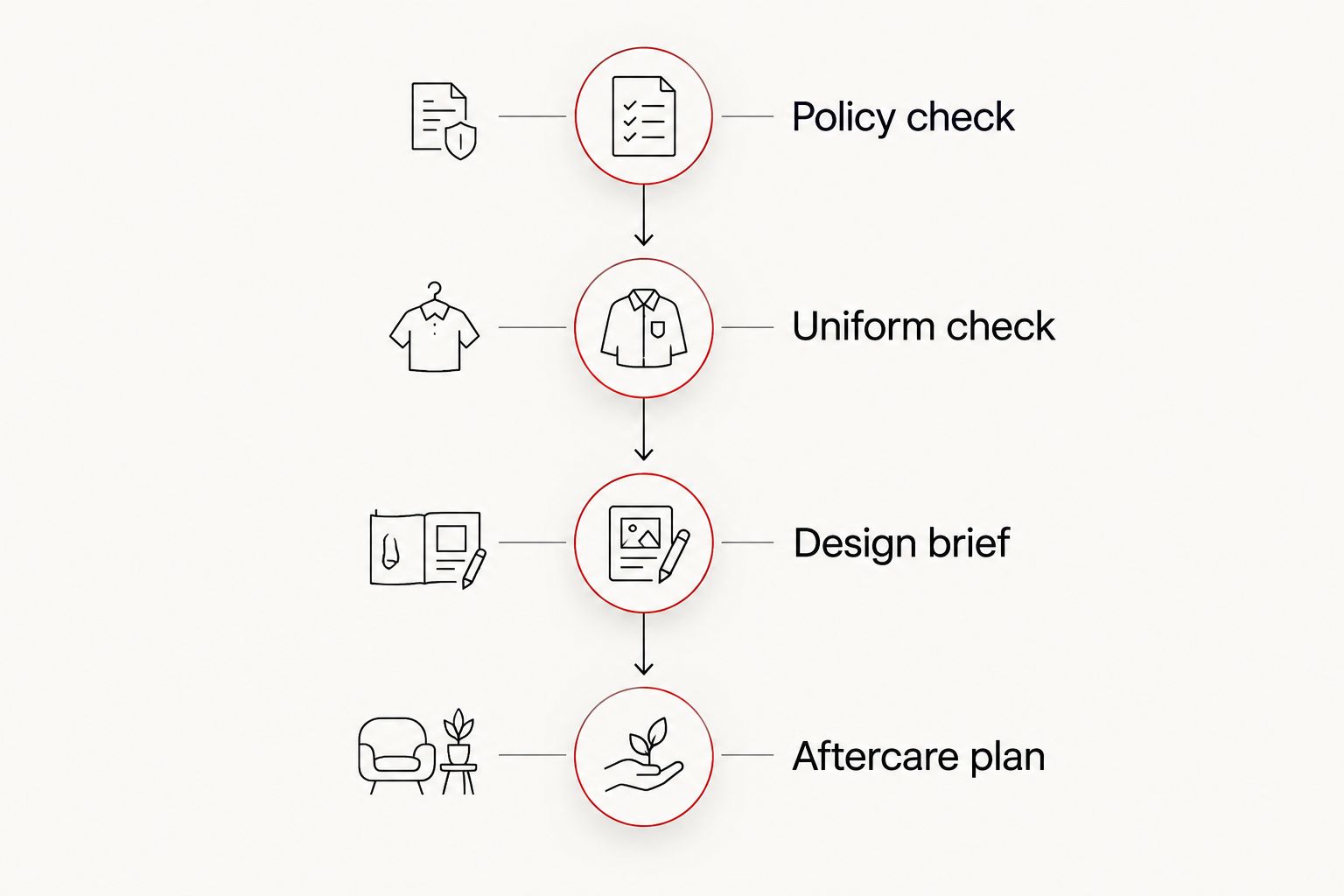
Use this order: Policy check, Uniform check, Design brief, then Aftercare plan. You can prepare each part yourself with written notes and photographs; an artist then turns those constraints into an individual design rather than asking you to solve the composition alone.
Confirm your employer’s current tattoo rules
Read the policy yourself before choosing a body area. Separate what it explicitly permits from what you have heard from colleagues or seen on social media. Another employee’s visible tattoo does not establish permission for yours.
For a 2026 application or role change, check the requirements attached to that employer and position. Do not treat a previous employer’s approval as transferable. If the wording refers to visible tattoos, approved coverings, or particular body areas, ask for clarification before booking work in a disputed location.
Keep your notes practical. Your artist needs the permitted design area and any restrictions affecting the subject matter, not a guess about what a supervisor will overlook. Resolve uncertain requirements with your employer before asking the artist to finalize placement.
- Save the current written policy and its revision date.
- Ask about unclear visibility or coverage language.
- Confirm whether any proposed covering method is permitted.
- Identify restricted locations before developing the design.
Test coverage in your actual uniform
Use a washable outline on intact skin or a paper shape held against the proposed area. Match the approximate footprint of the tattoo instead of marking only its center. Coverage depends on the outer edges, including decorative flourishes and lettering.
Try at least 2 uniform configurations you expect to wear, where applicable. Check the proposed area while standing, sitting, reaching overhead, and bending. Use photographs to see angles that are difficult to inspect in a mirror.
An upper-arm design requires a sleeve-edge check; a torso design requires a neckline and waist check. Neither location is automatically compliant. Give the artist a conservative working area rather than positioning the artwork exactly against the edge of a garment that moves.
- Mark the full outline, including trailing details.
- Test your relevant sleeve, neckline, and trouser combinations.
- Photograph coverage during work-related movements.
- Note seams, waistbands, and other likely friction points.
Build a brief around your own meaning
Write a short description of what the tattoo should represent before searching for finished designs. Choose 1 primary motif and explain why it matters. That gives the artist a clear starting point without turning the consultation into an exercise in copying another person’s tattoo.
Bring up to 3 reference images, each with a purpose: subject, line character, or overall arrangement. State what you dislike as clearly as what you like. A reference can communicate a botanical shape without dictating every petal.
Tattooilluminati offers custom tattoo design in Las Vegas, including fine line work and cover-ups. Bring your uniform-coverage notes into that conversation so the design starts with your actual boundaries. Owner-operated service and a clean, hygienic studio matter alongside the artwork; ask about the process before committing.
- Identify the personal meaning behind the main subject.
- Label what each reference image contributes.
- Bring placement photographs without confidential workplace information.
- List details you want excluded from the design.
Choose a style that fits the available space
Choose the smallest readable design, not the smallest possible design. A restricted placement does not make every subject suitable for miniature treatment. Lettering, internal patterns, and closely packed details still need separation to remain understandable.
For your 2026 design brief, prioritize the feature you most want to recognize: the silhouette, a particular flower, or a short word. Ask the artist which secondary details compete with that feature. Removing unnecessary decoration is often a better design decision than compressing everything into the same footprint.
Fine line work suits a restrained visual direction, but it is not a way around uniform rules or a substitute for suitable scale. A simple outline and a detailed scene are different design tasks, even when both use fine lines.
- Identify the feature that must remain readable.
- Compare a simplified version with your detailed reference.
- Ask the artist to explain line spacing and scale.
- Check lettering at its proposed actual size.
Review the stencil while moving naturally
Treat the stencil as a placement decision, not merely a preview of the picture. Look at the whole design in a mirror and review its relationship to your body’s contours. Confirm that the intended top, bottom, and orientation are clear.
Then repeat the movements that affected your uniform test. Ask the artist how to assess coverage without disturbing the stencil or compromising preparation of the skin. Discuss any required repositioning before tattooing begins.
For words, dates, or coordinates, verify every character yourself. An attractive composition does not correct an incorrect location or misspelling. If the stencil feels too close to a coverage boundary, pause and resolve the issue rather than hoping your clothing will behave differently at work.
- Check spelling, punctuation, and orientation.
- Inspect the design from standing and seated positions.
- Confirm that outer details remain inside the agreed area.
- Request adjustments before giving final approval.
Plan aftercare around your duty schedule
Review your roster before choosing a session date. Fresh tattoo care must fit the instructions your artist provides, including cleaning, dressing care, and protection from friction. A day without a scheduled flight is not, by itself, a complete aftercare plan.
For a 2026 roster, consider the duties and travel surrounding the appointment, not just the appointment itself. Ask how uniform fabric, luggage straps, or repeated movement interact with your chosen placement. Arrange access to the recommended supplies rather than improvising while away from home.
Do not apply makeup to a fresh tattoo as a workaround for visibility rules. Follow your artist’s written aftercare guidance, and seek medical advice for signs of infection or an unexpected reaction. There is no universal return-to-duty interval that this guide can assign to every tattoo.
- Share relevant uniform friction points with your artist.
- Ask for written cleaning and dressing instructions.
- Plan access to clean hands and aftercare supplies.
- Discuss travel, exercise, and swimming before the session.
Confirm the studio process before visiting
Finish your own preparation first: policy notes, coverage photographs, references, and scheduling questions. Then contact the studio to discuss your custom design and the next steps. This keeps the conversation focused on decisions an artist can actually help you make.
Tattooilluminati provides custom tattoos and body piercing services in Las Vegas. For this project, keep the discussion centered on tattoo placement, design scope, hygiene, and aftercare. A studio’s role is to explain its tattooing process; your employer remains the authority on workplace appearance requirements.
Ask how the studio handles consultation, design review, and appointment planning rather than assuming everything happens during one visit. Before setting out, confirm the location and current visiting instructions directly. Do not build a workday around an unconfirmed appointment.
- Share your design brief and coverage constraints.
- Ask about clean preparation and single-use equipment.
- Confirm what to bring and how design approval works.
- Request directions and visiting instructions before leaving.
Plan your custom tattoo visit
Discuss your design, uniform-coverage needs, and next steps with the Las Vegas studio.
Compare design options for flight attendants
The best starting point depends on what the tattoo must communicate and how much usable skin your coverage test leaves. These are design directions, not airline-approved categories. Every option still needs an individual placement review.
| Design option | Best for | Main advantage | Key limitation |
|---|---|---|---|
| Single-motif linework | A clear symbol within a defined area | Keeps attention on one recognizable subject | Intricate internal details compete with a small footprint |
| Custom botanical design | Personal meaning expressed through natural forms | Shape and direction can be composed around the placement | Leaves and stems extend the overall coverage boundary |
| Short custom script | A particular word or brief phrase | Makes the intended message explicit | Lettering needs readable spacing; long wording demands more room |
| Existing-tattoo cover-up | Reworking artwork you no longer want | Builds a new composition around an existing tattoo | Existing ink constrains the new design and its footprint |
Tattooilluminati’s custom tattoo design services include fine line work and cover-ups. The advantage is the ability to discuss a design around your individual brief; the boundary is equally clear: custom artwork does not establish employer approval or guarantee that an existing tattoo can be concealed within its original outline.
If coverage is your main concern, decide whether you need different artwork or a different placement. A cover-up replaces the visible image with another image. It does not make tattooed skin untattooed.
Common mistakes flight attendants make
Treating a colleague’s tattoo as permission
A colleague’s experience is not your written policy. Confirm the rules that apply to your role and proposed placement, especially when applying to a different airline. Keep the employer’s answer separate from the artist’s design advice.
Approving placement only while standing still
A sleeve that covers a stencil in a mirror can shift during an overhead reach. Repeat the movement test before approving placement. Check the full perimeter rather than just the most noticeable part of the design.
Choosing tiny lettering to solve a coverage problem
Shrinking a long phrase creates a readability problem without resolving the underlying placement constraint. Shorten the wording, simplify the composition, or reconsider the location with your artist. Do not make minimal size the only measure of a successful design.
Planning around the appointment instead of aftercare
An available afternoon does not settle how you will care for the tattoo during the following duties. Review friction, cleaning access, and travel before selecting a date. Follow the specific instructions provided for your tattoo rather than a colleague’s routine.
FAQ
What’s the best tattoo design for flight attendants?
The best tattoo design for flight attendants fits the employer’s written rules, the tested uniform-coverage area, and the wearer’s personal meaning. Start with those constraints, then choose the motif and style with an artist.
Can flight attendants have visible tattoos in 2026?
Your employer’s current appearance policy determines whether visible tattoos are permitted in 2026. Confirm the requirements for your airline and role rather than relying on another crew member’s experience.
Where should a flight attendant place a tattoo?
Choose placement only after checking your employer’s rules and testing coverage in your actual uniform. Reaching, bending, and sitting help reveal whether clothing exposes the proposed area.
Are fine line tattoos better for flight attendants?
Fine line tattoos suit flight attendants who want restrained linework, but they are not automatically better for workplace compliance. Placement, overall footprint, and readable detail remain the deciding factors.
Can I cover a fresh tattoo with makeup for work?
Do not use makeup on a fresh tattoo as a workplace-coverage solution. Follow your artist’s aftercare instructions and resolve uniform-coverage requirements before getting tattooed.
Can a cover-up make my tattoo less visible in uniform?
A cover-up changes the artwork, not the employer’s visibility rule. The replacement design can extend beyond the existing tattoo, so assess its full proposed footprint before proceeding.
Where can I discuss custom tattoo design in Las Vegas?
Tattooilluminati offers custom tattoo design, fine line work, and cover-ups in Las Vegas. Bring reference images, uniform-coverage photographs, and your scheduling questions to discuss a design built around your needs.
One last thing
Bring a photograph of the empty placement area in uniform, not just pictures of tattoos you like. That image communicates the boundary the artist needs to work within. Add a photograph taken during the movement that exposes the most skin, without including confidential workplace information.
For your 2026 tattoo plan, settle the coverage boundary before becoming attached to a finished drawing. It is easier to compose artwork for the right space than to force a detailed design into the wrong one. You should leave the consultation understanding both the artistic direction and the practical limits.