Choose Illuminati Tattoo Co. if you want a Las Vegas tattoo and piercing studio offering custom design, fine line work, and cover-ups; choose Inner Vision Tattoo if a specific artist there has the healed work you want and a consultation confirms the fit. For this 2026 comparison, choose by the artist’s relevant work and proposed approach—not the studio name alone.
- Illuminati Tattoo Co. suits Las Vegas clients seeking custom tattoos, fine line work, cover-ups, or professional body piercing.
- Choose Inner Vision Tattoo when a specific artist’s healed portfolio matches your intended result.
- Compare inner vision tattoo options by artist fit, design planning, hygiene, and aftercare—not reputation alone.
- Request a written scope before committing to either studio.
Why this matters
A studio comparison should help you choose who will work on your skin. Your intended style, placement, existing ink, and comfort with the artist matter more than a broad claim that one shop is better.
Illuminati Tattoo Co. offers custom tattoos and professional body piercing in Las Vegas, with an owner-operated approach and an emphasis on clean, hygienic service. Those are useful starting points. Your next step is to match the service to your particular design, rather than treating a service list as proof of an individual artist’s suitability.
For your 2026 decision, separate two questions: does the studio offer what you need, and does the proposed artist demonstrate the result you want? A good comparison answers both before you commit.
At a glance
| Dimension | Illuminati Tattoo Co. | Inner Vision Tattoo |
|---|---|---|
| Best for | Local clients seeking custom tattoos, fine line work, cover-ups, or body piercing | Clients whose preferred artist there demonstrates the intended style |
| Standout feature | Custom designs built around each client; owner-operated service | Let the specific artist’s relevant portfolio establish the distinction |
| Fine line selection | Fine line work is an offered service; review the proposed artist’s examples | Review the proposed artist’s healed examples at comparable scale |
| Cover-up planning | Cover-ups are an offered service; request an assessment of your existing tattoo | Request an assessment before choosing a replacement design |
| Piercing decisions | Professional body piercing is an offered service | Confirm the intended piercing and practitioner directly |
| Hygiene and communication | Clean, hygienic service is part of the studio’s stated approach | Ask the practitioner to explain preparation and aftercare |
| Pricing model | Confirm whether your proposal uses a project or time-based structure | Confirm whether your proposal uses a project or time-based structure |
| Practical fit | Use the contact page to plan your visit | Confirm visit details directly with the studio |
Custom design favors a clear brief over a famous name
The better custom tattoo choice is the artist who turns your idea into a convincing design for your body. A custom service is relevant when you want personal imagery, a particular composition, or a design adapted to a specific placement.
The client studio explicitly offers that service. The advantage is a clear match between your request and its stated offering; the limit is that a custom service description does not show how your individual design will look.
Inner Vision Tattoo is the better choice for an artist-led decision when you have identified a particular artist whose work matches your goal. That is a genuine reason to choose it. Do not substitute a general impression of the shop for examples from the person who will do your tattoo.
Prepare a short brief containing:
- Meaning: What you want the tattoo to represent.
- Style: Which visual qualities you want to keep.
- Placement: Where you want the design to sit.
- Boundaries: Elements you do not want included.
Ask the artist to explain how the design fits the chosen area. A clear explanation is more useful than an enthusiastic agreement with every reference you bring.
Fine line work belongs with the strongest relevant portfolio
Fine line is an offered service, not an automatic win in a studio comparison. Choose the artist whose examples help you judge line consistency, spacing, composition, and readability at your intended scale.
Fresh photographs show the immediate result. Healed photographs help you assess how the work looks after healing, so ask to see both when evaluating your options in 2026.
For a practical comparison, bring 3 reference images and identify what you like in each. One might show the subject, another the line character, and another the placement. Explain those differences so the artist does not mistake every reference for a design you want copied.
Consider 2 placement options before settling on a very small composition. Ask whether the lettering, internal spaces, or closely packed details should change to suit the area.
Inner Vision Tattoo wins your shortlist if its proposed artist provides the more relevant healed examples and a clearer explanation of your design. The same standard applies to the client studio. Portfolio fit takes priority over a fine line label.
Cover-ups favor the stronger assessment, not the preferred picture
A cover-up starts with existing ink. Your preferred replacement image is only part of the decision; the artist also needs to assess the old tattoo’s placement, shape, density, and surrounding space.
Cover-ups are an explicit service at the client studio, making it a relevant option for this request. That is a reason to seek an assessment, not a promise that any reference image will work over any existing tattoo.
Ask either studio to explain:
- Which parts of the old tattoo influence the new composition.
- Whether the proposed design needs a different scale or position.
- Which design elements do the work of disguising the old image.
- What compromises you would need to accept.
Choose the artist who makes the constraints understandable. An attractive sketch without an explanation of coverage leaves an important question unanswered.
Inner Vision Tattoo is the stronger choice for your cover-up if the proposed artist demonstrates comparable completed work and presents a plan you understand. Do not rank either studio by a guarantee that the old tattoo will disappear completely.
Piercing needs a separate decision from tattoo style
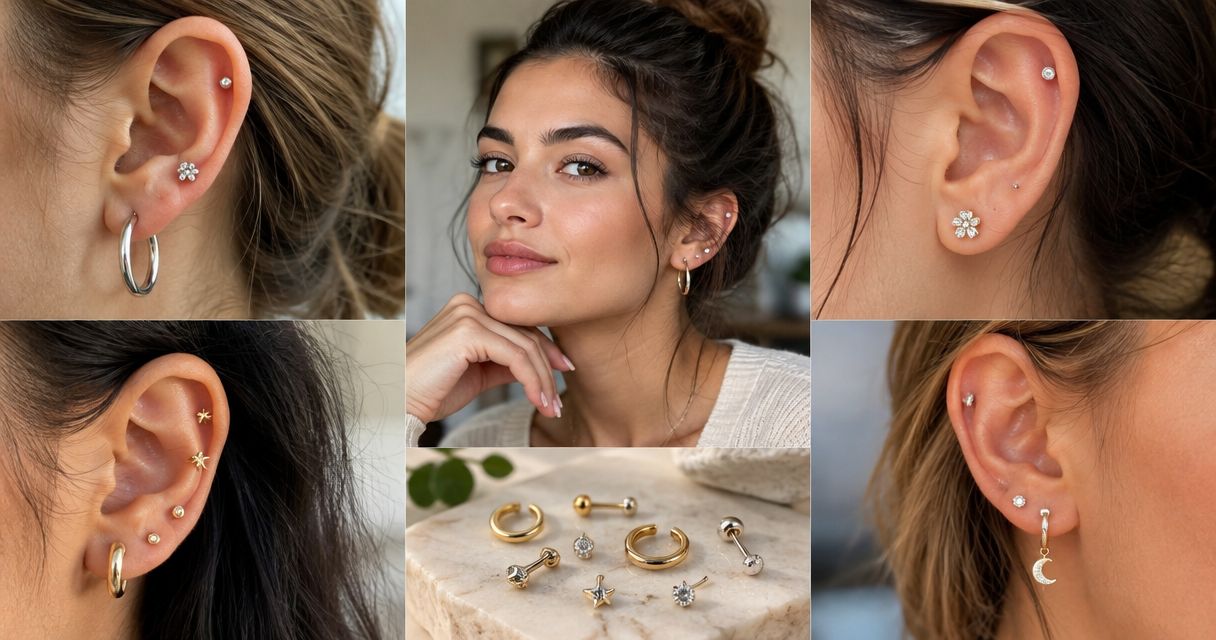
A tattoo portfolio does not establish piercing suitability. If your main goal is a piercing, evaluate the practitioner’s consultation, explanation of placement, jewelry discussion, and aftercare guidance separately.
Professional body piercing is part of the client studio’s stated service offering. That makes it a relevant starting point for local clients who want to discuss tattoos and piercings with one business; it does not mean both procedures should happen during the same visit.
For either studio, explain your intended placement and any practical concerns, including work clothing, headphones, or sports equipment that touches the area. Ask the practitioner how those factors affect the plan.
The useful tradeoff is convenience versus practitioner fit. A single studio is convenient, but the person performing each procedure still needs to be the right choice for that procedure. Keep tattoo and piercing decisions separate when their requirements differ.
Hygiene is a requirement, not a tiebreaker
The client studio emphasizes a safe, clean, hygienic setting. When you visit either option, ask the practitioner to explain the preparation process, single-use items, and handling of reusable equipment where applicable.
A reassuring conversation should also cover aftercare. Ask what instructions you will receive, how to raise concerns afterward, and when a concern requires medical attention rather than another studio conversation.
Use the same standard at both studios:
- The practitioner answers reasonable questions directly.
- You understand what will happen before the procedure begins.
- You can discuss placement or design concerns without pressure.
- You leave with clear aftercare instructions.
Neither studio earns an automatic hygiene win from its name or photographs. For a 2026 visit, assess the actual setting and the explanation you receive. Cleanliness is necessary; it is not a substitute for relevant artistic work.
Pricing: compare the structure and scope together
Ask each studio whether your proposal is project-based or time-based. A project-based arrangement defines the charge around an agreed scope; a time-based arrangement connects the total to the work’s duration. Confirm which structure applies to your request rather than assuming a studio-wide model.
The tradeoff is predictability versus flexibility. A defined project scope helps you understand what the agreement covers, while a time-based structure needs a clear discussion about how design changes and additional work are handled.
Before committing, clarify these points:
- Which artist the proposal covers.
- What design preparation and revisions are included.
- How changes to size, placement, or detail affect the agreement.
- How separate appointments are handled.
- Which booking and cancellation terms apply.
Compare equivalent proposals, not isolated totals. A small outline and a detailed cover-up are different requests, even if they occupy a similar area. Keep your brief consistent when speaking with both studios so you can compare the responses fairly.
Practical fit improves when you prepare the same brief
A useful studio visit starts before you arrive. Create 1 written brief that you can share with both options, keeping the subject, approximate placement, references, and non-negotiable details consistent.
Use this sequence:
- Write your brief: Describe the idea in plain language.
- Compare healed work: Look for relevant examples from the proposed artist.
- Discuss placement: Ask how the design should fit the area.
- Confirm the scope: Understand the proposed work and terms.
- Plan your visit: Get directions and confirm the purpose of the visit.
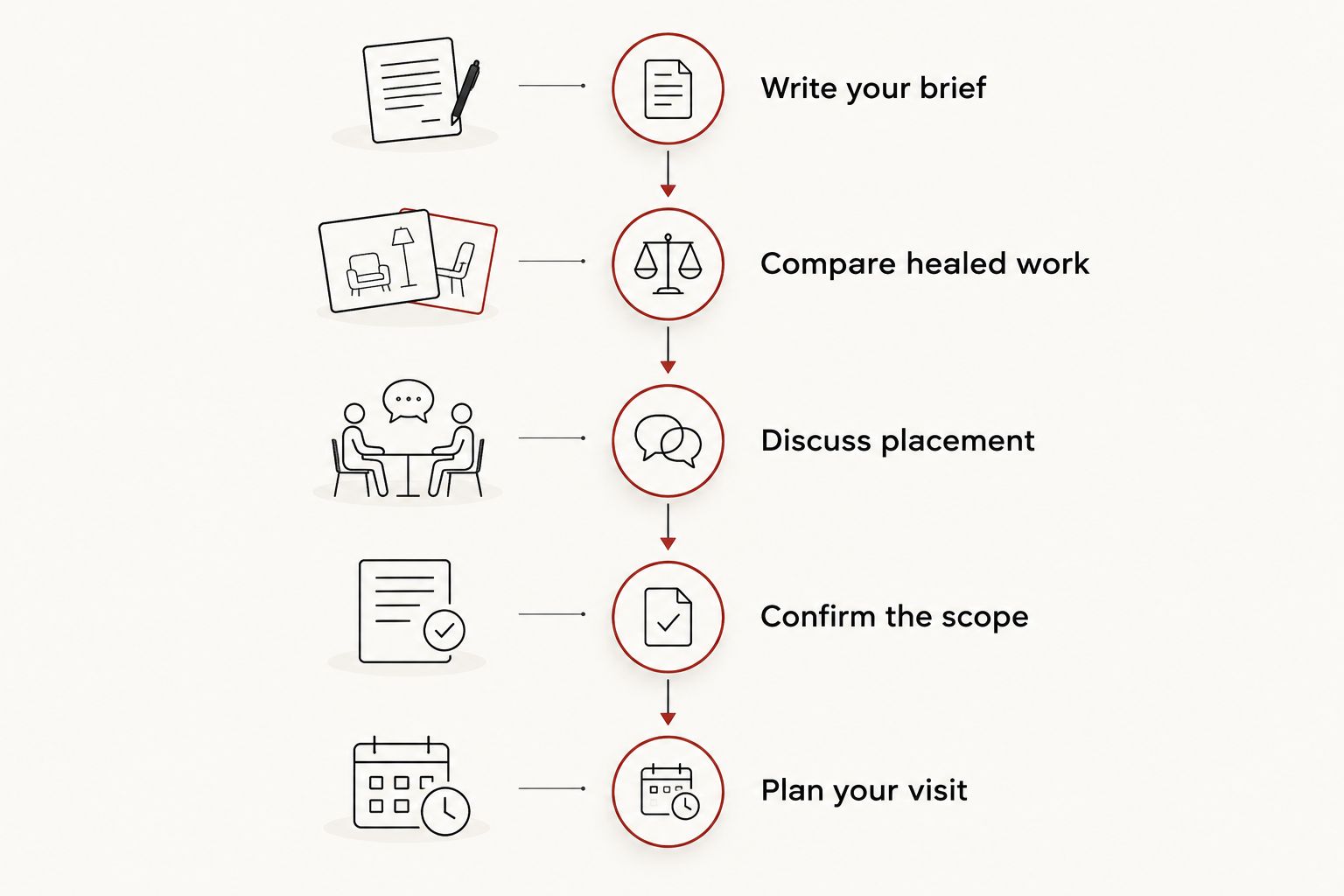
For a local consultation, use the contact page to get directions and plan a visit. Explain whether you want to discuss a new design, existing ink, or a piercing so the conversation starts with your actual goal.
Final verdict: choose the artist and plan that fit
Choose Illuminati Tattoo Co. if you want a custom-service starting point
Best for: Las Vegas clients seeking a personalized tattoo or piercing consultation. Its stated services cover custom design, fine line work, cover-ups, and professional body piercing, supported by an owner-operated, hygiene-focused approach.
Choose this route when those services match your request and the proposed practitioner’s work supports your decision. The service range is the advantage; you still need to assess the individual artist and plan.
Choose Inner Vision Tattoo if you have an artist-specific reason
Best for: clients who have identified a particular artist there whose healed work matches their goal. Choose that artist when the consultation also gives you confidence in the proposed design, placement, and process.
This is a stronger reason than choosing by a familiar name. For your 2026 decision, the limit is equally clear: admiration for unrelated work does not establish a match for your particular tattoo.
| Dimension | Winner |
|---|---|
| Best for | Custom-service seekers: client studio; artist-specific seekers: Inner Vision Tattoo |
| Standout feature | Client studio for its stated custom, owner-operated approach |
| Fine line selection | Artist with the strongest relevant healed examples |
| Cover-up planning | Artist with the clearest assessment of the existing ink |
| Piercing decisions | Practitioner who explains the specific procedure clearly |
| Hygiene and communication | No automatic winner; assess both directly |
| Pricing model | No automatic winner; compare equivalent scope and terms |
| Practical fit | Studio whose visit plan suits your needs |
FAQ
Is Inner Vision Tattoo better for my first tattoo?
Choose Inner Vision Tattoo for a first tattoo when a specific artist’s relevant work and consultation match your needs. Prioritize clear explanations, comfortable communication, and a design you understand before committing.
Which studio should I choose for a custom tattoo?
Choose the studio whose proposed artist can turn your brief into a suitable design for your placement. Custom design is an explicit service at the client studio, but the individual artist’s examples and explanation should settle your choice.
How do I compare fine line tattoo artists?
Compare relevant healed examples at a scale similar to your intended tattoo. Ask the artist to explain spacing, detail, and placement rather than judging only fresh close-up photographs.
Which studio is better for a tattoo cover-up?
Choose the artist who gives the clearest assessment of your existing tattoo and demonstrates relevant completed cover-ups. Ask how the old ink affects the new design before committing to a replacement image.
What should I ask about tattoo pricing?
Ask whether the proposal is project-based or time-based and exactly what work it covers. Confirm how revisions, design changes, and separate appointments affect the agreement.
What should I bring to a tattoo consultation?
Bring a short written brief, reference images, and your preferred placement. For a cover-up, provide a clear view of the existing tattoo and explain which changes matter most to you.
Can I use the same criteria for tattoos and piercings?
Evaluate tattoos and piercings separately because they require different practitioner-specific discussions. Review tattoo artwork for artistic fit, and discuss piercing placement, jewelry, procedure, and aftercare with the piercer.
One last thing
Ask the artist what they would change about your reference—and why. The answer reveals how they think about placement, detail, and the limits of the design, rather than simply whether they like your idea.
You do not need to arrive with every decision settled. Bring a clear goal, listen to the explanation, and choose the practitioner whose reasoning you understand.