Best overall: layered florals. Best for dense lettering: blackwork. Best for a narrow, elongated tattoo: a snake design. These 12 cover up tattoo ideas for old tattoos give you a starting point for a custom design in 2026—not a promise that every design fits every tattoo.
- Layered florals lead these cover up tattoo ideas for old tattoos because petals and leaves offer flexible composition.
- Blackwork suits readers comfortable making substantial dark areas part of the finished design.
- Illuminati Tattoo Co. offers custom tattoo cover-ups for Las Vegas clients seeking a design built around existing ink.
- Choose tattoo cover-up designs around existing darkness, placement, and the artwork you actually want to wear.
Illuminati Tattoo Co. is best for Las Vegas clients seeking custom tattoo cover-ups built around their existing artwork. Bring your ideas, but let the old tattoo help determine where the new design needs shading and structure.
Why this matters
A cover-up is a new composition over existing pigment, not a blank-skin tattoo. The old tattoo's darkest marks, outer edges, and position all affect the design. A beautiful reference image alone does not establish whether it will work.
For your 2026 cover-up, separate the subject you love from the technique needed to address the old work. You might want a flower, for example, while the artist needs overlapping leaves and a shaded center to make that flower suitable.
Choose the finished tattoo you want to wear, not simply the first image that hides the old one. Concealment matters, but so does liking the replacement.
What makes the best cover-up tattoo ideas
Use these criteria before choosing a subject:
- Darkness placement: The design needs intentional shaded areas where the existing ink demands them.
- Shape compatibility: The subject should work with the old tattoo's footprint and your body's contours.
- Layered structure: Overlapping petals, feathers, scales, or folds give the artist options for arranging detail.
- Readable composition: The new subject should remain clear rather than becoming a collection of unrelated dark patches.
- Personal fit: Choose imagery you want independently of its ability to disguise the previous tattoo.
- Room to expand: Discuss the outer boundary before committing, especially near another tattoo or a joint.
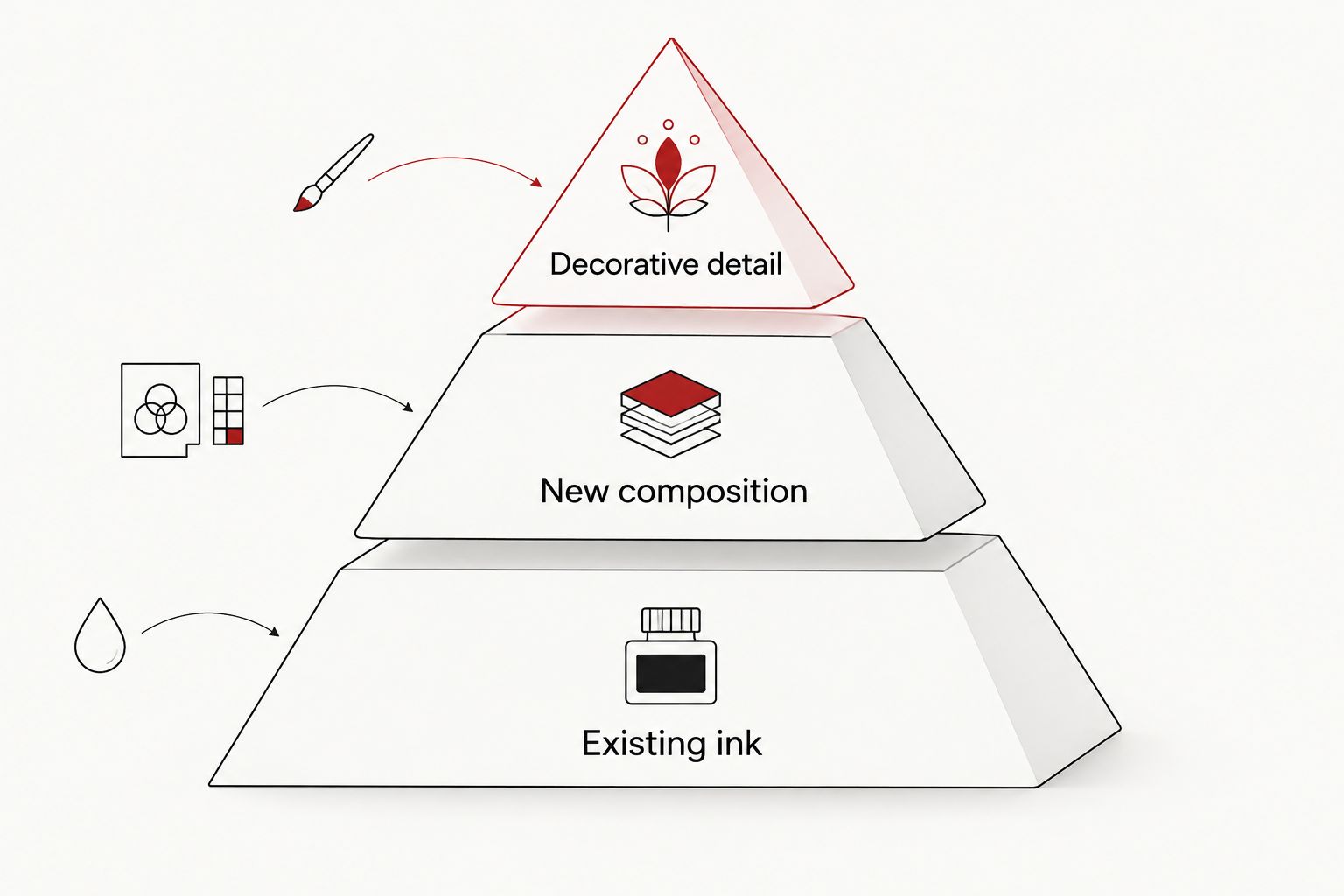
Keep 3 design priorities in order: existing ink, new composition, then decorative detail. Adding more detail does not solve a mismatch between the old tattoo and the new design.
Cover-up tattoo ideas at a glance
This 2026 shortlist ranks design approaches by their usefulness as starting points, not by guaranteed concealment. Each option serves a different visual preference or existing shape.
| Rank | Design idea | Best for | Standout feature | Key limitation |
|---|---|---|---|---|
| 1 | Layered florals | Irregular outlines | Overlapping petals and leaves | Sparse flowers leave exposed areas |
| 2 | Blackwork | Dense lettering | Deliberate solid-dark shapes | Requires accepting substantial darkness |
| 3 | Snake | Narrow, elongated tattoos | Curving body and patterned scales | Small outlines offer limited coverage |
| 4 | Japanese-inspired composition | Expanding into a larger piece | Connected subject and background | Needs room for the full composition |
| 5 | Raven | Compact dark symbols | Dark body with feather structure | Needs a recognizable silhouette |
| 6 | Ornamental mandala | Centered, rounded tattoos | Repeating radial pattern | Symmetry restricts placement |
| 7 | Botanical branch | Scattered small marks | Adjustable leaves and stems | Open gaps expose existing ink |
| 8 | Moth | Short horizontal tattoos | Broad wings and patterned sections | Light wings restrict concealment |
| 9 | Koi | Curved existing designs | Curving body, scales, and water | Detail requires adequate space |
| 10 | Panther | Bold angular shapes | Dark silhouette and strong movement | Pose determines usable coverage |
| 11 | Forest landscape | Broad horizontal areas | Layered silhouettes | Fine distant details need clear space |
| 12 | Abstract composition | Unusual existing layouts | Flexible placement of forms | Requires comfort with nonliteral artwork |
1. Layered florals: best for irregular tattoo outlines
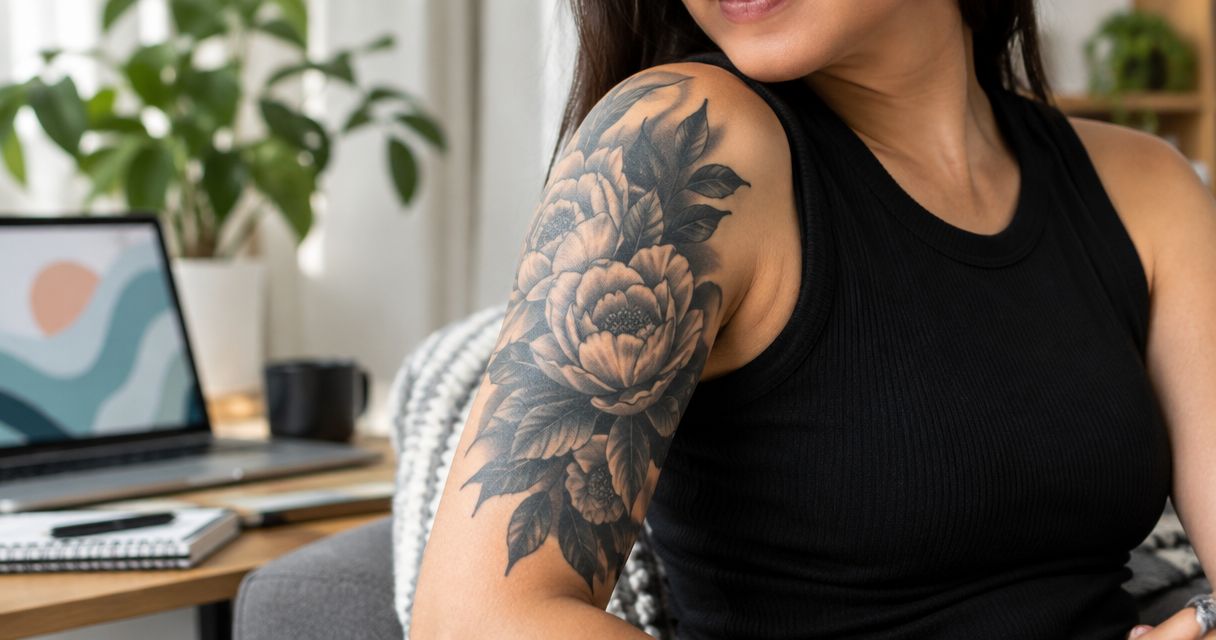
Layered florals use petals, leaves, and overlapping blooms to build a composition around an uneven footprint. A shaded flower center or leaf cluster gives the artist a place to address darker marks without making the entire design uniformly dark.
Layered florals pros:
- Flexible arrangement around existing edges.
- Clear focal point with supporting foliage.
- Choices between rounded and elongated compositions.
Layered florals cons:
- Open petals provide less concealment.
- Extra foliage changes the overall footprint.
Best for: You want recognizable botanical artwork around an irregular old tattoo. Ask to see where the darkest existing marks sit beneath the proposal. Verdict: Buy into this direction if you genuinely want floral work.
2. Blackwork: best for dense lettering
Blackwork makes solid-dark areas an intentional part of the design. It is a useful direction to discuss when old lettering creates a concentrated dark area and you prefer graphic artwork over delicate linework.
Blackwork pros:
- Makes darkness part of the visual language.
- Supports bold silhouettes and geometric forms.
- Avoids relying on pale decorative areas.
Blackwork cons:
- Substantial dark areas become permanent design features.
- Remaining negative space needs careful placement.
Best for: You want a bold replacement for dense lettering. Distinguish a shaped blackwork design from filling the whole area indiscriminately; composition still matters. Verdict: Buy if substantial darkness matches your taste; skip if it does not.
3. Snake: best for narrow, elongated tattoos
A snake's body can curve along a narrow existing design while its coils create wider focal areas. Scales, overlapping curves, and shading offer different ways to organize the surface rather than leaving a simple outline over old ink.
Snake pros:
- Adaptable curves for elongated placement.
- Scales provide a repeating surface pattern.
- Coils introduce overlap and movement.
Snake cons:
- A thin outline leaves little coverage.
- The head and body need readable proportions.
Best for: Your old tattoo follows a narrow line and you want animal imagery. Discuss body thickness before choosing small decorative details. Verdict: Buy for a shaded composition; skip outline-only treatment as your cover-up plan.
4. Japanese-inspired composition: best for a larger redesign
A Japanese-inspired composition connects a main subject with supporting elements such as waves, clouds, or flowers. That relationship allows the old tattoo to become part of a larger layout instead of dictating the entire subject.
Japanese-inspired composition pros:
- Connects foreground and background elements.
- Offers multiple locations for shaded areas.
- Creates continuity across a larger body area.
Japanese-inspired composition cons:
- Requires space beyond a small isolated motif.
- A crowded layout weakens subject clarity.
Best for: You want to expand the old tattoo into a larger, connected piece. Discuss the full boundary, not just the central image. Verdict: Buy if expansion is welcome; hold if you want the same small footprint.
5. Raven: best for a compact dark symbol
A raven provides a naturally dark subject with a recognizable body, beak, and feather structure. The design can use the body as its main dark area while keeping the silhouette distinct from the old symbol underneath.
Raven pros:
- Dark shading belongs to the subject.
- Feather groups offer layered structure.
- Sitting and flying poses create different outlines.
Raven cons:
- A cramped silhouette loses definition.
- Fine feather separations need deliberate placement.
Best for: You have a compact symbol and want bird imagery. Choose the pose around the existing shape rather than insisting on a reference image unchanged. Verdict: Buy when the raven remains readable over the old marks.
6. Ornamental mandala: best for a centered, rounded tattoo
An ornamental mandala uses repeating forms around a center. Its balance suits a rounded starting shape, but symmetry also limits how freely an artist can move individual elements to meet old ink.
Ornamental mandala pros:
- Strong central organization.
- Repetition connects decorative elements.
- Shaded sections can alternate with open areas.
Ornamental mandala cons:
- Off-center ink complicates symmetry.
- Fine open patterns expose underlying marks.
Best for: Your old tattoo has a centered footprint and you prefer ornamental artwork. Ask whether the proposal preserves both symmetry and usable shading. Verdict: Hold until placement supports the pattern; skip a fine-line-only solution for dark existing ink.
7. Botanical branch: best for scattered small marks
A botanical branch connects leaves along stems, giving separate marks a shared composition. Unlike a dense floral cluster, this approach emphasizes direction and spacing, so the placement of every leaf matters.
Botanical branch pros:
- Connects separated marks visually.
- Leaves can face different directions.
- Supports a flowing vertical or diagonal layout.
Botanical branch cons:
- Open gaps leave old ink visible.
- Sparse linework provides limited concealment.
Best for: You want to connect scattered small tattoos with foliage. In 2026, choose this direction for its composition—not because a delicate botanical reference looks effortless. Verdict: Buy if shaded leaves align with the marks; hold if the proposal stays mostly open.
8. Moth: best for a short horizontal tattoo
A moth offers broad wings around a central body. Patterned wing sections let the artist organize shading across a horizontal footprint while maintaining a recognizable subject.
Moth pros:
- Broad silhouette suits horizontal layouts.
- Wing patterns divide the design into sections.
- Central body gives the composition an anchor.
Moth cons:
- Pale wing areas limit coverage.
- Uneven existing marks complicate balanced wings.
Best for: Your tattoo is wider than it is tall and you want an insect motif. Compare the old tattoo against both wings, not only the center. Verdict: Buy when the wing pattern accommodates the ink; hold if symmetry forces unsuitable light areas.
9. Koi: best for a curved existing design
A koi combines a curved body with scales, fins, and optional water elements. The body supplies the main subject, while surrounding water can connect the new outline to the existing tattoo's edges.
Koi pros:
- Curving body supports directional movement.
- Scales create organized texture.
- Water provides supporting composition.
Koi cons:
- Small scale details need enough room.
- Fins alone offer limited concealment.
Best for: You want aquatic imagery around a curved tattoo. Decide the fish's direction before focusing on individual scales or color choices. Verdict: Buy if the body carries the necessary shading; hold if only the fins overlap the old ink.
10. Panther: best for bold angular shapes
A panther uses a dark body and an active silhouette to create strong movement. A crouching or climbing pose offers different arrangements of the torso, legs, and tail around an angular tattoo.
Panther pros:
- Dark areas fit the animal naturally.
- Different poses create different footprints.
- Strong outline keeps the subject identifiable.
Panther cons:
- Gaps between limbs expose underlying areas.
- A forced pose weakens anatomy and readability.
Best for: You prefer bold animal artwork over ornamental detail. Choose the pose that suits the old tattoo, then refine expression and supporting elements. Verdict: Buy when the torso meets the darkest marks; skip a pose selected only for its reference image.
11. Forest landscape: best for a broad horizontal area
A forest landscape builds depth through overlapping tree silhouettes and foreground shapes. The darker foreground can carry the visual weight while lighter spaces establish distance.
Forest landscape pros:
- Layered silhouettes create a clear structure.
- Tree heights vary across the composition.
- Foreground shapes offer intentional dark areas.
Forest landscape cons:
- Open sky leaves existing ink exposed.
- Tiny distant details need uncluttered space.
Best for: You want landscape imagery across a broad area. Place the old ink within the planned foreground rather than assuming every part of a scenic image will conceal it. Verdict: Buy for a layered silhouette design; hold if the concept depends on open sky.
12. Abstract composition: best for an unusual tattoo layout
An abstract composition uses shapes, textures, and movement without requiring a recognizable animal or flower. That freedom lets the artist arrange the design around an unusual footprint without forcing anatomical proportions.
Abstract composition pros:
- Flexible arrangement of dark forms.
- No fixed anatomy to preserve.
- Can incorporate irregular edges intentionally.
Abstract composition cons:
- Offers less literal subject recognition.
- Random additions do not create a coherent design.
Best for: You prefer nonliteral artwork and want flexibility around awkward placement. Agree on the visual direction before approving individual shapes. Verdict: Buy if abstract artwork appeals independently; skip if you need a clearly recognizable subject.
How these ideas are ranked
Layered florals lead because overlapping elements provide a flexible starting composition. The remaining options serve distinct needs: dense lettering, narrow shapes, larger expansions, or specific subject preferences.
This is a design shortlist, not a concealment guarantee. For a 2026 decision, an assessment of your actual tattoo takes priority over its position in the table.
Which cover-up tattoo idea should you choose?
Start with layered florals if you like botanical artwork and need an adaptable composition. Choose blackwork when you welcome substantial darkness, or a snake when a narrow layout and animal subject fit your preferences.
Illuminati Tattoo Co. offers custom tattoo cover-ups in Las Vegas. Before visiting, prepare 2 views of your tattoo: a close view of the ink and a wider view showing its placement. Bring references for artwork you like, plus a clear boundary for how far you are comfortable expanding.
Plan your custom cover-up
Explore the studio website, get directions, and bring your existing tattoo and design ideas for discussion.
FAQ
What's the best cover-up tattoo idea for an old tattoo?
Layered florals are the default starting point in this guide because overlapping petals and leaves offer flexible composition. The best design for your tattoo still depends on its darkness, footprint, and placement.
Can a fine-line tattoo cover an old dark tattoo?
Fine-line-only artwork is not a sound default for covering dense dark ink. Its open spaces leave limited room for the shading needed to address the existing tattoo.
Is blackwork better than flowers for covering old lettering?
Blackwork is the stronger design direction when you want substantial solid-dark areas over dense lettering. Flowers suit readers who prefer a recognizable botanical subject with strategically placed shading.
Does a cover-up tattoo have to be larger than the old tattoo?
A cover-up does not have one universal size requirement. Discuss the outer boundary with your artist because the new composition needs room to address existing edges and remain readable.
Should I choose a cover-up design before visiting the studio?
Choose a preferred direction before visiting, not an unchangeable final design. Bring subject references and let the existing tattoo guide the composition.
Where can I discuss a custom tattoo cover-up in Las Vegas?
Illuminati Tattoo Co. offers custom tattoo cover-up services in Las Vegas. Visit the studio website for directions and discuss your existing ink alongside the artwork you want next.
What should I bring for a cover-up tattoo discussion?
Bring clear views of the old tattoo, subject references, and your preferred placement boundary. Explain which features you want hidden and whether you are comfortable with a darker or larger replacement.
One last thing
For your 2026 cover-up, ask the artist to identify where the darkest old marks sit inside the proposed design. That explanation tells you more than an attractive reference image. You should understand how the composition addresses your tattoo before deciding whether it is right for you.