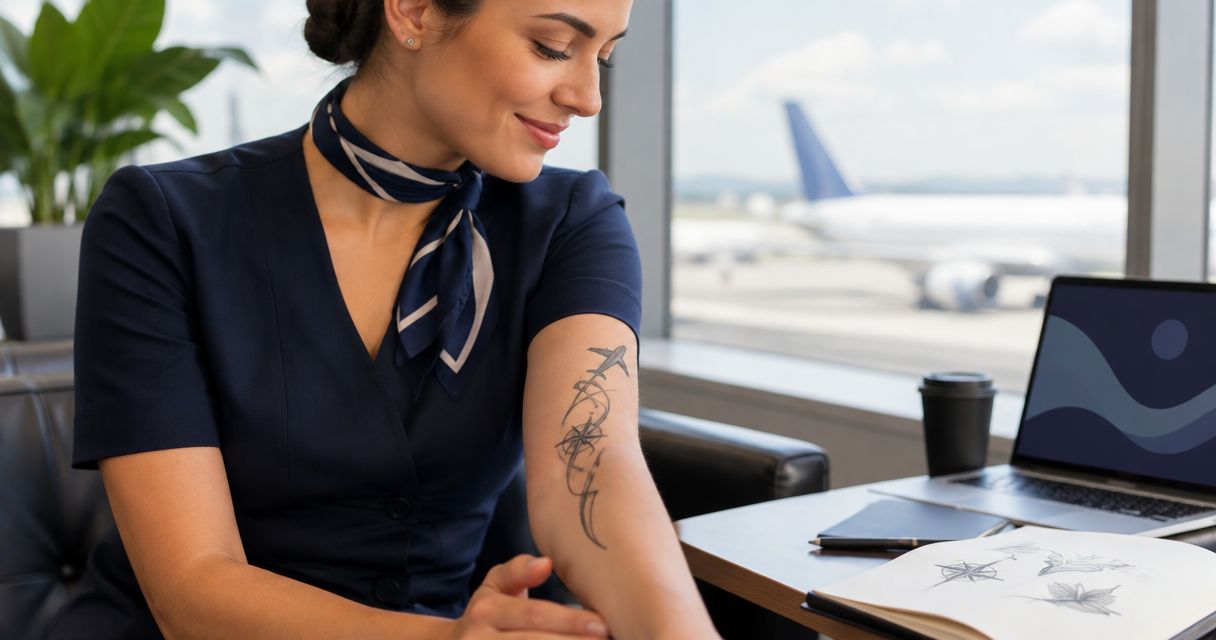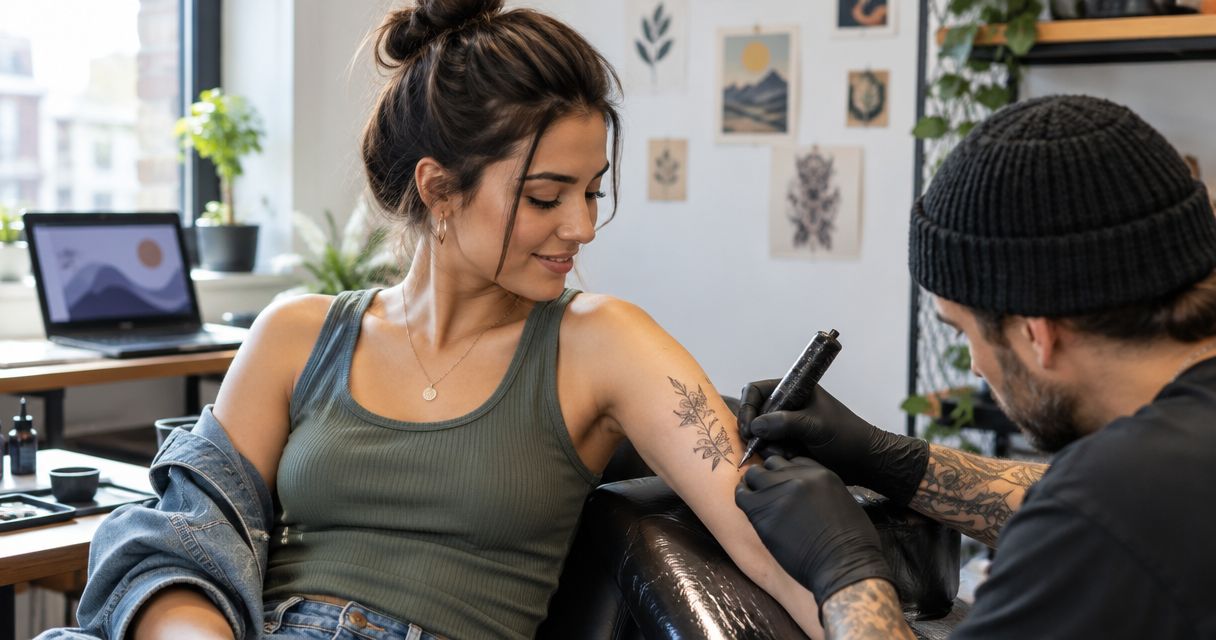

Corporate professionals’ tattoo cover-ups are custom tattoo redesigns that incorporate existing ink, with the aim of creating body art that suits your preferences and workplace visibility requirements. A successful plan separates changing the artwork from concealing it at work, then considers clothing, placement, and healing before you commit.
- Tattoo cover ups for corporate professionals change existing artwork; they do not make tattooed skin invisible.
- Illuminati Tattoo Co. is best for Las Vegas professionals seeking a custom tattoo cover-up consultation.
- Check workplace rules and shirt coverage before approving a larger replacement design.
- Choose cover-up artwork around existing ink, not around a reference image alone.
Why tattoo cover-ups matter for corporate professionals
A corporate tattoo decision has two separate requirements: you need artwork you want to wear, and you need control over when colleagues or clients see it. Replacing an unwanted symbol addresses the first requirement. Keeping the replacement beneath your normal work clothing addresses the second.
For your 2026 planning, use your employer’s written appearance policy rather than assumptions about what looks professional. A workplace that permits visible tattoos and one that requires concealment call for different placement decisions. Client visits, presentations, and business travel also deserve a place in your brief.
Illuminati Tattoo Co. is best for Las Vegas professionals seeking a custom tattoo cover-up consultation. The studio offers custom designs and tattoo cover-ups, with owner-operated service and an emphasis on a clean, hygienic environment. Start with Illuminati Tattoo Co. for studio information and directions before arranging your visit.
The practical limitation is clear: a custom cover-up remains a tattoo. It cannot substitute for clothing coverage when your workplace requires tattooed skin to stay concealed.
How to plan a work-compatible tattoo cover-up
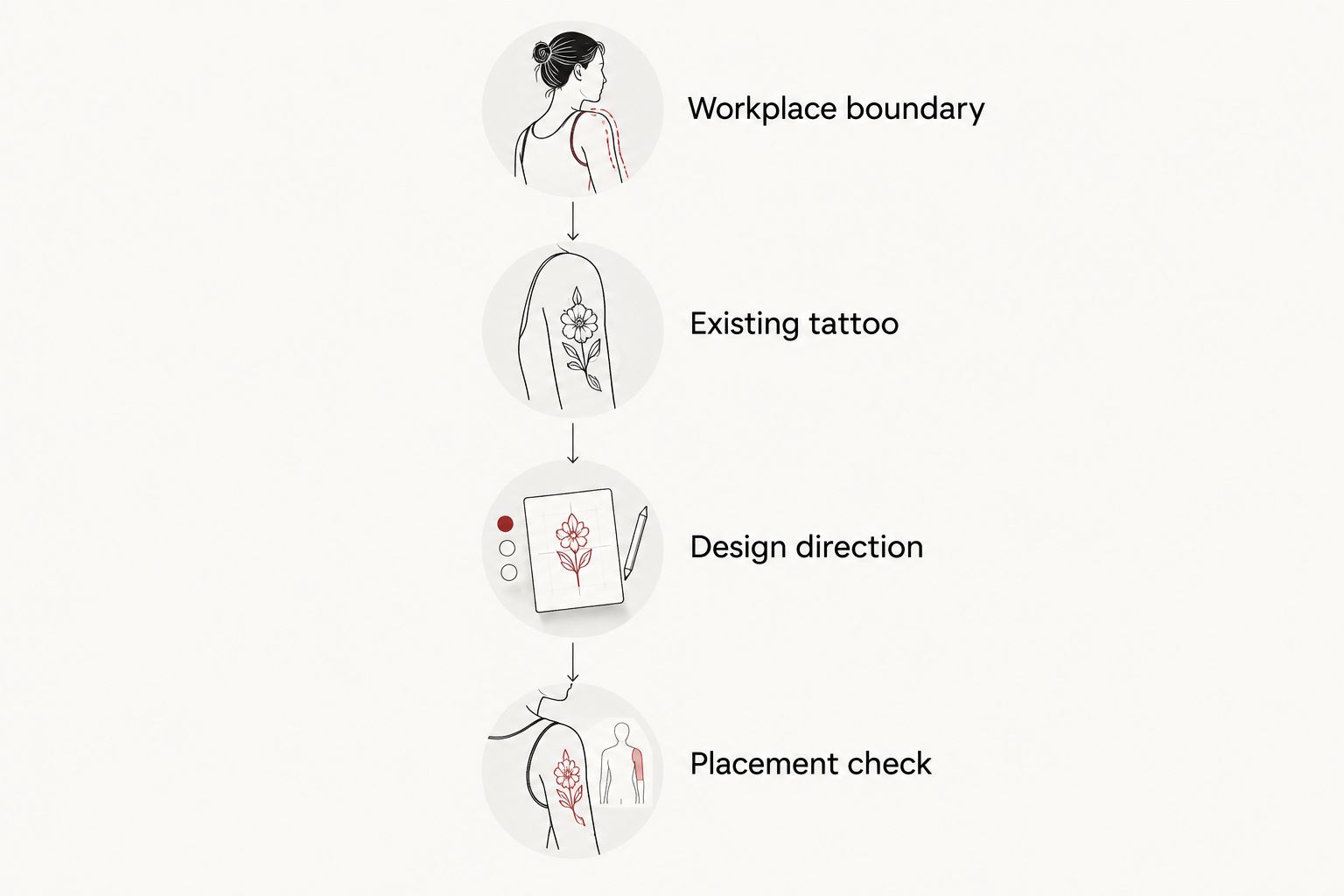
Define your workplace visibility boundary
Start with your actual wardrobe, not a drawing. Put on the clothing you wear for ordinary office days and your most formal work commitments. Check the tattoo while sitting, reaching, typing, and raising your arm; a cuff that covers your wrist at rest is not a dependable boundary during movement.
For a 2026 workplace brief, write down what the policy says and what you personally prefer. Those are different constraints. You can choose discretion even when visible tattoos are permitted, without treating the tattoo itself as unprofessional.
Use 2 work outfits for this check: your usual office clothing and your least-covering permitted outfit. Photograph the clothing boundary so the artist can see where a replacement must stop.
- Read the written appearance policy before choosing placement.
- Test sleeves and collars during normal movement.
- Mark the outermost acceptable design boundary in a photo.
- Include client-facing and travel clothing in your brief.
Document the existing tattoo clearly
Create a useful record before collecting replacement designs. Take 3 reference photos: a close view, a wider placement view, and a view showing the relevant clothing boundary. Use natural lighting and avoid filters that change the ink or skin appearance.
Record what bothers you about the current tattoo. An unwanted name, an unclear outline, and a design that no longer reflects your interests are different design problems. Tell the artist whether your priority is changing the subject, improving the composition, or keeping the replacement within a discreet area.
Photographs support an initial conversation, but they do not replace an in-person assessment. Raised texture, skin condition, and the way the tattoo follows your body need direct attention.
- Photograph the entire tattoo without cropping its edges.
- Include a clear view of surrounding untattooed skin.
- Describe which parts of the old artwork must disappear.
- Tell the artist about previous work on the same area.
Compare realistic redesign directions
Begin manually: collect a small set of references and identify what you like about each one. Separate subject matter from execution. You might like botanical shapes but dislike dense shading, or prefer geometric structure without wanting a larger piece.
For 2026 reference gathering, treat online images as discussion material rather than promises. Existing ink influences the replacement’s composition, contrast, and footprint. Light, open artwork does not automatically conceal a dark outline, and a tiny reference image does not establish that a tiny cover-up will work.
Illuminati Tattoo Co. offers custom tattoo cover-ups, giving you a direct route from reference gathering to an artist-led design discussion. The benefit is a design built around your existing tattoo; the limitation is that the existing ink still sets constraints. Review cover-up ideas ranked by ease of coverage to prepare questions, not to diagnose your own tattoo.
- Collect examples of composition, shading, and subject matter.
- Identify design features you do not want repeated.
- Ask where the old lines fit within the proposed artwork.
- Request an explanation of any proposed size increase.
- Reject a direction you dislike, even if it conceals effectively.
Test the design against your working day
Approve the placement on your body, not just the artwork on a screen. Ask to see the proposed outline relative to your sleeve, collar, or trouser boundary. Then repeat the movements that matter at work.
A cover-up that fits your taste but exceeds your clothing boundary does not meet a concealment brief. If the design needs more room than your wardrobe allows, pause. Discuss another composition or seek an assessment of other approaches before committing to more ink.
Use a 1-page design brief to keep the discussion focused. Include the existing tattoo, the maximum visible boundary, preferred subjects, and details you want excluded. This is a decision aid, not a contract for an outcome.
- Check the proposed outline while standing and sitting.
- Test the placement with your normal sleeve position.
- Confirm which edges extend beyond the original tattoo.
- Review the composition from normal viewing distance.
- Approve both the artwork and its placement before tattooing.
Schedule around healing and work obligations
Build your 2026 schedule around aftercare, not a fixed return-to-normal deadline. Tattooing breaks the skin, and a new tattoo needs care even when it looks tidy beneath clothing. Ask the artist how the proposed placement interacts with your workwear and daily routine.
Bring up travel, exercise, uniforms, and any equipment that contacts the area. Do not assume a watch, tight cuff, or repeated friction is compatible with the aftercare instructions you receive. If your schedule prevents you from following those instructions, change the appointment plan.
There is no useful universal healing deadline for this guide. Follow your artist’s written instructions, and seek medical advice for concerning symptoms rather than relying on workplace convenience to judge recovery.
- Share upcoming trips and major work commitments.
- Ask about clothing contact with the tattooed area.
- Confirm the written aftercare instructions before leaving.
- Plan how you will follow those instructions at work.
- Leave room to change plans if healing needs attention.
Assess the studio before committing
Start with direct questions about the design process and hygiene. Ask to see healed cover-up examples, not only photographs taken immediately after tattooing. Look for work that addresses a similar problem, such as a dark outline or a replacement constrained by clothing.
Illuminati Tattoo Co. emphasizes owner-operated service, custom design, and a clean, hygienic studio. Those priorities suit a consultation where discretion and personal preferences need clear discussion. They do not remove the need to assess your existing tattoo or confirm that the proposed design fits your requirements.
Visit with your photographs and workwear brief. Ask for an explanation you understand, and keep the decision unpressured. If you remain uncertain about the size or subject, postpone approval rather than accepting a permanent design to finish the conversation.
- Ask to review healed cover-up photographs.
- Discuss clean preparation and single-use equipment.
- Confirm who will design and perform the tattoo.
- Explain your workplace boundary before discussing decoration.
- Leave with a clear next step rather than an assumed commitment.
Compare your options before adding more ink
Choose the option that solves your actual problem: unwanted artwork, workplace visibility, or both. These are not interchangeable goals. A larger tattoo can improve a composition while making concealment harder; clothing can conceal existing ink without changing the artwork at all.
For a 2026 decision, compare the approaches below before selecting a replacement design. Laser treatment requires assessment by a qualified provider and is not a service established for the tattoo studio in this guide.
| Option | Best for | Main advantage | Key limitation |
|---|---|---|---|
| Custom tattoo cover-up | Professionals who want different permanent artwork | Builds a new composition around existing ink | Adds ink and can require a larger footprint |
| Reworking the existing tattoo | Professionals who still like the original subject | Retains the concept while revising selected elements | Does not necessarily remove unwanted imagery |
| Clothing-based concealment | Professionals whose main concern is visibility at work | Changes visibility without changing the tattoo | Depends on clothing coverage during movement |
| Cosmetic concealment | Professionals seeking temporary coverage on healed skin | Offers a non-tattoo approach for selected occasions | Requires application and transfer management; not for a fresh tattoo |
| Laser assessment before redesign | Professionals who need an assessment of lightening or removal | Explores whether reducing existing pigment suits the goal | Requires separate clinical assessment and its own recovery planning |
A consultation is the place to establish which approaches are realistic for your skin and existing ink. Do not book a permanent redesign simply because temporary concealment feels inconvenient, and do not assume removal is necessary before an artist has assessed the tattoo.
Common mistakes corporate professionals make
Treating a cover-up as tattoo removal
A cover-up changes what the tattoo depicts; it does not return the area to untattooed skin. If your employer requires no visible tattoos, approve the clothing boundary as carefully as the artwork. A more appealing visible tattoo still does not satisfy a concealment requirement.
Choosing fine lines because they seem discreet
Fine-line work is a style choice, not a guarantee of coverage. Open spaces and delicate lines do not automatically conceal existing dark ink. Ask how the proposed design addresses the old tattoo instead of choosing it solely because it looks understated in a reference photo.
Approving artwork without testing a shirt cuff
A design can look contained with your arm relaxed and appear below a sleeve while you type or reach. Bring the relevant garment to the placement discussion. Checking it before tattooing is more useful than trying to solve a boundary problem afterward.
Scheduling immediately before an important event
Do not build your plan around presenting a freshly tattooed area at an interview, conference, or client event. Healing and aftercare deserve their own space. Discuss the event date with the artist and choose a schedule that lets you follow instructions without improvising.
FAQ
What are tattoo cover ups for corporate professionals?
Tattoo cover ups for corporate professionals are custom redesigns planned around existing ink and workplace visibility requirements. They change the artwork rather than make tattooed skin invisible, so clothing coverage remains a separate decision.
Can a cover-up make my wrist tattoo less visible at work?
A cover-up does not inherently make a wrist tattoo less visible at work. The replacement can extend beyond the original tattoo, so test the proposed outline against your shirt cuff during movement.
Is a fine-line design suitable for covering a dark tattoo?
A fine-line design is not automatically suitable for covering a dark tattoo. An artist needs to assess the existing pigment, line placement, and proposed composition before recommending a design.
Do I need laser treatment before getting a cover-up?
Laser treatment is not a universal prerequisite for a tattoo cover-up. Start with an artist’s assessment; if lightening or removal becomes part of the discussion, seek a separate assessment from a qualified laser provider.
What should I bring to a cover-up consultation?
Bring clear photographs, design references, and the clothing that defines your workplace coverage boundary. Explain what you want changed and any upcoming commitments that affect aftercare.
Can I cover a fresh tattoo with makeup for a meeting?
Do not apply cosmetic concealer to a fresh tattoo. Follow the artist’s aftercare instructions and discuss suitable clothing coverage instead of improvising products over healing skin.
Where can I discuss a custom cover-up in Las Vegas?
Illuminati Tattoo Co. offers custom tattoo design and cover-up services in Las Vegas. Bring your existing tattoo and workplace requirements into the consultation so the design discussion addresses both artwork and placement.
One last thing
Your least-covering work outfit is the most useful design reference you own. Bring it to the placement discussion alongside your inspiration images. A beautiful replacement that crosses that clothing boundary creates a new problem; checking the boundary first keeps the decision focused on what you actually want.
Before visiting the Las Vegas studio, check directions and prepare your photographs, reference images, and questions. You do not need a finished design to start a productive conversation.