
Best for maximum dark coverage: blackwork. Best for old lettering: layered florals. Best for a small, faded mark: geometric designs. These tattoo cover up ideas ranked by ease of coverage compare design flexibility—not guaranteed results. Illuminati Tattoo Co. offers custom tattoo cover-ups in Las Vegas, giving you a local studio to discuss a design built around your existing ink.
- Tattoo cover up ideas ranked by ease of coverage start with blackwork, layered florals, and scaled creatures.
- Blackwork suits clients comfortable with a darker result; florals offer more flexibility around old lettering.
- Existing ink, available space, and healed skin matter more than choosing a fashionable subject.
- Illuminati Tattoo Co. offers custom tattoo cover-ups for Las Vegas clients seeking a design around existing ink.
Why this matters
A cover-up is not a fresh tattoo on blank skin. The artist must account for existing lines, pigment, placement, and the condition of the skin while creating something you actually want to wear.
For your 2026 shortlist, start with the old tattoo rather than a reference image. The easiest cover-up direction is the one that places suitable dark areas over the existing marks without making the new design feel forced. A beautiful reference with open skin exactly where your old lettering sits is the wrong starting point.
What makes the best tattoo cover-up ideas?
These criteria explain the order before you compare the designs:
- Dark-area flexibility: Can the artist place substantial shading where the old ink needs it?
- Shape adaptability: Can the subject bend, expand, or change direction around existing lines?
- Visual distraction: Do layers, texture, and overlapping elements interrupt recognition of the original tattoo?
- Space requirements: Does the idea need surrounding skin to establish a readable new silhouette?
- Long-term readability: Will the new tattoo have a clear subject rather than an indistinct patch of detail?
- Personal fit: Are you comfortable with the necessary darkness, scale, and placement?
No subject automatically covers every tattoo. Pale highlights do not function like an opaque coat of paint, and empty space cannot conceal a line underneath it. A design that depends on either needs reconsideration before you commit.
Tattoo cover-up ideas at a glance
This 2026 ranking moves from broad coverage flexibility toward designs that depend more heavily on favorable existing ink. The order is a design guide, not a measured success rate.
| Rank | Idea | Best for | Standout feature | Key limitation |
|---|---|---|---|---|
| 1 | Blackwork | Accepting a substantially darker result | Large connected dark areas | Commits you to substantial dark ink |
| 2 | Layered florals | Old lettering and compact symbols | Overlapping petals and leaves | Open petals need careful positioning |
| 3 | Dragons and koi | Long or curved existing tattoos | Scales, bodies, and surrounding elements | Needs room for a readable silhouette |
| 4 | Abstract organic designs | Irregular clusters of old ink | Flexible shapes and dark masses | Not ideal for a literal subject preference |
| 5 | Botanical foliage | Narrow marks along a limb | Directional leaves and branches | Fine stems offer little coverage |
| 6 | Feather and wing designs | Elongated marks | Layered feather groups | Airy feather tips cannot hide dense ink |
| 7 | Biomechanical designs | Angular or fragmented lines | Panels, joints, and shadow pockets | Requires a taste for complex imagery |
| 8 | Animal portraits | Localized marks that align with shading | Fur, feathers, and facial shadows | Eyes and pale facial areas restrict placement |
| 9 | Geometric designs | Small, faded marks | Controlled shapes and dark sections | Precision exposes poorly placed old lines |
| 10 | Landscapes and forest scenes | Faded ink suited to darker scenery | Trees, rock forms, and foreground shadows | Open skies leave little room for concealment |
1. Blackwork: best cover-up idea for a darker result
Blackwork uses substantial black areas as part of the finished design. It gives the artist room to incorporate existing dark marks into a larger composition, although healed visibility still depends on the original tattoo and skin.
Blackwork pros:
- Connected dark areas accommodate existing lines.
- Shapes can expand around an awkward outline.
- Strong silhouettes do not require a literal subject.
Blackwork cons:
- The finished tattoo contains substantial dark ink.
- Open-skin details must avoid old pigment.
Best for: You want coverage and genuinely like bold black designs.
Verdict: Buy into blackwork only if you want the darker result—not simply because you dislike the old tattoo.
2. Layered florals: best cover-up idea for old lettering
Layered flowers combine petals, leaves, and shaded overlaps. Those separate elements give an artist places to redirect attention away from recognizable letters while building a new composition.
Layered floral pros:
- Overlapping forms interrupt a word’s outline.
- Leaves create useful areas for darker shading.
- Flower placement adapts to different body contours.
Layered floral cons:
- Pale, open petals cannot conceal every letter.
- A sparse flower outline provides limited coverage.
Best for: You want a recognizable botanical subject over lettering or a compact symbol.
Verdict: Buy into layered florals when the design includes coverage where the lettering actually sits.
3. Dragons and koi: best cover-up idea for curved tattoos
Dragons and koi offer elongated bodies, textured surfaces, and surrounding design elements. The artist can use the body’s direction to accommodate a curved or stretched original tattoo instead of forcing a compact subject over it.
Dragon and koi pros:
- Curving bodies adapt to directional marks.
- Scales provide repeated visual texture.
- Surrounding elements support a larger composition.
Dragon and koi cons:
- The subject needs space to remain readable.
- Light body areas still require careful placement.
Best for: Your existing tattoo follows a curve or extends along a limb.
Verdict: Hold until an artist maps the body and its darkest sections over your existing ink.
4. Abstract organic designs: best cover-up idea for irregular ink
Abstract organic designs use flowing shapes, texture, and dark masses without requiring a fixed face, flower, or animal outline. That freedom is useful when the original tattoo consists of scattered marks or an awkward cluster.
Abstract organic pros:
- Shapes can respond directly to old ink.
- Dark areas need not follow anatomical rules.
- Texture breaks up recognizable original forms.
Abstract organic cons:
- The result lacks a single literal subject.
- Excess detail can weaken the overall composition.
Best for: You prefer an expressive design over a recognizable object.
Verdict: Buy into abstract work when flexibility matters more than a specific subject.
5. Botanical foliage: best cover-up idea for narrow marks
Leaf groups and branches create a directional composition that follows a forearm, calf, or similar placement. Coverage comes from leaf bodies and their shading, not from delicate stems alone.
Botanical foliage pros:
- Branch direction follows elongated placements.
- Overlapping leaves create usable shadow areas.
- Leaf groups can vary around existing marks.
Botanical foliage cons:
- Thin stems cannot conceal substantial old lines.
- Widely spaced leaves leave pigment exposed.
Best for: You have a narrow existing tattoo and like a leafy composition.
Verdict: Hold sparse foliage; choose fuller leaf groups when the old tattoo requires them.
6. Feather and wing designs: best cover-up idea for elongated shapes
Feather groups and wings combine a directional outline with repeated overlapping sections. Their stronger coverage areas sit in shaded feather groups rather than the light, separated tips.
Feather and wing pros:
- Long forms suit elongated placements.
- Overlap creates natural shading opportunities.
- Feather direction redirects attention from old lines.
Feather and wing cons:
- Airy tips offer little concealment.
- Dense ink can conflict with a light feather reference.
Best for: Your original mark is elongated and you accept a shaded interpretation.
Verdict: Hold delicate feather references until the artist confirms a workable darker structure.
7. Biomechanical designs: best cover-up idea for fragmented lines
Biomechanical designs combine imagined mechanical structures with organic forms. Panels, layered edges, and deep shadow pockets provide places to incorporate angular or disconnected marks.
Biomechanical pros:
- Panel edges accommodate angular shapes.
- Shadow pockets support concentrated coverage.
- Layered forms interrupt the old outline.
Biomechanical cons:
- Complex imagery needs a clear visual hierarchy.
- The mechanical subject is a distinct aesthetic commitment.
Best for: You like mechanical imagery and have fragmented lines to address.
Verdict: Buy into biomechanical work for the subject itself, not solely for its coverage potential.
8. Animal portraits: best cover-up idea for localized shaded areas
Animal portraits use fur, feathers, and anatomical shadows to build depth. They become a suitable cover-up direction when the existing ink aligns with those darker features rather than the eyes, muzzle, or pale markings.
Animal portrait pros:
- Fur and feather texture interrupt old shapes.
- Dark features provide localized coverage.
- A recognizable subject creates a strong focal point.
Animal portrait cons:
- Facial proportions limit design flexibility.
- Pale markings restrict where old ink can sit.
Best for: Your existing tattoo fits a suitable shadow area in the animal design.
Verdict: Hold until the artist checks facial placement; a portrait cannot be rearranged freely.
9. Geometric designs: best cover-up idea for small, faded marks
Geometric designs use repeated shapes, controlled edges, and planned dark sections. They work as a cover-up direction when the original mark fits those sections without crossing the intended open spaces.
Geometric design pros:
- Dark shapes provide defined coverage zones.
- Repetition creates a deliberate visual structure.
- A compact composition suits favorable small marks.
Geometric design cons:
- Old lines can disrupt precise new edges.
- Open shapes leave existing pigment visible.
Best for: You have a small, faded tattoo that fits a shaded geometric layout.
Verdict: Skip fine-outline geometry when the old ink falls outside its dark sections.
10. Landscapes: best cover-up idea for faded scenic placements
Forests and landscapes combine darker foreground elements with lighter areas that establish depth. Trees, rocks, and shadows offer coverage opportunities, but the composition depends on keeping open sky and lighter scenery away from old ink.
Landscape pros:
- Foreground silhouettes create dark sections.
- Trees and rock shapes offer varied outlines.
- Layered scenery establishes a new focal point.
Landscape cons:
- Open skies cannot conceal existing lines.
- Dark coverage can compete with scenic depth.
Best for: Your faded tattoo aligns with a darker part of the proposed scene.
Verdict: Hold until the foreground covers the old marks without sacrificing the landscape.
How this ranking works
The ranking prioritizes movable dark areas, adaptable shapes, and visual interruption. Blackwork leads because its composition can accommodate substantial dark regions; portraits and landscapes rank lower because their recognizable features constrain placement.
The 2026 order does not mean blackwork is the best tattoo for every client. Personal fit remains a deciding criterion: a cover-up that conceals the original but gives you a subject you dislike is not a successful choice.
Which cover-up idea should you choose?
Start with blackwork if you welcome a substantially darker design. Start with layered florals if you want a recognizable subject with adjustable overlapping forms. If neither suits you, choose a subject you want and let the artist assess its coverage limits.
Illuminati Tattoo Co. offers custom tattoo cover-ups for Las Vegas clients who want a design built around existing ink. Bring a clear view of the original tattoo and references that show your preferred direction—not a demand to copy a design unchanged.
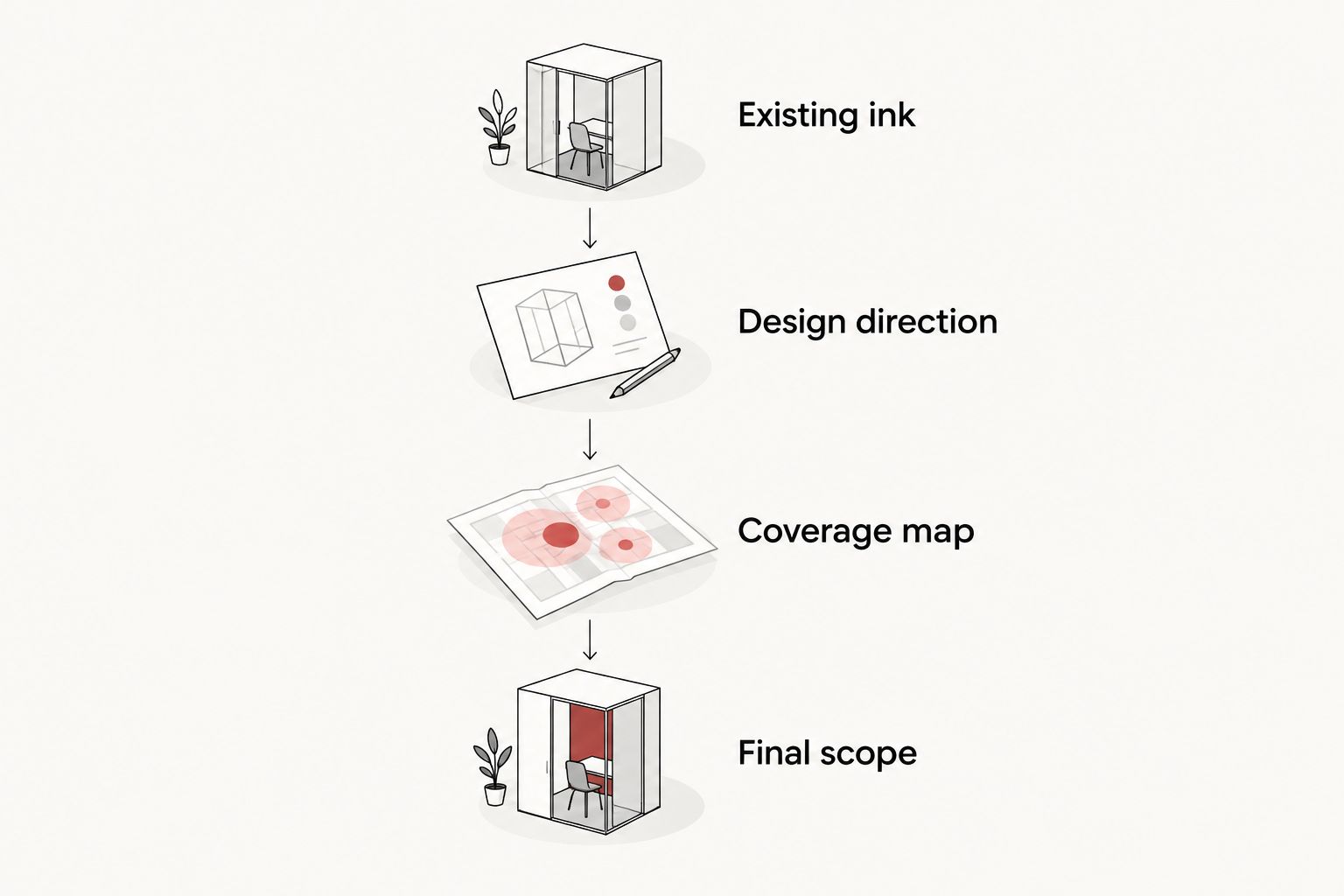
Use this consultation sequence for your 2026 appointment planning:
- Existing ink: Show the complete tattoo, including surrounding skin.
- Design direction: Explain the subjects you want and those you do not.
- Coverage map: Ask where the darker sections would sit.
- Final scope: Discuss size, placement, skin condition, and aftercare before committing.
The studio offers custom design rather than a reason to choose from this list unchanged. The practical limitation is that a ranked guide cannot establish your skin’s suitability or the final coverage result. Ask about hygiene procedures and follow the artist’s instructions; an attractive design is only part of the decision.
Discuss your custom cover-up
Explore a design direction around your existing tattoo at a Las Vegas studio.
FAQ
What's the easiest tattoo cover-up idea?
Blackwork offers broad flexibility for placing dark areas over existing ink. Whether it suits your tattoo depends on the original pigment, skin condition, and your willingness to wear a darker design.
Are floral tattoos better than geometric tattoos for cover-ups?
Layered florals offer more freedom to move shaded elements around irregular marks than precise geometric outlines. Geometric designs remain an option when a small, faded tattoo fits their planned dark sections.
Can a fine-line tattoo cover an old dark tattoo?
A sparse fine-line design does not provide broad coverage over dense existing ink. Ask the artist whether additional shading or a different composition is necessary before choosing the reference.
Does a cover-up tattoo have to be bigger?
A cover-up often needs surrounding space to create a new silhouette and place coverage effectively. The required footprint depends on the existing tattoo and proposed design, not a universal size multiplier.
Can white ink erase a black tattoo?
White tattoo ink is not an eraser or an opaque replacement for existing black pigment. Do not choose a cover-up on the assumption that pale highlights will remove the old lines.
Should I consider laser treatment before a cover-up?
Discuss lightening with a qualified laser provider and your tattoo artist when existing pigment restricts the design you want. Assessment and treatment planning are separate from choosing a tattoo subject.
Where can I discuss a custom tattoo cover-up in Las Vegas?
Illuminati Tattoo Co. offers custom tattoo design and tattoo cover-up services in Las Vegas. Review the studio information and discuss your existing tattoo before committing to a design.
How should I choose a cover-up idea in 2026?
Choose a subject you want to wear, then check whether its dark areas can accommodate your existing ink. Use the ranking to organize your consultation, not to replace an assessment of the actual tattoo.
One last thing
For your 2026 cover-up, ask to see the proposed design with the original tattoo’s outline marked underneath. A separate reference image shows what you like; an overlay shows whether the dark sections meet the problem. Choose the coverage map, not just the attractive reference.