Getting a new tattoo while pregnant is not recommended; postponing it is the safer choice. Tattooing introduces infection and allergic-reaction risks, and limited pregnancy-specific research means a clean studio cannot establish that tattoo ink or the procedure is safe for your developing baby.
- Is it safe to get a tattoo while pregnant? Waiting is the safer choice; pregnancy-specific safety evidence is limited.
- Sterile equipment reduces infection risk but does not establish tattoo ink safety during pregnancy.
- Already tattooed while pregnant? Tell your prenatal clinician and seek prompt care for infection symptoms.
- Illuminati Tattoo Co. offers custom tattoo design in Las Vegas; plan the artwork now and discuss procedure timing with your clinician.
Is it safe to get a tattoo while pregnant?
Do not treat any trimester as a proven safe window for a new tattoo. The central issue in 2026 is not whether an artist can create the design carefully. It is whether an elective procedure with infection risks and incomplete pregnancy safety data needs to happen now.
You can separate the creative decision from the procedure. Start by understanding what a custom tattoo consultation involves, then leave the tattoo appointment until you have discussed your circumstances with your prenatal clinician.
| Choice | Best for | Benefit | Limitation | Recommendation |
|---|---|---|---|---|
| Get tattooed during pregnancy | No pregnancy safety advantage is established | Completes the artwork sooner | Adds an avoidable skin wound; pregnancy-specific safety remains uncertain | Wait |
| Postpone the tattoo | Pregnant clients considering new body art | Avoids tattoo-related exposure during pregnancy | Delays the finished piece | Recommended |
| Plan the design without tattooing | Clients who want to develop an idea now | Lets you consider meaning, placement, and style without breaking the skin | Does not determine when tattooing becomes appropriate | Recommended for planning |
This guidance is educational, not personal medical clearance. Your obstetric clinician or midwife should address pregnancy-specific questions, symptoms, and any exposure that has already occurred.
Why this matters
A tattoo is elective, but the skin injury it creates is real. Even a small design requires needles to enter the skin and leaves an area that needs healing and aftercare.
For a pregnancy decision in 2026, the useful distinction is risk reduction versus proof of safety. Good hygiene matters, but it answers only part of the question. Clean equipment does not supply missing evidence about pigment exposure during pregnancy.
You do not have to abandon a meaningful design. Postponing gives you room to make the artistic decision without combining it with an avoidable medical uncertainty.
What are the main concerns with pregnancy and tattoos?
Infection from equipment, handling, or contaminated ink
Tattooing breaks the skin, creating an opportunity for infection. The FDA identifies contaminated tattoo inks and unhygienic practices as tattoo-related infection concerns; contamination is not limited to visibly dirty equipment.
Blood-contaminated needles or equipment can also transmit bloodborne infections. CDC guidance identifies hepatitis B and hepatitis C as infections associated with exposure to infected blood, including unsafe injection or tattooing practices.
These are reasons to take studio hygiene seriously whenever you get tattooed. They are not evidence that a particular client has been infected, and a recent tattoo alone does not establish a diagnosis.
Allergic and inflammatory reactions
Tattoo pigments can cause allergic or inflammatory skin reactions. A reaction can develop after the procedure rather than while you are sitting in the chair, so feeling well immediately afterward does not settle the question.
A previous tattoo without complications does not guarantee that another pigment or session will cause no reaction. During pregnancy, a new rash or swollen tattoo needs clinical assessment rather than assumptions about ordinary healing.
Limited evidence about pregnancy-specific ink safety
Limited evidence is not proof that tattoo ink harms a fetus, but it is not proof of safety either. Research does not establish a pregnancy-safe ink, tattoo size, or trimester for elective tattooing.
Avoid claims that a particular color, an ink ingredient list, or a natural-sounding label resolves that uncertainty. Product descriptions do not replace pregnancy-specific safety evidence.
Treatment decisions if something goes wrong
An infected or inflamed tattoo can require medical evaluation and treatment. Pregnancy affects which medicines and treatments your clinician recommends, making self-treatment a poor substitute for assessment.
Do not assume that an antibiotic, numbing product, or ointment is appropriate because it is sold without a prescription. Ask your prenatal clinician or pharmacist about the exact product and ingredients before using it.
Why tattoo risk varies—and why that does not establish safety
Tattoo experiences differ, but those differences do not identify a safe pregnancy option. These factors explain what deserves attention:
- Equipment and handling: Sterile, single-use needles and practices that prevent cross-contamination address infection exposure. They do not answer questions about pregnancy and pigments.
- Ink contamination: Ink itself can be a source of infection. An unopened container is not a reason to dismiss symptoms after tattooing.
- Individual skin reactions: Previous allergies, skin conditions, and reactions deserve discussion. Having tolerated an earlier tattoo does not guarantee the same response again.
- Products used during the appointment: Numbing creams, cleansers, dressings, and aftercare products have their own ingredients. Pregnancy suitability requires product-specific advice.
- Placement and skin changes: Pregnancy can change the skin and the shape of the area you want tattooed. Placement affects design planning, but choosing another location does not establish medical safety.
For your 2026 decision, use these factors to understand the limits of reassurance—not to build a checklist that turns tattooing during pregnancy into a safe procedure.
Does a small or fine line tattoo change the recommendation?
A small or fine line tattoo is still a procedure that breaks the skin. Less artwork does not establish that the ink or procedure is safe during pregnancy, and there is no evidence-based size threshold that makes the decision straightforward.
The same reasoning applies to a touch-up, a name tattoo, or a small addition to an existing piece. Calling an appointment minor does not remove its infection or reaction risks.
Fine line work can remain part of your design plan. Decide what you want the finished tattoo to communicate, collect references, and discuss timing separately from style.
What should you do if you already got a tattoo while pregnant?
Do not assume that harm occurred. A tattoo during pregnancy does not, by itself, mean you or your baby has an infection or another complication. Your next step is to give your prenatal clinician accurate information and follow their advice.
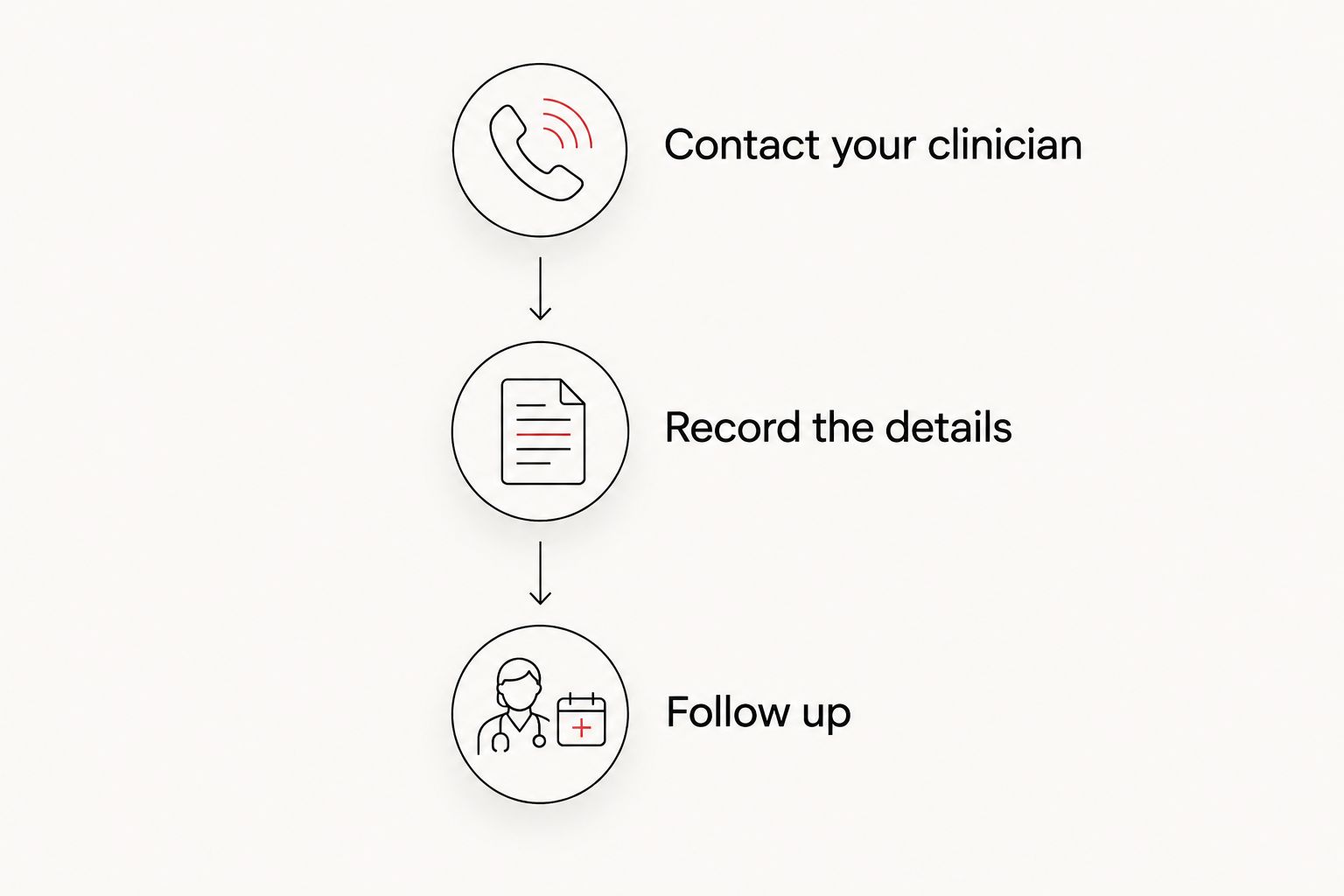
- Contact your clinician. Explain when the tattoo was done, whether you knew you were pregnant, and whether you have symptoms. Mention any concern about reused needles, uncertain hygiene, or an ink recall.
- Record the details. Keep the studio information, aftercare instructions, and any available ink or product details. Clear photographs can help you explain changes, but they do not replace an examination.
- Follow up. Your clinician can determine whether an examination, testing, or treatment is appropriate. Do not order tests or start leftover medication on your own.
If you discovered the pregnancy after the appointment, explain that too. You do not need to defend the decision; your clinician needs the exposure history to advise you appropriately.
Which symptoms need medical attention?
Seek prompt medical advice for spreading redness, increasing warmth, worsening pain, pus, fever, chills, or feeling generally unwell. Do not dismiss worsening symptoms as normal tattoo healing, especially during pregnancy.
Trouble breathing, swelling of the lips or tongue, fainting, or rapidly worsening illness requires emergency care. Do not wait for a studio reply before seeking urgent help.
A tattoo artist can explain the aftercare instructions provided at the appointment. Diagnosing an infection, assessing a pregnancy, and choosing medication belong with a qualified healthcare professional.
Is it safer to wait until the second or third trimester?
No trimester is established as a safe window for elective tattooing. Passing an early pregnancy milestone does not establish that pigments or the tattoo procedure are safe later in pregnancy.
For 2026 planning, postpone the procedure rather than treating a trimester change as clearance. If someone offers a specific safe week, ask what medical evidence supports that claim and discuss it with your prenatal clinician.
Can you get a tattoo while breastfeeding?
Breastfeeding does not create a universal, evidence-based tattoo clearance date. Pregnancy and breastfeeding are different circumstances, but infection prevention and limited safety information still deserve consideration.
Discuss postpartum recovery, breastfeeding, medications, and any ongoing health issues with your clinician before scheduling. A studio's willingness to book an appointment is a business decision, not medical clearance.
You also need time and practical support for wound care. Plan around your ability to keep the area clean, follow dressing instructions, and obtain care if healing does not progress normally.
How should you plan a tattoo after pregnancy?
Start with your recovery and your clinician's advice, not a calendar promise. There is no single waiting interval that fits every delivery, recovery, medical history, or breastfeeding situation.
Once the timing is appropriate, return to the craft decisions: the design's meaning, its relationship to your anatomy, the amount of detail, and how the placement works with your daily routine. Skin that is changing deserves another look before the final stencil is approved.
Illuminati Tattoo Co. is best for Las Vegas clients seeking custom tattoo design, fine line work, or cover-ups. The studio's service fit is an artistic consideration; it does not replace medical advice about pregnancy or postpartum recovery.
When you are ready to plan a future visit, Illuminati Tattoo Co. offers custom tattoos and body piercing services in Las Vegas. Discuss the artwork without treating that conversation as a commitment to immediate tattooing.
Questions to ask before a future appointment
A careful consultation should leave you informed, not pressured. Bring these questions when medical timing is no longer the unresolved issue:
- How are sterile needles and single-use supplies handled?
- What practices prevent cross-contamination during the appointment?
- Which inks, dressings, and aftercare products will be used?
- How should you respond if the tattoo becomes increasingly painful, red, or swollen?
- Does the proposed placement need reconsideration after pregnancy-related skin changes?
These questions remain useful beyond pregnancy. They help you understand the procedure and its aftercare without relying on broad claims that a tattoo is risk-free.
Plan your future studio visit
Discuss custom design ideas and get directions to the Las Vegas studio when the timing is appropriate.
FAQ
Is it safe to get a tattoo while pregnant in 2026?
Getting a new tattoo while pregnant is not recommended; postponing is the safer choice. Tattooing carries infection and reaction risks, and pregnancy-specific safety evidence remains limited.
Can I get a tattoo before I know I'm pregnant?
If you got a tattoo before learning you were pregnant, tell your prenatal clinician rather than assuming harm occurred. Share the appointment details and report any symptoms or concerns about equipment hygiene.
Does a clean tattoo studio make tattooing safe during pregnancy?
A clean studio reduces some infection risks but does not establish pregnancy safety. Hygiene does not resolve uncertainty about tattoo pigments or prevent every possible reaction.
Can I get a tattoo touch-up while pregnant?
Postpone a tattoo touch-up during pregnancy because it still involves needles entering the skin. A short appointment does not establish that the procedure or ink is safe.
Can I use numbing cream for a tattoo while pregnant?
Ask your prenatal clinician or pharmacist about the exact numbing product before using it. Numbing cream does not remove tattoo-related infection risks or make elective tattooing safe during pregnancy.
Do I need to remove an existing tattoo when I become pregnant?
Pregnancy alone is not a reason to remove a healed tattoo. If an existing tattoo develops a new rash, swelling, or other changes, ask your clinician to assess it rather than starting removal treatment.
Can Illuminati Tattoo Co. tell me when it is medically safe to get tattooed?
Illuminati Tattoo Co. can discuss custom tattoo design, but pregnancy and postpartum medical advice belongs with your clinician. Use the design consultation for artwork decisions, not medical clearance.
One last thing
A meaningful tattoo does not need an immediate appointment to remain meaningful. Keep the reference images, write down the story behind the design, and revisit placement after pregnancy rather than rushing to secure a particular date.
The most useful distinction is simple: planning artwork does not break the skin; getting tattooed does. You can move the creative process forward while leaving the elective procedure for a more appropriate time.