Instead of repeatedly sending reference photos and explaining what you want, prepare a short design brief, placement photos, and focused questions so your tattoo consultation produces a clear direction. Here’s how to prepare for a tattoo consultation in 2026 without needing to draw the finished design yourself.
- How to prepare for a tattoo consultation: organize references, identify placement, and explain your priorities before discussing custom tattoo design.
- Illuminati Tattoo Co. suits Las Vegas clients seeking custom tattoo design, fine line work, or tattoo cover-ups.
- Explain what you like in each reference; another person’s tattoo should inspire an original design, not a copy.
- Confirm the design process and next steps before assuming your consultation includes a tattoo appointment.
Why this matters
A reference photo shows an image, not every decision behind it. Your artist still needs to understand the subject, placement, scale, and details you want to preserve or change.
Illuminati Tattoo Co. is best for Las Vegas clients seeking custom tattoo design shaped around their individual ideas. The owner-operated studio emphasizes personal service and a clean, hygienic setting; your consultation is the place to discuss both the artwork and your questions about the process.
Start with Illuminati Tattoo Co. to plan your studio visit. Bring a useful starting point rather than a finished solution: your artist needs room to translate the idea into a tattoo.
Before you start
- Gather your materials: Save 3 reference images as a starting limit, take clear placement photos, and bring a written description of your idea. Add more references only when they explain something different.
- Confirm the visit requirements: Ask how to arrange the consultation, what identification to bring, and whether the artist needs your references beforehand. Confirm directions before traveling to the Las Vegas studio.
- Separate inspiration from permission to copy: A photograph of someone else’s tattoo does not establish permission to reproduce the artwork. Identify the qualities you like instead of requesting an exact duplicate.
For a 2026 consultation, keep everything in an easily accessible folder on your phone. Download the images rather than relying on social media posts loading during the conversation.
Reference brief
Turn saved pictures into design instructions
- Write the core idea. Describe the subject and its meaning in 1 sentence. For example: a botanical tattoo that represents a family connection, with an open composition rather than a dense arrangement.
- Label each reference. Under each image, explain the specific feature you like: the outline, the spacing, the subject, or the direction of movement. Also identify anything you do not want.
- Name your priorities. Separate essential elements from flexible details. A meaningful flower might be essential; its exact angle might be open to the artist’s judgment.
- Remove conflicting references. If the pictures suggest different results, explain which feature takes priority. Do not leave the artist to guess whether you prefer delicate detail or a stronger outline.
Expected result: You can explain the tattoo without handing over your phone and saying you want everything in the folder.
Use simple labels in your own notes: Core idea, Keep, Avoid, and Flexible. These are headings for your preparation document, not required studio forms.
A personal drawing is useful even if it is rough. Treat it as a map of your idea, not a technical plan the artist must follow. You bring the meaning; the artist contributes composition and tattoo-specific judgment.
Placement plan
Give the design a real location
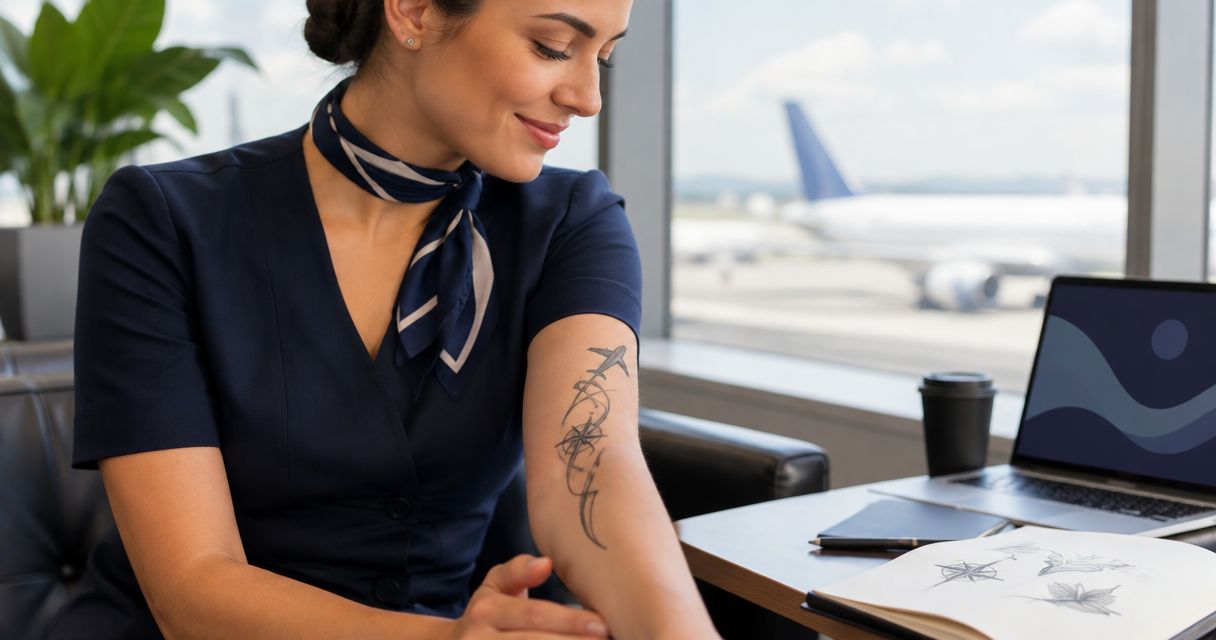
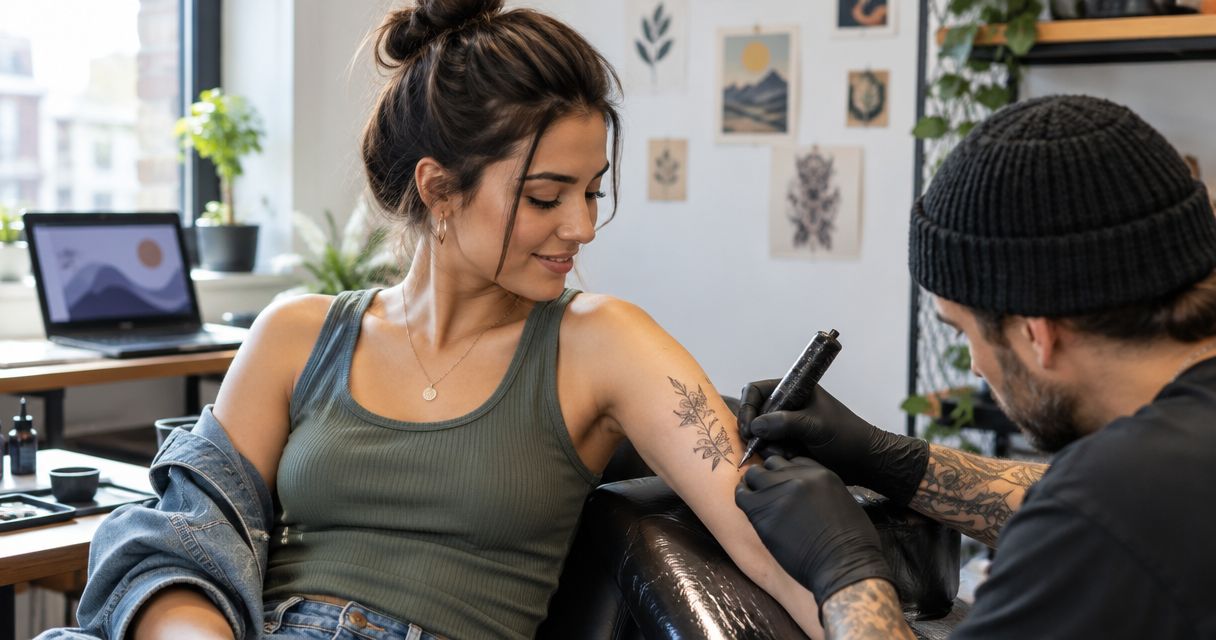
- Choose the body area. Name the exact location rather than saying only arm or leg. Describe whether you imagine the design facing inward, outward, or following the limb.
- Record your preferred size. Measure the space with a ruler and write down your measurement with its units. Avoid describing scale only as small or medium, because those words leave room for misunderstanding.
- Take clear photos. Photograph the area in even light, without filters, and include enough surrounding anatomy to show where the tattoo would sit. Avoid twisting your body to make the location visible.
- List everyday constraints. Explain clothing coverage, work requirements, equipment contact, and any planned activities that affect your scheduling questions. Describe your actual circumstances rather than asking the artist to guess.
Expected result: Your artist can discuss the design in relation to your body, not just as a flat image.
Bring 2 placement options if you genuinely remain undecided. Your preferred location comes first; the alternative helps you evaluate the idea without forcing a design into unsuitable space.
For fine line work, ask how the requested detail and spacing relate to the proposed size. Do not make smaller the only goal. A design that reads clearly matters more than matching the dimensions of a social media photograph.
If you are planning additional tattoos during or after 2026, mention that now. Ask whether the composition should leave room for later additions rather than treating every new piece as an isolated image.
Consultation discussion
Turn the brief into a shared direction
- Explain the idea before showing every image. Start with your core sentence, then describe why the tattoo matters. This gives the references a purpose.
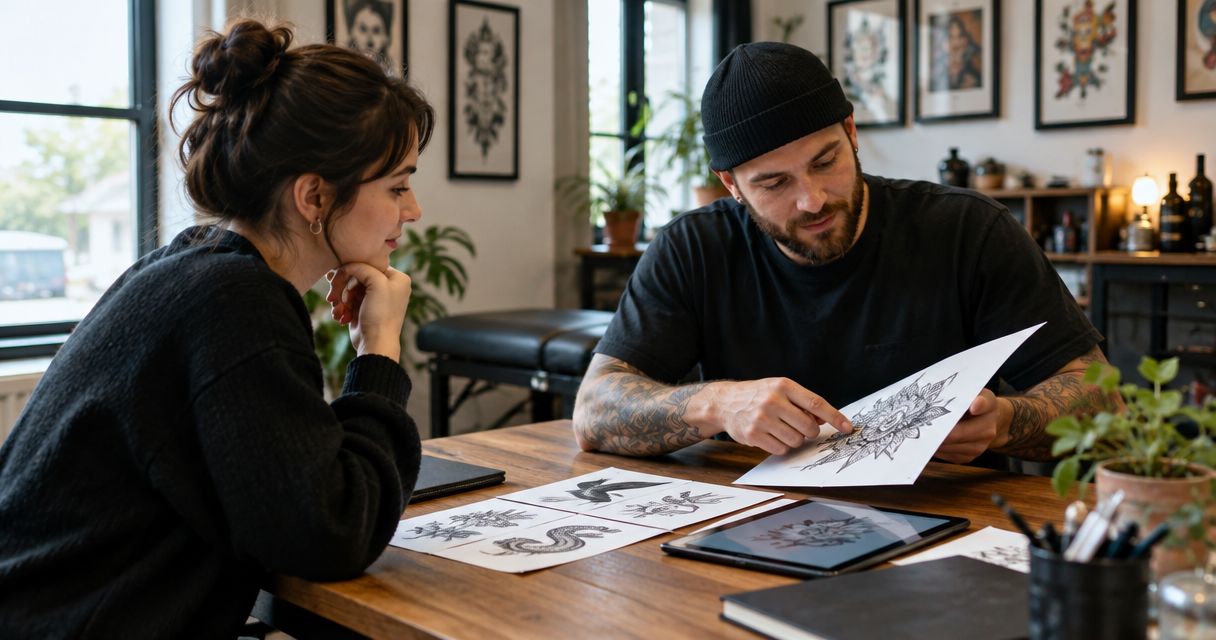
- Review the references selectively. Point to the feature you mean. Ask the artist to explain any recommended change to detail, spacing, orientation, or size.
- Discuss the studio process. Ask how custom design development works, when you will review the artwork, and how to request changes. Do not assume every studio follows the same sequence.
- Ask about hygiene and preparation. Ask how equipment is prepared, how the work area is cleaned, and what you need to do before your tattoo appointment. Request instructions specific to your planned work.
- Raise health questions early. Tell the artist about relevant skin concerns, allergies, or medications. Ask a qualified healthcare professional about medical suitability or medication changes; do not stop prescribed medication on your own.
Expected result: You understand the artist’s recommendation and can explain the agreed direction in your own words.
Use this sequence for your 2026 visit: Reference brief, Placement plan, Consultation discussion, and Next steps. It keeps the conversation focused without turning it into a rigid script.
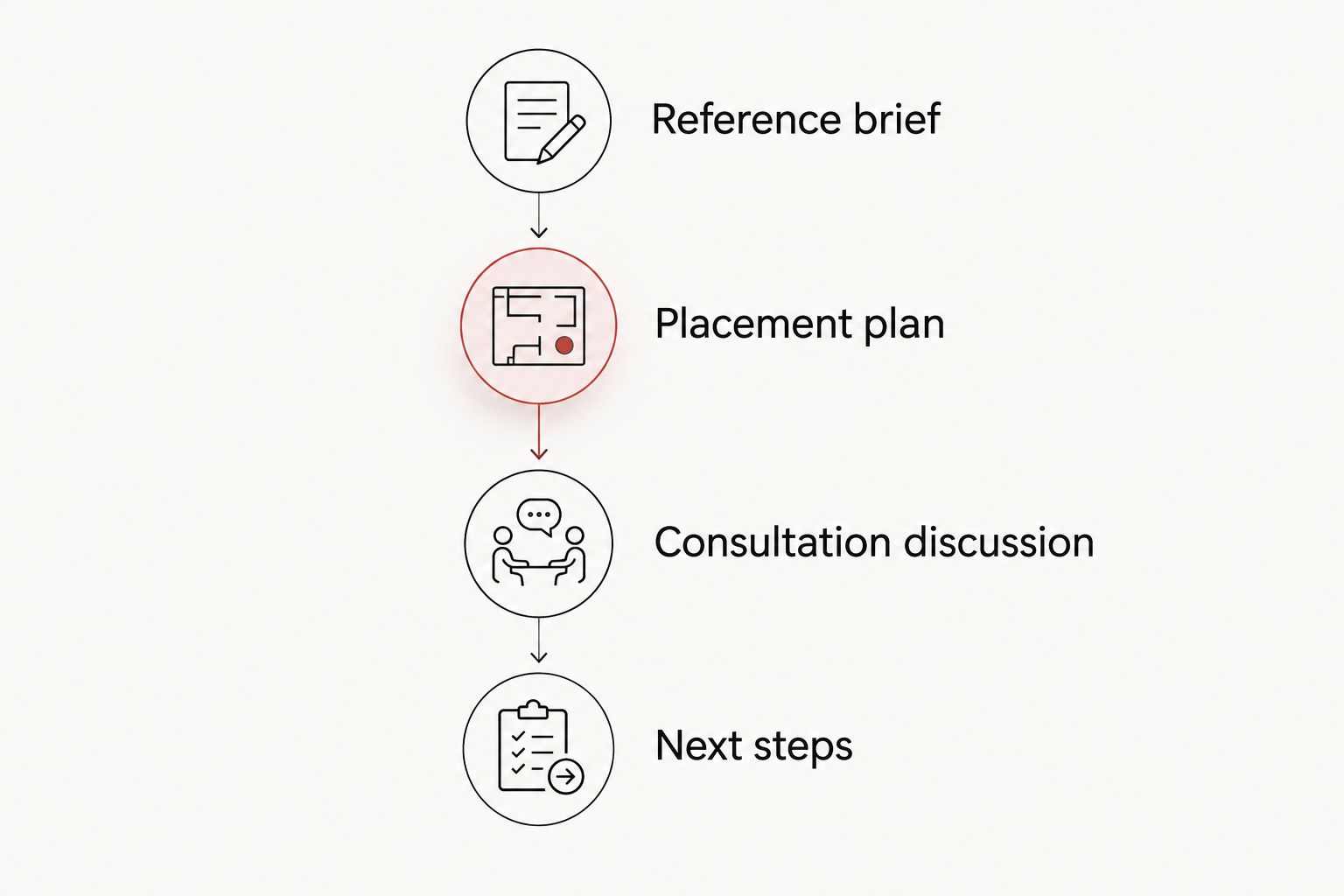
Leave room for questions that arise during the discussion. A consultation should clarify the design, not pressure you into approving a direction you do not understand.
Next steps
Confirm what happens after the conversation
- Summarize the direction. Repeat the subject, placement, preferred scale, essential details, and agreed changes. Correct any misunderstanding before ending the discussion.
- Confirm the design review. Ask when and how you will see the artwork, what feedback the artist needs, and how changes are handled. Record the actual instructions rather than relying on assumptions.
- Clarify the appointment status. Ask whether a tattoo appointment has been arranged or whether another action is required. A consultation does not automatically mean tattooing happens during the same visit.
- Request preparation and aftercare guidance. Ask what to bring, what to wear, and how the planned placement affects clothing or activities. Follow the studio’s specific instructions and raise anything you cannot accommodate.
Expected result: You leave with a defined next action, not merely a collection of ideas.
With Illuminati Tattoo Co., keep the conversation centered on the custom design you want and the practical questions that affect your visit. The benefit is an individual design discussion; the trade-off is that references alone cannot settle every artistic or scheduling decision.
Prepare for your studio visit
Visit the studio website, confirm directions, and ask how to arrange your custom tattoo consultation.
When the reference is an existing tattoo
A cover-up consultation starts with the tattoo already on your skin. Bring your inspiration, but make the existing work the first subject of the conversation.
Photograph the tattoo straight on in clear light, include its edges, and avoid filters. Explain whether your priority is concealing the old design, incorporating part of it, or understanding what changes are realistic.
| Consultation route | Best for | Advantage | Limitation |
|---|---|---|---|
| New custom tattoo | Clients developing artwork for an untattooed area | The discussion can begin with the intended subject and placement | Size and anatomy still shape the design |
| Tattoo cover-up | Clients changing an existing tattoo | Existing shapes can help guide a new composition | Existing pigment and placement constrain the result |
Ask the artist to assess the existing work before becoming attached to a replacement image. A pale, delicate reference does not establish that the same approach can conceal the tattoo underneath it.
For workplace visibility concerns, review tattoo cover-ups for corporate professionals and bring your actual clothing requirements to the consultation. Choose the cover-up direction after assessment, not before it.
Troubleshooting your consultation preparation
Your references point in different directions
Fix: Identify the common feature and discard images that add confusion. If you like one image’s subject and another image’s spacing, say exactly that rather than asking the artist to combine both whole designs.
Your idea contains too many essential details
Fix: Rank the elements by importance. Ask which details support the central subject and which compete with it; be ready to simplify or reconsider the available space.
You cannot describe the size
Fix: Bring a measured placement photo and show the approximate boundaries on your body during the visit. Ask the artist to explain the relationship between the requested detail and the proposed scale.
You dislike the proposed direction
Fix: Name the mismatch specifically: subject, line treatment, placement, or overall composition. If the direction still feels wrong after clarification, pause rather than approving a permanent decision under pressure.
You expected a finished drawing at the consultation
Fix: Ask about the design process before your visit. If the expectation was never discussed, clarify the next review point instead of assuming the artist has missed an agreed step.
Customize your workflow
Keep your consultation notes in a single document and update them after the discussion. Mark what is agreed, what remains open, and what you need to send or confirm.
For a first tattoo, prioritize understanding the process and asking questions over collecting more inspiration. For an addition to existing work, bring photos of the surrounding tattoos so the artist can discuss the relationship between them.
For your 2026 planning calendar, note travel, work, exercise, and other commitments before choosing appointment dates. Ask how those commitments fit the artist’s preparation and aftercare instructions; do not build your schedule around an assumed recovery deadline.
FAQ
What should I bring to a tattoo consultation?
Bring reference images, a short description of your idea, placement photos, and your questions. Confirm identification requirements and any studio-specific preparation before visiting.
Do I need to draw my tattoo before the consultation?
No, you do not need to produce a finished drawing before a custom tattoo consultation. A rough sketch can communicate your idea, while the artist develops the tattoo design through the studio’s process.
Can I bring a photo of someone else’s tattoo?
Yes, bring it as a reference for specific features rather than as an instruction to copy. Explain which parts you like and ask how those qualities can inform an original design.
How many reference photos should I bring?
Start with 3 carefully chosen reference photos as an organizational guideline. Add another only when it explains a feature the existing images do not show.
Will I get tattooed during the consultation?
Do not assume the consultation includes tattooing. Ask the studio to confirm the purpose of the visit and whether a separate tattoo appointment is needed.
How do I prepare for a tattoo cover-up consultation?
Bring clear, unfiltered photos of the existing tattoo and explain what you want changed. The artist needs to assess the existing pigment, shape, and placement before recommending a replacement design.
Is Illuminati Tattoo Co. suitable for a custom tattoo consultation?
Illuminati Tattoo Co. serves Las Vegas clients seeking custom tattoo design, fine line work, and tattoo cover-ups. Contact the studio to discuss your idea and confirm how to arrange a consultation.
One last thing
Bring an example of what you do not want. A clear explanation of an unwanted feature can prevent more confusion than another saved image of something you like.
Your strongest preparation is not a perfect mood board. It is knowing what matters to you, explaining it clearly, and leaving room for the artist’s judgment.