Instead of guessing what your tattoo needs each day, use this tattoo healing timeline by week to match cleaning, protection, and activity to your skin’s recovery. This 2026 guide takes you from the first dressing to healed skin, with clear checkpoints for routine care and symptoms that need medical attention.
- Use this tattoo healing timeline by week as a guide, not a deadline; skin recovery varies.
- Illuminati Tattoo Co. suits Las Vegas clients seeking custom tattoo design and practical aftercare guidance.
- Tattoo aftercare means gentle washing, appropriate moisturizing, and protection from friction, soaking, and sunlight.
- Spreading redness, worsening pain, pus, or fever need medical attention—not a change of moisturizer.
Why this matters
A tattoo is a healing skin wound before it is finished body art. The surface often heals over roughly 2–4 weeks, while deeper recovery continues for months. Looking settled and being fully healed are not the same thing.
Illuminati Tattoo Co. is best for Las Vegas clients seeking custom tattoo design built around the individual. Start with your artist’s written instructions, and use this timeline to understand the stages—not to override your dressing directions. You can visit Illuminati Tattoo Co. to plan a studio visit and discuss placement, design, and aftercare before your appointment.
For your 2026 tattoo plans, make room for recovery as well as the session. A swimming trip, tight work uniform, or equipment strap against fresh ink creates an aftercare problem that is easier to prevent beforehand.
Before you start
- Get written instructions. Confirm which dressing your artist applied, when to remove it, and how to contact the studio about routine healing questions. Ask about medical conditions or medications that affect healing before getting tattooed; do not stop prescribed medication yourself.
- Prepare simple supplies. Have gentle fragrance-free cleanser, clean hands, a clean drying method, the moisturizer your artist recommends, and loose clothing that avoids rubbing the area. More products do not mean better healing.
- Know the dressing exception. Adhesive film and a conventional absorbent dressing have different removal instructions. Do not copy someone else’s wear time, seal a leaking film yourself, or rewrap the tattoo with household plastic unless your artist specifically instructs you to do so.
Before leaving the studio in 2026, save those instructions somewhere you can find them without searching social media. The dressing on your skin—not a generic online schedule—determines your first cleaning step.
Your weekly healing checkpoints
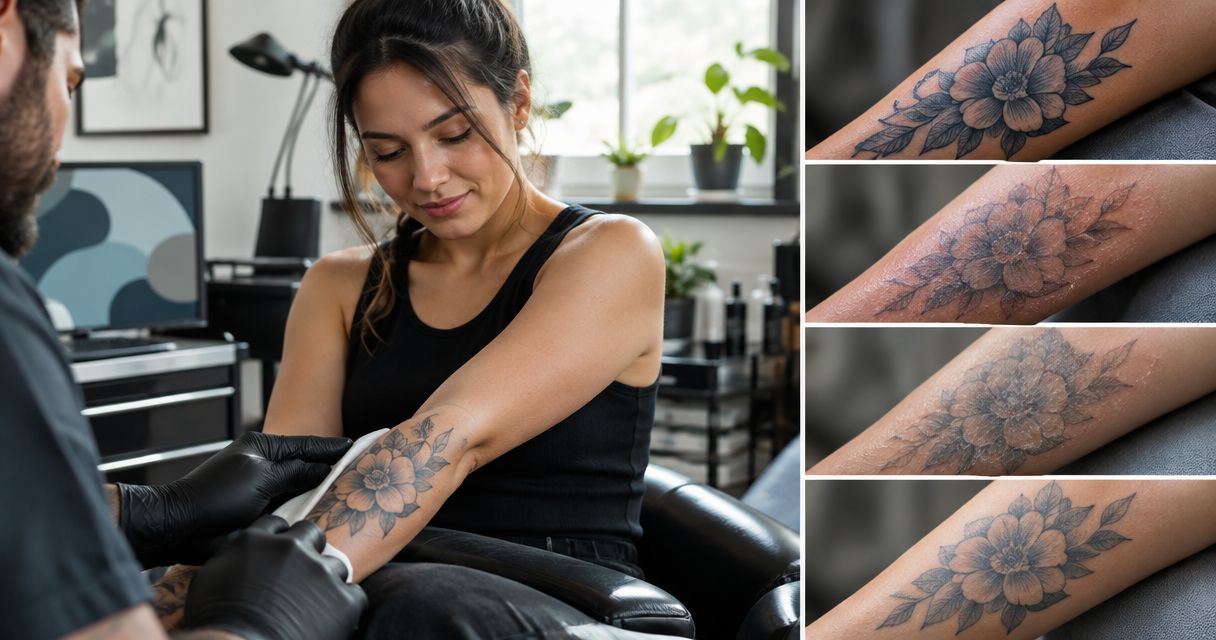
These stages describe common patterns, not deadlines. Tattoo size, placement, skin response, and the amount of work affect recovery. Improvement matters more than reaching a particular day.
| Stage | Common appearance or sensation | Best for | Limit or warning |
|---|---|---|---|
| Days 1–3 | Tenderness, localized redness, swelling, and some fluid leakage | Following the dressing plan and keeping handling minimal | Increasing pain or spreading redness needs assessment |
| Week 1 | Dryness, itching, and the start of flaking or light scabbing | Gentle cleaning and protection from rubbing | Picking can damage healing skin |
| Week 2 | Continued peeling; a dull or cloudy-looking surface | Leaving flakes alone and using light moisture as directed | A peeling surface is not ready for swimming |
| Weeks 3–4 and beyond | Surface settling, with less flaking and sensitivity | Checking skin condition before resuming restricted activities | Deeper healing continues after the surface looks normal |
Use the table to choose your next action, not to diagnose an infection. Worsening symptoms belong with a healthcare professional even when the calendar says they fall within an early healing stage.
Session day and the first wash
The first care unit is straightforward: protect the fresh tattoo, follow the dressing instructions, and avoid unnecessary handling. A little fluid mixed with ink can appear early; appearance alone does not establish whether everything is normal.
- Confirm the dressing plan. Before leaving, repeat back when and how to remove the covering. Ask what to do if it leaks, loosens, or causes a rash.
- Wash your hands before touching the area. Prepare your supplies first so you do not handle drawers, phones, and the tattoo in the same sequence.
- Remove the dressing as instructed. Follow your artist’s directions and, for adhesive film, the manufacturer’s removal instructions. Do not pull a stuck covering abruptly from healing skin.
- Clean gently once removal is due. Use lukewarm running water, gentle cleanser, and clean fingertips. Avoid scrubbing tools, exfoliants, and direct high-pressure spray.
- Dry without rubbing. Use the clean drying method your artist recommends, then apply only the advised aftercare product in a thin layer when directed.
Expected result: the tattoo is gently cleaned and protected without scrubbing, heavy product buildup, or repeated touching. Some early tenderness remains; the aim is careful wound care, not an immediately normal-looking surface.
Keep bedding and clothing clean. Keep pets away from the healing area, and do not let other people touch it to inspect the artwork.
Week 1: cleaning and protection
During the first week, tenderness should generally move toward improvement rather than intensify. Dryness and itching often become more noticeable as the surface begins to recover.
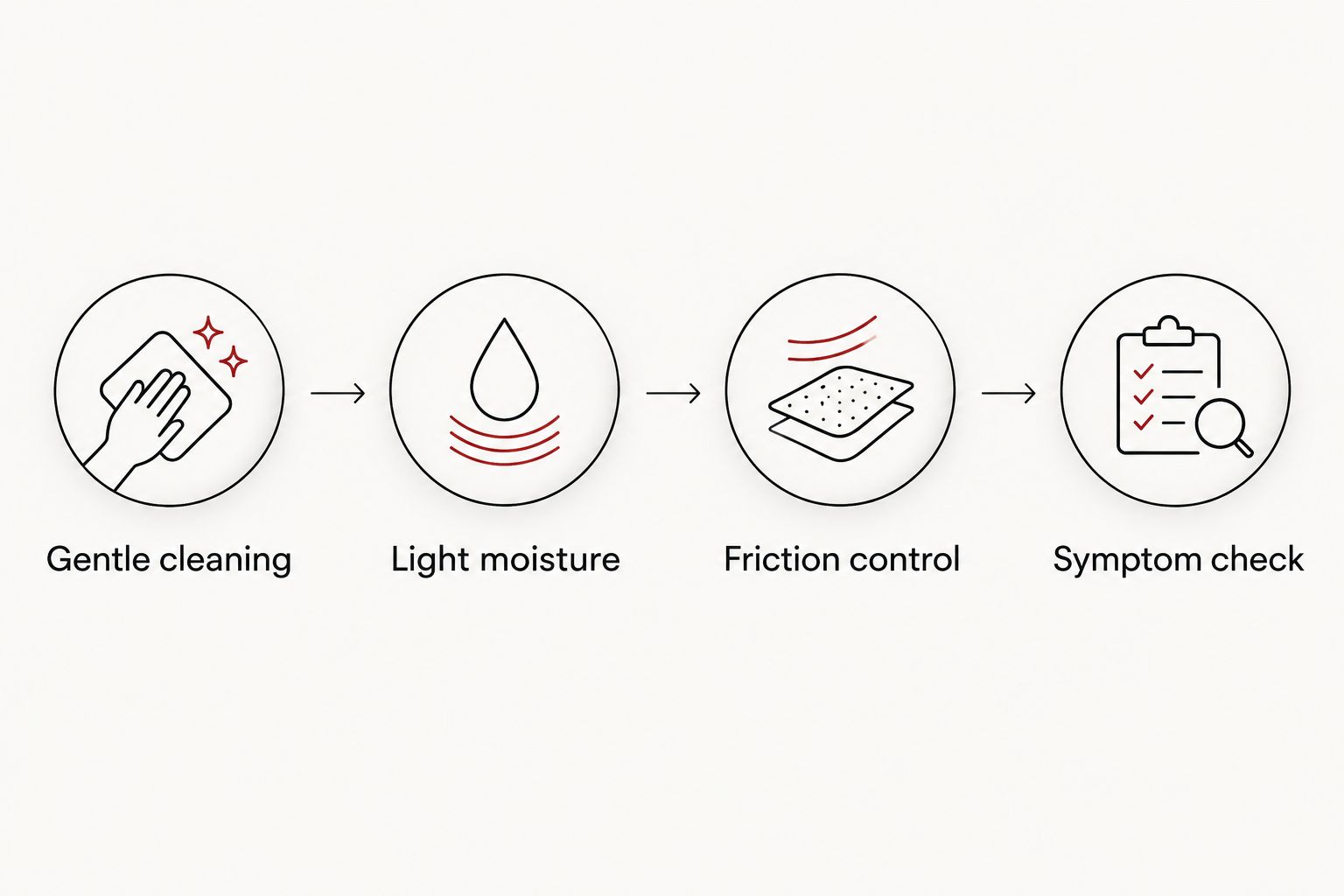
- Gentle cleaning: follow your artist’s washing schedule and clean the area after contamination. Wash with your fingertips rather than a washcloth, brush, or sponge.
- Light moisture: apply the recommended fragrance-free product sparingly. Do not leave a thick, sticky coating or keep adding moisturizer whenever the surface looks different.
- Friction control: choose clean, loose clothing and adjust anything that presses or rubs against the tattoo. Watch waistbands, watch straps, bra straps, and protective equipment.
- Symptom check: notice whether redness, swelling, and pain are settling. A brief photograph in consistent lighting can help you explain a change to your artist or clinician.
Expected result: your routine stays gentle, the area avoids unnecessary rubbing, and early discomfort trends downward. Dryness is a reason to follow the moisture plan—not to soak the skin or scratch it.
Short showers are different from soaking. Keep the healing tattoo out of baths, pools, hot tubs, and natural bodies of water until the skin has healed; a dressing does not make swimming safe.
Week 2: peeling and surface recovery
During the second week, flakes can carry pigment and make you worry that the design is disappearing. Peeling can be part of normal healing, but pulling flakes off creates avoidable injury.
- Let flakes release naturally. Do not peel, scratch, shave, or exfoliate the tattoo. Leave attached skin alone even when it catches your attention.
- Keep moisture light. Continue the artist-approved routine without trying to eliminate every dry patch immediately. More frequent application is not automatically better care.
- Protect the surface. Avoid abrasive sleeves, rough towels, and activities that repeatedly stretch or rub irritated skin.
- Separate appearance from symptoms. A dull-looking tattoo without worsening symptoms is different from a tattoo becoming hotter, more painful, or increasingly red.
Expected result: loose skin sheds without being picked, and irritation continues to settle. Do not judge the final color or line quality while the surface is peeling or cloudy.
If a flake falls away during gentle washing, leave the area alone. If you accidentally pull one off and the skin bleeds, stop handling it, clean gently, and ask your artist for appropriate care instructions; seek medical advice for concerning symptoms.
Weeks 3–4 and beyond: surface closure and long-term care
By weeks 3–4, many tattoos have substantially settled at the surface. That range is not permission to resume every activity: ongoing scabs, cracks, drainage, or tenderness mean the skin still needs protection.
- Check skin condition first. Look for an intact surface without open areas, active peeling, or drainage. Do not use the date alone to decide that healing is complete.
- Return gradually to friction-heavy activities. Stop or modify an activity that makes the area sting, pull, or become irritated.
- Add sunscreen after healing. Until then, protect the area with shade and suitable clothing. Once healed, use broad-spectrum, water-resistant sunscreen with SPF 30 or higher, following its label.
- Arrange an artwork check when appropriate. Ask the artist when to assess settled linework and pigment. Do not arrange corrective tattooing over skin that is still healing.
Expected result: your care shifts from protecting a healing wound to maintaining comfortable, intact skin. Deeper recovery still takes time, even when the tattoo looks ready to show.
For Illuminati Tattoo Co. clients, the useful follow-up question is specific: describe what changed, where it changed, and whether symptoms are improving. A calendar date alone tells the artist much less.
A second workflow: aftercare around work and exercise
If your 2026 schedule includes workouts or physical work, build aftercare around exposure rather than assuming every activity has the same effect. Stretching a fresh tattoo, rubbing it against equipment, and exposing it to dirty surfaces create different problems.
| Approach | Best for | Advantage | Trade-off |
|---|---|---|---|
| Modify the activity | Keeping movement without stressing the tattooed area | Reduces direct rubbing and stretching | Requires changing your usual routine |
| Pause the activity | Activities involving soaking, contact, or unavoidable abrasion | Avoids the exposure while skin heals | Interrupts training or recreation |
| Adjust clothing or equipment | Work that allows pressure points to move | Reduces repeated contact with the tattoo | Does not solve contamination or heavy friction |
Use this sequence whenever your activity changes:
- Identify what touches, stretches, or wets the tattoo.
- Remove that exposure where possible rather than covering it and hoping.
- Keep shared equipment away from healing skin, and wash gently after sweating or contamination according to your care instructions.
- Reassess the skin before repeating the activity.
Expected result: the activity fits your recovery instead of forcing your tattoo to tolerate the usual routine. The tattoo aftercare guide for gym and fitness enthusiasts expands on planning around training.
Troubleshooting: what to change and when to get help
The dressing leaks or loses its seal
Do not patch a contaminated dressing and continue as though the barrier is intact. Follow the artist’s and manufacturer’s instructions for removal and subsequent cleaning; ask the studio if the next step is unclear.
The skin looks soggy or stays heavily coated
Stop adding product over the existing layer. Clean gently according to your instructions and use only the recommended thin application afterward. Persistent irritation needs assessment rather than another product layered on top.
Itching makes you want to scratch
Keep nails and abrasive fabric away from the tattoo. Continue gentle care and ask your artist about comfort measures; do not scratch through clothing or apply unapproved anti-itch products to healing skin.
A rash follows the adhesive outline
Contact your artist about removing or changing the dressing as instructed, and seek medical advice for a persistent or worsening rash. Adhesive irritation and infection need different responses; do not diagnose either from a photograph alone.
Redness, heat, or pain is getting worse
Seek prompt medical assessment for spreading redness, increasing warmth or swelling, worsening pain, pus, or fever. Red streaking or feeling seriously unwell also needs urgent attention. Trouble breathing or swelling of the face, lips, or tongue is an emergency—call 911.
Do not wait for an artist’s reply before seeking care for concerning symptoms. A studio can guide routine aftercare; a clinician evaluates infection and significant allergic reactions.
Customize your workflow before your next session
Make your next 2026 aftercare plan specific to placement. Tell the artist about sleeves, gloves, boots, protective gear, travel, and swimming plans before deciding where and when to get tattooed.
Illuminati Tattoo Co. offers owner-operated custom tattoo services in a clean, hygienic studio. Use the consultation to discuss a design built around you and the practical demands of caring for its placement. Professional studio hygiene and careful home aftercare serve different purposes; neither replaces the other.
Before visiting, check current directions and studio information. Bring reference images and questions, but leave room for the artist to explain design and placement choices without committing under pressure.
Plan your studio visit
Discuss custom design, placement, and the aftercare questions that affect your daily routine.
FAQ
What is the normal tattoo healing timeline by week?
The first days commonly involve tenderness and some fluid leakage, followed by dryness, itching, and peeling during the early weeks. Surface healing often takes roughly 2–4 weeks, while deeper recovery continues for months; use improving symptoms, not dates alone, as your checkpoint.
Is my tattoo fully healed when it stops peeling?
No, the end of peeling does not mean deeper healing is complete. Keep protecting the area and do not resume soaking while any open skin, scabs, drainage, or irritation remains.
How long should I leave my tattoo bandage on?
Follow the instructions for the specific dressing your artist applied. Adhesive film and conventional dressings have different care requirements, so there is no single removal time that fits every tattoo.
Can I work out during the first week after a tattoo?
Avoid workouts that rub, stretch, contaminate, or repeatedly irritate the healing area. Modify or pause the activity according to placement and your artist’s instructions rather than relying on a universal return date.
Is cloudy-looking ink normal during healing?
A dull or cloudy appearance can occur while the tattoo surface heals. Wait until the skin has settled before judging the artwork, but seek medical advice if the appearance comes with worsening pain, spreading redness, drainage, or fever.
When can I put sunscreen on a new tattoo?
Apply sunscreen after the tattooed skin has healed, not over an open or actively healing wound. Until then, use shade and suitable clothing; afterward, choose broad-spectrum, water-resistant SPF 30 or higher and follow its label.
Should I contact my artist or a doctor about a healing problem?
Contact your artist for routine dressing and aftercare questions, and contact a healthcare professional for possible infection or significant allergic reactions. Spreading redness, worsening pain, pus, or fever should not wait for a studio response.
One last thing
Do not book your next tattoo against a recovery deadline. A design that must be healed before a trip, competition, or uniform-heavy work assignment deserves a scheduling discussion first.
For a 2026 tattoo appointment, bring your upcoming calendar alongside your reference images. The artwork stays with you; moving the session is simpler than trying to rush healing.