Yes—have a consultation before getting a custom tattoo so you and the artist agree on the concept, placement, size, and design direction before tattooing begins. That discussion does not necessarily require a separate appointment; ask the studio how it handles custom work. A consultation prepares the design brief, but it does not replace your approval of the final design and stencil placement.
- Do you need a consultation before getting a custom tattoo? Yes—discuss design, placement, and size before tattooing.
- Illuminati Tattoo Co. offers custom tattoo design for Las Vegas clients seeking work built around their ideas.
- Bring references that explain your preferences, not instructions to copy another person's tattoo.
- For cover-ups, discuss the existing tattoo before committing to a replacement design.
Do you need a consultation before getting a custom tattoo?
Yes. Treat the consultation as the planning stage, not a promise to get tattooed that day. A custom piece needs a shared brief: what you want, where it belongs, and what the artist needs to adapt for your body.
For local custom tattoo work, Tattooilluminati offers custom designs, fine line work, and tattoo cover-ups. Confirm the consultation process before visiting rather than assuming every project follows the same appointment format.
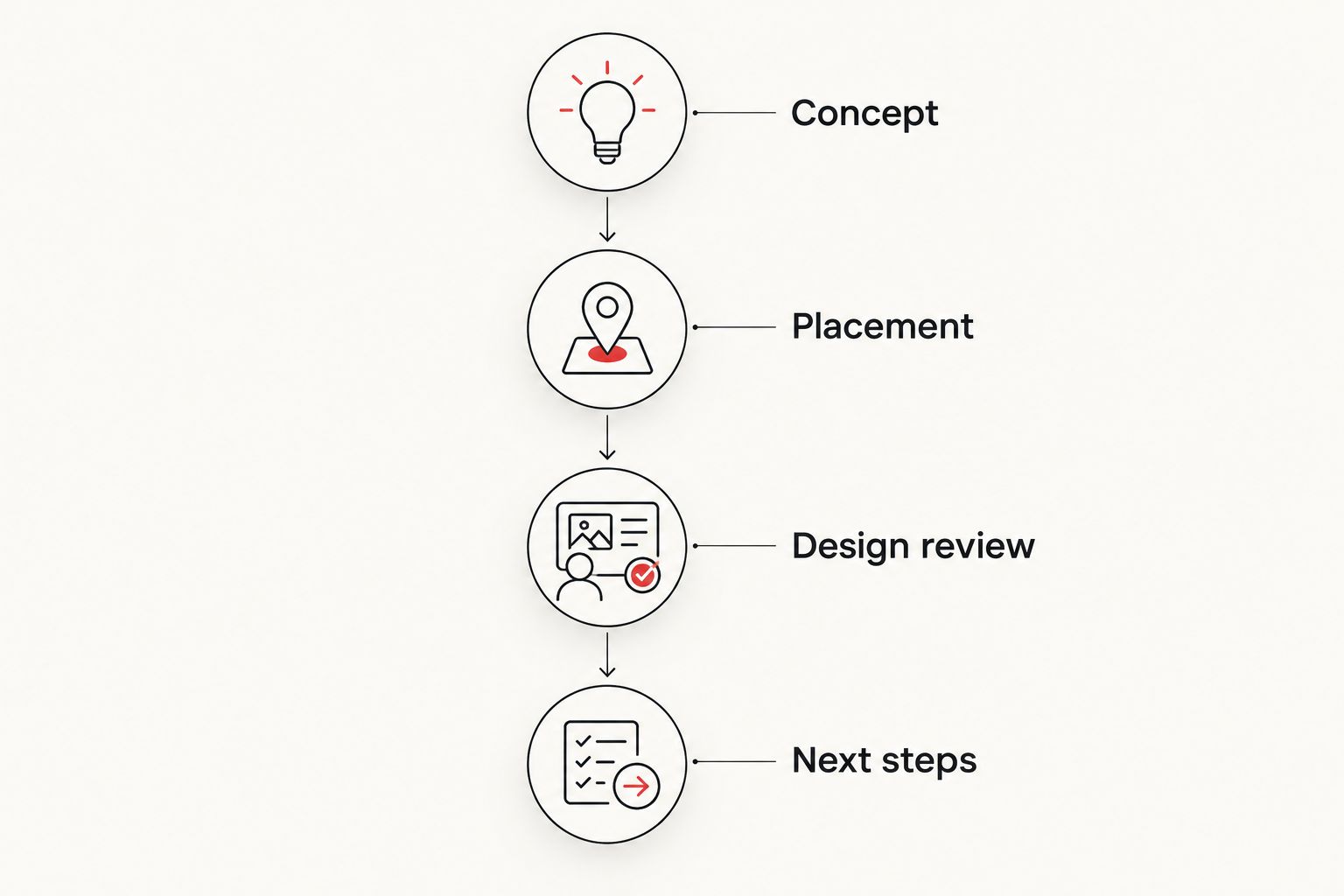
Use this sequence to make the discussion productive:
- Explain the idea. Name the subject, meaning, and overall feeling you want the tattoo to convey.
- Show the placement. Identify the body area and explain any visibility requirements.
- Discuss scale. Describe the space you are comfortable using, rather than relying only on words such as small or medium.
- Review the direction. Ask which details support the design and which need simplifying or changing.
- Confirm the next step. Establish what happens before tattooing, including design review and appointment arrangements.
You do not need an artist-ready drawing. You need enough direction for the artist to understand your priorities without guessing.
Why this matters
A reference image cannot settle every decision. The same subject can become a compact symbol, a detailed illustration, or a composition that follows the shape of an arm or leg.
The consultation connects that subject to your actual placement. It also gives you room to explain boundaries: details you do not want changed, areas you do not want tattooed, and whether the piece needs to remain covered at work.
For your 2026 tattoo plans, settle the design direction before you organize your schedule around a tattoo appointment. Travel arrangements or a special occasion should not become the reason you approve something that still feels unresolved.
What should you bring to a custom tattoo consultation?
Bring useful information rather than a finished solution. An artist can work with a clear description, selected references, and an honest explanation of what matters to you.
A clear idea
Write a short description of the tattoo you want. Include the subject, its significance if you want to share it, and the visual qualities you prefer.
Separate essential elements from flexible ones. A particular flower might be essential, while the arrangement around it remains open to the artist's judgment.
Reference images
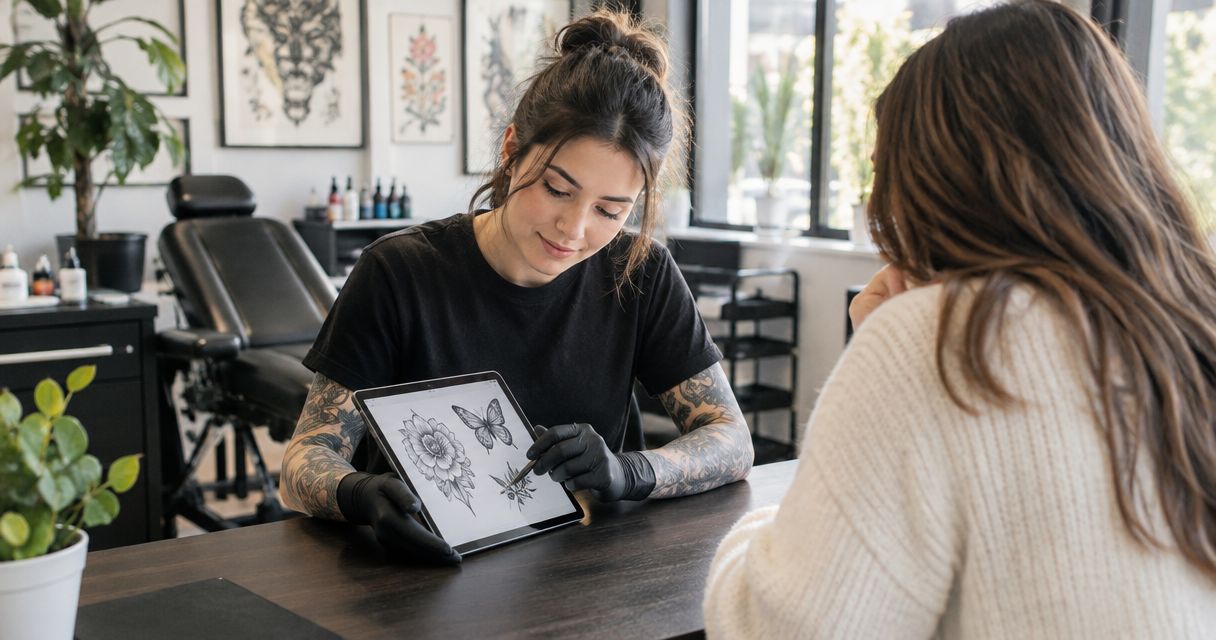
Choose references for specific reasons: line quality, shading, composition, or mood. Explain what each image contributes instead of asking the artist to combine everything without a clear priority.
A photograph of someone else's tattoo is useful for communicating preferences, but it should not become an instruction to reproduce that person's custom piece. Use references to explain taste; let the artist develop the composition.
Placement and visibility
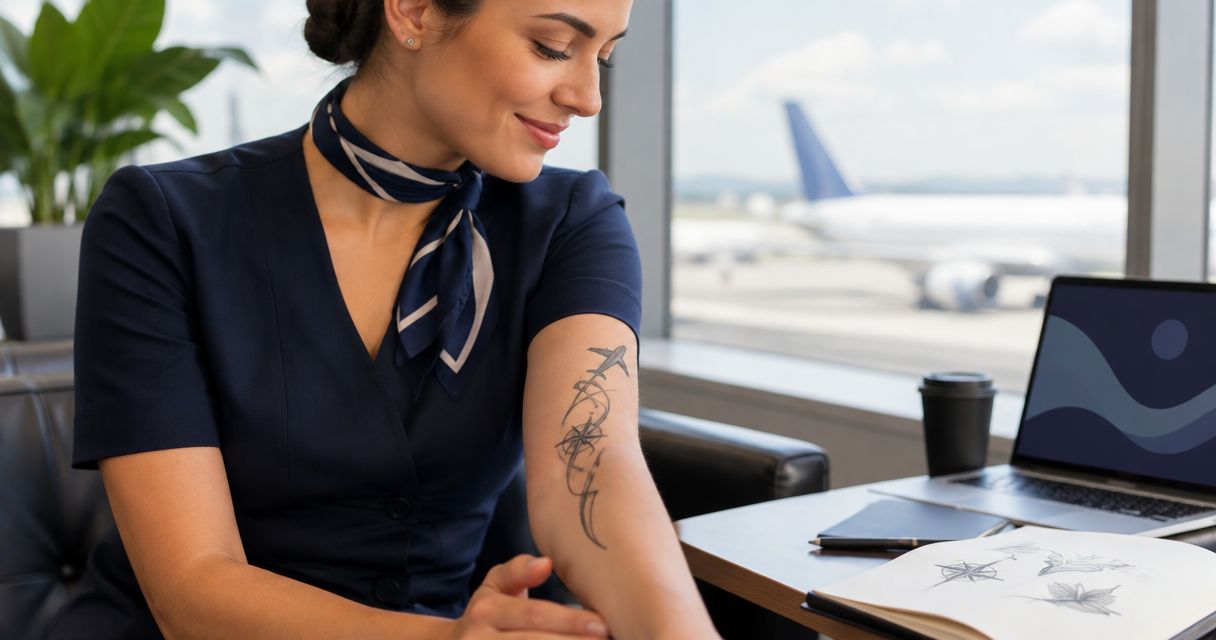
Show the intended body area and describe how visible you want the tattoo to be. If uniforms, sleeves, watches, or other clothing affect the placement, bring that into the discussion.
Be specific about boundaries. Saying that a tattoo must stay beneath your usual sleeve gives the artist a more useful starting point than saying it should be discreet.
Existing work and skin concerns
Tell the artist about tattoos already in or near the planned area. For a cover-up, provide a clear view of the existing piece rather than describing it only by subject.
Mention scars, irritation, or other concerns affecting the intended placement. A tattoo consultation is not a medical assessment; direct medical questions to an appropriate healthcare professional.
Does every custom tattoo need the same kind of consultation?
No. The discussion should match the decisions the project requires, and the studio determines how that discussion is arranged. A focused idea and an unresolved cover-up do not present the same planning questions.
Use this comparison to identify what needs attention. These are planning priorities, not promises about appointment length or studio policy.
| Project type | Best for | What to settle | Benefit | Limitation |
|---|---|---|---|---|
| Focused custom design | A clear subject and defined placement | Composition, scale, and essential details | Gives the artist a direct brief | A clear idea still needs placement review |
| Fine line design | Clients who prefer delicate linework | Detail, spacing, and size | Clarifies which elements deserve emphasis | Not every reference translates directly to the requested scale |
| Cover-up | Clients redesigning existing tattooed areas | Existing ink, coverage goals, and acceptable changes | Builds the new concept around the actual starting point | The old tattoo constrains the new design |
| Larger connected piece | Clients planning a composition across an area | Overall flow, boundaries, and future additions | Keeps individual elements connected | Requires decisions beyond a single isolated image |
Choose a design direction because it suits your goals, not because the consultation sounds simpler. If the artist identifies an unresolved issue, address it before moving to the next stage.
Why custom tattoo consultation needs vary
Consultation needs vary because the design starts from different conditions. The most useful discussion addresses the parts of your project that remain undecided.
- Concept clarity: A specific subject gives the artist a different starting point from a collection of unrelated images.
- Placement: The available space and the body's contours affect how the composition is arranged.
- Detail: Lettering, small shapes, and closely spaced elements require discussion about scale and readability.
- Existing ink: A cover-up has to account for the tattoo already present, not just the desired replacement.
- Personal boundaries: Visibility, symbolism, and elements you do not want changed belong in the design brief.
- Project scope: A standalone piece and a design intended to connect with future work need different planning conversations.
If you are collecting inspiration in 2026, organize it around these factors. A saved image becomes more useful when you can explain what you want to keep and what you are comfortable changing.
What should happen during the consultation?
The conversation should leave you with a clearer brief and a clear next step. You should understand the proposed direction without feeling pressured to approve details you have not resolved.
Concept
Explain your idea in your own words before discussing how closely a reference should be followed. This helps distinguish the meaning of the tattoo from the particular arrangement shown in an image.
Ask the artist to reflect the main priorities back to you. If your central idea gets lost in the discussion, clarify it while the design is still being planned.
Placement
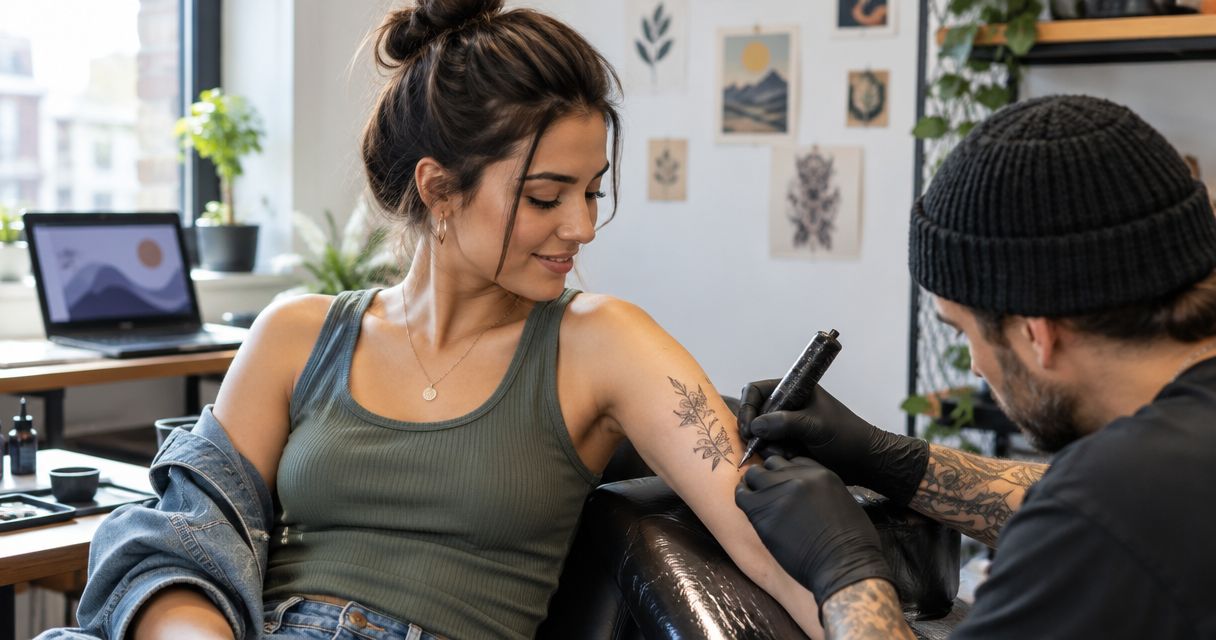
Discuss where the design begins and ends, its orientation, and how it relates to nearby tattoos. Ask to consider the placement in a natural body position rather than judging it only from a close-up photograph.
You should also explain whether you want room for future work. That preference belongs in the initial plan, even if you have not chosen the next tattoo.
Design review
Ask when you will review the design and how requested changes are handled. Do not assume a complete drawing will be available during the consultation or sent in advance.
A consultation and a final design review serve different purposes. The first establishes direction; the later review checks whether the proposed drawing meets the agreed brief.
Next steps
Confirm the appointment process, preparation instructions, and anything the artist still needs from you. Keep those instructions together so you are not relying on memory when the appointment approaches.
For a 2026 booking, ask the studio directly about its current process. An older social post or another client's experience does not establish how your project will be handled.
How do you choose a studio for a custom tattoo consultation?
Choose a studio whose services match your project and whose communication leaves you comfortable asking questions. Review work relevant to your preferred style, then use the consultation to understand how the artist approaches your brief.
Illuminati Tattoo Co. is best suited to Las Vegas clients seeking custom tattoo design, fine line work, or cover-ups. Its owner-operated service emphasizes designs built around each client and a clean, hygienic studio environment.
The limitation is straightforward: a service listing cannot determine whether a particular idea, placement, or cover-up is suitable. That decision needs a conversation about your project, and some preferences will need adjustment.
Use the contact page to ask how to arrange a consultation and get directions before visiting. Explain whether you want a new custom piece or a cover-up so the studio understands the purpose of your visit.
Discuss your custom tattoo
Ask about the consultation process and get directions to the Las Vegas studio.
Can you get a custom tattoo without a separate consultation appointment?
Yes—the planning conversation and the tattoo appointment do not always need separate visits. The studio decides how it schedules that process, so confirm the arrangement rather than assuming a walk-in visit includes custom design and tattooing.
A separate appointment is a scheduling choice; agreeing on the design is not optional. You should still understand the artwork, placement, and next steps before tattooing begins.
Do you need a finished design before meeting the artist?
No—you can bring an idea and references instead of a finished drawing. Custom design is a collaborative process, and your job is to communicate your priorities clearly.
If you already have artwork, explain where it came from and what you want adapted. Do not assume a drawing made for paper will transfer unchanged to your chosen body area.
What if you change your mind after the consultation?
Tell the artist before the tattoo appointment if you want to change the subject, placement, scale, or overall direction. Ask how the studio handles revisions and changes to the appointment plan.
Do not treat uncertainty as something you must push through. Pause when the design no longer matches what you want, and resolve the difference before approving the stencil.
FAQ
Do you need a consultation before getting a custom tattoo in 2026?
Yes—discuss the concept, size, placement, and design direction before getting a custom tattoo in 2026. Ask the studio whether that conversation requires a separate appointment.
What should I bring to my first tattoo consultation?
Bring a clear description of your idea, relevant reference images, and your intended placement. Explain which elements are essential and which you are comfortable changing.
Will the artist draw my tattoo during the consultation?
Do not assume the artist will complete the drawing during the consultation. Ask when the design will be reviewed and how requested changes are handled.
Should I have a consultation for a small custom tattoo?
Yes—a small custom tattoo still needs agreement on the design, placement, and size. A small footprint does not remove the need to discuss detail and spacing.
Can I discuss a cover-up using a photo of my old tattoo?
A clear photograph can help explain your cover-up request. Ask whether the artist also needs to assess the existing tattoo in person before recommending a direction.
Does a consultation mean I have to get tattooed that day?
No—a consultation does not mean tattooing must happen that day. Confirm the appointment arrangement and approve the design only when you understand and accept it.
Where can I ask about a custom tattoo consultation in Las Vegas?
Illuminati Tattoo Co. offers custom tattoo design, fine line work, and tattoo cover-ups in Las Vegas. Contact the studio to discuss your project, confirm the consultation process, and get directions.
One last thing
Bring a short list of what you do not want. Exclusions—such as no lettering, no background, or no extension beyond a particular area—can make your preferences clearer than another reference image.
Before your 2026 consultation, separate those firm boundaries from preferences you are willing to reconsider. That gives the artist room to create without asking you to compromise on what matters most.