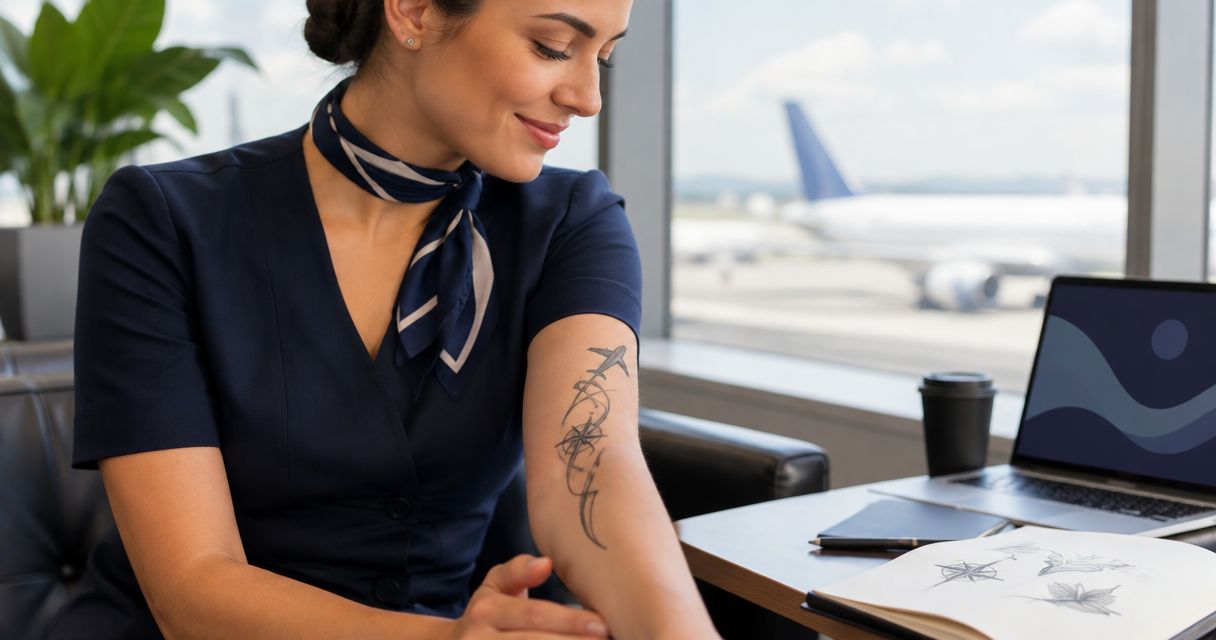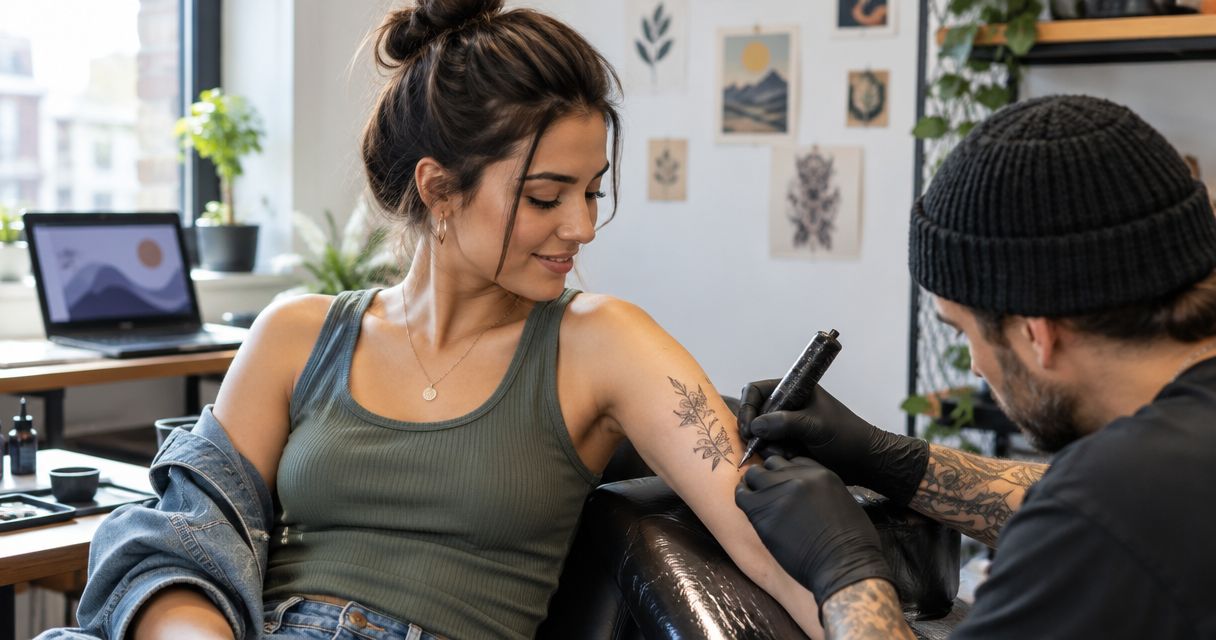
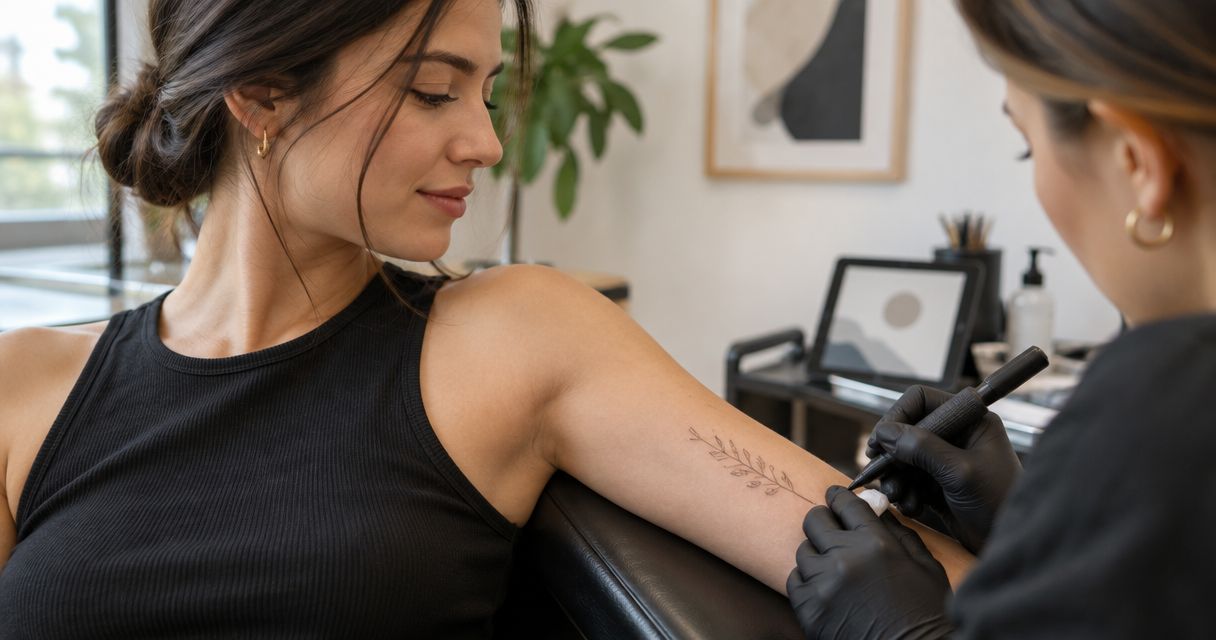
A fine line tattoo is worth it in 2026 if you want delicate artwork and accept that healed lines will not look exactly like a fresh photograph. The trade-off is limited room for tightly packed detail: choose a readable design, review healed examples, and discuss placement before committing.
- Is a fine line tattoo worth it? Yes, when subtle artwork matters more than bold contrast.
- Illuminati Tattoo Co. offers custom fine line tattoos for Las Vegas clients seeking individually designed body art.
- Choose healed examples over fresh photographs when judging line quality and readability.
- Keep open space between details; making a design smaller does not automatically make it better.
Why this matters
A tattoo has to work on your skin, not just on a phone screen. Fine line artwork draws attention through restraint, so a crowded design or unsuitable placement can work against the effect you want.
Choose the design you will enjoy healed, not only the photograph you enjoy today. Before deciding, read about how long a fine line tattoo takes to fade, then ask an artist to explain what realistic aging looks like for your idea.
Is a fine line tattoo worth it in 2026?
Yes, if delicate linework matches your priorities and your design has enough space to remain readable. Fine line is a style choice, not a promise of invisible aging, painless application, or maintenance-free results.
Use this comparison to decide whether fine line suits the artwork you actually want. Neither approach wins for every person or every design.
| Approach | Best for | Main advantage | Main limitation |
|---|---|---|---|
| Fine line tattoo | People who prefer delicate outlines and understated detail | Creates a lighter visual effect | Closely spaced details leave less room for changes in healed line appearance |
| Bolder linework | People who prioritize strong outlines and visible contrast | Makes shapes easier to distinguish at a glance | Produces a heavier appearance than some subtle designs need |
If you love an airy botanical outline, fine line is a sensible direction. If you want a crowded miniature scene whose smallest features must stay separate, reconsider the size or simplify the drawing.
The useful question is not whether fine line is universally better. Ask whether its strengths match your priorities and whether you accept its limitations.
Fine line tattoos: best for subtle, open designs
Fine line is best for people who want restrained artwork with clear shapes and breathing room. A simple outline, an uncluttered botanical drawing, or readable lettering can express that preference without relying on dense detail.
Look at the empty areas as carefully as the inked ones. Open space helps separate neighboring elements and keeps the subject understandable without requiring every tiny mark to carry meaning.
The limitation is scale. A reference that looks clear when enlarged on a screen does not necessarily work when reduced to the size you want on your wrist or ankle.
Ask the artist which details define the design and which are optional. Keep the defining features; remove decoration that makes the drawing harder to read. Choose fine line for the overall effect, not simply because a reference looks impressively tiny.
Bolder linework: best for strong visual definition
Bolder linework is best for people who want pronounced outlines and an immediately recognizable silhouette. It deserves consideration when your main priority is seeing the subject clearly rather than achieving the lightest possible appearance.
The trade-off is visual weight. Heavier outlines change the character of delicate lettering or an airy drawing, even when the subject stays the same.
Do not ask an artist to make every line thicker without discussing the composition. Line weight, spacing, and overall size need to work together. A revised design is more useful than a blanket instruction to make everything bold.
If neither extreme suits you, ask about a custom drawing with deliberate variation in line weight. Judge that drawing on its own merits rather than treating a style label as the decision.
Why fine line tattoo results vary
The value of a fine line tattoo depends on the relationship between the design, the application, and your skin. These factors belong in the consultation:
- Design density: Closely packed marks are harder to distinguish when their edges soften. Ask which details need more separation.
- Overall size: Reducing a drawing also reduces the gaps inside it. Approve the design at its actual intended size.
- Placement: Sun exposure, movement, friction, and the surface being tattooed matter when choosing a location.
- Artist execution: Consistent linework requires control. Review examples that resemble the style and scale you want.
- Healing and care: Follow the artist's aftercare instructions and protect healed skin from ultraviolet exposure. Care supports healing; it does not guarantee an unchanged tattoo.
- Your expectations: A tattoo that feels too light to you is not a good match simply because someone else prefers subtle work.
For a 2026 consultation, bring references that show both the artwork you like and the visual weight you want to avoid. That gives the artist a clearer brief than asking for something small and delicate without further explanation.
How do you decide before booking?
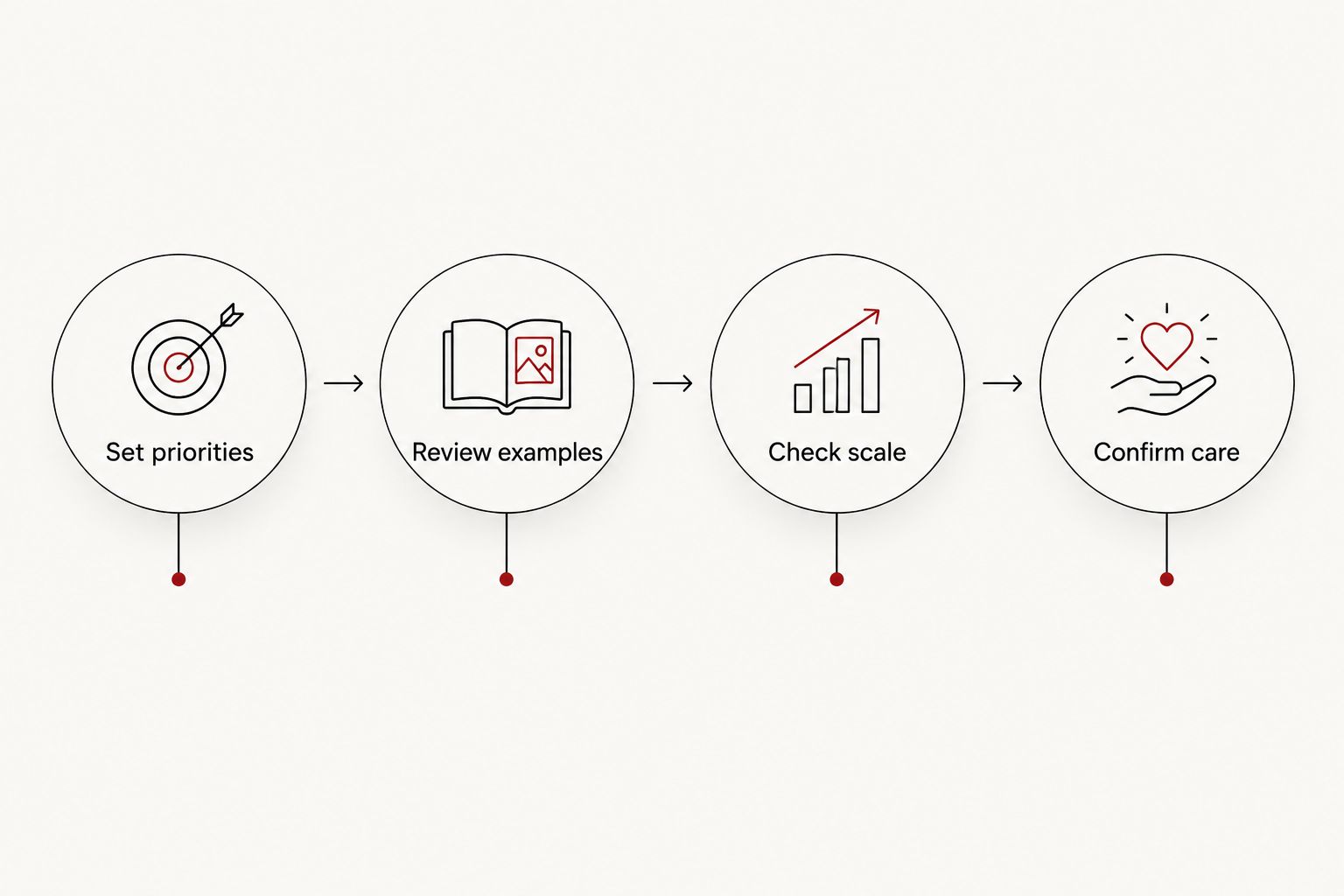
Use these 4 consultation steps to turn an attractive reference into a decision you can explain. The goal is not to approve the smallest possible drawing; it is to approve a design you understand.
- Set priorities. Explain what matters most: a delicate appearance, readable lettering, personal symbolism, or a specific placement. Say which preference you will reconsider if the design needs adjustment.
- Review examples. Ask for healed work relevant to your idea, not only fresh close-ups. Look for clear shapes and separation between neighboring details.
- Check scale. Review the drawing at its intended size on your body. Ask the artist to identify anything that depends on extremely narrow spacing.
- Confirm care. Discuss preparation, aftercare, and how your activities affect the proposed placement. Ask how the studio handles questions about the healed result.
A useful consultation ends with a clear explanation of what stays, what changes, and why. You should understand the compromise before approving the design, rather than discovering it after the tattoo is finished.
What should you look for in healed photographs?
Fresh photographs show the work immediately after application. Healed photographs help you assess what the artwork looks like after the initial healing process, making them especially useful when judging delicate details.
Look for consistency rather than perfection at extreme magnification. Can you identify the subject? Are separate elements still distinguishable? Does the overall appearance match the kind of tattoo you want?
Ask when the photograph was taken and whether the tattoo had additional work before that image. Those questions provide context without assuming every healed tattoo follows the same timeline.
A photograph still has limits. Lighting, focus, editing, and viewing distance affect what you see. Review relevant examples with the artist and ask what they demonstrate; do not treat a polished image as a guarantee for your skin.
How do you choose placement without chasing the smallest size?
Start with the design's shape and the way it sits on your body. A placement that accommodates the composition is more useful than a location chosen first and a drawing compressed to fit afterward.
Use 2 stencil views before approval: a close view for detail and a normal viewing-distance check for overall readability. Move naturally and check how the design sits when the surrounding skin changes position.
Also discuss your routine. Clothing, protective equipment, exercise, outdoor exposure, and workplace requirements belong in the placement conversation. Do not assume a discreet location is automatically an easy location to heal.
Keep 1 focal point clear before adding secondary detail. If the main subject becomes difficult to identify, simplify the drawing or reconsider its size instead of adding more lines to explain it.
Is fine line a good choice for your first tattoo?
Fine line is a reasonable first-tattoo choice when you genuinely prefer its appearance. Being new to tattoos does not mean you need the smallest design or the thinnest available lines.
A first tattoo also needs the same preparation and informed consent as any other tattoo. Ask about the procedure, hygiene practices, aftercare, and the artist's approach to your chosen placement. Small does not mean risk-free or pain-free.
For your first tattoo in 2026, choose a design you can describe without referring to a trend. If you can explain why the subject, placement, and visual weight suit you, you have a stronger basis for deciding.
Where should you discuss a custom fine line tattoo in Las Vegas?
Illuminati Tattoo Co. is best for Las Vegas clients seeking custom fine line tattoo design rather than a fixed, one-size-fits-all drawing. The owner-operated studio offers custom designs built around each client, with a focus on clean, hygienic service.
Bring your references and explain the result you want. The benefit of custom work is the opportunity to discuss changes to composition, scale, and placement; the limitation is that your preferred reference might need revision to work as a tattoo.
Visit Illuminati Tattoo Co. for current studio information and directions. Before making the trip, confirm the arrangements for discussing your design rather than assuming an immediate tattoo session.
Plan Your Fine Line Tattoo
Explore the studio, check current information, and plan your Las Vegas visit.
Will a fine line tattoo stay as sharp as a fresh photo?
A fine line tattoo will not stay identical to its fresh photograph. Tattoo appearance changes as skin heals and ages, and tightly spaced details deserve particular attention during design planning.
Ask the artist what changes to expect in the specific drawing. Avoid anyone promising an exact permanent match to a fresh image.
Is a fine line tattoo easier to cover later?
A fine line tattoo is not automatically easy to cover later. Cover-up planning depends on the existing ink, its placement, the surrounding space, and the proposed replacement design.
Choose the original tattoo because you want it, not because you assume changing it will be simple. A future redesign is a separate assessment.
FAQ
Is a fine line tattoo worth it in 2026?
A fine line tattoo is worth it in 2026 if you prefer delicate artwork and accept changes in its healed appearance. Review healed examples and approve a design with enough space between details.
Is fine line better than a bold tattoo?
Fine line is better for a light, understated appearance; bold linework is better for pronounced outlines. Choose according to your preferred visual effect and the needs of the design.
Will my fine line tattoo need a touch-up?
A fine line tattoo does not come with a universal touch-up schedule. Ask the artist to assess the healed result and explain the studio's approach before booking.
Does a smaller fine line tattoo hurt less?
A smaller fine line tattoo is not guaranteed to hurt less. Placement, session demands, and individual sensitivity affect the experience, so discuss your concerns before the appointment.
Can I use a fine line design to cover an old tattoo?
A fine line design is not automatically suitable for covering existing ink. An artist needs to assess the old tattoo and determine whether the proposed design provides adequate coverage.
What should I bring to a fine line tattoo consultation?
Bring visual references, your preferred placement, and a clear explanation of the details that matter most. Illuminati Tattoo Co. offers custom fine line tattoo design for local Las Vegas clients.
One last thing
The most useful revision to a delicate tattoo is sometimes removing a detail rather than adding one. A cleaner drawing can preserve the subject you care about without forcing every feature into a tiny space.
For your 2026 tattoo, ask one final question before approving the stencil: Which detail would you change to make this design more readable when healed? The explanation matters as much as the answer.