A tattoo cover-up requires an individual quote based on the existing ink, the replacement design, placement, and the work needed to complete it. Get an assessment of the old tattoo before treating any estimate as your total. Ask whether the quote includes design work, every planned appointment, and any follow-up work discussed during the consultation.
- How much does a tattoo cover-up cost? Your existing ink and custom design determine the quote.
- Compare the complete cover-up plan, not an appointment estimate without a defined scope.
- Illuminati Tattoo Co. offers custom tattoo cover-ups for local clients in Las Vegas.
- Confirm the proposed size, coverage limits, planned sessions, and quote inclusions before committing.
Why this matters
A cover-up is not simply a new picture placed over an old one. Your artist must build a composition that works with the ink already in your skin, while giving you a design you actually want to wear.
For Las Vegas clients, Illuminati Tattoo Co. offers custom tattoo design and tattoo cover-up services. Illuminati Tattoo Co. is best for Las Vegas clients seeking a custom tattoo cover-up built around their existing ink. The important limitation is that a custom design still has to respect the old tattoo's darkness, shape, and placement.
How much does a tattoo cover-up cost?
Your cover-up cost depends on the assessed project, not a universal charge for covering an old tattoo. For a 2026 quote, ask the artist to define the finished design and explain how the estimate relates to the work required.
Use the following breakdown to check what a quote covers. These are questions to resolve, not assumptions about any studio's billing policies.
| Part of the project | What you need to establish | Why it matters |
|---|---|---|
| Existing tattoo assessment | Whether the proposed design can conceal the old ink | A design preference is not proof of coverage |
| Custom design | Whether preparation and revisions are included | The replacement must work around existing marks |
| Tattooing | Whether the estimate covers an appointment or the complete project | An appointment estimate does not define the total scope |
| Additional sessions | Which appointments are planned and how changes are handled | You need to understand the commitment before starting |
| Follow-up work | What the artist recommends after healing and how it is handled | Do not assume additional work is included |
| Changes you request | How a different size, placement, or concept affects the quote | A revised design needs a revised scope |
A useful quote explains both the work and its boundaries. If you cannot tell what completion means, ask for clarification before accepting the plan.
Keep a copy of the agreed design direction and quote details. That gives you something concrete to refer to if you later decide to change the project.
Why tattoo cover-up costs vary
The old tattoo is part of the design brief. Two clients asking for the same subject can need different compositions because their existing ink is different.
These factors belong in your 2026 consultation:
- Existing size and shape. The artist needs to work around the actual footprint, including stray lettering, outlines, and isolated marks.
- Ink darkness and density. A faded outline and a densely filled area present different coverage challenges.
- Replacement design. Detail, shading, contrast, and composition affect the work needed to create a readable tattoo.
- Placement. The design must fit the body area and account for the surrounding space available for coverage.
- Skin condition. Raised areas, scarring, or irritation need assessment rather than assumptions based on a photograph.
- Project scope. The proposed size, preparation, and planned appointments determine what the quote needs to include.
Do not reduce this discussion to the old tattoo's dimensions alone. A small, dark mark can constrain a design differently from a larger, faded outline.
Your artist should explain which factor is driving the proposed approach. That explanation helps you distinguish necessary design decisions from preferences you can still change.
Reworking an existing tattoo
Best for: You still like the original subject but want an artist to assess whether its appearance can be improved.
A rework retains the original tattoo as the foundation. It focuses on improving what is already there rather than replacing the image with an unrelated composition.
- Advantage: You can preserve a subject that still matters to you.
- Limitation: Existing lines, proportions, and placement remain constraints; not every unwanted feature can be corrected through reworking.
Ask the artist to point out what would stay and what would change. If your main goal is to stop seeing the original subject, say that clearly before discussing a rework.
Covering an old tattoo with a new design
Best for: You want a different subject and are open to a composition designed around the existing ink.
A cover-up uses a new tattoo to conceal the old design. The artist considers where to place darker areas, texture, and visual detail so the replacement works as a complete image.
- Advantage: You can move toward a new subject rather than preserve the old one.
- Limitation: Your preferred size, lightness, or fine detail might conflict with the coverage the old ink requires.
Choose the replacement because you want to wear it, not just because it hides something. A technically workable cover-up is still the wrong choice if you dislike the proposed design.
| Approach | Best for | Main benefit | Main limitation |
|---|---|---|---|
| Rework | Keeping the original subject | Preserves the existing concept | Retains constraints from the original tattoo |
| Cover-up | Replacing the original subject | Creates a different composition | Requires design flexibility around existing ink |
Neither approach has an automatic cost advantage. Ask for a quote tied to the specific work proposed, rather than assuming one label means less work.
How to get a useful cover-up quote
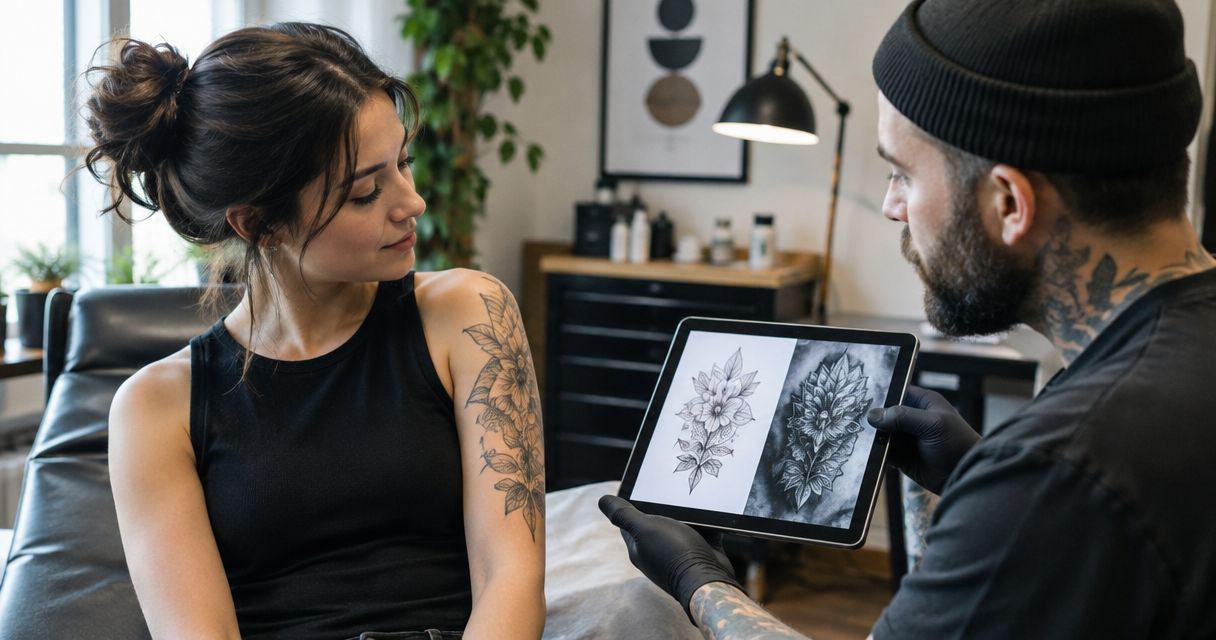
A good consultation connects the tattoo you have with the tattoo you want. Prepare enough information for that discussion without deciding the technical solution yourself.
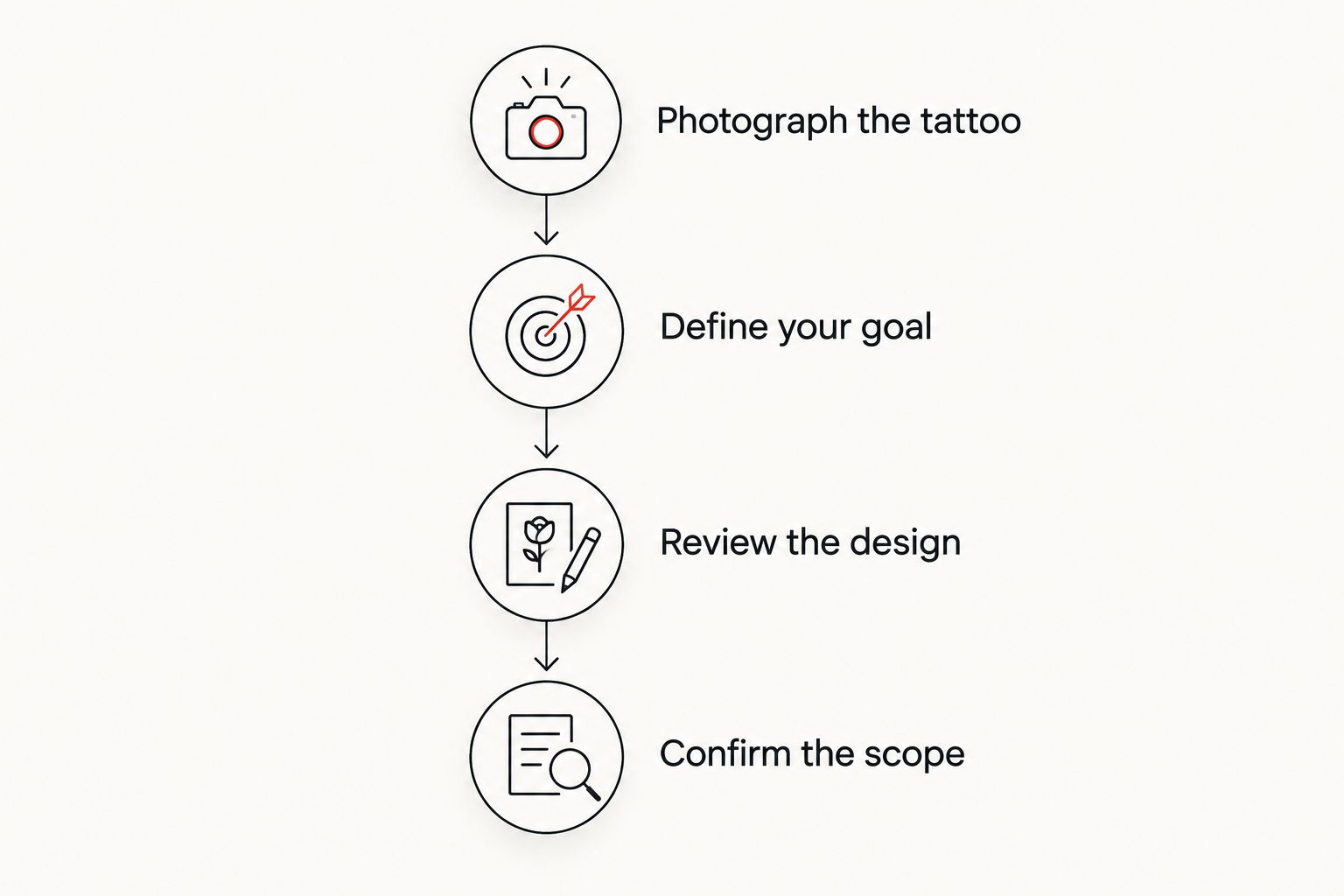
Photograph the tattoo
Take clear photographs in natural light, including a close view and a wider view of the body area. Avoid filters that change the appearance of the ink or skin.
Include the whole tattoo, not just the part you dislike. An artist needs to understand the surrounding shape and placement before discussing a replacement.
Define your goal
Explain whether you want to preserve the subject, replace it, or make particular lettering or imagery less recognizable. Those are different goals and should not be treated as interchangeable.
Bring references for the style and subject you like. Also identify anything you do not want, such as a larger footprint or a heavily shaded composition.
Review the design
Ask the artist to explain how the proposed composition addresses the darkest and most distinctive parts of the old tattoo. Discuss what the finished piece is intended to conceal and any limitations you should understand.
This is the time to raise concerns about size or visual weight. Do not accept a design you dislike because you feel committed to getting the tattoo covered.
Confirm the scope
Ask what the quote includes, which appointments are anticipated, and what would trigger a change to the estimate. Confirm how requested design changes and follow-up work are handled.
For a project discussed in 2026, keep your planning tied to that specific consultation rather than an older screenshot or someone else's tattoo. Their design and existing ink do not define your project.
What should you ask before accepting the estimate?
Ask questions that reveal the proposed result, not just the billing arrangement. You need to know what you are agreeing to wear as well as what work is included.
Use this checklist during the consultation:
- Which parts of the existing tattoo are hardest to conceal?
- Why does this design suit the old ink?
- How far does the replacement extend beyond the original tattoo?
- What limitations should I expect after healing?
- Does the estimate describe the whole project or a particular appointment?
- What happens if I request a different design?
- What follow-up assessment or work is recommended?
A clear answer does not require a promise of perfect invisibility. It requires an honest explanation of the design's intended result and its limits.
Can a small tattoo need a larger cover-up?
A small tattoo can need a larger replacement because the new composition must account for the old design's edges, dark areas, and recognizable features. There is no universal enlargement rule that should substitute for an assessment.
Ask to see the proposed footprint on your body before approving it. A drawing viewed on its own does not show how much surrounding space the finished tattoo will occupy.
If keeping the original footprint is essential, make that a starting condition. The artist can then explain whether your preferred concept fits that limit.
Can a fine line tattoo cover dark ink?
Fine line work does not automatically provide the coverage needed for dark existing ink. A delicate design with open skin between lines does not function like an opaque layer over the old tattoo.
Ask which parts of your preferred style are compatible with the existing tattoo. If the proposed solution needs more shading or a different composition, decide whether you still want that result.
How should you plan a Las Vegas studio visit?
Bring your references, photographs, and questions to the consultation, and be ready to discuss the tattoo without filters or clothing hiding its edges. Before visiting in 2026, check current studio details and get directions through the website.
Illuminati Tattoo Co. emphasizes owner-operated service, custom designs, and a clean, hygienic studio. Those priorities support a careful discussion of your options; they do not remove the design limits imposed by existing ink.
Do not plan around guaranteed same-day work. Make the assessment and your comfort with the proposed design the deciding factors.
Plan Your Cover-Up Consultation
Review the studio website, check visit details, and get directions before you travel.
FAQ
How much does a tattoo cover-up cost in Las Vegas?
A Las Vegas tattoo cover-up needs an individual quote based on the existing ink and proposed design. Ask whether the estimate covers the complete project or a particular appointment.
Is a cover-up always more work than a new tattoo?
A cover-up has the additional constraint of existing ink, but the work depends on the specific project. Compare defined designs and scopes rather than assuming every cover-up requires the same approach.
Can I get an accurate cover-up quote from a photo?
A photograph can support an initial discussion, but it does not replace every part of an assessment. Ask whether the estimate needs confirmation after the artist examines the tattoo in person.
Does a cover-up have to be bigger than the original tattoo?
A cover-up can need additional space, but there is no universal size rule. Ask the artist to show the proposed footprint and explain how it addresses the old tattoo.
Can I keep my cover-up light and delicate?
A light, delicate design must be assessed against the darkness and placement of your existing ink. Ask what coverage is realistic before committing to a fine line concept.
What should a tattoo cover-up estimate include?
A useful estimate identifies the proposed design, project scope, and what work is included. Clarify planned appointments, requested changes, and follow-up arrangements before accepting it.
Does Illuminati Tattoo Co. offer tattoo cover-ups?
Illuminati Tattoo Co. offers tattoo cover-ups and custom tattoo design in Las Vegas. Bring your existing tattoo and design goals into the consultation so the proposed work addresses both.
One last thing
Describe what you want to see, not only what you want to hide. That gives the artist a design goal instead of a concealment problem with no direction.
For your 2026 cover-up plan, leave the consultation able to explain the proposed subject, footprint, coverage limits, and quote scope in your own words. If any part remains unclear, resolve it before booking the work.