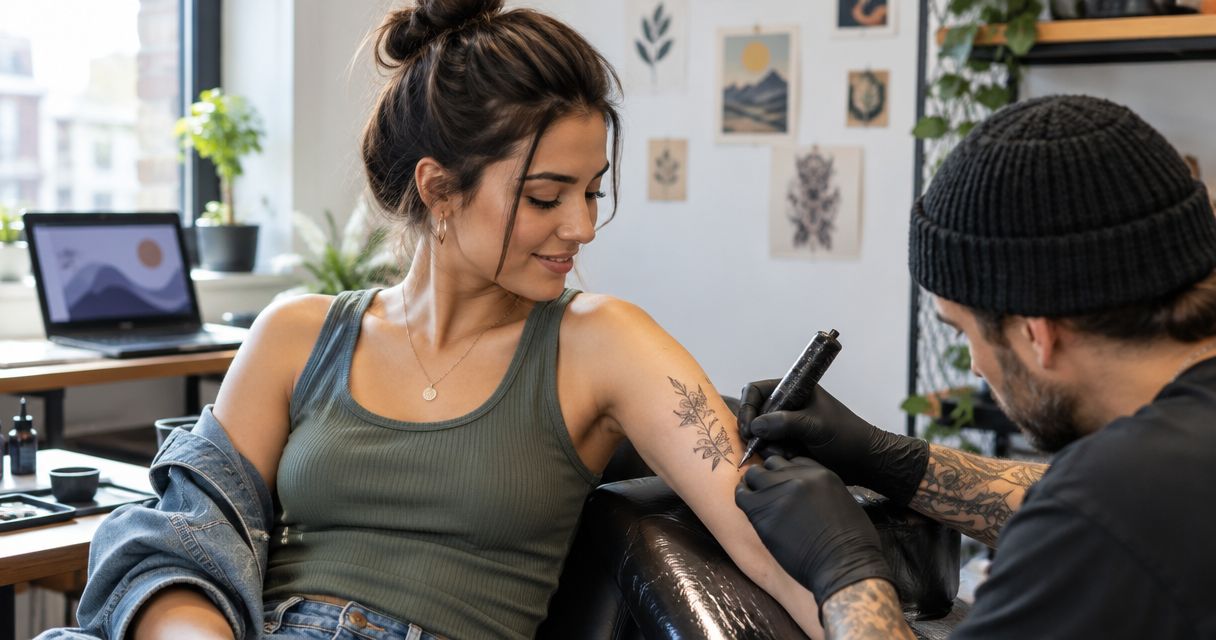
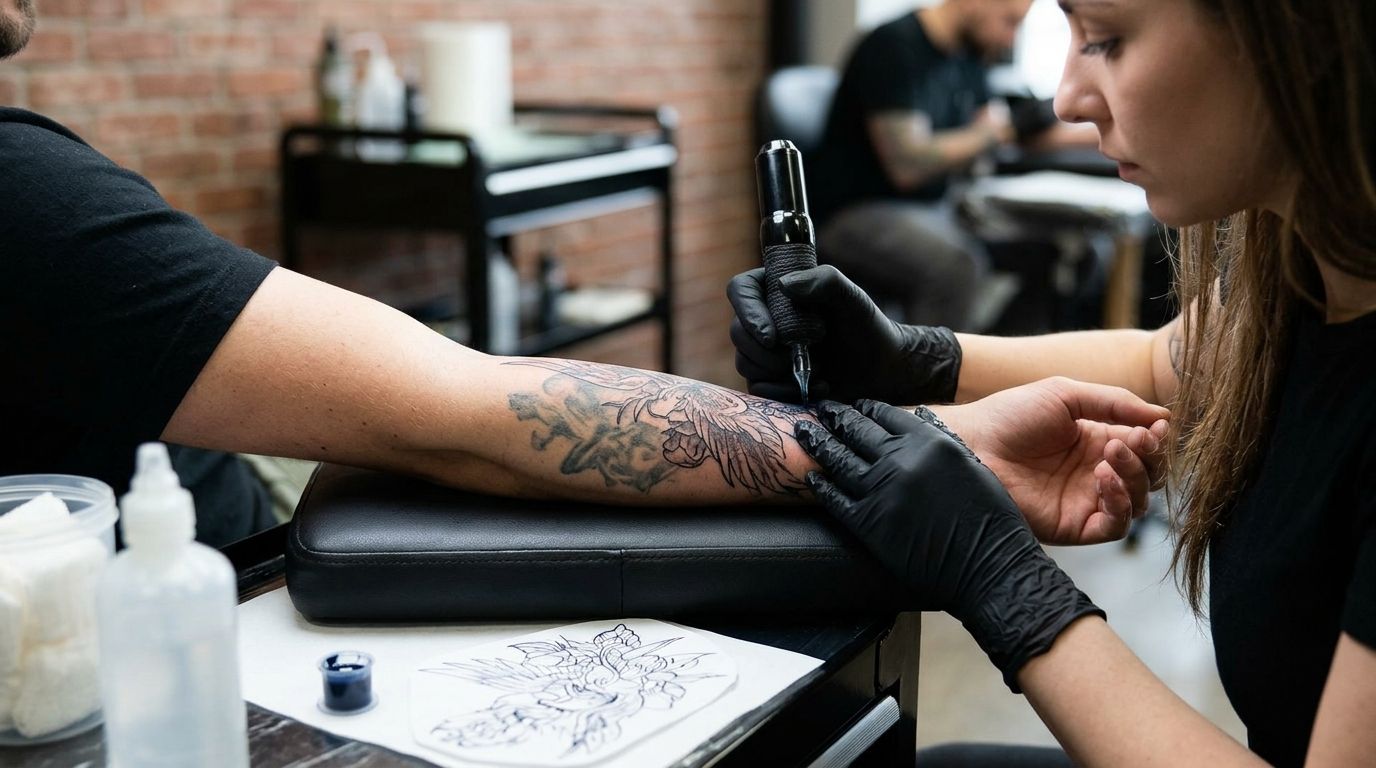
Instead of repeatedly searching for a design that might hide your old tattoo, start with an artist’s assessment and build the replacement around the ink already in your skin. A tattoo cover-up works by using new shapes, shading, color, and placement to make the new design read clearly without relying on the old tattoo disappearing.
- How does a tattoo cover up work? New tattoo design redirects attention and incorporates existing ink; it does not erase pigment.
- Illuminati Tattoo Co. offers custom tattoo cover-ups for Las Vegas clients seeking a replacement built around existing artwork.
- Approve the coverage plan before choosing fine details; old ink affects size, shading, and placement.
- Judge coverage after healing, not only from a fresh tattoo photograph.
Why this matters
A cover-up is a design problem before it is a tattooing appointment. Existing lines, dark patches, and skin texture limit where your new design can leave open space. A reference image helps explain your taste, but it cannot establish whether that design will cover your tattoo.
Illuminati Tattoo Co. is best for Las Vegas clients seeking a custom tattoo cover-up rather than a design chosen independently of the existing ink. The owner-operated studio emphasizes custom artwork and a clean, hygienic setting. Start with Illuminati Tattoo Co. for studio information and directions before arranging your visit.
For a 2026 redesign, bring a clear goal rather than a fixed promise to yourself about the finished size. Flexibility gives your artist room to solve the coverage problem without forcing a design you do not want.
Before you start
- Prepare clear photographs. Take 3 views: straight on, slightly angled, and farther back to show placement. Use even lighting without filters; photographs support, rather than replace, an in-person assessment.
- Bring a focused design brief. Choose 2 reference images that explain the style or subject you like. Add a short list of elements you want to keep, remove, or avoid.
- Flag skin concerns before planning. Tell the artist about raised areas, previous cover-ups, laser treatment, or a tattoo that is still healing. The non-obvious catch: new ink changes appearance, not surface texture, and a digital mockup cannot establish whether the skin is ready.
If the area is inflamed, broken, or showing signs of infection, postpone tattooing and seek medical advice. A consultation is not a medical clearance.
Existing tattoo assessment
The first configuration decision is not the new subject. It is the usable space, existing pigment, and condition of the skin beneath that subject.
- Identify the strongest marks. Show the artist the darkest outlines, solid fills, lettering, and areas where several lines overlap. Explain which parts bother you most; the feature you dislike most is not necessarily the hardest part to cover.
- Separate color from texture. Point out raised lines or uneven areas. Ask what the new artwork can disguise visually and what will remain physically noticeable.
- Define the outer boundary. Discuss how far you are comfortable extending beyond the original tattoo. A cover-up often needs surrounding skin to establish its own silhouette, but there is no universal enlargement formula.
- Confirm readiness. Disclose recent tattooing or treatment and let the artist assess the area in person. Do not schedule around a deadline before confirming that the skin and design are suitable.
Expected result: You understand the main coverage constraints and whether the next step is design development, a revised goal, or a separate assessment before tattooing.
Ask the artist to explain the difficult area in ordinary language. You should leave knowing which existing marks drive the design, not merely hearing that the tattoo can be covered.
Coverage strategy
A cover-up places new pigment into skin that already contains tattoo pigment. It is not an opaque coating placed over a clean surface, so light colors and empty spaces cannot simply cancel dark lines underneath.
- Choose the actual goal. Decide whether you want to conceal the original image, improve it while retaining recognizable elements, or investigate lightening before a redesign. These are different workflows.
- Match structure to the old ink. Ask where the new design needs dense shading, overlapping forms, or texture. Those elements should serve the new subject, not become unrelated dark patches added only to hide mistakes.
- Protect readable areas. Identify where the new focal point and open skin will sit. Keeping these areas away from conflicting old lines helps the replacement read as intentional artwork.
- Discuss the compromise openly. Establish what changes if your preferred subject, size, or color palette cannot provide enough coverage.
Use this comparison for your 2026 consultation. The right route depends on the existing tattoo and your goal, not on which route sounds simplest.
| Route | Best for | Main advantage | Main limitation |
|---|---|---|---|
| Custom cover-up | Replacing an unwanted image | Builds a new composition around existing ink | Existing pigment restricts size, shading, and open space |
| Rework | Keeping a recognizable subject | Retains meaningful elements while revising the artwork | Does not aim to hide the entire original tattoo |
| Laser lightening assessment before redesign | Exploring more design flexibility | Can reduce existing pigment before further tattooing | Adds a separate treatment process; suitability and results require assessment |
Expected result: You have selected a route and understand its limitations. Do not approve artwork while still disagreeing about whether the old image should remain recognizable.
Custom design approval
A successful drawing must work on your body and against your existing tattoo. A clean image on a screen is only part of that decision.
- Translate references into preferences. Describe the line quality, subject, contrast, and mood you like instead of asking for another person’s tattoo to be copied. The custom tattoo design consultation guide explains how to turn references into a usable brief.
- Review coverage zones. Ask the artist to show where the old outline, lettering, and darkest fill sit within the proposed design. Each difficult area needs a deliberate response.
- Check placement on your body. Review the proposed scale and orientation in a natural posture. Look at how the composition follows the body rather than judging only a close-up photograph.
- Approve the trade-offs. Confirm the overall boundary, darkest areas, retained elements, and any parts that remain uncertain until the tattoo heals. Resolve unwanted changes before tattooing begins.
Expected result: You can explain what the new design covers, what it incorporates, and why its size and shading are necessary.
When reviewing a 2026 cover-up design, compare it with your actual tattoo rather than an imagined blank canvas. Do not approve a larger or darker piece merely because it is technically possible. You should want to wear the replacement independently of wanting the original gone.
Tattoo session and healed review
Design approval establishes the plan; tattooing and healing determine how that plan appears in skin. Keep both stages in your schedule.
- Reconfirm the plan before starting. Review placement and the agreed boundaries with the artist. Speak up if the proposed layout differs from what you understood during the consultation.
- Discuss session staging. Ask whether the work is planned as a single appointment or divided into stages. Size, detail, skin response, and the artist’s approach affect that decision; do not assume every cover-up follows the same schedule.
- Follow written aftercare instructions. Clarify cleansing, dressing care, clothing friction, sun exposure, and when to resume activities that affect the area. Avoid substituting advice from unrelated tattoos or social media.
- Arrange a healed assessment. Ask when the artist wants to review the result and how to raise concerns. Fresh pigment, redness, and surface shine are not a dependable picture of the healed tattoo.
Expected result: You know how to care for the tattoo, when it should be reviewed, and who to contact if something concerns you.
Increasing redness, warmth, swelling, drainage, or worsening pain warrants medical advice. Do not treat suspected infection as an ordinary coverage issue or wait for an artistic review to address it.
When you want a rework instead of a full cover-up
A rework follows a related process but keeps the original subject recognizable. Choose a rework when you still want the tattoo’s identity, not merely because changing it feels easier than replacing it.
Start by listing the elements you want preserved: the subject, a meaningful detail, or the overall placement. Then identify what needs improvement, such as the composition, contrast, or supporting background. Ask the artist which changes can work within the existing lines and which would require a broader redesign.
For your 2026 brief, separate “must keep” from “open to change.” That distinction prevents the consultation from drifting into a cover-up when you wanted a restoration. It also exposes conflicts early—for example, wanting to keep a dark outline while requesting a much lighter overall appearance.
The expected result is a revised tattoo that retains the features you value. Its limitation is equally clear: a rework does not promise to make the original artwork unrecognizable.
Troubleshooting your cover-up plan
Your preferred design is too light or open
Fine outlines, pale areas, and generous negative space do not provide an opaque barrier over old ink. Ask whether the composition can move its open areas away from existing dark marks. If doing so removes what you love about the design, discuss a different route rather than forcing the match.
The replacement keeps getting larger
Additional space can help establish a new shape outside the old tattoo. It is not permission for unlimited expansion. Ask the artist to explain what each extension contributes, then decide whether that footprint fits your body and preferences.
The old outline still shows after healing
Arrange an artist review before deciding the tattoo has failed or booking more work elsewhere. The artist needs to assess whether the issue involves contrast, pigment retention, or the original coverage plan. Do not repeatedly tattoo the area without a clear explanation of the next step.
Raised lines remain visible
A cover-up can redirect visual attention but does not flatten scar tissue. Discuss texture during the assessment, not after approving a smooth-looking mockup. Persistent irritation or a changing raised area needs medical advice rather than another layer of ink.
You and the artist disagree about the design
Pause before tattooing. Restate your non-negotiables and ask which ones conflict with effective coverage. Illuminati Tattoo Co.’s custom tattoo cover-up service still starts with your preferences; if the necessary compromises do not suit you, reconsider the plan instead of approving under pressure.
Customize your workflow
Build your 2026 consultation around how you will live with the finished tattoo. Work clothing, placement preferences, and activities that create rubbing or prolonged sun exposure belong in the discussion before scheduling.
For Las Vegas clients, visiting Illuminati Tattoo Co. gives the artist an opportunity to assess the tattoo beyond a photograph. Bring your brief, ask about the clean and hygienic tattooing setup, and discuss aftercare before committing to the redesign. Keep decisions separate: first establish a workable plan, then decide whether that plan is right for you.
Plan your cover-up consultation
Review studio information and directions before visiting with your existing tattoo and design references.
FAQ
How does a tattoo cover up work on an old tattoo?
A tattoo cover-up uses a new composition, shading, and pigment to obscure or incorporate existing artwork. It does not remove the original pigment, so the old tattoo affects the replacement design.
Can a small tattoo cover a bigger tattoo?
A smaller design cannot conceal old ink that extends beyond its boundaries. Your artist must assess the full existing tattoo and explain what footprint effective coverage requires.
Can white ink cover a black tattoo?
White ink does not act like opaque paint over a black tattoo. Dark existing pigment limits light replacement areas, so ask an artist to assess the design rather than relying on color alone.
Do I need laser removal before a tattoo cover-up?
Not every cover-up requires laser treatment. An artist can assess the design constraints, while a qualified laser practitioner can assess whether lightening is suitable for your skin and tattoo.
Can you cover a tattoo with fine line work?
Fine line work alone does not conceal dense existing pigment. A design that includes fine details still needs a coverage strategy for the old lines and filled areas.
Does a tattoo cover-up hurt more than the original?
A cover-up is not automatically more or less painful than the original tattoo. Placement, session length, skin condition, and individual sensitivity affect the experience; discuss comfort and breaks with your artist.
Can a cover-up hide tattoo scars?
A cover-up can change the appearance of tattooed skin but does not remove raised texture. Have the area assessed before design approval and seek medical advice for irritated or changing skin.
How do I know whether a cover-up worked?
Judge the cover-up after healing and an artist review, not only while it is fresh. Assess whether the replacement reads clearly and whether visible old marks conflict with the agreed design.
One last thing
Evaluate the replacement as a tattoo you want, not just as a tattoo you want gone. Before approving, imagine the proposed design on untattooed skin and ask whether you would still choose it. That question helps separate genuine enthusiasm from relief at finding something that covers.