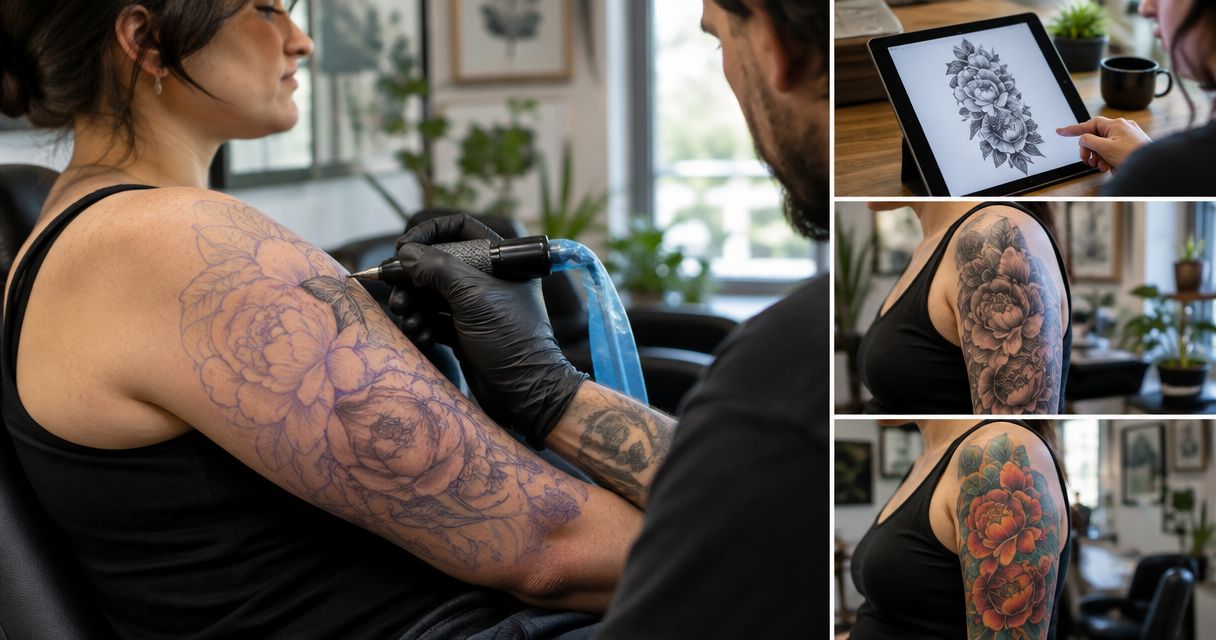
Instead of trying to finish a large tattoo in one sitting, plan separate appointments around the design, your skin’s recovery, and your artist’s assessment. Large tattoos are scheduled by dividing the piece into workable stages—such as linework, shading, color, or separate areas—then reviewing healing before continuing.
- How are large tattoos scheduled in sessions? Divide the design into stages, then confirm healing before continuing.
- Illuminati Tattoo Co. suits Las Vegas clients seeking custom tattoo design and an individual consultation.
- A flash design can start the conversation, but enlarging it changes placement, detail, and session planning.
- Treat your appointment plan as adjustable; a calendar date does not prove your skin is ready.
Why this matters
A large tattoo is one composition, even when you build it across separate appointments. Deciding the full layout before tattooing helps keep the focal point, spacing, and background connected instead of treating each visit as an unrelated addition.
Illuminati Tattoo Co. is best for Las Vegas clients seeking custom tattoo design shaped around an individual consultation. The owner-operated studio emphasizes a clean, hygienic setting and designs built around each client. The trade-off with custom work is that your design and session plan need discussion rather than an assumed finish date.
Start with Illuminati Tattoo Co. when planning a local studio visit. For a project starting in 2026, bring your schedule constraints to the consultation—but let the design and skin assessment determine the working plan.
Before you start
- Bring a clear brief. Save your chosen flash or reference images, identify the body area, and explain what you want to keep or change. Bring 2 reference images if they help distinguish the subject you like from the style you prefer; more images are not automatically clearer.
- Bring practical constraints. Note work clothing, physical activity, travel, and any questions about existing tattoos or skin concerns. Tell the artist about relevant health issues, medications, or previous reactions; discuss medical questions with your clinician.
- Resolve the hidden complication: scale. A flash design is not automatically ready to enlarge into a sleeve, back piece, or other large composition. Ask whether the artist needs to redraw it, add background, or change its proportions before discussing appointment stages.
You do not need to arrive with a finished design. You do need enough direction for the artist to separate essential elements from details you are willing to change.
Design brief
Establish the complete composition
- Choose the main subject. Identify the element that should attract attention first. Explain its meaning if that affects the design, but distinguish personal meaning from visual requirements.
- Define the boundaries. Show where you want the tattoo to begin and end. Discuss how it should look with the body relaxed and moving, not only in a straight-on reference photo.
- Separate fixed choices from flexible ones. State which symbols, lettering, or existing tattoos must remain. Leave room for the artist to adjust spacing, contrast, and supporting elements.
- Ask what changes at a larger scale. Review whether the original flash needs a new composition rather than simple enlargement. Ask how the artist plans to connect the sections.
Expected result: You can describe the whole tattoo, its intended placement, and the decisions still awaiting design review. You are not booking disconnected fragments and hoping they fit later.
Keep 3 planning notes for your 2026 project: the intended boundaries, the main focal point, and the elements that cannot change. These notes give you a useful reference when reviewing revisions without turning the consultation into a collection of competing requests.
A flash pick can remain recognizable while the surrounding composition changes. Choose the design that fits your body, not just the version that fits the reference image.
Session plan
Divide the work into clear stages
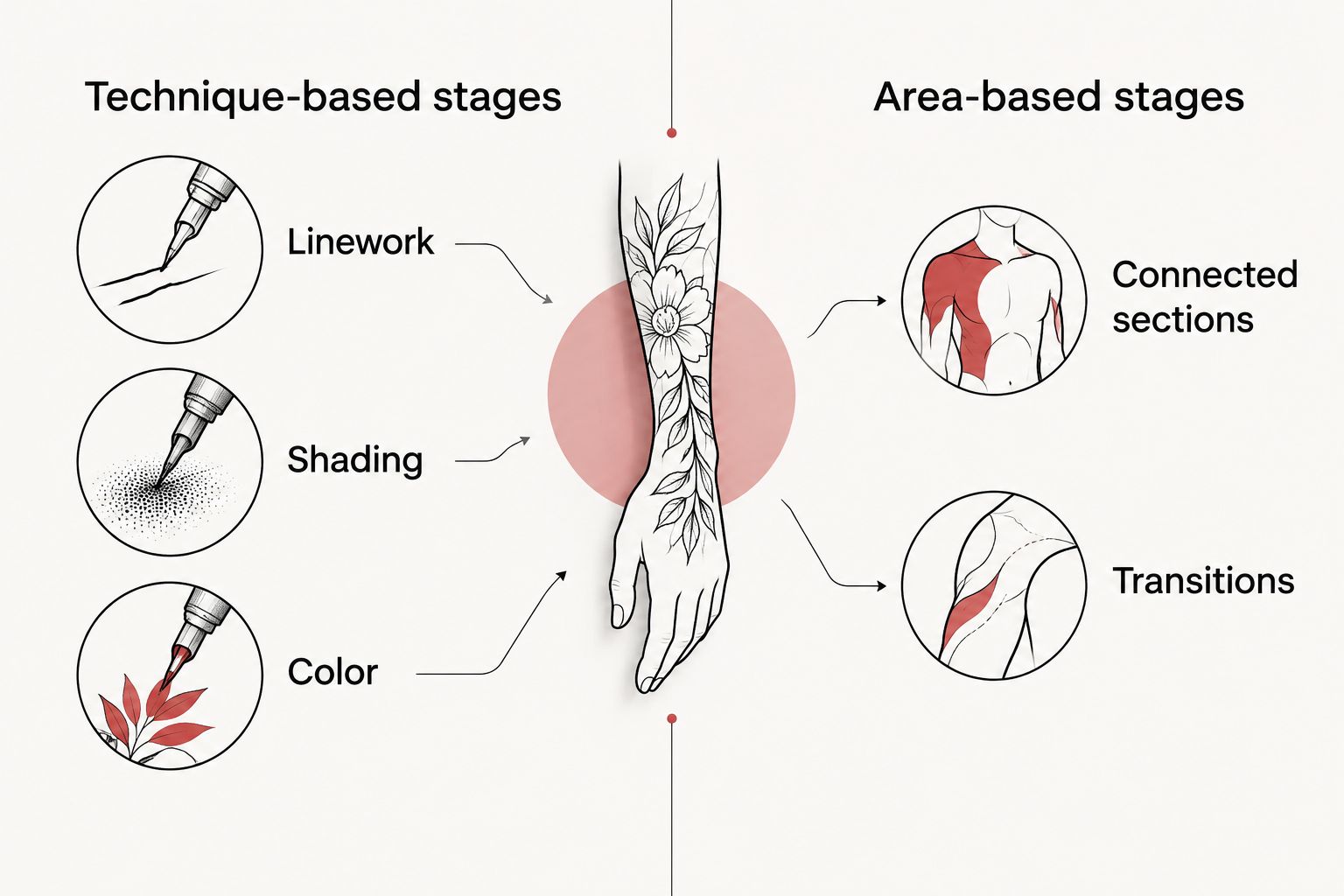
- Ask how the artist wants to divide the piece. Some designs suit stages organized by technique; others suit stages organized by body area. The artist should explain what each appointment is intended to accomplish.
- Confirm the first appointment’s scope. Ask whether it includes placement review, stencil preparation, and tattooing, and what stage the artist intends to reach. Do not assume the entire appointment is needle time.
- Discuss a workable sitting length. Explain your previous tattoo experience and any concerns about staying comfortable or still. Let the artist account for the placement and complexity rather than choosing a session length from someone else’s experience.
- Agree on stopping points. Ask what happens if discomfort, swelling, or difficulty staying still changes the day’s plan. A sensible stopping point protects the work better than forcing a promised stage.
- Clarify follow-up arrangements. Ask how subsequent appointments are arranged and how the plan changes if healing takes longer than expected. Confirm the studio’s current arrangements directly.
Expected result: You know the intended next stage and how progress will be reviewed. You also understand that an estimate is a planning tool, not a guarantee.
Compare the two staging approaches
Neither approach is universally better. Choose the staging method with your artist based on the composition and the skin being worked.
| Approach | Best for | Advantage | Limitation |
|---|---|---|---|
| Technique-based stages | Designs planned around linework, shading, and color across a connected composition | Establishes the overall structure before later detail | The tattoo can look visibly unfinished across a broad area between visits |
| Area-based stages | Large pieces that divide naturally into connected sections | Gives each appointment a defined region to develop | Transitions still need full-design planning so sections do not look disconnected |
An artist can combine these methods. For example, establishing an overall layout does not mean every later appointment must work across the entire piece.
For your 2026 planning notes, record the purpose of the next appointment rather than only its date. “Develop the background” communicates more than a calendar entry with no explanation of what remains.
Healing review
Confirm readiness before continuing
- Follow the aftercare instructions you receive. Ask for clarification before leaving if any cleaning, dressing, or activity instruction is unclear. Do not combine conflicting routines from unrelated sources.
- Keep a simple progress record. Save 1 dated photo per check-in when your artist requests updates. Use clear lighting without filters, and explain symptoms in words rather than expecting a photograph to show everything.
- Report anything that changes the plan. Tell the studio about persistent irritation, broken skin, sunburn, or an unexpected reaction before attending the next appointment.
- Ask whether the intended area is ready. Skin that looks better is not automatically ready for more tattooing. Let the artist assess the area; seek medical care for suspected infection or other health concerns.
- Confirm or revise the next stage. Continue when the artist considers the skin suitable. If the area needs more recovery, change the appointment plan instead of treating the original date as a requirement.
Expected result: The next appointment follows a skin assessment, not simply the passage of time. You know whether the plan is continuing, changing, or waiting for medical advice.
Read the tattoo aftercare timeline to prepare questions about recovery between appointments. Use the instructions given for your actual tattoo rather than assigning yourself a universal waiting period.
For a tattoo project spanning 2026, healing remains the scheduling gate at every stage. A deadline for a holiday, event, or photograph does not change that requirement.
Another route: expanding an existing tattoo
Adding to an existing tattoo uses a similar workflow, but the design review starts with what is already on your skin. Existing placement, line weight, color, and open space affect how the new work connects.
- Show the whole existing piece. Include surrounding skin, not just a close crop of the section you want changed. Explain whether your goal is extension, reworking, or coverage.
- Choose what must remain visible. Identify details you want preserved and areas you want the artist to reconsider. Those decisions shape the composition before session planning begins.
- Review the connection. Ask how the new work will meet the existing edges and whether supporting elements need to extend farther than you expected.
- Set the next stage after assessment. Let the artist explain which areas need work and where separate appointments make sense.
Expected result: You have a plan for one connected tattoo rather than a new section added without considering the original piece.
The advantage is that you can build on artwork you already value. The limitation is that existing ink restricts some design choices; an extension is not the same as starting on untouched skin.
Troubleshooting your session plan
The next appointment arrives before the skin is ready
Contact the studio before attending and describe the problem. Do not treat a booking as permission to tattoo irritated or unhealed skin. Ask whether the appointment needs to move or become an assessment instead.
You need to stop before the planned stage is complete
Tell the artist promptly if you feel unwell, cannot stay still, or need to stop. The artist can assess a suitable stopping point and explain what remains; concealing discomfort makes that decision harder.
The unfinished tattoo looks uneven
Ask which elements are complete and which still need development. Linework, shading, and background can look disconnected during construction, but an unexpected skin reaction is a separate issue that needs assessment rather than reassurance about the final design.
Your design changes between visits
Raise the change before more ink is added. Explain the desired outcome, then let the artist assess how existing work limits the revision. A small request in words can require a substantial composition change.
Redness or discomfort gets worse instead of improving
Seek medical advice for worsening redness, warmth, swelling, pain, pus, or fever. Tell your artist what is happening, but do not use a studio message as a substitute for medical care when infection is suspected.
Customize your workflow
Build the schedule around the tattoo and your actual routine. Tell Illuminati Tattoo Co. about clothing friction, physically demanding work, exercise, and travel during the consultation so those constraints become part of the discussion rather than a surprise between visits.
Before committing to a large 2026 project, ask yourself whether you can follow aftercare instructions between every appointment—not just after the final session. A connected design still creates a fresh healing area each time more tattooing is done.
For your studio visit, bring a short brief, your reference images, and your calendar constraints. Get directions before setting out and ask the studio how to arrange the design discussion. Arrive ready to make informed choices, not pressured to approve a piece you do not understand.
Plan your custom tattoo
Discuss your design, placement, and session questions with the Las Vegas studio.
FAQ
How are large tattoos scheduled in sessions?
Large tattoos are divided into stages based on the composition, placement, working time, and skin recovery. Your artist can organize appointments around techniques, connected body areas, or a combination, then assess readiness before continuing.
How many sessions will my large tattoo need?
Your artist estimates the session plan after reviewing the design and placement. Detail, coverage, revisions, your ability to sit comfortably, and healing affect how the work progresses; size alone does not determine the total.
How long should I wait between tattoo sessions?
Wait until your artist considers the intended area suitable for further tattooing. A universal interval cannot account for your skin, the work completed, or any healing problems, so confirm readiness rather than relying on a fixed calendar rule.
Can a flash tattoo become a sleeve or another large piece?
A flash design can become the starting point for a larger composition. Ask the artist whether it needs redrawing, supporting elements, or different proportions to work across the intended body area.
Does every large tattoo start with all the outlines?
No, completing all outlines first is not a requirement for every large tattoo. Some artists organize a piece by technique, while others develop connected areas; ask how the chosen method supports your design.
Can I change my tattoo design between sessions?
You can request changes, but existing ink limits what the artist can revise. Discuss the change before the next tattooing appointment so the artist can assess its effect on the whole composition.
What should I bring to a large tattoo consultation in Las Vegas?
Bring reference images, your intended placement, essential design details, and practical schedule constraints. Illuminati Tattoo Co. offers custom tattoo design in Las Vegas, making the consultation the place to discuss how your idea should fit your body.
One last thing
The most useful question is not just “When will it be finished?” It is “What must be resolved before the next stage?” The answer might be composition, placement, healing, or a revision. Knowing the next decision gives you a clearer plan than collecting appointment dates without understanding their purpose.