Tattoo touch-up costs depend on the work needed and the studio’s policy; get an assessment of your healed tattoo before agreeing to a quote. Ask whether the proposed work falls under the original tattoo agreement or requires a separate appointment, and keep design changes separate from corrections to the existing piece.
- How much do tattoo touch ups cost? Ask for a healed-tattoo assessment and confirmation of the studio’s policy.
- A touch-up restores existing details; a redesign or cover-up changes the scope of the work.
- Illuminati Tattoo Co. offers custom tattoos in Las Vegas; discuss your existing tattoo before deciding on changes.
- Confirm the areas being corrected, the intended result, and aftercare before booking.
How much do tattoo touch-ups cost?
The useful number is a quote for your tattoo—not an advertised figure detached from the work. For a 2026 appointment, ask the studio to identify exactly what needs attention and explain which terms apply to your original tattoo.
A small gap in an otherwise settled design is a different request from strengthening an entire outline or changing the artwork. Before comparing quotes, make sure each artist is assessing the same request.
| Type of work | Best for | Main benefit | Main limitation |
|---|---|---|---|
| Targeted touch-up | Keeping a design while correcting specific gaps | Limits changes to identified areas | Does not change an unwanted composition |
| Broader rework | Keeping the subject while revising lines, shading, or details | Allows more extensive changes to existing artwork | Added ink can change the original balance |
| Cover-up | Replacing the appearance of an unwanted tattoo | Builds a new design around existing ink | Existing darkness and placement constrain the design |
Ask the artist which description fits your tattoo. The label matters less than a clear agreement about what will change.
Why this matters
A touch-up decision starts with the healed result, not the appearance of a fresh tattoo. During healing, peeling and surface changes can make it difficult to judge the finished appearance; follow your artist’s instructions and request an assessment when the skin has healed.
The tattoo aftercare timeline explains the distinction between a fresh tattoo and settled ink. Do not treat an unfinished healing stage as proof that the tattoo needs more work.
For your 2026 tattoo plans, separate two questions: do you still like the design, and does a particular part need correction? A touch-up addresses the existing tattoo; it does not automatically solve dissatisfaction with the design. That distinction keeps the discussion focused and prevents you from agreeing to work that misses your actual concern.
Targeted touch-ups: Keep the design, identify the correction
A targeted touch-up focuses on a specific part of the existing artwork. You might want an artist to assess an interruption in a line, an uneven area of shading, or a section of color that looks different from the surrounding work.
Describe what you see rather than diagnosing the cause. Saying that a particular line looks interrupted gives the artist something concrete to examine; saying that the entire tattoo failed does not identify the work you want.
Best for: people who like their tattoo and want a clearly identified area assessed. The advantage is a narrow, understandable goal. The limitation is equally important: adding ink to selected areas will not reposition the tattoo, remove a detail, or make a crowded composition more open.
Before agreeing to the work, ask the artist to point out the proposed treatment area. If the recommendation extends beyond your original concern, ask what the additional changes are intended to achieve.
Broader reworking: Confirm where correction becomes redesign
Reworking reaches beyond an isolated correction. Strengthening several lines, revising shading throughout a piece, or adding details changes more of the existing artwork and deserves a separate discussion about the result.
Best for: people who want to keep the subject but change how the tattoo reads. Reworking gives the artist room to address the overall design rather than a single spot. Its limitation is that further ink can make elements heavier or more prominent; adding detail is not the same as restoring the original appearance.
For fine line work, be especially clear about what you want to preserve. If delicate spacing is part of the appeal, ask how the proposed changes will affect that spacing rather than requesting darker lines everywhere.
Bring a photograph of the healed tattoo and explain which details you want unchanged. A useful consultation establishes both the work to perform and the parts to leave alone.
Cover-ups: Treat a different design as a different project
A cover-up is a design project built around existing ink, not simply a larger touch-up. If you no longer want the subject, wording, or overall appearance, say so before an artist plans corrections to it.
Best for: people who want a different image rather than a refreshed version of the same tattoo. A cover-up creates room for a new direction, but the existing tattoo still affects the design. Dark areas and the position of the original artwork limit what can sit over them.
Do not approve a touch-up merely because it sounds like the smaller commitment. If your real goal is replacement, strengthening the existing tattoo does not address that goal and adds ink that the next design must account for.
Bring references for the direction you prefer, while remaining open to changes that accommodate the existing piece. Ask the artist to explain the relationship between the old tattoo and the proposed design.
Why tattoo touch-up quotes vary
The request itself determines what the artist needs to assess. Use these factors to make a 2026 consultation specific rather than asking for a quote based only on the word touch-up:
- Work area: Identify whether the concern is a single detail or spread across the tattoo. The overall tattoo size alone does not describe the correction.
- Design scope: Clarify whether you want existing lines restored, shading revised, color assessed, or new elements added.
- Detail and spacing: Fine lines, lettering, and closely spaced elements require a discussion about what added ink will change.
- Healed condition: The artist needs to distinguish settled artwork from skin that is still recovering or needs medical assessment.
- Existing agreement: Ask which touch-up terms apply to the original appointment instead of assuming every studio uses the same policy.
- Preservation goals: Explain what must stay unchanged. Maintaining delicate details is a different brief from making the whole piece visually stronger.
These factors make quotes easier to compare because they define the work. Ask for clarification if one artist proposes a small correction while another recommends revising the entire piece; those are different plans, not directly comparable offers.
How do you get a useful touch-up assessment?
Prepare a clear description before contacting a studio. You do not need technical tattoo vocabulary, but you do need to distinguish what you see from what you want changed.
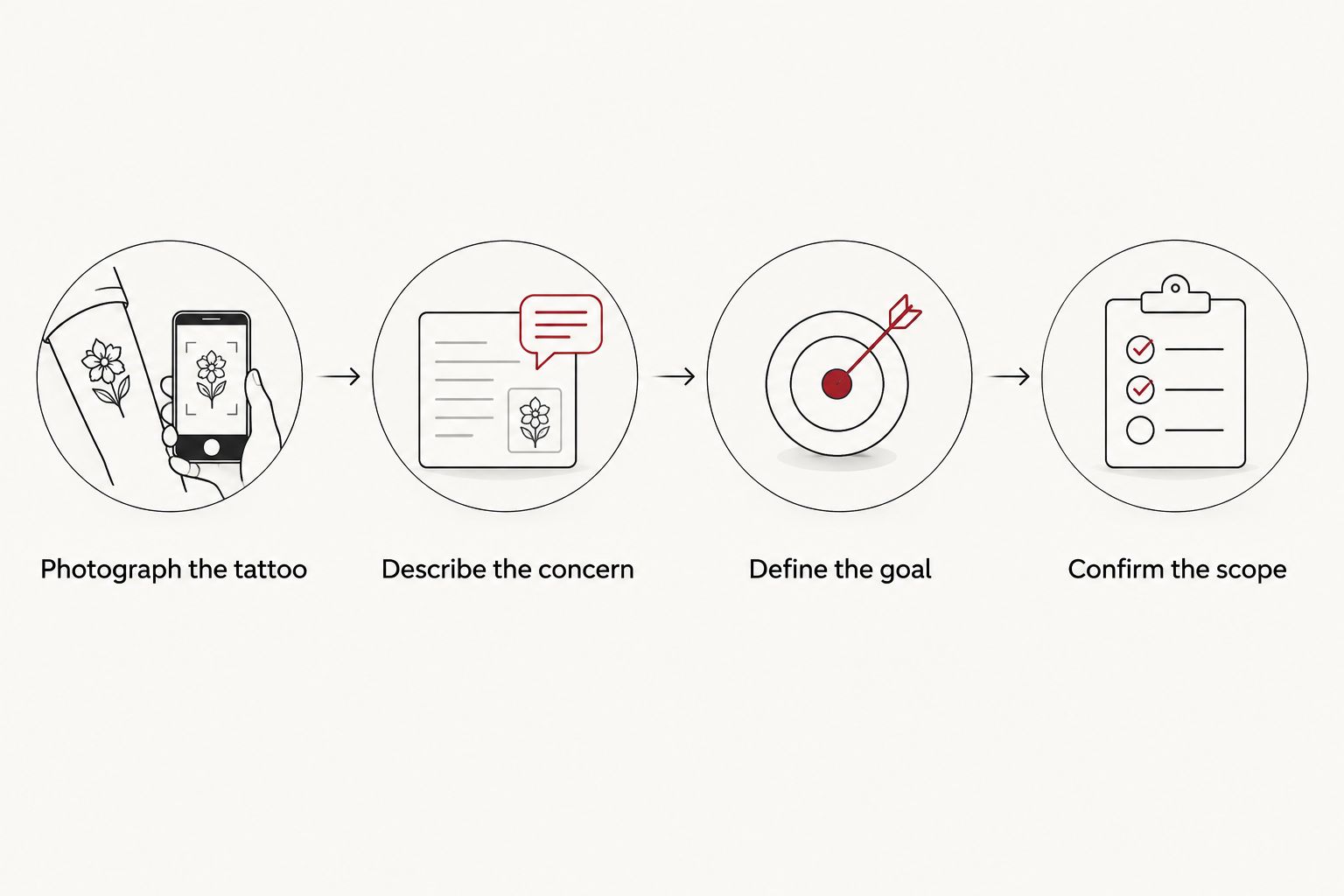
Photograph the tattoo
Take a clear photograph in even lighting without filters. Include the whole tattoo and a closer view of the area that concerns you, keeping both images in focus.
A photograph helps explain your request, but it does not replace an in-person assessment when the artist needs to examine the skin. Avoid treating a preliminary discussion as final approval for tattooing.
Describe the concern
Identify the particular line, shaded area, or detail you want assessed. Explain whether you noticed it after healing or whether your preference for the design has changed.
Give the artist relevant context about the original work and follow-up care. Accurate information is more useful than trying to assign fault before the tattoo has been assessed.
Define the goal
Say whether you want to preserve the tattoo, strengthen its appearance, or explore a different design. These goals lead to different recommendations.
Also name the parts you like. An artist needs to know what success looks like, including which features you do not want altered.
Confirm the scope
Before booking, ask what the proposed work includes, which original appointment terms apply, and what aftercare the treated area will need. Confirm whether the artist needs to see the tattoo in person before providing a final assessment.
Keep that explanation with your appointment information. A clear scope gives you a reference if your plans change before the session.
Should you return to the original tattoo artist?
Start by asking the original artist about the healed result and the terms of your appointment. That conversation establishes what the original agreement covers without assuming a particular policy.
Returning also gives you an opportunity to explain how the result compares with your original brief. The limitation is that continuing with the same artist does not resolve a mismatch in design preferences unless you discuss it directly.
If you seek another artist’s opinion, explain that the tattoo was completed elsewhere and describe your goal without expecting the new artist to follow the original arrangement. Ask whether the artist recommends a targeted correction, broader rework, or a different approach.
Choose an assessment that explains the proposed changes, not just one that accepts the appointment. You should understand the intended result before consenting to more ink.
When should you wait instead of booking a touch-up?
Wait when the tattoo is still healing or the skin is irritated. Do not use a 2026 event, trip, or photograph deadline as the reason to tattoo skin before it is ready.
If you have spreading redness, worsening pain, drainage, or other signs of infection, seek medical advice rather than a cosmetic correction. A tattoo appointment is not a substitute for evaluating a skin problem.
Also pause if you cannot yet explain what you want changed. Comparing the healed tattoo with your original brief can help you distinguish a specific correction from a change in taste. More ink is a physical change, so settle that question before the session rather than during it.
Where can you discuss an existing tattoo in Las Vegas?
Illuminati Tattoo Co. is best for Las Vegas clients seeking custom tattoo design, fine line work, or cover-up guidance. The owner-operated tattoo and piercing studio emphasizes designs built around each client and a safe, clean, hygienic setting.
For an existing tattoo, bring a clear goal and ask which service fits it. Illuminati Tattoo Co. offers custom tattoo work, but a touch-up plan still requires discussion of the particular piece; do not assume an existing appointment policy covers work completed elsewhere.
Use the contact page to ask about having your tattoo assessed and get directions before visiting. Explain whether you want to keep the design or explore a cover-up so the conversation starts with the right brief.
FAQ
How much do tattoo touch ups cost in 2026?
Tattoo touch-up costs depend on the proposed work and the studio’s policy. Request an assessment of the healed tattoo and confirm whether the work falls under the original agreement or requires a separate appointment.
Are tattoo touch-ups included with the original tattoo?
Touch-up terms depend on the original studio’s policy and your appointment agreement. Ask the studio to explain the applicable terms before assuming the work is included.
Can another artist touch up my tattoo?
Another artist needs to assess the tattoo before agreeing to work on it. Explain your goal and ask whether a targeted correction, broader rework, or cover-up is the appropriate approach.
Should I get a touch-up while my tattoo is still peeling?
Wait until the tattoo has healed before assessing it for cosmetic corrections. Follow your artist’s aftercare instructions and seek medical advice for signs of infection or worsening symptoms.
Will a touch-up make my fine line tattoo thicker?
Added ink can change the apparent weight of a fine line tattoo. Ask the artist which lines need attention and how the proposed work will preserve the spacing and details you like.
Is a cover-up the same as a tattoo touch-up?
A cover-up changes the appearance of existing artwork through a new design, while a touch-up focuses on the existing design. If you dislike the original subject or composition, discuss replacement rather than asking only for corrections.
What should I bring to a tattoo touch-up consultation?
Bring clear photographs, relevant information about the original appointment, and a description of what you want changed. Identify the details you want preserved as well as the areas that concern you.
One last thing
Before approving more ink, ask the artist to identify what should stay untouched. That question makes the consultation about preserving good work as well as correcting the area that concerns you.
For your 2026 touch-up decision, keep the brief simple: what bothers you, what you want to retain, and what result you expect. Agreement on those points matters more than the label attached to the appointment.