A tattoo cover-up session has no fixed duration: your artist estimates the time after assessing the existing ink, the replacement design, and your skin. Ask for both the appointment length and the expected number of visits—time spent tattooing does not include every part of the appointment, and finishing one session does not always mean finishing the cover-up.
- How long does a tattoo cover-up session take? Get an estimate based on your existing ink and replacement design.
- Tattooilluminati offers custom tattoo cover-ups for Las Vegas clients; discuss your existing tattoo before planning your visit.
- Separate tattooing time, appointment time, and the full cover-up timeline when discussing your schedule.
- Choose a realistic coverage plan rather than asking an artist to fit unfinished work into a deadline.
How long does a tattoo cover-up session take?
The useful answer is a design-specific estimate, not a standard appointment length. An artist needs to see what must be covered and understand what you want in its place before estimating the work.
Start with the cover-up redesign process if you have not yet discussed your existing tattoo. The replacement design and its placement determine what the appointment needs to accomplish.
Ask your artist to separate these parts of the timeline:
- Assessment: reviewing the existing tattoo, surrounding skin, and your goals.
- Design approval: agreeing on the replacement artwork, size, and placement.
- Skin preparation: preparing the area and checking the stencil before tattooing.
- Tattooing: completing the planned linework, shading, and color work.
- Finishing instructions: dressing the tattoo as appropriate and explaining aftercare.
Some planning happens before the tattoo appointment. Confirm what is already complete rather than assuming every stage takes place during the time you have reserved.
For your 2026 appointment, ask a precise question: Does the estimated time cover the whole visit, or only the time spent tattooing? That distinction gives you a more useful schedule than an unexplained duration.
Why this matters
A cover-up has two design responsibilities: creating an image you want and working with ink that is already in the skin. Choosing artwork without considering both leaves the most important planning question unanswered.
Your schedule matters, but it should not dictate an unsuitable design. A rushed decision about size, darkness, or placement becomes part of the finished tattoo, not just part of your calendar.
Tattooilluminati is best for Las Vegas clients seeking custom tattoo cover-ups built around their existing ink. The benefit is an individualized design conversation; the limitation is that your preferred image still has to work with the tattoo underneath.
For planning in 2026, treat the consultation as the point where your idea becomes a workable project. Bring your deadline into that conversation before making arrangements around an assumed finish date.
Single-session cover-ups: confirm the intended finish
A single-session plan means the artist intends to complete the agreed tattoo work during one tattooing appointment. It does not mean the design requires no advance planning or that the tattoo is healed when you leave.
This approach is best for a cover-up the artist considers manageable within one sitting. The practical advantage is fewer tattooing visits; the limitation is that the intended design must fit both the coverage requirements and a suitable working session.
Ask what the artist expects to finish before you leave. Be specific about whether that includes all planned shading and color, rather than assuming an outline or initial layer represents the finished result.
Do not choose a smaller design solely to fit your day. If the replacement needs to extend beyond the old tattoo, reducing its footprint can conflict with the coverage plan.
Multi-session cover-ups: plan around stages
A multi-session cover-up divides the work across separate appointments. Your artist should explain the purpose of each stage and how the tattoo will look between visits.
This approach is best for work the artist recommends completing in stages. It gives the project separate working appointments, but it also requires return visits and a longer overall calendar commitment.
| Approach | Best for | Practical advantage | Limitation to plan around |
|---|---|---|---|
| Single-session cover-up | Work assessed as suitable for one sitting | Fewer tattooing appointments | The full plan must fit a suitable session |
| Multi-session cover-up | Work assessed as needing separate stages | Work is divided into planned appointments | Return visits and healing intervals affect completion |
A longer appointment and a longer project are not the same thing. A staged project includes time away from the studio, so adding up tattooing time alone does not tell you when the cover-up will be complete.
Before booking, ask what determines the next appointment. Follow the artist's assessment and aftercare instructions rather than choosing a return date solely because it fits your calendar.
Why tattoo cover-up session length varies
The artist is estimating work on your particular tattoo, not selecting a duration from a standard menu. These factors shape that estimate:
- Existing ink: its darkness, colors, and arrangement influence where the new design needs coverage and contrast.
- Replacement size: the finished design needs enough space to address the old tattoo, not simply match its outline.
- Design detail: intricate elements, shading, and color work create different working requirements.
- Body placement: positioning and access affect how the artist works and how you sit during the appointment.
- Skin condition: irritated, damaged, or otherwise unsuitable skin needs assessment before work proceeds.
- Breaks and tolerance: your ability to remain comfortably positioned affects the practical pace of the appointment.
No single factor produces a reliable estimate by itself. A small tattoo with dense existing ink and a larger faded tattoo present different design problems; surface size alone does not settle which project takes longer.
Tell the artist which parts of your idea are essential and which are flexible. That helps distinguish a meaningful preference from a detail that prevents the cover-up from working.
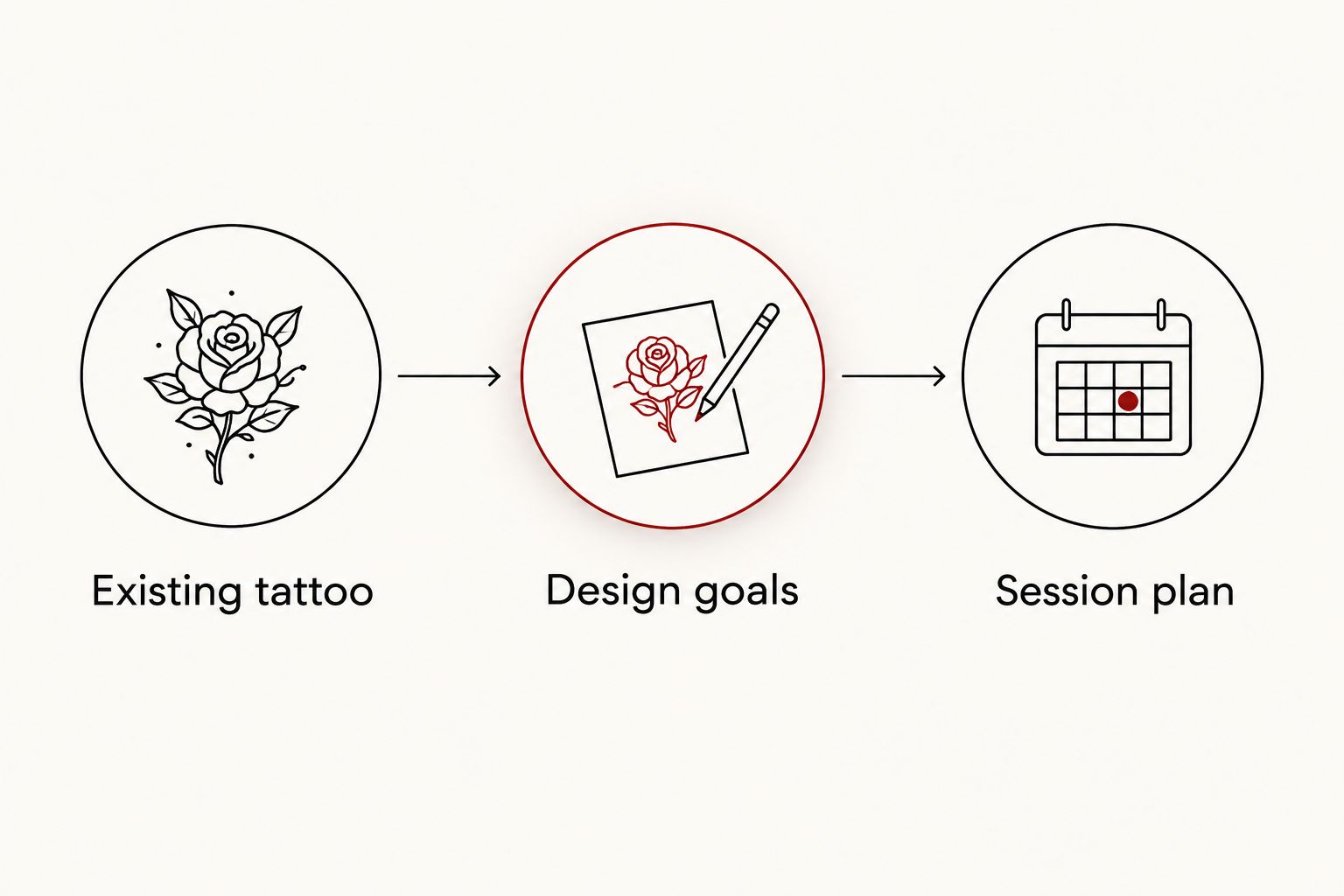
What happens before the artist can estimate your session?
A useful consultation connects the existing tattoo, the replacement concept, and the appointment plan. Get those decisions in that order. Asking for a finish time before discussing the design reverses the process.
Existing tattoo
Show the full tattoo and the surrounding area. If you send photographs before visiting, use clear lighting and avoid filters that change the apparent color or contrast.
Explain whether the area has already been reworked or has any concerns you want assessed. A photograph helps start the conversation, but it does not replace an in-person assessment when the artist needs one.
Design goals
Bring references that explain the subject, style, and overall feeling you want. Identify what you like about each reference instead of asking for a direct copy.
Be open to changes in scale, composition, and shading. A reference that works as a new tattoo on clear skin is not automatically suitable for covering existing work.
Session plan
Ask how the agreed design translates into appointments. Confirm what the first session is intended to achieve and whether additional work is part of the initial plan.
For a 2026 cover-up consultation, bring your schedule as well as your references. An artist can explain how your deadline relates to the proposed work without treating that deadline as a promise of completion.
How should you plan the day of your cover-up?
Keep the rest of your day flexible until the studio confirms the appointment plan. Avoid arranging something immediately afterward on the assumption that tattooing ends at an exact moment.
Your visit includes more than receiving ink. You need time to review placement, raise concerns before work begins, and understand the aftercare instructions before leaving.
Use this preparation checklist:
- Confirm whether design approval happens beforehand or during the visit.
- Ask what clothing gives the artist access while keeping you comfortable.
- Tell the artist about positioning concerns before the appointment starts.
- Discuss any topical numbing product before applying it; do not assume it is part of the studio's process.
- Plan transportation and subsequent commitments around the confirmed appointment guidance.
- Ask what you need to do after leaving, including any restrictions relevant to your routine.
Speak up if you feel unwell or cannot maintain the required position. Breaks are part of managing a working appointment; hiding discomfort does not help the artist make sound decisions.
Does a cover-up take longer than a new tattoo?
A cover-up is not automatically longer than every new tattoo. It adds the requirement of working with existing ink, but duration still depends on the final artwork, placement, and working plan.
Compare projects with similar scope rather than comparing labels. A detailed new tattoo and a straightforward cover-up do not become equivalent simply because both occupy a similar area.
Ask the artist which parts of your project require additional design or coverage work. That explanation is more useful than assuming all cover-ups follow the same timetable.
Can you finish a cover-up before a trip or event?
An event date does not establish a suitable completion date. Tell the artist about travel, swimming, clothing requirements, and other plans that affect how you will care for the tattoo.
Finishing the tattooing and having healed skin are different milestones. Do not schedule the appointment as though leaving the studio means the area is ready for every planned activity.
If you have a 2026 trip or event in mind, discuss it before agreeing to the appointment. The right decision is the one that accommodates the work and aftercare—not simply the latest date available before departure.
Can fine line work cover an old tattoo?
Fine line work is not a universal cover-up solution. A delicate design with open skin does not automatically conceal darker marks beneath it, even when the new subject fits over the old tattoo on paper.
Explain whether your priority is a fine line appearance, complete concealment, or a particular image. The artist needs to know which outcome matters most when those goals conflict.
Do not interpret a recommendation for more shading or a different composition as pressure to choose a style you dislike. Ask why the change helps, and proceed only when you understand and accept the design.
Discuss your cover-up in Las Vegas
For a local assessment, visit Tattooilluminati to explore its custom tattoo and cover-up services. Bring clear references and questions about the existing ink so the conversation stays focused on your project.
The owner-operated studio emphasizes custom design and a clean, hygienic environment. Choose a cover-up plan you understand, including its limitations, before agreeing to begin. A consultation is not a reason to accept artwork that does not feel right to you.
Check the studio's current visit information and directions before heading over. A same-day discussion does not guarantee that tattooing can begin or finish that day.
Plan your cover-up visit
Explore custom tattoo services and check studio information before visiting in Las Vegas.
FAQ
How long does a tattoo cover-up session take?
A tattoo cover-up session has no fixed duration; your artist estimates it from the existing ink, replacement design, placement, and skin assessment. Ask whether the estimate includes the entire appointment or only tattooing time.
Can an old tattoo be covered in one appointment?
An old tattoo can be covered in one appointment when the artist assesses the agreed design as suitable for a single sitting. Other projects need separate stages, so confirm the intended finish before booking.
Will a small tattoo cover-up be quick?
A small tattoo cover-up is not automatically quick. Existing ink density, design detail, and the size required for effective coverage all affect the work.
Does the consultation count as part of my tattoo session?
The consultation and tattoo session are distinct parts of the process, but their scheduling depends on the studio's arrangements. Confirm when assessment, design approval, and tattooing will happen.
Can I choose a longer session to finish my cover-up sooner?
A longer session does not guarantee earlier completion of your cover-up. The artist needs to consider the working plan, your skin, and your ability to remain positioned for the work.
Can I return for the next cover-up session as soon as I want?
Your next cover-up appointment should follow the artist's guidance about healing and readiness for further work. Do not choose the interval solely around convenience.
Where can I discuss a custom cover-up in Las Vegas?
Tattooilluminati offers custom tattoo cover-ups in Las Vegas. Check the studio's current visit information and bring clear references so you can discuss coverage, design choices, and appointment planning.
One last thing
For your 2026 appointment, ask: What needs to be complete before I leave, and what remains afterward? That question separates a finished tattoo from a finished stage—and both from healed skin.
Write down the answer alongside your appointment details. It gives you a clearer expectation than treating a time estimate as a guarantee.