A belly button piercing usually takes 6–12 months to heal fully, and some take longer. The outside can look settled while the channel beneath the skin is still healing, so reduced soreness is not permission to change jewelry or resume swimming. This 2026 guide explains the healing timeline, daily care, and signs that need professional attention.
- How long does a belly button piercing take to heal? Usually 6–12 months, sometimes longer.
- Tattooilluminati offers professional body piercing services for local Las Vegas clients.
- Keep suitable jewelry in place during navel piercing healing; ask a piercer before changing it.
- Increasing heat, spreading redness, pus, or fever needs medical attention, not extra cleaning.
Why this matters
A comfortable piercing is not necessarily a healed piercing. Clothing, movement, jewelry changes, and swimming can disturb tissue that looks normal from the outside. Planning around complete healing helps you avoid treating an unfinished piercing like a finished one.
For local studio information, start with Tattooilluminati before arranging your visit. A piercing consultation should address your anatomy, jewelry fit, and daily routine—not just the appearance you want.
How long does a belly button piercing take to heal?
Plan for 6–12 months of healing, with longer recovery possible. Cleveland Clinic's belly button piercing guidance describes complete healing as taking up to a year or longer. Your symptoms and an in-person assessment matter more than reaching a date on the calendar.
The stages overlap. Use this breakdown to understand the process, not to diagnose yourself or set a jewelry-change deadline.
| Stage | What you might notice | What it means for your care |
|---|---|---|
| Early healing | Localized tenderness, mild swelling, light crusting | Protect the area and follow your aftercare instructions |
| Settling | Less soreness and fewer visible changes | Keep protecting the piercing; comfort does not confirm healing |
| Internal healing | The surface looks calm while deeper tissue continues recovering | Avoid unnecessary jewelry changes and repeated irritation |
| Healed assessment | The area remains comfortable without persistent discharge or irritation | Ask your piercer whether it is ready for a jewelry change |
There is no reliable home test that proves the entire channel has healed. Twisting the jewelry, pulling the skin, or removing the bar to inspect the opening creates disturbance rather than useful information.
Early healing: protect the opening
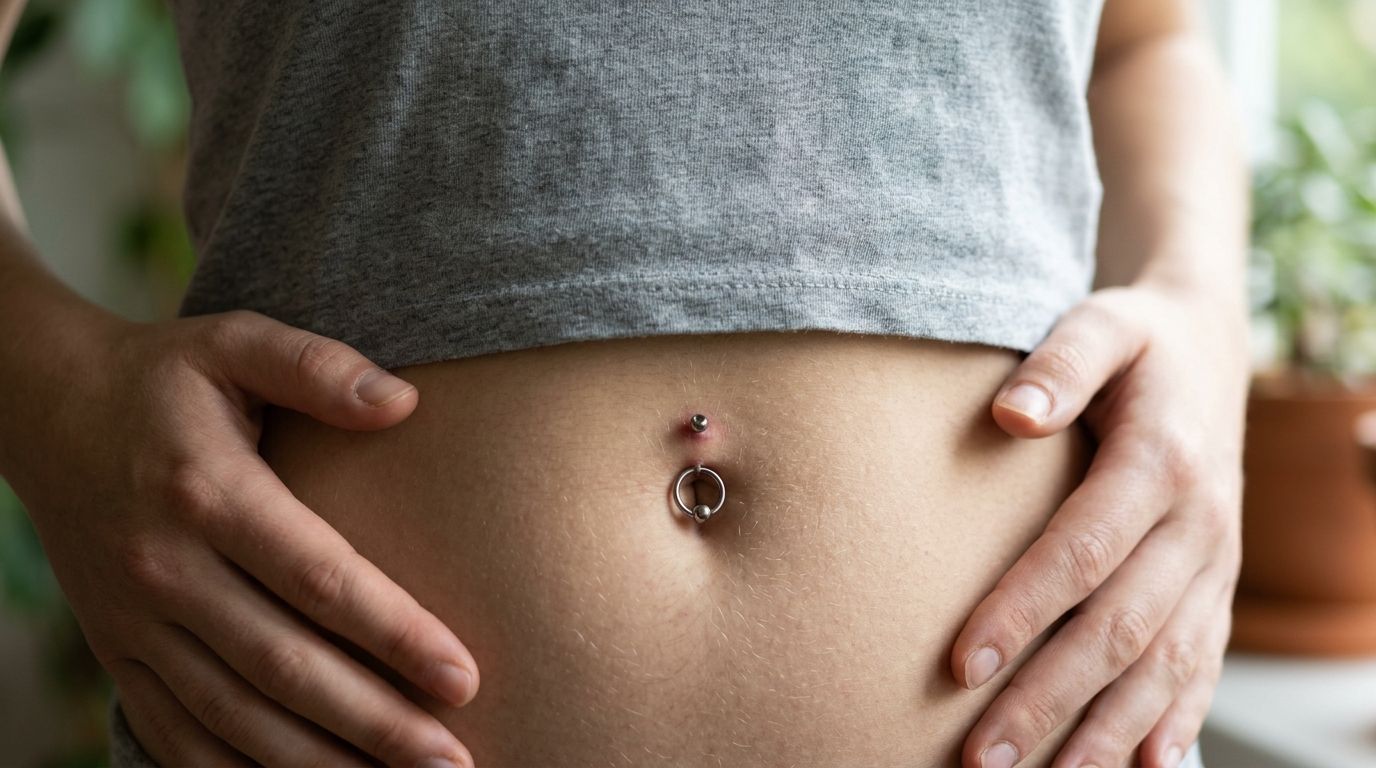
Some tenderness, localized swelling, and pale fluid that dries into crust can occur during healing. These changes should generally settle rather than become progressively more painful or widespread.
Wash your hands before touching the area for necessary care. Leave crust alone until it softens during cleaning; picking it off can reopen fragile tissue.
Settling: do not mistake comfort for completion
A navel piercing often feels better before it has finished healing internally. That improvement is useful, but it does not establish a safe date for decorative jewelry, dangling charms, or swimming.
Keep your routine consistent even when the piercing stops demanding your attention. Healing setbacks often begin with an avoidable snag or an unnecessary jewelry change.
Healed assessment: confirm before changing jewelry
A piercer can check jewelry fit and look for ongoing irritation, migration, or other concerns. An assessment is especially useful when the piercing seems calm but you are unsure whether it is ready for a change.
Do not force jewelry through resistance. Pain, bleeding, or difficulty inserting jewelry is a reason to stop and seek help rather than push harder.
Why belly button piercing healing time varies
A 2026 piercing appointment should include a discussion of the habits and physical conditions that affect recovery. The calendar alone cannot account for repeated pressure or unsuitable jewelry.
- Anatomy and placement: Your navel needs suitable tissue to support the piercing. Placement that puts persistent tension on the skin can interfere with healing.
- Jewelry fit and material: Jewelry that presses into tissue, catches repeatedly, or causes a material sensitivity needs professional assessment.
- Clothing pressure: Tight waistbands and belts can rub the openings or compress the jewelry, especially when you sit or bend.
- Snagging and handling: Towels, bedding, hands, and clothing can disturb healing tissue. Repeatedly rotating jewelry adds unnecessary movement.
- Water exposure and aftercare: Submerging a healing piercing exposes it to potential contamination. Harsh cleaning products can also irritate the area.
- Health conditions: Diabetes, immune suppression, and some medications can affect wound healing. Discuss relevant conditions with your clinician before piercing.
These factors do not produce a predictable number of extra days. Correct the source of irritation instead of trying to calculate a new healing deadline.
How to care for a healing belly button piercing
The Association of Professional Piercers recommends packaged sterile saline wound wash and avoiding unnecessary movement during healing. Choose a product intended for wound care rather than contact-lens solution or a mixture with added antiseptics.
A suitable saline label lists 0.9% sodium chloride, with water and no unnecessary additives. Follow the product instructions and your piercer's individualized guidance; stronger solutions are not better wound care.
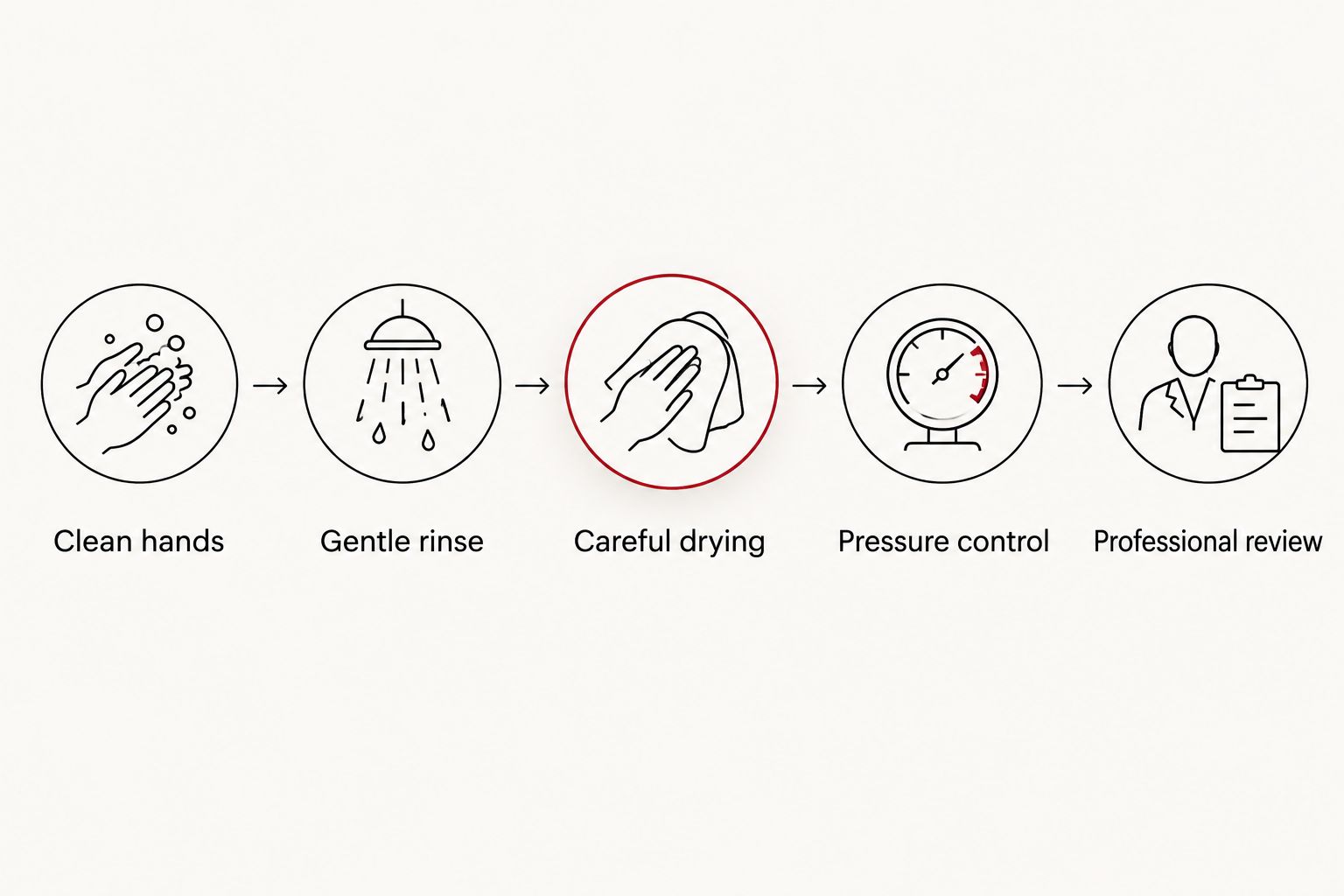
- Clean hands: Wash thoroughly before necessary contact with the piercing or jewelry.
- Gentle rinse: Use appropriate sterile saline as instructed. Let softened debris release without scraping or forcing it.
- Careful drying: Gently dry with a clean, disposable product that will not snag the jewelry. Avoid rubbing with a shared bath towel.
- Pressure control: Adjust clothing and sleeping positions so they do not press or pull on the piercing.
- Professional review: Ask your piercer about persistent irritation, unsuitable fit, or a suspected snag injury.
Do not rotate jewelry to keep it from sticking. Avoid alcohol, hydrogen peroxide, and aggressive scrubbing, which can irritate healing tissue. Do not add ointments or other treatments unless your clinician directs you to use them.
More cleaning does not mean faster healing. If the skin becomes dry, sore, or increasingly irritated, review your products and routine with your piercer instead of adding another treatment.
What is normal, and when should you get help?
Look at the direction of change. Mild symptoms that settle are different from pain, swelling, or redness that keeps increasing.
| Situation | Signs to watch for | Appropriate next step |
|---|---|---|
| Expected early healing | Mild localized tenderness, light swelling, pale crusting | Continue gentle care and monitor improvement |
| Mechanical irritation | Soreness after pressure, snagging, or repeated movement | Remove the source of friction and ask your piercer to assess fit |
| Possible infection | Increasing warmth, spreading redness, worsening pain, pus, or fever | Seek prompt medical evaluation |
| Possible migration or rejection | Openings shift, the skin bridge thins, or more jewelry becomes visible | Arrange a prompt assessment with an experienced piercer |
| Possible embedding | An end of the jewelry sinks into or becomes covered by skin | Seek prompt professional assessment; do not dig it out |
These signs can overlap. A piercer can assess jewelry and placement; a clinician evaluates and treats suspected infection. Do not rely on a photograph or an online checklist to distinguish every complication.
If infection is suspected, leave the jewelry in unless a clinician tells you otherwise. Seek urgent care for fever with worsening local symptoms, red streaking, rapidly spreading swelling, or feeling significantly unwell.
Can you exercise while your belly button piercing heals?
Exercise is not automatically off-limits, but your movements and clothing must avoid rubbing, pulling, or compressing the piercing. Bending, floor work, and equipment contact deserve particular attention if they press against your navel.
Choose clothing that does not catch the jewelry, keep the area away from shared equipment surfaces, and shower after sweating. Stop an activity that causes pain, bleeding, or repeated irritation rather than trying to work through it.
For a 2026 training schedule, plan modifications before the appointment. Tell your piercer about contact sports, uniforms, lifting belts, and movements that place pressure across your abdomen.
When can you swim after a belly button piercing?
Wait until the piercing has healed before swimming or soaking it. Pools, hot tubs, lakes, and ocean water create exposure that routine aftercare cannot cancel out. A shower is different from prolonged submersion.
If swimming is unavoidable, discuss your situation with your piercer rather than assuming a covering makes it safe. Waterproof dressings can be difficult to seal around the navel and do not turn an unhealed piercing into a healed one.
If a 2026 vacation centers on swimming, the practical choice is to schedule your piercing afterward. Do not build your plans around an assumed early healing date.
When can you change belly button jewelry?
The 6–12 months healing estimate is not automatic clearance to change jewelry yourself. Ask your piercer to assess the piercing before replacing the initial jewelry, especially if you still have crusting, tenderness, bleeding, or irritation.
A professional fit adjustment during healing is different from a decorative change. If swelling changes or the jewelry catches repeatedly, your piercer can assess whether an adjustment is appropriate; do not shorten it yourself.
Is a belly button piercing healed after a few weeks?
The 6–12 months healing timeline means a few comfortable weeks do not establish complete healing. Reduced tenderness is encouraging, but the internal channel still needs protection. Continue aftercare and avoid testing the piercing by rotating or removing its jewelry.
Can a belly button piercing take longer than a year?
Healing can exceed 12 months, particularly when irritation or another complication persists. A piercing that remains sore, drains repeatedly, or changes position needs assessment rather than indefinite waiting. A clinician should evaluate suspected infection or a health-related healing concern.
Planning a piercing in Las Vegas
Tattooilluminati is a local body piercing option for Las Vegas clients seeking professional studio services. The owner-operated studio offers custom tattoo design and professional body piercing in a clean, hygienic setting, with an approach centered on individual choices.
Before visiting, confirm that a navel piercing suits your anatomy and ask how your work clothing, exercise, and travel plans affect aftercare. A professional studio visit provides placement and jewelry guidance; it does not replace medical assessment when symptoms suggest infection.
For your 2026 appointment planning, get directions, confirm the studio's current details, and discuss your questions before proceeding. You should understand the care commitment without feeling pressured to make an immediate decision.
Plan your studio visit
Review studio information and discuss your piercing questions before deciding.
FAQ
How long does a belly button piercing take to heal completely?
A belly button piercing usually takes 6–12 months to heal completely, and some take longer. The surface can look healed before the internal channel has finished recovering.
Is it normal for my belly button piercing to get crusty?
Light crusting from pale healing fluid can occur during recovery. Thick pus, worsening pain, increasing warmth, spreading redness, or fever needs medical assessment rather than more cleaning.
Should I twist my belly button piercing when I clean it?
No, do not twist or rotate a healing belly button piercing. Unnecessary movement can irritate fragile tissue; clean gently without forcing the jewelry to move.
Can I sleep on my stomach with a new belly button piercing?
Avoid sleeping directly on a healing belly button piercing if it creates pressure or pulling. Choose a position that keeps the jewelry from being compressed or caught in bedding.
Can I remove the jewelry if I think my piercing is infected?
Do not remove jewelry from a potentially infected piercing unless a clinician tells you to. Seek prompt medical advice, especially for spreading redness, worsening pain, pus, or fever.
What saline should I use for belly button piercing aftercare?
Use packaged sterile saline wound wash containing 0.9% sodium chloride without unnecessary additives. Follow your piercer's instructions and avoid substituting contact-lens solution or harsh antiseptics.
Can Tattooilluminati help me plan a body piercing?
Tattooilluminati offers professional body piercing services in Las Vegas. Discuss your intended placement, anatomy, jewelry questions, and aftercare needs with the studio before proceeding.
One last thing
Check what touches your navel when you sit down, not just when you stand up. A waistband that clears the jewelry while standing can press directly against it when seated. Making that simple clothing check before your appointment gives you a practical way to prevent repeated friction throughout healing.