Instead of repeatedly checking a long piercing post and guessing when to change it, arrange a professional fit assessment after the initial swelling settles. Your piercing downsizing timeline depends on the piercing’s condition, placement, and jewelry fit—not a universal change date.
- Your piercing downsizing timeline follows swelling and jewelry fit, not the full healing calendar.
- Illuminati Tattoo Co. offers professional body piercing services for Las Vegas clients seeking in-person guidance.
- A shorter post can reduce catching, but premature downsizing can leave too little room for swelling.
- Downsizing is not proof of healing; continue piercing aftercare after a professional jewelry change.
Why this matters
Initial piercing jewelry often needs extra length to accommodate swelling. Once swelling subsides, that same length can catch on clothing, move excessively, or put unwanted pressure on the piercing when you sleep.
Downsizing adjusts jewelry fit; it does not finish healing. A piercing can look calm outside while the tissue inside remains fragile. Waiting for complete healing before checking an excessively long post is not the same as protecting the piercing.
Illuminati Tattoo Co. is best for Las Vegas clients seeking professional body piercing services in person. Start with Illuminati Tattoo Co. for studio information and directions, then discuss your piercing’s fit rather than requesting a shorter post by measurement alone.
Before you start
- Bring your piercing history. Note the placement, piercing date, recent swelling, snagging, and any previous jewelry changes. Bring the original aftercare instructions if you have them.
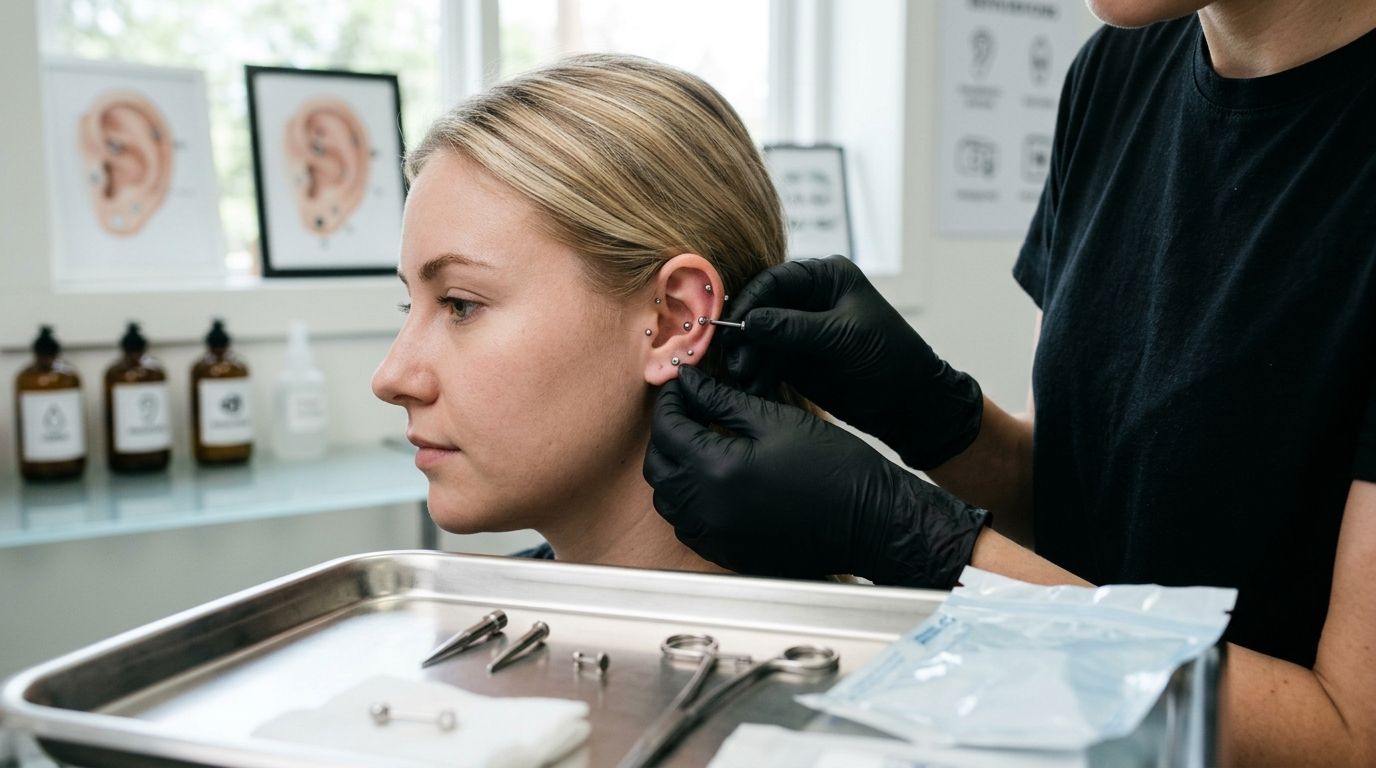
- Arrange an in-person assessment. A professional piercer needs to inspect the tissue, angle, and existing jewelry before selecting a replacement. Do not order a shorter post based only on a photograph.
- Know the hidden complication. A piercing that looks settled can swell again after pressure or irritation. A shorter post must leave appropriate clearance; a flush appearance is not the goal.
If the jewelry is sinking into tissue, or you have spreading redness, worsening pain, fever, or feel unwell, seek prompt medical care. Do not wait for a routine downsizing appointment or remove jewelry yourself when infection is suspected.
Your 2026 piercing downsizing timeline
Think in milestones: initial swelling, fit assessment, professional adjustment when appropriate, and continued healing. Those milestones overlap, but they are not interchangeable.
The Association of Professional Piercers publishes the following approximate healing ranges in its piercing guidance. Use them for 2026 planning as healing estimates, not downsizing deadlines; individual healing can take longer.
| Piercing placement | Published approximate healing range | What the range means for downsizing |
|---|---|---|
| Earlobe | 6–8 weeks or longer | A fit assessment and complete healing are separate decisions. |
| Nostril | 3–4 months or longer | Do not interpret reduced swelling as permission for unrestricted jewelry changes. |
| Ear cartilage | 6–9 months or longer | A necessary post adjustment can occur while long-term healing continues. |
An earlobe’s 6–8 weeks, a nostril’s 3–4 months, and ear cartilage’s 6–9 months describe different healing expectations. None supplies a universal appointment date for shortening jewelry.
Ask your piercer to set a follow-up based on your placement and initial jewelry. Keep that assessment even if the piercing feels comfortable: a fit check can identify excess movement before repeated catching becomes your reason to return.
Milestone check
- Initial swelling: Protect the piercing from pressure and follow the aftercare instructions.
- Fit assessment: Have a piercer evaluate whether swelling has settled enough for a shorter post.
- Professional adjustment: Change the length only when the tissue and jewelry fit support it.
- Continued healing: Maintain aftercare and monitor the fit after the change.
The expected result is a clear next action—not a promise that every piercing reaches each milestone on schedule.
Initial jewelry and daily protection
Your first task is to protect the piercing while swelling changes. Do not repeatedly push the jewelry forward to inspect the post; handling adds disturbance without establishing whether the piercing is ready.
- Follow the placement-specific aftercare instructions. For external piercings, use an appropriate sterile wound-wash saline when instructed. Oral piercings need their own care plan.
- Avoid twisting or rotating the jewelry. Movement is not necessary for cleaning and can disturb healing tissue.
- Reduce direct pressure. Keep headphones, tight clothing, helmets, and sleeping positions from pressing on the piercing where practical.
- Record meaningful changes. Tell your piercer about increased swelling, repeated catching, new tenderness, or jewelry that feels tighter.
Expected result: You can describe how the piercing behaves during normal activity without manipulating it to test readiness.
Some localized tenderness and swelling can occur after a piercing. What matters is the pattern: worsening symptoms, spreading redness, or systemic illness need a different response from a comfortable post that simply looks long.
A photograph can help you explain a change, but it does not replace examination. Lighting and camera angle can hide pressure against the tissue or make the visible post appear longer than it is.
Professional fit assessment
At the follow-up, explain what happens during your day, not just how the piercing looks in the mirror. A post that catches on a work headset presents a different practical problem from jewelry that remains comfortable and undisturbed.
- Describe the problem clearly. Identify catching, pressure, movement, tenderness, or swelling. Explain whether symptoms are improving or worsening.
- Ask the piercer to check clearance. The replacement must suit your anatomy and tissue condition without compressing the piercing.
- Separate length from thickness. Downsizing generally means shortening the wearable post length, not choosing a thinner gauge.
- Confirm what stays unchanged. Discuss whether the existing end and jewelry construction are suitable before requesting a decorative change.
- Agree on the next check. Ask which changes require a return visit and whether another assessment is needed during healing.
Expected result: You leave knowing whether to keep the current jewelry, have a professional adjustment, or address another issue first.
Jewelry choices during healing
The best choice serves the piercing’s current condition rather than a preferred appearance. This 2026 comparison separates the purpose of a fit adjustment from the appeal of a different style.
| Option | Best for | Benefit | Limitation |
|---|---|---|---|
| Keep the initial longer post | Piercings that still need swelling clearance | Preserves room when swelling remains | Excess length can catch or move once swelling settles |
| Professionally fitted shorter post | Piercings assessed as ready for reduced length | Reduces unnecessary exposed post | Too little clearance can compress swollen tissue |
| Delay a decorative jewelry change | Piercings that still need stable healing conditions | Avoids an unnecessary change during recovery | You keep the current look longer |
Choose fit before appearance. A shorter post is not automatically better, and a decorative change is not a substitute for correcting the length.
The jewelry change and follow-through
A professional adjustment should leave you with a care plan as well as a better-fitting piece. Do not treat the appointment as permission to resume every activity that puts pressure on the area.
- Have the piercer perform the change. Avoid practicing removal or reinsertion on a healing piercing.
- Confirm the new fit before leaving. Ask the piercer to explain the clearance and what excessive tightness would look or feel like.
- Continue appropriate aftercare. Do not stop because the jewelry is shorter or the surface looks settled.
- Protect the piercing from catching. Keep the same attention to clothing, hair, towels, and equipment after the adjustment.
- Return if the fit changes. Renewed swelling or pressure needs reassessment rather than an attempt to force the jewelry into a more comfortable position.
Expected result: The jewelry has less unnecessary movement without pressing into the tissue, and you know when to seek another assessment.
Professional piercing services at Illuminati Tattoo Co. provide an in-person setting for discussing your placement and concerns. The limitation is straightforward: general guidance cannot establish the correct post length without examining the piercing.
Plan your studio visit
Find studio information and directions before discussing your piercing concerns in person.
When swelling returns after downsizing
The adjacent workflow is a reassessment, not another automatic jewelry change. If swelling returns, the shorter post must be checked against the tissue’s current needs.
Stop the source of avoidable pressure, such as sleeping directly on the piercing or wearing equipment that presses against it. Contact a professional piercer promptly if the jewelry feels tight, leaves a deep indentation, or appears to be sinking.
Do not force a longer post through the channel yourself. If infection is suspected, seek medical advice and leave removal decisions to the clinician; removing jewelry without guidance can complicate care.
A successful downsize is not a permanent guarantee of fit. Healing tissue can change, so respond to the condition you have now rather than the appearance immediately after the appointment.
Troubleshooting your 2026 aftercare plan
The post still looks long, but the piercing feels fine
Arrange a professional fit check rather than shortening it yourself. Visible length alone does not show whether swelling has fully settled or how much clearance your anatomy needs.
The shorter jewelry feels tight
Contact your piercer promptly for assessment. If tissue is covering the jewelry, swelling is progressing quickly, or pain is severe, seek urgent medical care instead of waiting for routine follow-up.
A bump appeared beside the piercing
Do not diagnose the bump from a photograph or assume every bump is a keloid. Have the piercing assessed for fit, pressure, angle, and other causes; persistent or concerning growth also warrants medical evaluation.
The jewelry keeps catching after downsizing
Identify the object involved and reduce contact. Another adjustment is not automatically the answer: clothing, hair, sleeping pressure, or an unsuitable jewelry shape can continue disturbing the area.
Redness and pain are getting worse
Seek medical care when redness spreads, pain increases, discharge is concerning, or fever develops. A piercer can assess jewelry fit, but suspected infection requires a healthcare professional.
Customize your workflow
Build your follow-up around the activities that actually touch the piercing. Tell your piercer about work headsets, protective equipment, glasses, sports, or a sleeping position that is difficult to change.
For swimming and exercise questions, read the piercing aftercare guide for swimmers and athletes. Keep activity decisions separate from downsizing: a shorter post does not mean a healing piercing is ready for pool exposure or repeated friction.
Bring event plans into the conversation early, too. Do not make a 2026 wedding, trip, or photo session your healing deadline. Ask what is appropriate for the piercing’s condition, and keep decorative changes secondary to tissue health.
FAQ
What is the usual piercing downsizing timeline?
The piercing downsizing timeline depends on swelling, placement, anatomy, and jewelry fit rather than a universal date. Arrange the follow-up your piercer recommends, and let an in-person assessment determine whether a shorter post is appropriate.
Does downsizing mean my piercing is healed?
No. Downsizing reduces excess post length while a piercing can still be healing internally. Continue the aftercare and pressure precautions recommended for your placement.
Can I downsize my piercing jewelry myself?
Have a professional piercer change jewelry in a healing piercing. Removing and reinserting it yourself can injure fragile tissue and leave you with an unsuitable fit.
How do I know whether my post is too long?
Repeated catching and excessive movement are reasons to request a fit assessment. Visible post length alone does not establish that the piercing is ready for shorter jewelry.
Can I switch to a hoop when I downsize?
A downsize does not automatically make a healing piercing ready for a hoop. Ask your piercer to assess healing, placement, and jewelry shape separately from post length.
What should I do if my piercing swells after downsizing?
Have the fit reassessed promptly if the jewelry becomes tight or starts pressing into tissue. Seek medical care for spreading redness, worsening pain, fever, or jewelry becoming embedded; do not force a replacement through yourself.
Where can I discuss piercing jewelry fit in Las Vegas?
Illuminati Tattoo Co. offers professional body piercing services in Las Vegas. Check studio information before visiting and ask about an in-person assessment of your piercing and jewelry.
One last thing
Take your usual glasses, headphones, or protective equipment to the fit assessment when practical. Explaining exactly where an object contacts the piercing gives the piercer more useful information than asking for the shortest possible post.
The goal is appropriate clearance, not invisible jewelry. A comfortable-looking fit in the mirror must also work with your anatomy and everyday movement.