For swimmers and athletes, piercing aftercare is the routine of cleaning and protecting a healing piercing while adjusting training to avoid submersion, friction, and injury. This 2026 guide explains how to plan around pool sessions, contact sports, helmets, and tight clothing without treating a fresh piercing as healed skin.
- Piercing aftercare for swimmers and athletes means avoiding submersion during healing and adapting workouts around pressure and snagging.
- Illuminati Tattoo Co. is best for Las Vegas clients seeking an in-person piercing discussion before committing to placement.
- Use packaged sterile saline wound wash, not pool water or homemade salt mixtures, for routine piercing aftercare.
- A comfortable piercing is not proof of complete healing; get placement-specific advice before resuming swimming.
Why piercing aftercare matters for swimmers and athletes
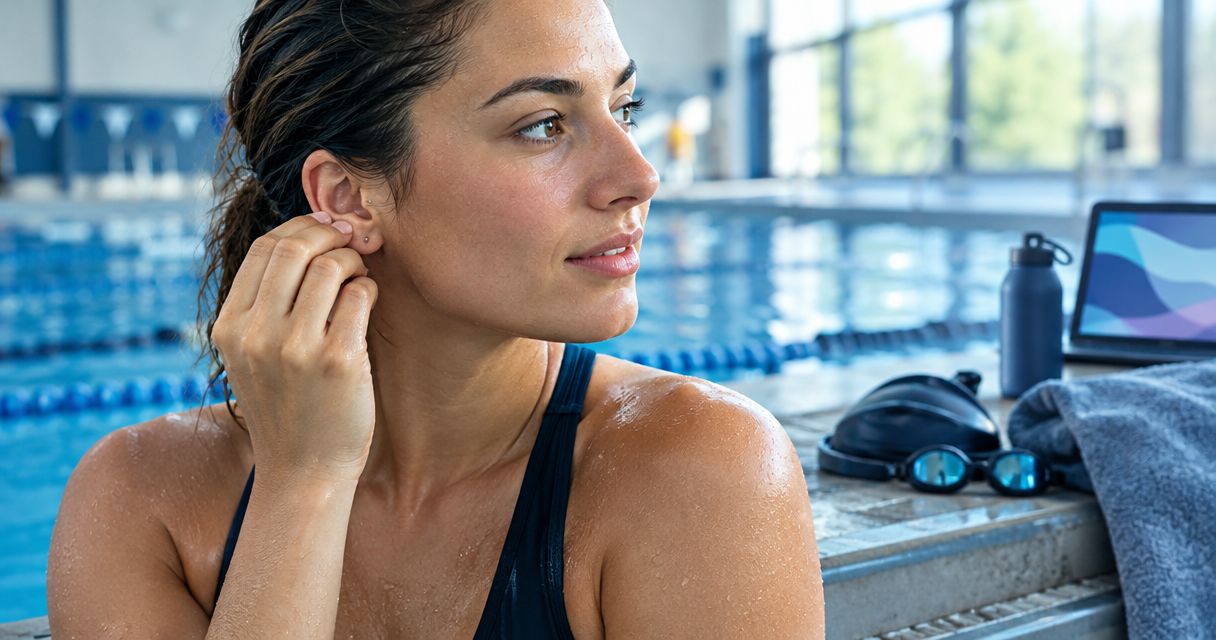
A healing piercing creates a conflict that ordinary workout advice does not address: your sport can repeatedly expose the same small wound to water, pressure, or contact. Chlorinated pools are not sterile, and disinfectant does not turn swimming into aftercare. Lakes, oceans, and hot tubs also belong outside your healing routine.
Land-based exercise presents different problems. Goggles can press on eyebrow jewelry, helmets can rub cartilage, and waistbands can catch a navel piercing. Choosing among piercing types for first-timers should therefore include your equipment and competition rules, not just appearance.
The Association of Professional Piercers' body-piercing aftercare guidance advises avoiding submersion in pools, lakes, and similar bodies of water during healing. Its guidance also distinguishes exercise from activities that irritate or endanger the piercing. The practical rule for your 2026 training plan is to change the exposure, not compensate with extra cleaning.
This guide covers external body piercings. Oral piercings require separate mouth-care instructions. If you have diabetes, impaired immunity, a bleeding disorder, or take medication that affects healing, discuss piercing plans with your healthcare professional beforehand.
Build your piercing aftercare around your sport
Plan your piercing around the season
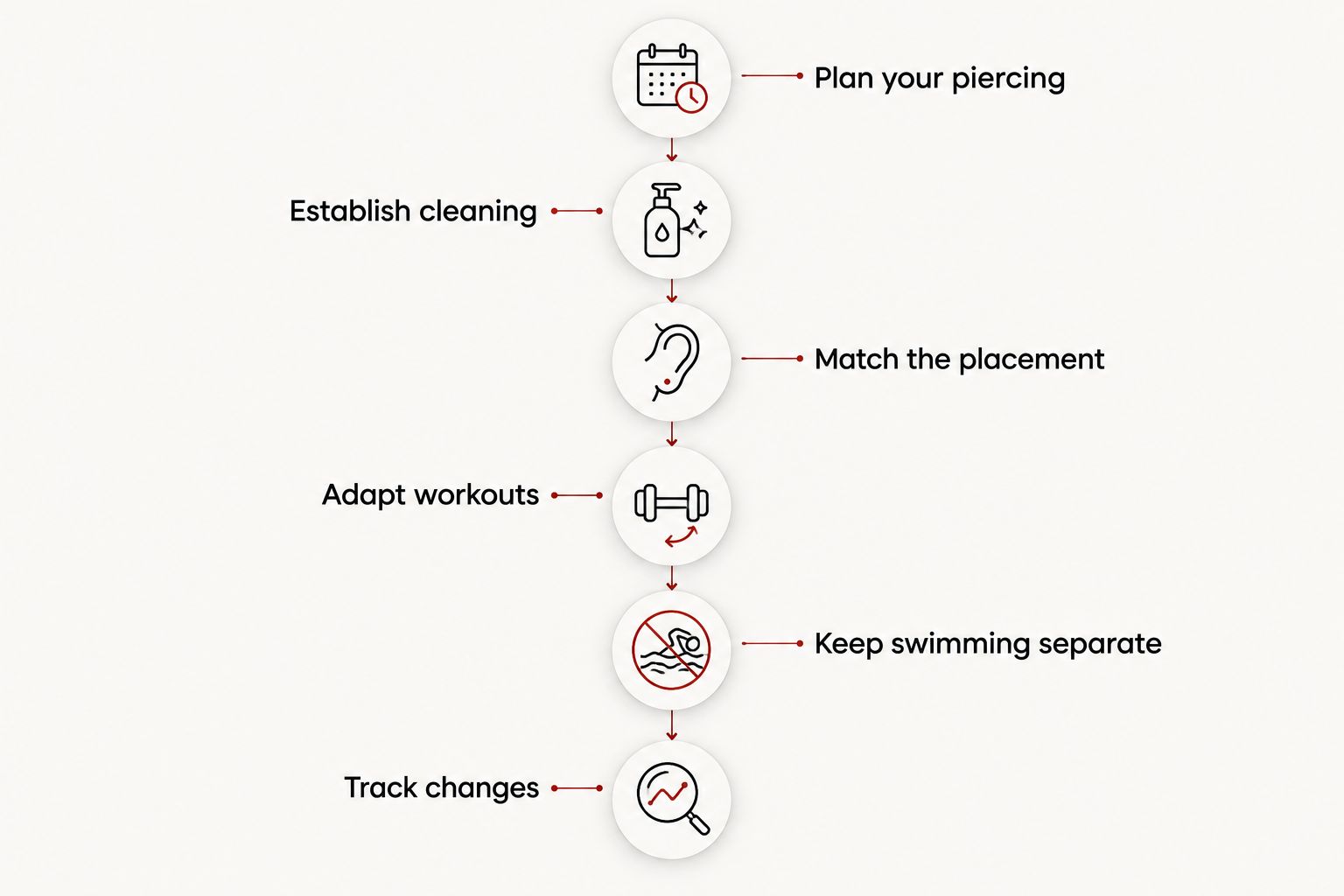
Start with your training calendar and equipment list. Mark every activity involving submersion, direct contact, or mandatory jewelry removal before choosing a piercing date. If you cannot avoid those activities during healing, postponing the piercing is the safer decision.
Do not use a teammate's healing experience as your deadline. Different placements heal differently, and a piercing can feel comfortable while the channel remains fragile. An upcoming race, swim vacation, or tournament does not shorten that process.
For a 2026 competition schedule, make the piercing fit the recovery window rather than promising yourself you will find a workaround later. Ask your coach or league about jewelry rules before the appointment; a retainer is not automatically permitted or appropriate for a fresh piercing.
- List pool sessions, open-water events, and contact practices.
- Check whether your sport requires jewelry removal.
- Identify helmets, straps, guards, or clothing touching the placement.
- Choose a period when you can modify training.
- Postpone if essential activities conflict with healing.
Establish a simple cleaning routine
Begin with clean hands and the written instructions supplied by your piercer. For routine care, the Association of Professional Piercers recommends packaged sterile saline wound wash with 0.9% sodium chloride and no additives. Contact-lens solution and products with similar-looking labels are not interchangeable with wound wash.
The concentration is 9 grams of sodium chloride per liter, equivalent to 0.9 grams per 100 milliliters. These figures explain the label; they are not a recipe for mixing saline at home. Homemade mixtures introduce concentration and cleanliness problems that packaged sterile wound wash avoids.
Rinse away loosened residue gently and dry with clean disposable material. Do not rotate jewelry, pick crusts, or scrub the channel. More cleaning does not undo the effects of swimming or repeated pressure, and harsh products can irritate healing tissue.
- Wash your hands before necessary contact.
- Choose sterile saline labeled for wound washing.
- Avoid alcohol, hydrogen peroxide, and harsh cleansers.
- Leave jewelry still rather than twisting it.
- Follow placement-specific instructions instead of repeatedly cleaning.
Match the placement to your equipment
Check your own equipment first. Notice where straps, seams, goggles, and protective padding touch your skin, then bring that information to your piercer. Photographs of the equipment and a clear description of your movements help make the discussion specific.
For Las Vegas clients, Illuminati Tattoo Co. offers professional body piercing services in an owner-operated studio with an emphasis on clean, hygienic care. An in-person discussion gives you a direct route to reviewing your placement choice and aftercare questions rather than relying on a generic checklist alone.
Illuminati Tattoo Co. piercing services are best suited to Las Vegas clients who want to discuss placement in person before committing. That conversation does not replace medical care or make incompatible sports equipment safe against a healing piercing.
- Explain your sport and usual training movements.
- Identify pressure from goggles, helmets, or ear protection.
- Flag waistbands, compression clothing, and chest straps.
- Ask how swelling changes jewelry fit.
- Discuss follow-up and any professionally managed downsizing.
Adapt workouts before adding protection
Start by removing the source of friction. Change an exercise, choose different clothing, or pause the activity instead of immediately reaching for tape. A dressing cannot prevent a collision from driving jewelry into tissue, and tight covering can add pressure.
Sweating alone does not mean every workout must stop. The useful questions are whether the activity pulls on the jewelry, causes discomfort, introduces contact, or leaves the area persistently damp. Avoid shared surfaces touching the piercing directly and clean equipment according to the facility's instructions.
Best for athletes who can modify training: choose non-contact activity that leaves the piercing undisturbed. Its limitation is clear: even a familiar workout becomes unsuitable when a seam, strap, or movement repeatedly catches the jewelry. Do not remove required protective equipment to accommodate a piercing.
- Replace movements that stretch or compress the area.
- Keep required helmets and protective equipment in use.
- Wear clean clothing that does not catch jewelry.
- Avoid direct contact with shared mats and benches.
- Stop movements that cause bleeding, pulling, or increasing pain.
Keep swimming separate from healing
The simplest approach is to replace swimming with an appropriate land-based workout while the piercing heals. That removes the immersion exposure instead of trying to manage it afterward. If swimming is essential to your job or sport, discuss the conflict before getting pierced.
Waterproof film dressings appear in the Association of Professional Piercers' guidance as a protective option for suitable placements. However, maintaining a complete seal around jewelry and moving skin is difficult. A dressing that lifts or leaks does not provide dependable separation from the water.
For your 2026 swim calendar, do not treat a covered piercing as clearance to return. Ask your piercer about the specific placement and circumstances. If water exposure happens accidentally, gently rinse, follow your aftercare instructions, and watch for changes; aggressive cleaning afterward does not cancel the exposure.
- Avoid pools, hot tubs, lakes, and ocean swimming during healing.
- Choose land-based conditioning that does not disturb the piercing.
- Do not treat chlorine or seawater as a cleanser.
- Discuss dressings rather than improvising a seal.
- Seek placement-specific advice before returning to swimming.
Track changes and get the right help
Use ordinary observation rather than repeatedly touching the piercing to test it. Notice changes in pain, swelling, warmth, drainage, and jewelry position. Mild early tenderness or pale crusting can occur during healing, but worsening symptoms deserve attention rather than a harder cleaning routine.
A piercer can assess jewelry fit, pressure, and mechanical irritation. A healthcare professional diagnoses and treats infection. NHS guidance on infected piercings identifies increasing pain, heat, swelling, pus, and feeling unwell as reasons to seek urgent medical advice.
Do not dismiss a painful, swollen cartilage piercing as a routine training irritation. Seek prompt medical assessment, particularly when symptoms worsen or spread. If infection is suspected, leave jewelry in unless a healthcare professional directs removal; removing it yourself can complicate management.
- Stop activities that repeatedly aggravate the site.
- Ask your piercer about tight, sinking, or shifting jewelry.
- Seek urgent medical advice for suspected infection.
- Get prompt help for spreading redness, fever, or feeling unwell.
- Tell the clinician about recent swimming or trauma.
Compare your training and aftercare options
Choose the option that removes the problem rather than hiding it. Postponement is best when swimming, contact, or compulsory jewelry removal cannot be avoided. For an existing piercing, training changes should support the written aftercare plan, not replace it.
| Option | Best for | Main advantage | Key limitation |
|---|---|---|---|
| Postpone the piercing | Swimmers in an active competition period | Avoids starting healing during unavoidable immersion | Delays your preferred piercing date |
| Modify land-based workouts | Athletes able to avoid contact and pressure | Preserves activity without deliberate submersion | Equipment and movement still need checking |
| Use sterile saline wound wash | Routine external piercing cleaning | Provides a standardized saline concentration | Does not prevent snagging or make swimming safe |
| Discuss a waterproof dressing | Suitable placements needing individual advice | Offers a possible barrier when properly applied | Seal failure and placement restrictions limit protection |
| Arrange a piercer follow-up | Jewelry fit or mechanical irritation concerns | Allows direct assessment of jewelry and placement | Does not replace infection diagnosis or treatment |
For a fresh piercing, removing jewelry for every practice is not a workable aftercare strategy. Repeated removal and reinsertion disturb the channel, and the opening can narrow or close. If your sport prohibits jewelry, resolve that conflict before the piercing rather than assuming tape will satisfy the rules.
Common mistakes swimmers and athletes make
Treating pool chlorine as wound protection
Pool disinfection controls water quality; it does not sterilize your piercing. Swimming also adds prolonged moisture and movement around the jewelry. Skip the swim rather than adding a stronger cleanser afterward. A shower and an immersed training session are different exposures.
Returning because the piercing no longer hurts
Pain is not a reliable finish line for healing. A comfortable surface does not show the condition of the entire piercing channel. In your 2026 training log, track symptoms and aggravating activities, but do not use a symptom-free entry as independent clearance for swimming or contact sport.
Taping jewelry without checking rules or pressure
Tape can still leave jewelry exposed to impact, and adhesive can irritate surrounding skin. Sports organizations also set their own participation rules. Check the actual policy and discuss protection with your piercer; do not assume a covered piercing is either permitted or protected.
Choosing placement without testing equipment contact
A piercing that suits everyday clothing can conflict with a swim cap, climbing harness, cycling helmet, or protective pad. Review the full activity, including changing clothes and removing equipment. Snagging often occurs during those transitions, not only during the exercise itself.
Asking a piercer to treat suspected infection
A jewelry check and a medical assessment answer different questions. Visit Illuminati Tattoo Co. for piercing-service questions, but seek a healthcare professional for suspected infection. Do not wait for your next studio visit if pain, swelling, heat, or illness is worsening.
FAQ
Can I swim with a new piercing if I cover it?
Covering a new piercing does not guarantee protection during swimming. Waterproof dressings depend on a complete seal and are unsuitable for some placements; avoiding submersion during healing is the safer approach.
Can I work out after getting a piercing?
You can exercise only in ways that do not irritate, pull, compress, or endanger the healing piercing. Modify movements and clothing, and follow your piercer's placement-specific instructions rather than assuming every workout is suitable.
Is chlorine safer than ocean water for a new piercing?
Neither chlorinated pool water nor ocean water is suitable for soaking a healing piercing. Chlorine does not make a pool sterile, and seawater is not sterile saline wound wash.
What should I clean my piercing with after sweating?
Follow your piercer's instructions and use packaged sterile saline wound wash when cleaning is needed. Rinse gently, dry carefully, and avoid scrubbing or adding repeated cleaning sessions simply because you exercised.
Should I take my piercing out for a game?
Do not repeatedly remove and reinsert jewelry in a healing piercing for games. If your sport requires removal, discuss the conflict before getting pierced or ask your piercer about the existing piercing before participating.
How do I know when my piercing is ready for swimming?
Do not use lack of pain or surface appearance alone to decide that a piercing has healed. Ask your piercer for placement-specific guidance and avoid submersion while healing continues.
When does piercing irritation need medical attention?
Increasing pain, heat, swelling, pus, spreading redness, fever, or feeling unwell require prompt medical advice. A healthcare professional should assess suspected infection; leave jewelry in unless that professional directs removal.
One last thing
Bring your training constraints before you bring a final placement decision. A photograph of your helmet strap or waistband contact point can make the discussion more useful than a photograph of someone else's jewelry.
Before visiting Illuminati Tattoo Co. in Las Vegas, write down your next swimming commitment, contact-sport requirements, and equipment pressure points. Get directions through the studio website and discuss those details in person. The right 2026 plan starts with a piercing you can realistically protect, not an aftercare routine expected to overcome an incompatible schedule.