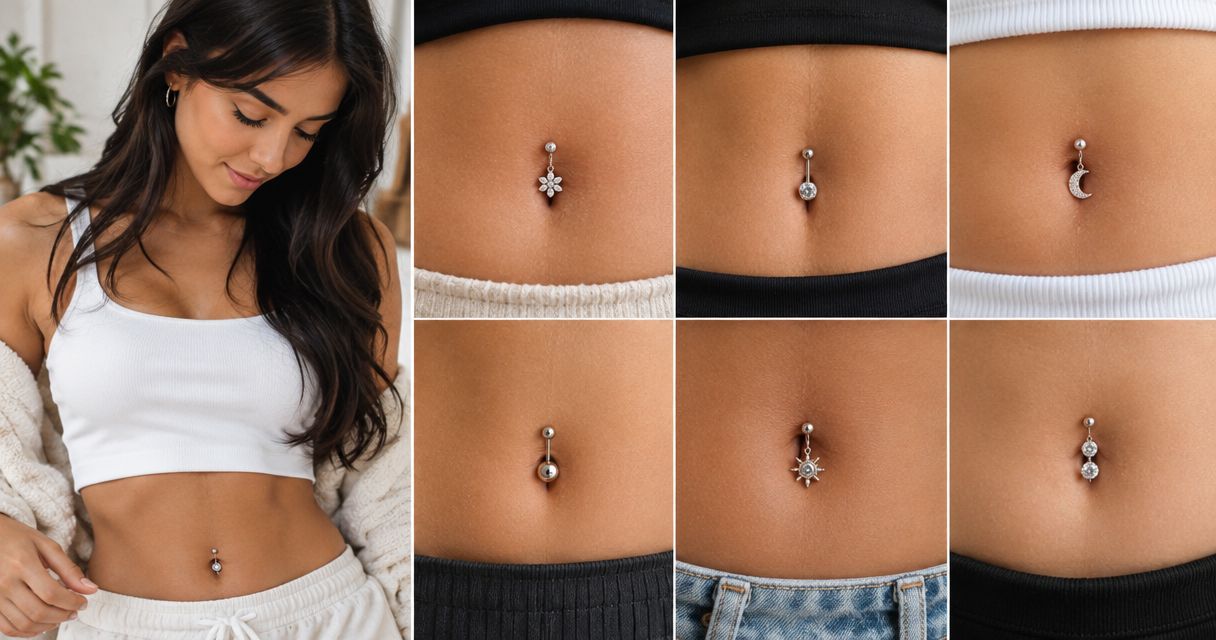
Best overall: a classic gem curved barbell. Best for an understated look: a minimalist flat-top design. Best for anatomy-led placement: a floating navel piercing, when a professional confirms suitability. These seven belly button piercing style ideas compare appearance, clothing contact, and practical limitations so you can choose confidently in 2026.
- Classic gem curved barbells lead these belly button piercing style ideas for a balanced, everyday look.
- Floating navel piercings address anatomy and jewelry fit; they are not simply another decorative style.
- Save dangling charms and elaborate clusters for healed piercings, with professional guidance on fit.
- Illuminati Tattoo Co. offers professional body piercing services in Las Vegas for readers seeking an in-person consultation.
Why this matters
A navel piercing has two separate decisions: whether your anatomy supports the placement, and which jewelry expresses your style. Choose the placement first and the decoration second. A reference photo cannot establish whether your navel has suitable tissue or how jewelry will sit when you bend.
For local guidance, Illuminati Tattoo Co. offers professional body piercing services in Las Vegas. Bring inspiration, explain your clothing habits, and ask the piercer to assess your anatomy before you settle on a particular look.
Your 2026 style plan also needs room for healing. The Association of Professional Piercers lists navel healing at 6–9 months or longer; that is a planning range, not a deadline for changing jewelry. A piercing that looks settled on the outside can still need care, so let a qualified piercer assess readiness rather than counting calendar days.
What makes the best belly button piercing style?
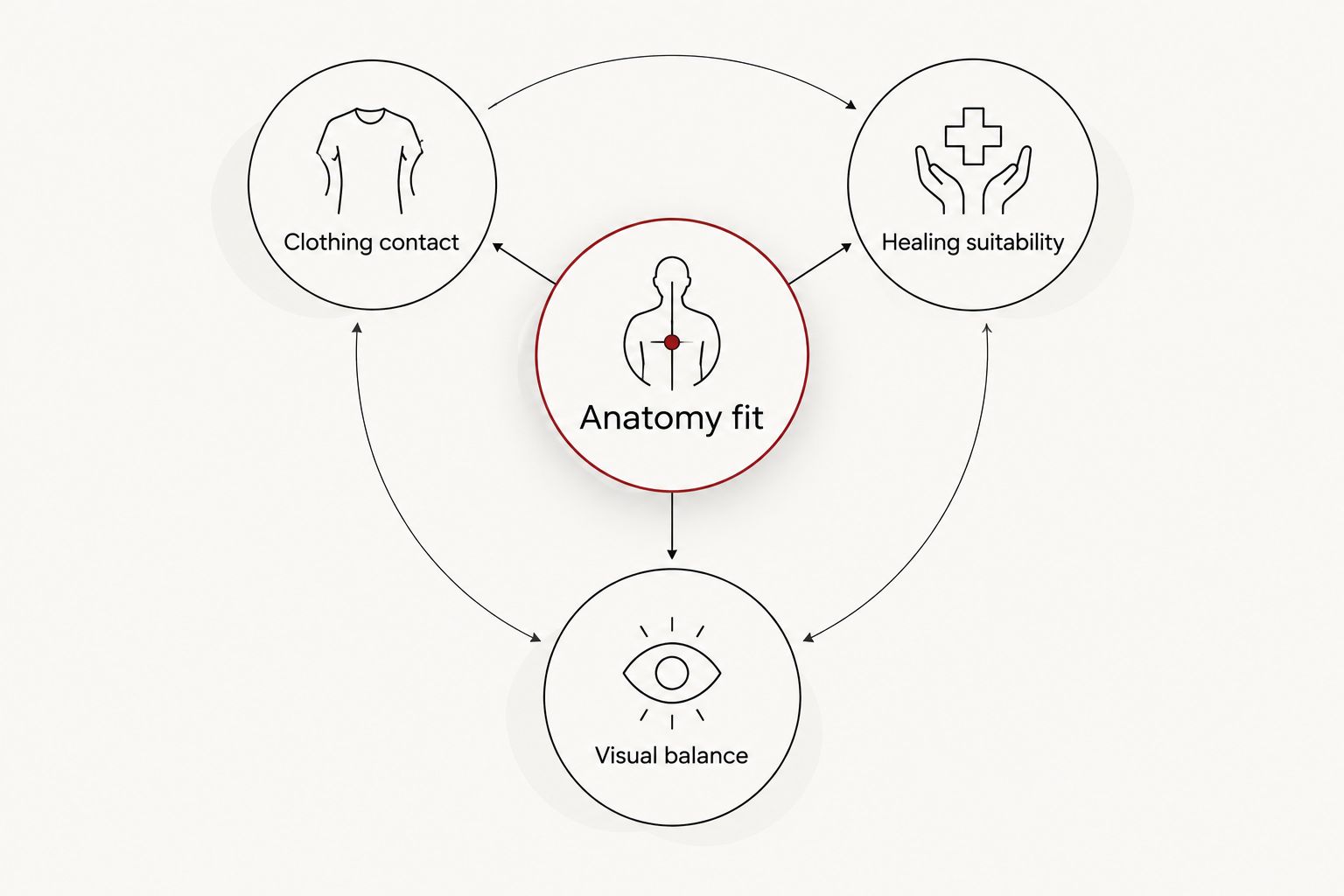
These criteria put wearability ahead of decoration:
- Anatomy fit: The placement and jewelry must suit your navel, including how it changes when you sit or bend.
- Jewelry material: Ask for documented material specifications. Implant-certified titanium is an established option for initial piercing jewelry; a titanium-colored finish is not the same thing.
- Clothing contact: Consider waistbands, fitted tops, sportswear, and anything that presses against the navel.
- Visual balance: Choose an end size and shape that fit the look you want without treating bigger jewelry as automatically better.
- Healing suitability: Separate jewelry appropriate for an initial piercing from decorative pieces intended for a healed channel.
- Maintenance: Consider whether protruding settings, moving charms, or intricate shapes make daily wear more demanding.
The best belly button piercing style ideas in 2026 start with these checks, not with a trend label. Your piercer should explain the trade-offs before the procedure, including whether your preferred decoration needs to wait until healing is complete.
Belly button piercing styles at a glance
The order below ranks broad usefulness first, then more specific aesthetic or anatomical needs. These are design categories, not named products or confirmed studio inventory.
| Rank and style | Best for | Standout feature | Key limitation |
|---|---|---|---|
| 1. Classic gem curved barbell | A balanced everyday look | A familiar gem accent at the navel | A prominent lower end can contact clothing or compress when seated |
| 2. Minimalist flat-top design | Understated styling | A simple, restrained visible end | A flat-looking decoration does not establish correct fit |
| 3. Floating navel piercing | Anatomy-led alternatives | Typically pairs a visible upper end with a low-profile lower end | Requires professional assessment; not suitable for every navel |
| 4. Coordinated color gemstones | Matching an existing jewelry palette | Color creates the main visual effect | Surface finish and gem color do not identify the underlying material |
| 5. Symbolic decorative end | A personal motif | A recognizable shape without a hanging charm | Points and protrusions can catch or press against clothing |
| 6. Short dangling charm | Movement on a healed piercing | A suspended detail adds motion | Extra movement and snagging make it a poor initial-jewelry default |
| 7. Statement cluster | A decorative focal point | Multiple elements create a concentrated accent | Bulk and projecting edges require careful fit and wear planning |
1. Classic gem curved barbell: best for everyday balance
A classic gem curved barbell places a decorative gem end at the navel on curved jewelry. It is the clearest starting point if you want a recognizable navel-piercing look without an elaborate charm arrangement.
Best for: Readers who want one visual accent that works with different outfits. In 2026, this remains the default recommendation because it keeps the design decision simple—not because every navel can support the same jewelry.
Classic gem curved barbell pros:
- Creates a straightforward focal point.
- Lets you choose a restrained or more noticeable gem appearance.
- Avoids the moving parts of dangling designs.
Classic gem curved barbell cons:
- A larger lower end can press against clothing.
- A conventional arrangement is not appropriate for every anatomy.
Ask the piercer to assess how the lower end sits when you stand and sit. The gem should not dictate the placement, and a photo-perfect appearance while standing is not enough.
Verdict: Buy only after your piercer confirms anatomy, material, and fit.
2. Minimalist flat-top design: best for understated styling
A minimalist flat-top design uses a simple visible end rather than a prominent gem or hanging ornament. The result is quieter: the piercing complements your other jewelry instead of becoming the main feature.
Best for: Readers who prefer clean shapes and restrained body jewelry. Think about the actual profile of the complete piece, not just whether the decorative face looks flat in a photograph.
Minimalist flat-top design pros:
- Keeps the visual effect simple.
- Pairs easily with an understated jewelry collection.
- Avoids the added movement of a hanging charm.
Minimalist flat-top design cons:
- Gives you less sparkle or visual detail.
- A flat decorative end does not guarantee freedom from pressure.
Ask to see how the edges and setting sit against your body. A minimal appearance can still conceal an unsuitable length, bulky underside, or poor material choice.
Verdict: Buy for a restrained look once the complete jewelry fit is confirmed.
3. Floating navel piercing: best for anatomy-led alternatives
A floating navel piercing typically uses a decorative upper end and a low-profile lower end inside the navel. A piercer considers this arrangement when a conventional prominent lower end does not suit how the navel folds or compresses.
Best for: Readers whose anatomy calls for a different jewelry arrangement. This is a placement-and-fit decision, not a shortcut to getting pierced when the tissue is unsuitable.
Floating navel piercing pros:
- Makes anatomy the priority.
- Keeps decoration visible at the upper end.
- Provides an alternative to a prominent lower ornament when appropriate.
Floating navel piercing cons:
- Requires an in-person anatomical assessment.
- Does not make every navel suitable for piercing.
- Has a different appearance from the familiar lower-gem style.
Ask the piercer to explain why this arrangement suits your navel and what it will look like in ordinary positions. Avoid selecting it solely because an online image calls it more comfortable.
Verdict: Hold until a professional confirms that floating placement is appropriate.
4. Coordinated color gemstones: best for a matching jewelry palette
Coordinated color gemstones make color, rather than shape or movement, the defining detail. You can use a single accent that echoes jewelry you already wear, while keeping the overall arrangement uncomplicated.
Best for: Readers who want their navel jewelry to feel connected to their existing accessories. Bring a reference showing the color relationship you like rather than relying on a vague description.
Coordinated color gemstone pros:
- Adds personality without requiring a dangling charm.
- Connects the piercing visually with other accessories.
- Keeps the design focused on one clear feature.
Coordinated color gemstone cons:
- Photographs can misrepresent the actual shade.
- Gem color says nothing about the body-contact material.
A gold-colored or silver-colored appearance does not establish the jewelry's composition. Ask the piercer to distinguish the decorative color, surface treatment, and underlying material before you make your choice.
Verdict: Buy for color coordination only after material and fit are established.
5. Symbolic decorative end: best for a personal motif
A symbolic decorative end uses a recognizable shape, such as a heart, moon, or flower, without necessarily adding a hanging component. It gives the piercing a personal theme while keeping the design centered at the navel.
Best for: Readers who want meaning or a recognizable motif rather than a conventional gem. Choose the shape for its silhouette, then assess whether the actual edges suit daily wear.
Symbolic decorative end pros:
- Makes the design personally meaningful.
- Offers a distinct silhouette.
- Can express a theme without a swinging charm.
Symbolic decorative end cons:
- Pointed details can catch on fabric.
- Broad or raised shapes can press against waistbands.
Compare the design from the side as well as the front. A motif that looks delicate head-on can have a projecting setting, so discuss initial-jewelry suitability rather than assuming all decorative ends are interchangeable.
Verdict: Hold elaborate shapes until your piercer approves their fit and healing suitability.
6. Short dangling charm: best for movement after healing
A short dangling charm adds a suspended element below the main jewelry. Its movement is the appeal, but that same movement introduces more opportunities for catching and pulling.
Best for: Readers with a healed navel piercing who want an occasional decorative change. Treat dangling jewelry as a later styling option, not the default for a fresh piercing.
Short dangling charm pros:
- Adds visible movement.
- Creates a distinct look without changing the piercing placement.
- Works as an occasional alternative to simpler jewelry.
Short dangling charm cons:
- Can snag on fabric.
- Adds movement and weight.
- Needs extra consideration around fitted clothing and physical activity.
For a 2026 event or outfit, have a piercer assess healing before planning a jewelry change. Do not interpret the end of a general healing range as automatic permission to wear a charm.
Verdict: Wait until the piercing is healed and the charm's fit is professionally assessed.
7. Statement cluster: best for a decorative focal point
A statement cluster groups decorative elements into a more elaborate visible arrangement. It creates a concentrated accent without relying on a long hanging ornament, although the exact profile depends on the design.
Best for: Readers with a healed piercing who want body jewelry to be a focal point. The strongest choice is a coherent shape, not simply the design with the most decoration.
Statement cluster pros:
- Creates a distinctive focal point.
- Combines multiple decorative elements in one arrangement.
- Offers an alternative to dangling jewelry.
Statement cluster cons:
- Bulk can increase clothing contact.
- Projecting edges need careful assessment.
- Intricate settings can complicate cleaning around the jewelry.
Ask how the complete cluster sits when you bend and whether its edges catch on your usual clothing. A detailed design earns its place only when you can wear it without persistent pressure or pulling.
Verdict: Wait for healing; skip any cluster that repeatedly presses or catches.
How these styles rank
This 2026 ranking prioritizes anatomy fit, suitable materials, clothing contact, visual balance, healing suitability, and maintenance. It is a decision guide, not a claim that these designs have been tested against one another.
The classic gem curved barbell leads as the simplest recognizable starting point. Minimalist jewelry serves understated styling; floating placement answers a different anatomical question. Color and motifs personalize the design, while dangling charms and clusters require more deliberate wear planning.
Which belly button piercing style should you choose?
Choose the classic gem curved barbell if you want a clear starting point, then let anatomy and fit decide the final arrangement. Choose minimalist styling for a quieter appearance, and discuss floating placement when your piercer identifies an anatomical reason for it.
Illuminati Tattoo Co. is a Las Vegas body piercing studio for local clients seeking professional, in-person guidance. Its owner-operated approach and emphasis on a clean, hygienic studio support a consultation focused on your body and your preferences, without pressure to copy a reference exactly.
Before visiting, prepare three things: your preferred look, your usual waistband position, and any existing piercing history. Get directions through the studio's website and bring your questions about materials, aftercare, and appropriate jewelry changes.
Plan your studio visit
Discuss navel anatomy, jewelry choices, and piercing care in person in Las Vegas.
FAQ
What's the best belly button piercing style for a first piercing?
A simple curved barbell is a useful starting point when your anatomy supports it. A qualified piercer must select the placement, material, and dimensions; decorative preference comes afterward.
Is a floating navel piercing better than a regular navel piercing?
A floating navel piercing is not universally better; it serves a different anatomical fit. A piercer assesses how your navel folds and whether a low-profile lower end is appropriate.
Can I start with a dangling belly button ring?
Dangling jewelry is not a recommended default for an initial navel piercing. Save moving charms for a healed piercing and have a professional assess the jewelry before changing it.
How long does a belly button piercing take to heal?
The Association of Professional Piercers lists navel healing at 6–9 months or longer. Surface appearance does not confirm internal healing, so ask a qualified piercer before changing jewelry.
What material should I ask about for navel jewelry?
Ask about implant-certified titanium with documented material specifications. The jewelry's finish, polish, sizing, and construction also matter; a color description alone does not establish suitability.
Can tight clothing affect my belly button piercing?
Tight clothing can press against or catch navel jewelry. Discuss your usual waistbands with the piercer and avoid persistent pressure or pulling during healing.
Can every belly button be pierced?
Not every navel has suitable anatomy for a piercing. An in-person assessment determines whether the tissue supports an appropriate placement; floating jewelry does not remove that requirement.
Where can I discuss belly button piercing ideas in Las Vegas?
Illuminati Tattoo Co. offers professional body piercing services in Las Vegas. Visit the studio to discuss your preferred look, anatomical suitability, jewelry materials, and aftercare.
One last thing
The most useful reference photo shows the jewelry from the side, not just the front. Side views help you discuss protruding settings and decorative bulk, although only an in-person assessment can establish fit.
For your 2026 choice, bring an image of the look you want and explain how you dress and move. If irritation persists, ask your piercer to assess fit; suspected infection, worsening pain, spreading redness, or fever needs medical evaluation rather than a decorative jewelry change.