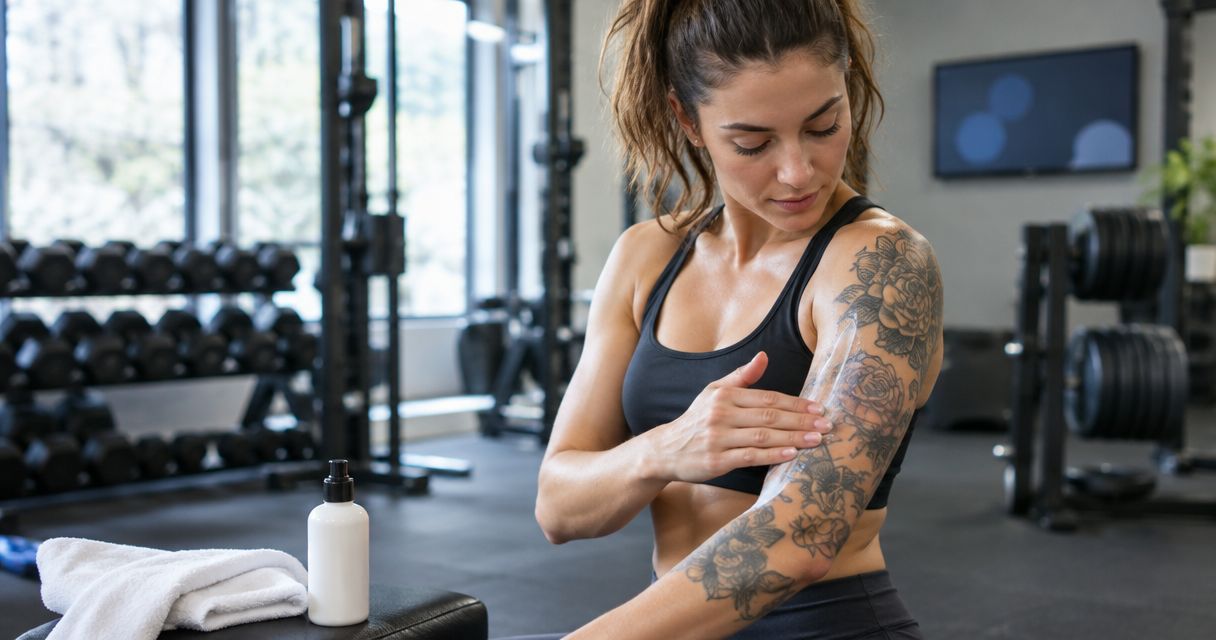
For gym and fitness enthusiasts, tattoo aftercare is protecting newly tattooed skin while adjusting exercise to avoid friction, contamination, and disrupted healing. This 2026 guide explains how to assess your training, care for the area, and return without letting a workout schedule overrule your skin.
- Tattoo aftercare for gym and fitness enthusiasts starts with protecting healing skin, not choosing a universal return date.
- Illuminati Tattoo Co. is best for Las Vegas clients seeking custom tattoo design.
- Adjust strength training around tattoo placement, clothing friction, and equipment contact.
- Skip swimming and soaking until the tattoo heals; a dressing is not permission to train.
Why tattoo aftercare matters for gym and fitness enthusiasts
A fresh tattoo is healing skin. Gym routines add repeated movement, tight clothing, shared surfaces, and opportunities to touch the area with unwashed hands. Your challenge is not simply whether you can tolerate a workout; it is whether the workout interferes with protecting that skin.
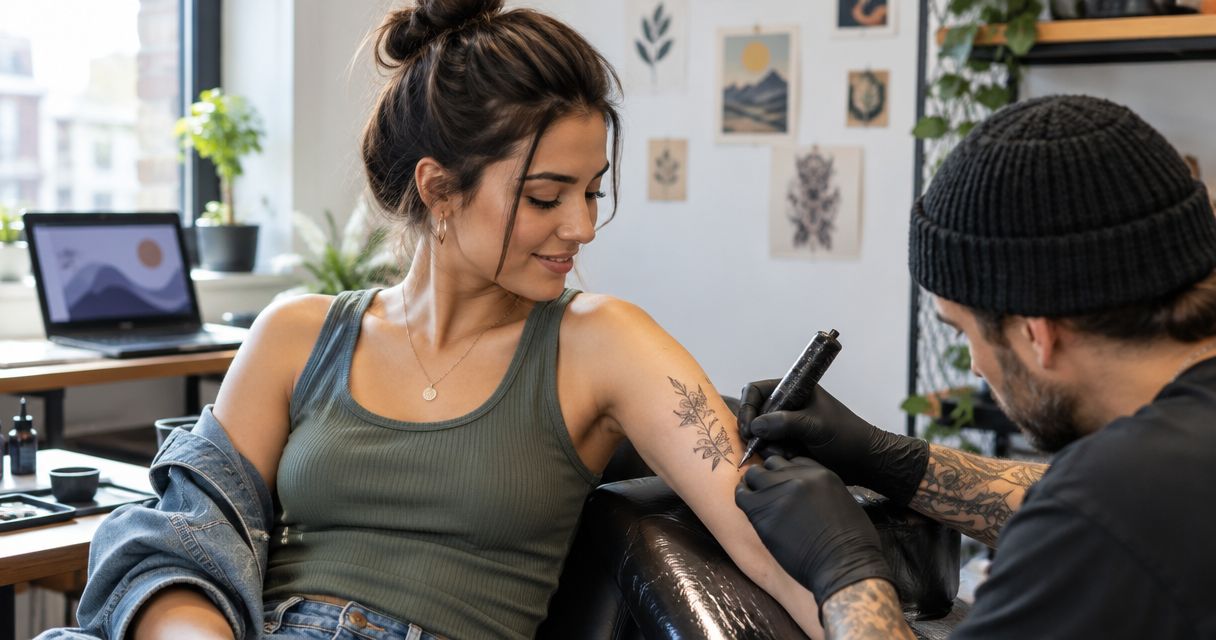
For Las Vegas clients, Illuminati Tattoo Co. offers custom tattoo design in an owner-operated studio with an emphasis on clean, hygienic service. Discuss your training routine while planning your design, rather than discovering afterward that a lifting belt or running shoe crosses the tattoo.
Use the condition of the tattoo and your artist’s instructions—not a calendar alone—to guide your return. The American Academy of Dermatology advises avoiding swimming until a tattoo heals; CDC handwashing guidance supports washing hands for at least 20 seconds. These are general health principles, not individualized medical clearance.
Build your return-to-training plan
1. Map your workouts against the tattoo placement
Start with your existing training log. Write down where each exercise puts pressure, stretches skin, or requires clothing and equipment to rub against your body. This simple review is more useful than dividing exercises into supposedly safe upper-body and lower-body categories.
A thigh tattoo can contact a bench during an upper-body workout. A forearm tattoo can rub against a lifting strap during a leg session. Look at the actual contact points, including getting into position and carrying equipment, not just the muscles listed in your program.
For your 2026 training plan, identify modifications before the appointment. If an exercise cannot avoid the healing area, leave it out rather than trying to cover up the problem.
- List contact from benches, pads, straps, belts, and footwear.
- Check where sleeves, waistbands, and seams sit.
- Identify movements that pull across the planned placement.
- Include commuting, changing clothes, and carrying a gym bag.
- Mark exercises to pause rather than improvise around later.
2. Get instructions for your actual dressing
Ask your tattoo artist how to care for the dressing you receive. Adhesive film and other coverings do not share interchangeable instructions, and a generic online removal schedule should not replace the directions given for your tattoo.
Do not remove a dressing early to fit in a workout or add household plastic wrap as exercise protection. If the covering leaks, lifts, or causes a reaction, contact the artist for dressing guidance. Seek medical advice for concerning skin symptoms rather than relying on a studio to diagnose them.
A covered tattoo is still a healing tattoo. A dressing does not remove the risks from pressure, repeated stretching, rubbing, or soaking.
- Record the dressing name and care instructions.
- Ask what to do if an edge lifts or fluid escapes.
- Confirm how and when to remove the covering.
- Keep adhesive products off the area unless instructed otherwise.
- Ask before replacing a dressing yourself.
3. Plan your design around your training commitments
Start by bringing reference images and a description of your normal week. Include contact sports, swimming, endurance events, and equipment that sits against your skin. Placement is a practical design decision as well as an artistic one.
Illuminati Tattoo Co. offers custom tattoo design built around each client. A studio conversation helps connect the artwork you want with the daily activities you need to discuss; it does not replace medical advice or guarantee an uninterrupted training schedule.
Keep the plan straightforward: placement, equipment contact, clothing contact, and healing instructions. Do not choose a location solely because someone online describes it as easy to train around.
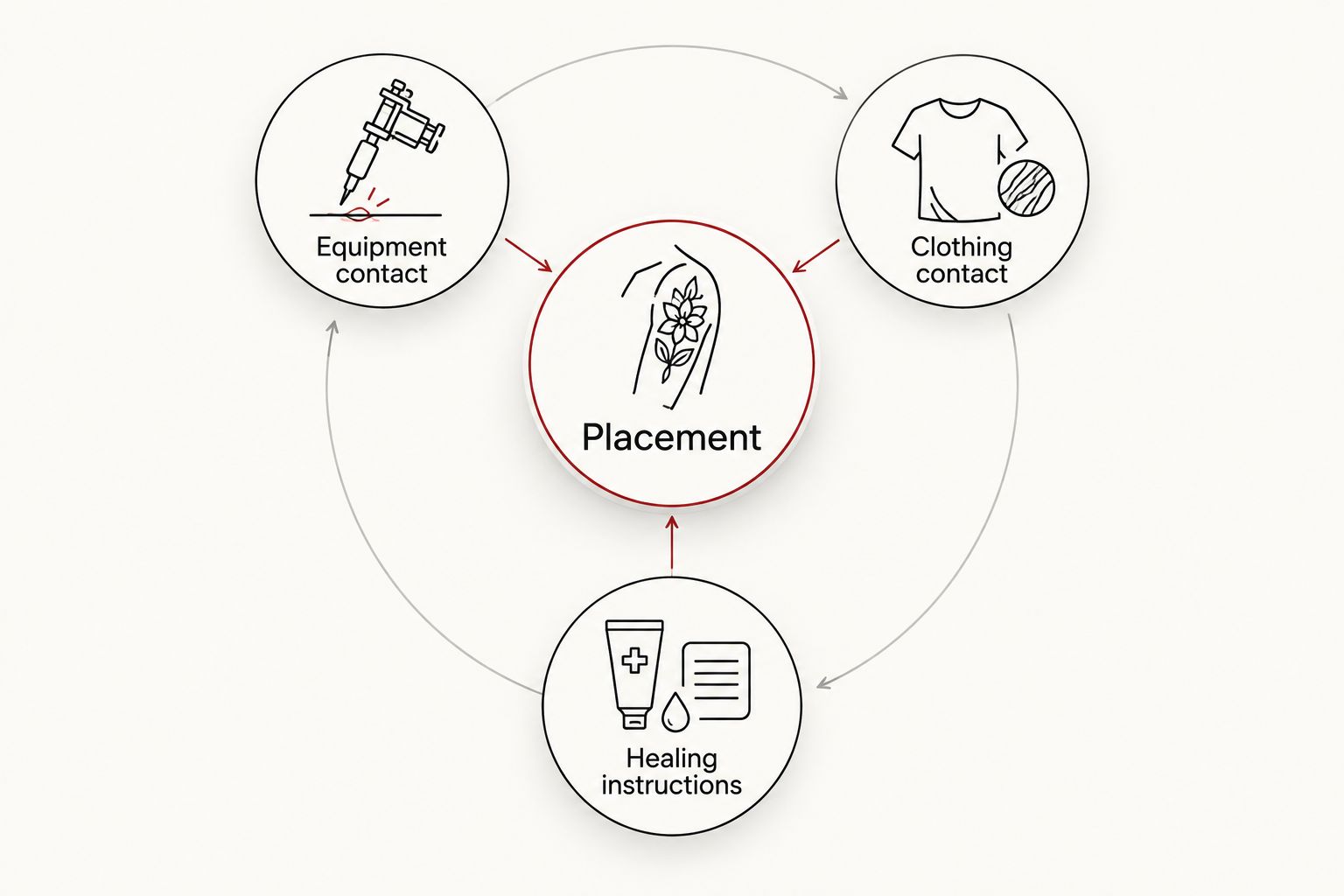
Your artist needs specific examples, not just the statement that you exercise. Explain whether your routine involves a rowing seat, shoulder pads, a weight belt, or repeated floor contact.
- Bring examples of the design and intended placement.
- Describe the equipment you use regularly.
- Mention events that are difficult to reschedule.
- Discuss clothing that crosses the proposed tattoo.
- Leave room to change your training plan.
4. Replace irritating sessions with suitable movement
Review ordinary movement at home before planning a gym visit. Walking, sitting, bending, and getting dressed help reveal contact or pulling without deliberately testing the tattoo under load. Do not force a stretch to see whether the skin can tolerate it.
Gentle walking is an option only when it does not rub, pull, or otherwise irritate the area and fits your aftercare instructions. It is not automatically suitable for every placement. Shoes can bother a foot tattoo, while shorts can rub a thigh tattoo.
Rest is a valid training adjustment. If every available activity creates a problem, taking a break is more sensible than switching to a different exercise that repeats the same irritation.
- Choose movement that avoids contact with the tattoo.
- Wear clean clothing that does not rub the area.
- Stop if movement causes pulling, burning, or fresh bleeding.
- Avoid contact sports while the skin is healing.
- Skip swimming, hot tubs, and soaking until healed.
5. Clean your hands and protect the healing skin
Use a basic hygiene routine before adding products or accessories. Wash your hands before touching the tattoo, follow your artist’s cleansing instructions, and use a clean towel to pat the area dry. Scrubbing is not a shortcut to cleanliness.
CDC guidance calls for at least 20 seconds of handwashing with soap and water. Cleaning gym equipment is also worthwhile, but a wiped bench is not permission to rest a fresh tattoo against it. Avoiding contact remains the better choice.
Follow the recommended aftercare product instructions rather than layering products in response to every sensation. More ointment, more washing, or an extra covering is not automatically better care.
- Wash your hands before aftercare.
- Follow the artist’s instructions for gentle cleansing.
- Pat dry instead of rubbing.
- Keep used gym towels away from the tattoo.
- Do not pick flakes or scabs.
- Avoid alcohol, peroxide, and abrasive scrubs on healing skin.
6. Check the skin before increasing training
Assess the tattoo before each planned session. Look for open areas, drainage, scabbing, tenderness, or irritation from ordinary clothing. If those signs remain, do not treat the session as a test of toughness.
Once the skin has healed and your aftercare instructions allow it, return gradually. Change the training demand cautiously rather than immediately combining heavy loading, tight equipment, and prolonged sessions. Check whether clothing or equipment leaves the tattoo irritated afterward.
For outdoor training in 2026, separate healing-skin protection from healed-tattoo sun care. The American Academy of Dermatology recommends broad-spectrum, water-resistant sunscreen with SPF 30 or higher for tattooed skin; do not use that advice as a reason to apply sunscreen to an open, healing tattoo.
- Check the skin before dressing for exercise.
- Keep healing tattoos out of direct sunlight.
- Avoid tight equipment across the area.
- Stop if exercise produces irritation or bleeding.
- Follow sun-protection guidance once the tattoo has healed.
7. Recognize symptoms that need medical care
Compare symptoms with how the area looked and felt previously. Do not assume worsening redness or pain is ordinary workout soreness. Increasing warmth, swelling, spreading redness, pus, or pain that worsens needs medical assessment.
A fever of 100.4°F (38°C) or higher alongside concerning tattoo symptoms warrants prompt medical advice. Do not wait for a temperature threshold if you feel seriously unwell. Seek urgent care for rapidly spreading redness, red streaks, or severe worsening symptoms; trouble breathing requires emergency care.
Your tattoo artist can explain the application and dressing instructions. A healthcare professional evaluates suspected infection, significant allergic reactions, and other medical complications.
- Pause training when symptoms worsen.
- Contact a healthcare professional for suspected infection.
- Describe when symptoms started and how they changed.
- Share the aftercare products and dressing used.
- Do not try to treat a suspected infection with extra ointment.
Plan your tattoo around your routine
Discuss custom design, placement, and your training routine before visiting the Las Vegas studio.
Compare your training options during healing
The best option is the one that avoids disturbing the healing area. This 2026 comparison is a decision aid, not clearance to exercise; your tattoo’s condition and your artist’s instructions take priority.
| Option | Best for | Main advantage | Key limitation |
|---|---|---|---|
| Temporary training break | Fresh, tender, draining, or easily irritated tattoos | Removes workout-related rubbing and equipment contact | Interrupts your normal routine; aftercare still matters |
| Gentle walking | Movement that avoids the tattoo and fits aftercare instructions | Requires little equipment and is easy to stop | Shoes, clothing, heat, and placement can still cause irritation |
| Modified strength training | A return after healing allows it | Lets you omit particular contact points | Setup, bracing, and accessories can still involve the tattoo |
| Swimming and water workouts | Training after complete healing | Restores a water-based routine | Unsuitable while the tattoo is healing because it involves immersion |
| Artist consultation | Design planning and dressing questions | Addresses the tattoo and instructions you received | Does not diagnose infection or provide medical exercise clearance |
Illuminati Tattoo Co. provides custom tattoo services, not sports medicine. Use the studio for design and aftercare questions, and a healthcare professional for medical concerns.
Common mistakes gym and fitness enthusiasts make
Treating a dressing as workout armor
A film covering does not stop a bar, pad, or waistband from pressing into the skin. Adjust the activity instead of assuming another layer makes the session appropriate.
Swapping exercises without checking contact points
Replacing squats with seated exercises does not help if the seat presses against a thigh tattoo. Review the whole movement, including setup, bracing, and where you rest between sets.
Scheduling a tattoo immediately before a fixed event
A race, tournament, or swimming trip creates pressure to ignore aftercare. Discuss timing before the appointment and allow the tattoo to take priority over an optional session.
Treating fine lines as an exemption
Fine-line work still involves tattooing the skin. Do not infer that a smaller or more delicate design permits an immediate return to lifting, swimming, or contact sports.
Using soreness tolerance as the return test
Being able to tolerate discomfort does not establish that skin is healed. Base your decision on the tattoo’s condition and care instructions, not your ability to finish a set.
FAQ
When can I go back to the gym after getting a tattoo?
Return when the tattoo’s condition and your artist’s instructions allow the activity you plan. There is no universal day that makes lifting, swimming, and contact sports equally appropriate.
Can I lift weights if my tattoo is covered?
A covering does not make weightlifting automatically appropriate. Pressure, clothing friction, straps, and repeated movement can still disturb healing skin.
Is walking better than lifting after a new tattoo?
Gentle walking is a lower-contact option only if it does not irritate the tattoo and fits your aftercare instructions. Footwear and clothing can still rub a healing tattoo, so placement matters.
Can I swim with a waterproof tattoo dressing?
Do not use a waterproof dressing as permission to swim with a healing tattoo. The American Academy of Dermatology advises avoiding swimming until the tattoo heals.
Does sweating ruin a new tattoo?
Sweating alone does not establish that a tattoo is ruined. The practical concerns include irritation, rubbing, contaminated contact, and whether you can follow the dressing and cleansing instructions.
How should I protect a new tattoo during outdoor workouts in 2026?
Keep a healing tattoo out of direct sunlight and avoid workouts that rub or irritate it. Once healed, follow sun-protection guidance, including broad-spectrum, water-resistant sunscreen with SPF 30 or higher.
Should I ask my tattoo artist or a doctor about redness?
Seek medical advice for worsening or spreading redness, increasing pain, pus, fever, or other concerning symptoms. Your artist can explain dressing instructions but cannot replace medical assessment.
One last thing
Your overlooked contact point might be outside the workout: a backpack strap, car seat belt, work uniform, or shoe. Before your 2026 tattoo appointment, walk through an ordinary day and identify what will touch the placement.
Bring that list to Illuminati Tattoo Co. when discussing your custom design. Visit the studio website for directions and current visiting information, and plan for healing as deliberately as you plan your training.