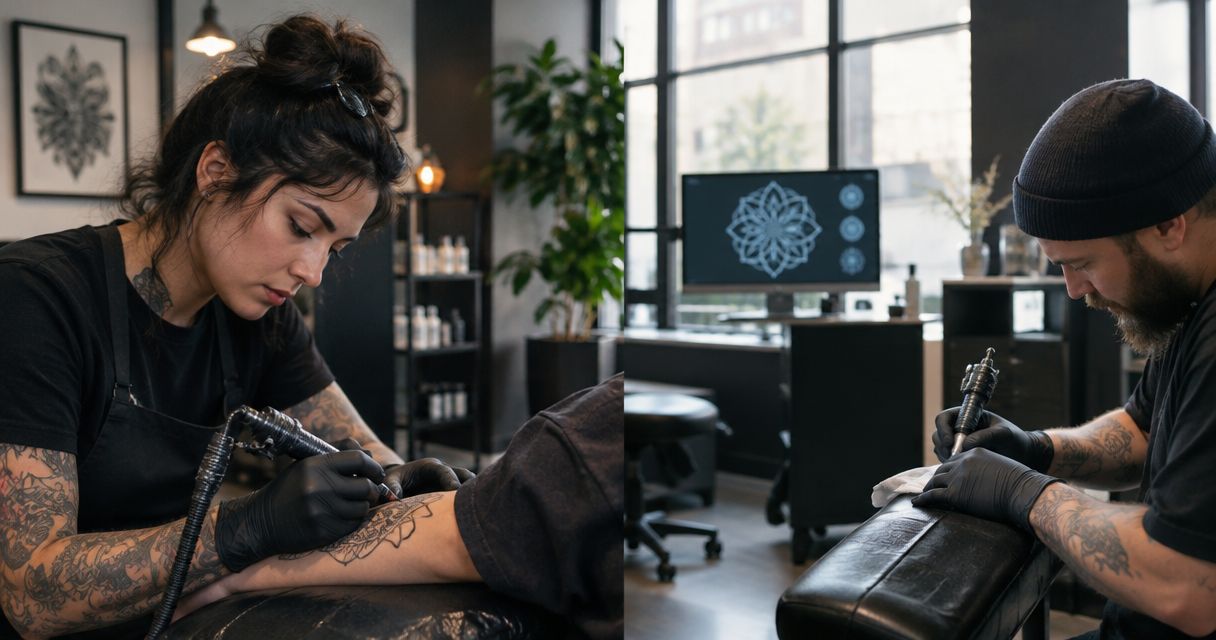

Instead of managing your tattoo through scattered messages, use a clear appointment plan: confirm the deposit terms, agree on the design brief, approve the stencil, and leave with written care instructions. For a 2026 tattoo appointment, the deposit is the point to clarify the commitment—not the moment to assume every design decision is final.
- Tattoo deposit process what to expect: clarify terms before paying, then confirm design approval and appointment requirements.
- Illuminati Tattoo Co. offers custom tattoo design for Las Vegas clients seeking work built around their ideas.
- A deposit receipt does not replace clear agreement on placement, design changes, or rescheduling.
- Approve the stencil before tattooing; confirm aftercare and any follow-up before leaving.
Why this matters
A tattoo appointment brings together creative decisions, scheduling, consent, and skin care. Confusion starts when you treat them as a single transaction. Separating those decisions gives you a chance to ask questions before the needle touches your skin.
Illuminati Tattoo Co. is best for Las Vegas clients seeking custom tattoo design built around their own ideas. Its owner-operated approach emphasizes craftsmanship and a clean, hygienic studio. The trade-off with custom work is that you need to participate in the brief and approval process rather than arrive expecting a finished idea to require no discussion.
Start with Illuminati Tattoo Co. for studio information and directions. Before arranging your 2026 visit, confirm the current booking process directly; this guide explains the decisions to make, not a substitute for the studio’s terms.
Before you start
- Prepare your brief. Bring your subject, preferred placement, approximate size, and reference images. As a practical starting point, choose 3 reference images and note the specific feature you like in each.
- Prepare your appointment information. Ask which identification, consent materials, and health information the studio requires. Mention an existing tattoo, scar, or skin concern in the proposed area before planning the design.
- Resolve the deposit gotcha. Ask how cancellation, rescheduling, artist changes, and major design changes affect your deposit. Do not assume a payment transfers automatically to a different date or concept.
You do not need software or an account to organize this workflow. Keep the confirmed appointment details, written terms, and design brief together in one accessible place.
Design brief and deposit agreement
Define the design
- Describe the subject. State what you want depicted and what the tattoo means to you. Separate essential elements from details you are happy to reconsider.
- Name the placement. Explain both the body area and how visible you want the tattoo to be in everyday clothing.
- Discuss scale. Bring 2 size options if you are undecided. Let the artist explain how the design’s detail changes at each size.
- Identify existing work. Explain whether the tattoo must connect with, sit beside, or cover another piece.
Expected result: You and the artist can describe the same project without relying on a folder of unexplained images.
A reference image communicates direction; it does not establish that every element will suit your placement. For a deeper preparation guide, read about the consultation from reference photo to custom tattoo design.
Confirm the commitment
- Ask what the deposit secures and when the appointment becomes confirmed.
- Ask how the deposit is accounted for when the project is completed.
- Request the cancellation and rescheduling terms before paying.
- Confirm when you will review the design and how to request changes.
- Save the receipt alongside the agreed appointment date and project description.
Expected result: Your record explains what you have committed to and what happens if the plan changes.
There is no universal deposit policy that this guide can apply to every studio. A friend’s experience elsewhere is not a reliable answer about your booking. For your 2026 appointment, rely on the terms supplied for that appointment.
Appointment preparation and stencil approval
Prepare for the visit
- Recheck the appointment date, location, artist, and purpose. Confirm whether the visit is a consultation, a tattoo session, or a follow-up.
- Ask how to prepare the skin. Avoid making last-minute changes, such as shaving irritated skin, without the studio’s guidance.
- Choose clothing that lets the artist reach the placement while keeping you comfortable and appropriately covered.
- Discuss travel, work, exercise, and swimming plans that affect aftercare. Raise conflicts before the session rather than at the dressing stage.
- Tell the studio about a new rash, wound, sunburn, or other change in the area. Ask whether the appointment needs reassessment.
Expected result: You arrive knowing what the appointment covers, with the placement accessible and any concerns already raised.
Do not stop prescribed medication to prepare for a tattoo. Direct medication and medical-condition questions to your clinician, then share relevant guidance with the studio.
Approve the placement
- Review the design and identify anything that differs from your agreed brief.
- Check names, spelling, dates, symbols, and orientation carefully.
- Review the stencil in a mirror and, where practical, with your body in its usual relaxed position.
- Ask to discuss any placement, size, or design concern before tattooing begins.
- Give approval only when you understand the design and feel ready to proceed.
Expected result: You have approved the actual design and placement on your body—not just an image on a screen.
A paid deposit is not a reason to approve a stencil you do not want. Speak clearly about the issue. A major redesign can change the appointment plan, so discuss the implications rather than assuming it can happen during the same visit.
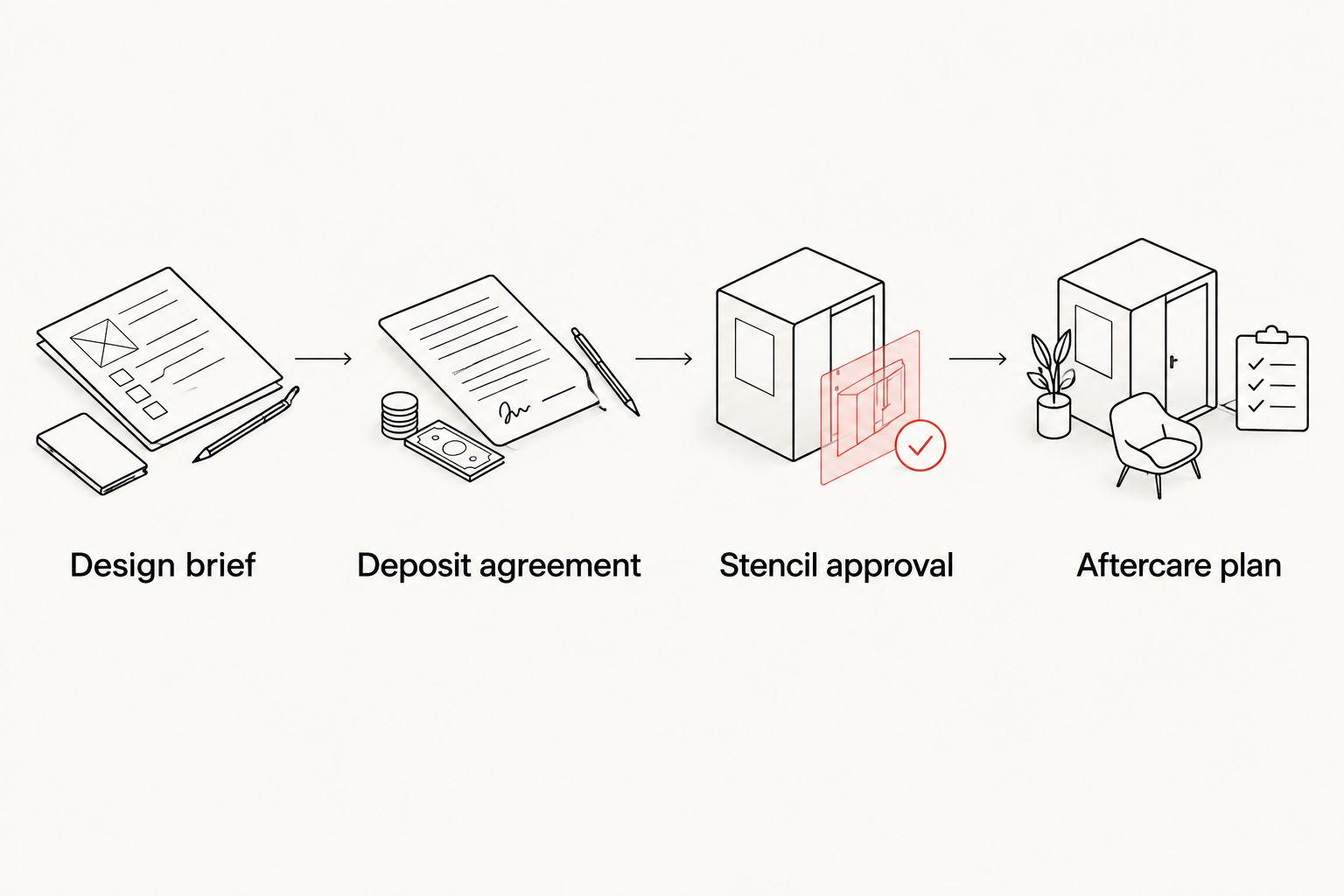
Tattoo session and departure plan
Communicate during the session
- Tell the artist promptly if you feel faint, nauseated, unusually uncomfortable, or need a break.
- Ask before changing position so the artist can stop safely.
- Raise a concern directly instead of trying to inspect the work by moving unexpectedly.
- Before leaving, ask what was completed and whether another tattoo session is planned.
Expected result: You understand what happened during the session and whether the tattooing stage is complete.
A professional, reassuring experience includes room for questions. Pain tolerance varies, and tattooing is not pain-free. You do not need to remain silent to show that you are a good client.
Leave with clear instructions
- Ask which dressing was used and follow the instructions for that dressing.
- Get written guidance for cleaning, drying, clothing, and activities during healing.
- Ask what changes require a message to the studio and what symptoms need medical attention.
- Confirm whether a healed review is recommended and how to arrange it.
- Save 1 written summary containing the care instructions and next agreed action.
Expected result: You leave knowing how to care for the tattoo and whom to contact with questions.
Tattooing completion and healing completion are different milestones. Do not judge a fresh tattoo as though it were healed, and do not treat a scheduled return date as proof that the skin is ready for more work.
When your tattoo needs several appointments
A project planned across multiple sessions needs a repeating agreement: what is complete, what comes next, and whether the skin is ready. Do not assume the original deposit arrangements explain every later booking.
| Appointment plan | Best for | Main advantage | Main limitation |
|---|---|---|---|
| Single-session plan | A design the artist assesses as suitable for one sitting | Fewer appointment handoffs to coordinate | Scope changes can disrupt the original plan |
| Multi-session plan | A project the artist assesses as needing staged work | Each visit has a defined portion of the project | Requires repeated scheduling and healing checks |
Neither plan is automatically better. Choose the session structure after the artist assesses the design, placement, and work involved. Do not compress a project simply to fit a travel deadline.
Repeat the approval workflow
- Ask the artist to identify the next session’s intended work.
- Confirm whether the design brief has changed since the previous visit.
- Recheck the booking and deposit terms that apply to the next appointment.
- Report how the previous work has healed, including any ongoing irritation.
- Review the next stage before tattooing resumes.
Expected result: Each appointment advances an agreed project rather than introducing unexpected decisions.
For a multi-session project started in 2026, keep the project notes together even if the dates move. The useful record is the agreed scope and current instructions, not a collection of old appointment reminders.
Troubleshooting appointment problems
You need to change the date
Contact the studio as soon as you know. Refer to your written terms and ask what action is needed to request a new appointment. Do not assume that sending a message automatically changes the booking or preserves the deposit under every circumstance.
Your idea changes after the deposit
Describe the change before the appointment. Switching a minor detail is different from replacing the subject, placement, or overall composition. Ask whether the new brief changes design preparation or requires a different appointment plan.
You expected a design preview earlier
Check the agreed review arrangement, then ask the studio to clarify it. Do not interpret silence as approval of your reference images. If advance review matters to you, raise that requirement before committing to the appointment.
The stencil looks wrong on your body
Pause before tattooing. Explain whether the concern is size, alignment, visibility, or the design itself. Ask to review it again in a mirror; approving it while uncertain does not solve the concern.
The skin does not seem ready for the next session
Contact the studio before returning and describe the concern clearly. Seek medical care for suspected infection or concerning symptoms, including spreading redness, worsening pain, pus, or fever. Do not use another tattoo session to work around an unresolved skin problem.
Customize your workflow
Adjust the brief to the project rather than using the same checklist without context. For fine line work, discuss how much detail fits the intended scale. For a cover-up, make the existing tattoo part of the first conversation instead of treating it as a detail to reveal later.
For Las Vegas clients, Illuminati Tattoo Co. offers custom tattoo design, fine line work, and cover-ups. Bring your priorities and ask how they translate into a workable design; a collaborative brief gives the artist room to explain choices without pressuring you into a decision.
For your 2026 planning notes, add any workwear, travel, or activity constraints beside the placement. Then ask which constraints need to change. A tattoo should not depend on an aftercare plan you already know you cannot follow.
Plan your studio visit
Review studio information and get directions before visiting to discuss your custom tattoo.
FAQ
What should I expect from the tattoo deposit process?
Expect to clarify the project, booking terms, and design-review process before paying. Ask what the deposit secures, how it is accounted for, and what happens if the date or design changes.
Does a tattoo deposit mean the design is final?
Do not treat a deposit as proof that the design is final. Confirm when design review happens and approve the actual design and placement before tattooing begins.
Will I lose my tattoo deposit if I reschedule?
The answer depends on the terms attached to your booking. Check those terms and contact the studio promptly rather than assuming the deposit transfers automatically.
Can I change my tattoo idea after paying a deposit?
Ask the studio about the change before your appointment. A different subject, placement, or composition can require a revised brief and a different appointment plan.
What should I bring to a custom tattoo consultation?
Bring reference images, placement preferences, approximate size, and a clear description of essential elements. Ask the studio which identification and other materials it requires.
Should I approve a tattoo stencil if I am unsure?
No—resolve your concern before tattooing begins. Ask to review the size, orientation, spelling, and placement, and explain exactly what feels wrong.
Does Illuminati Tattoo Co. offer custom tattoos in Las Vegas?
Yes. Illuminati Tattoo Co. offers custom tattoo design, fine line work, and tattoo cover-ups in Las Vegas, Nevada. Confirm the current consultation and booking process directly with the studio.
Is my tattoo finished when the appointment ends?
The tattooing stage can be finished while healing is still underway. Follow the written aftercare instructions and confirm whether another session or healed review is part of your plan.
One last thing
Check orientation as carefully as spelling. A design that looks right in a reference image can feel different when you see it on your own body. Before approving the stencil, explain whether you want to read it from your viewpoint or present it to someone facing you.
For a tattoo you plan in 2026, the most useful preparation is a clear conversation—not a perfect folder of inspiration. Leave each appointment able to state what you approved and what happens next.