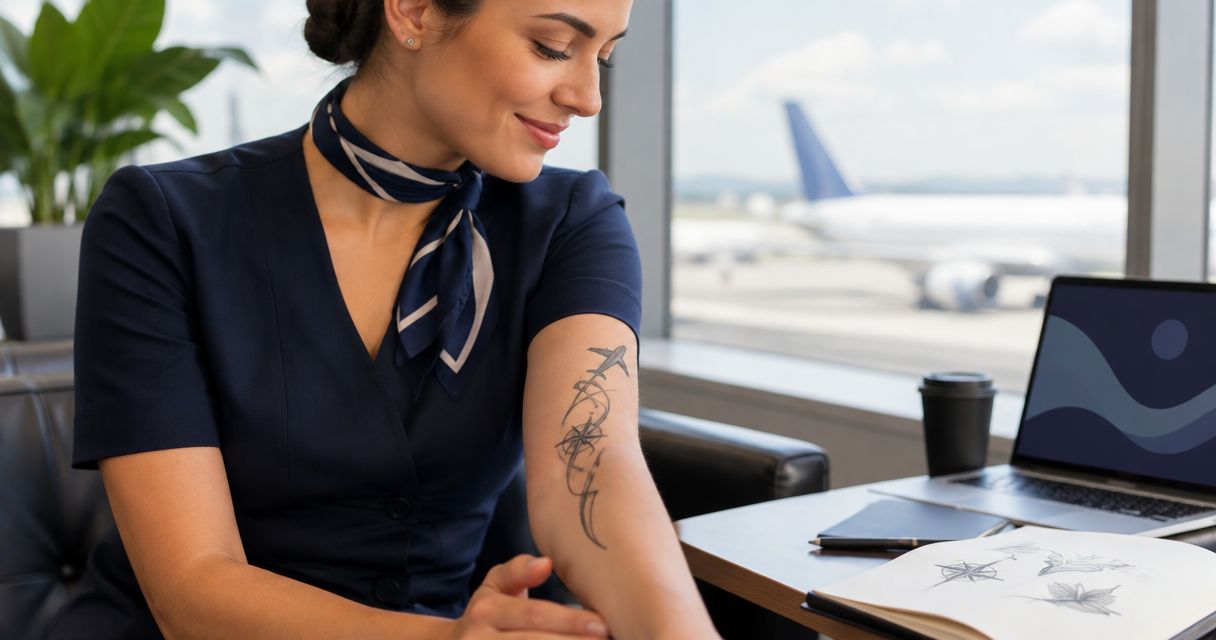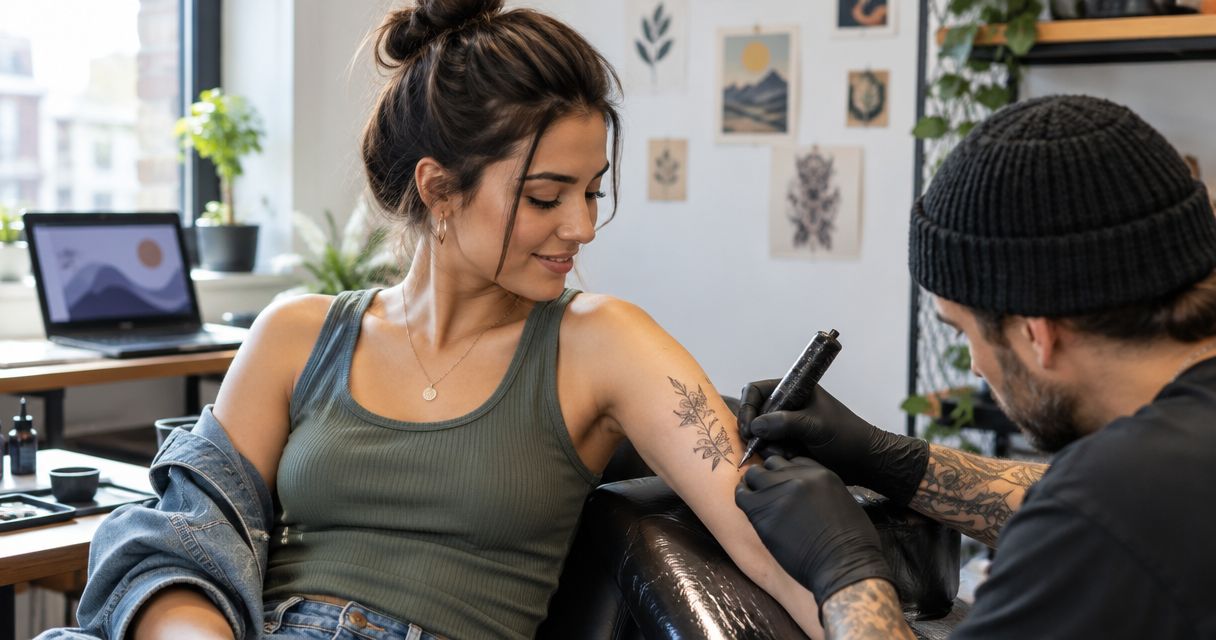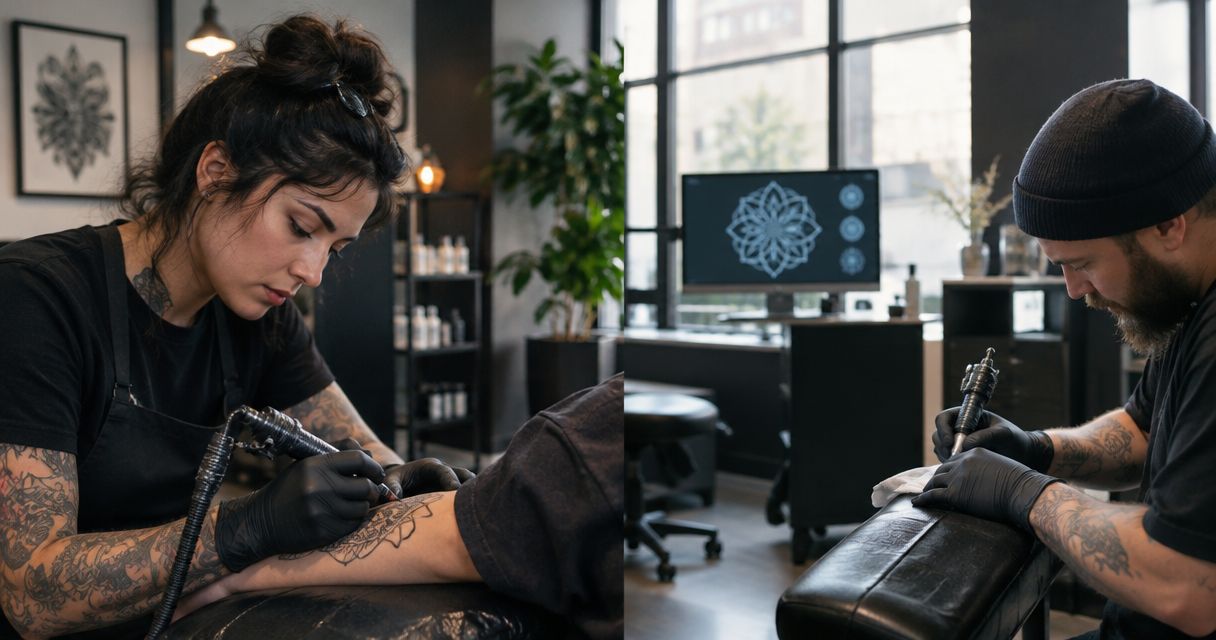
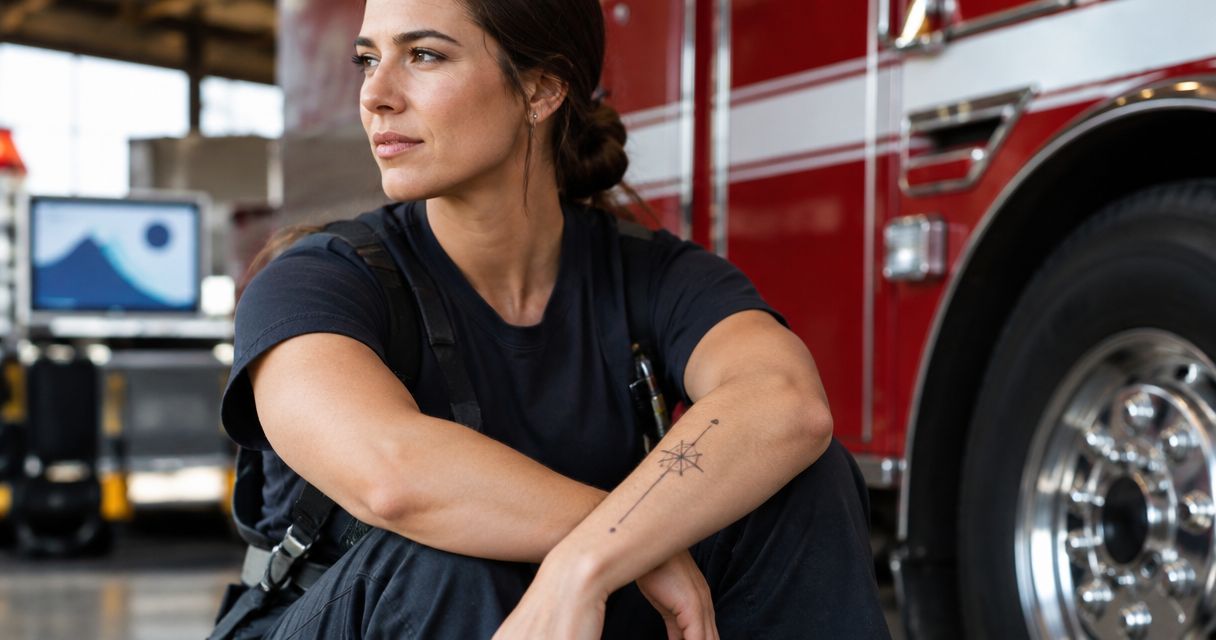
First responders’ fine line tattooing is body art built with delicate lines to express service, remembrance, or personal identity. Your design also needs to fit your employer’s appearance rules, the equipment you wear, and a realistic aftercare plan between shifts.
- Fine line tattoos for first responders work best when clear designs, uniform rules, and aftercare shape the plan.
- Illuminati Tattoo Co. suits Las Vegas first responders seeking custom fine line tattoos.
- Choose tattoo placement around actual uniform and equipment contact, not visibility alone.
- Keep memorial lettering readable; simplify the design before shrinking it.
Why fine line tattoos matter for first responders
A service-related tattoo carries a different design brief from a decorative piece. You might want to recognize a colleague, mark a career milestone, or keep something personal separate from your professional identity. None of those goals requires a badge, department name, or public explanation.
Choose the meaning first, then decide how visibly you want to wear it. Fine line work offers a restrained visual approach, but delicate lines do not make a tattoo temporary, maintenance-free, or automatically acceptable under workplace rules.
For local custom work, Illuminati Tattoo Co. offers fine line tattoos and custom tattoo design in Las Vegas. Its owner-operated service gives you a place to discuss the concept directly rather than settle on a design before discussing your needs.
For your 2026 plan, start with your current appearance policy and work schedule. A colleague’s tattoo is not proof that the same placement or imagery meets your own employer’s requirements.
How to plan your fine line tattoo
Use this sequence before you commit to a design. Preparing a short brief yourself keeps the consultation focused; your artist then helps translate that brief into workable linework, spacing, and placement.
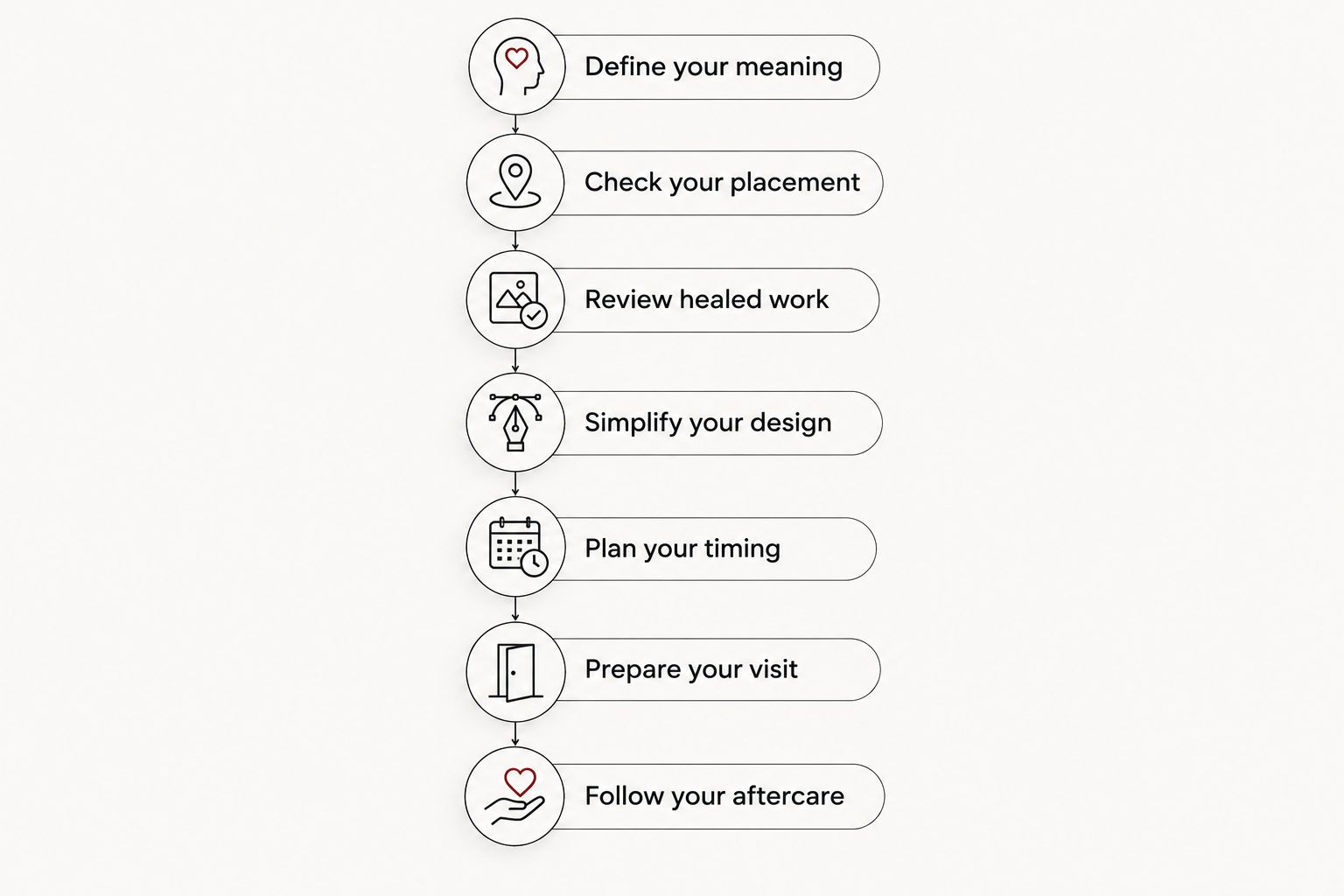
Define your meaning
Write a 1-sentence brief describing what you want the tattoo to represent. For example, describe remembrance, teamwork, a personal turning point, or life outside the uniform. Treat that sentence as the design’s purpose, not necessarily as text to tattoo.
Separate meaningful details from decorative extras. A memorial does not need a name, date, emblem, quotation, and background image to communicate its importance. Decide which element matters most before asking the artist to combine everything.
Bring 3 reference images with notes explaining what you like about each. Reference images help communicate line weight, composition, or mood; they should not become instructions to copy another person’s custom artwork.
- Write the meaning in plain language.
- Identify the detail you would keep if everything else disappeared.
- Mark any names or identifiers you want kept private.
- Note whether the design should reference your profession at all.
Check your placement
Compare 2 possible placements while wearing your normal work clothing. Check both standing and seated positions, then account for ordinary movement. A spot hidden by a sleeve at rest might become visible when you reach or lift.
Assess contact, not just coverage. Depending on your role, a watch, glove cuff, waistband, protective clothing, or equipment strap can overlap the area. Bring that information to the artist rather than assuming a covered tattoo is protected from friction.
Use fine line tattoo placement ideas to build a shortlist, not to override your workplace rules. For a 2026 appointment, confirm the current policy instead of relying on an old handbook or a coworker’s recollection.
- Read the rules for visible tattoos and restricted imagery.
- Check where cuffs, straps, and seams contact your skin.
- Decide how much privacy you want outside work.
- Ask the artist to assess the design at each proposed location.
Review healed work
Start by comparing examples yourself. Look for healed fine line tattoos as well as fresh photographs, and distinguish the design’s subject from the quality of its execution. A portfolio full of imagery you like does not automatically answer how an artist handles small lettering or closely spaced lines.
At Illuminati Tattoo Co., discuss your fine line tattoo brief alongside the artist’s relevant work. Custom design is the useful next step when you need help adapting a meaningful symbol to your anatomy and daily routine.
For your 2026 consultation, ask what the artist would remove, enlarge, or reposition. A thoughtful design recommendation is more useful than an automatic agreement to make everything smaller.
- Ask to see healed examples relevant to your concept.
- Look at lettering and line spacing, not just the overall image.
- Ask why the artist recommends a particular size.
- Discuss how the design is intended to remain readable as it ages.
Simplify your design
Fine line describes the visual treatment; it does not require the smallest possible tattoo. Your artist needs enough space to separate lines and keep the subject recognizable. Tiny lettering and crowded symbols create a different challenge from a simple outline at the same overall size.
For a service emblem, identify the feature that makes it meaningful. An outline or selected element might communicate the idea without reproducing every internal detail. For memorial lettering, prioritize the name or phrase over additional decoration.
Review the stencil at its intended size, not only enlarged on a screen. Read any text naturally and check the composition from an ordinary viewing distance. If you need an explanation to identify the central feature, discuss a simpler version.
- Choose a clear focal point.
- Remove details that duplicate the same meaning.
- Leave breathing room between letters and separate elements.
- Compare a simplified version with the original concept.
Plan your timing
Check your calendar before choosing an appointment. Work duties, physical training, swimming, travel, and protective equipment all belong in the discussion because a fresh tattoo needs appropriate care. Do not build the plan around a promised universal healing deadline.
For your 2026 work calendar, identify the duties you cannot change. Explain those constraints to the artist and ask how they affect timing and placement. If you cannot follow the aftercare instructions around an upcoming assignment, choose another appointment date.
Your employer and a qualified healthcare professional handle questions about occupational restrictions or medical conditions. The tattoo artist explains the studio’s process and aftercare; those are different responsibilities.
- Describe your normal shift duties accurately.
- Flag upcoming swimming, training, or travel.
- Discuss clothing and equipment contact during healing.
- Leave room to change the appointment plan if necessary.
Prepare your visit
Gather your brief, reference images, placement preferences, and policy questions before visiting. You do not need finished artwork. A clear description of what matters gives the artist room to develop something personal rather than simply trace a reference.
Illuminati Tattoo Co. emphasizes custom designs, owner-operated service, and a clean, hygienic studio. Those are useful priorities for a first tattoo, but the design still needs to suit the fine line format: intricate lettering or a detailed department crest can require simplification.
Check the studio’s current visiting information and get directions before leaving. At the visit, ask about the proposed design, consent process, hygiene practices, and written aftercare without feeling pressured to decide immediately.
- Bring the exact spelling of names and any dates.
- Show references with notes about what you like.
- Explain your uniform and equipment constraints.
- Confirm that you understand the plan before consenting.
Follow your aftercare
Get written instructions before you leave and follow the artist’s guidance for your specific dressing and tattoo. Do not substitute a coworker’s routine or a social media shortcut simply because the design is small.
Wash your hands before handling the area, avoid picking at healing skin, and ask how to manage normal clothing contact. If work conditions conflict with the instructions, contact the studio rather than improvising a different dressing or product routine.
Seek medical advice for concerns such as spreading redness, worsening pain, pus, or fever. A tattoo studio can discuss its aftercare instructions, but it does not replace medical assessment of a suspected infection.
- Keep the written aftercare instructions accessible.
- Clarify dressing care before leaving the studio.
- Avoid swimming or soaking while the tattoo heals.
- Ask about sun protection once the skin has healed.
Plan your custom tattoo visit
Review the studio’s information, get directions, and bring your design brief and placement questions.
Compare design options for first responders
The strongest option is the one that communicates your meaning without crowding the skin. These approaches serve different purposes; none is automatically better because it looks more closely connected to your profession.
| Design option | Best for | Main advantage | Key limitation |
|---|---|---|---|
| Simplified service emblem | Recognizing a professional identity | Keeps a clear connection to your work | Complex insignia can lose essential details when simplified |
| Memorial lettering | Honoring a specific person or event | Makes the dedication explicit | Small lettering needs careful spacing and enough room |
| Personal symbol | Keeping meaning private | Lets you express something without naming a department or person | Others will not necessarily understand its significance |
| Coordinated team motif | Sharing a connection with colleagues | Creates a common visual theme | Placement, consent, and workplace rules remain individual decisions |
A simplified service emblem needs an accuracy check before you approve it. Decide whether you want an exact recognizable insignia or a personal interpretation; those are different briefs.
Memorial lettering puts spelling and readability first. Bring the text in writing, and check it again on the stencil rather than relying on memory during an emotional appointment.
A personal symbol gives you the most distance from a literal work theme. Coordinated designs create a shared connection, but no colleague should feel obliged to get the same size, placement, or tattoo at all.
Common mistakes first responders make
Treating covered placement as a complete solution
A uniform can conceal a tattoo while a seam or equipment strap still presses on it. Evaluate visibility and contact separately. If the placement fails either test, discuss another location before committing to the artwork.
Compressing a detailed badge into a tiny outline
A detailed emblem and a fine line tattoo are not automatically a good match at a small scale. Choose the essential elements with your artist. Do not make miniature accuracy more important than a readable finished design.
Scheduling around a fixed healing promise
A return to work does not mean every duty is compatible with aftercare. Describe the actual task, clothing, and environment. Ask questions before the appointment rather than discovering a conflict at the start of your next shift.
Approving memorial details from memory
Emotional significance does not protect against a spelling or date error. Compare the stencil with a written reference before tattooing begins. Check every character, even when the design feels familiar.
Letting a group choose everyone’s placement
Shared artwork does not require identical decisions. Each person has different anatomy, privacy preferences, workplace rules, and comfort with a permanent mark. Keep the common theme optional and let each participant approve an individual design.
FAQ
What are the best fine line tattoos for first responders?
The best fine line tattoos for first responders express a clear meaning while fitting workplace rules and practical aftercare needs. Simplified emblems, readable memorial lettering, and personal symbols are useful starting points for a custom design.
Can first responders have visible tattoos at work?
Visible tattoo rules depend on your employer and role. Read the current written policy before choosing a placement, and ask the appropriate workplace contact about anything unclear.
Where should I put a fine line tattoo if I wear protective equipment?
Choose placement after checking where your actual equipment, cuffs, straps, and seams contact your skin. Tell the artist about those contact points so you can discuss the design and healing plan together.
Does a fine line tattoo have to be very small?
No, fine line describes the visual treatment rather than a required size. Lettering, closely spaced details, and complex symbols need enough room to remain distinct.
Can I return to a first responder shift immediately after a tattoo?
Do not assume your next shift is compatible with a fresh tattoo. Discuss the duties, equipment contact, and aftercare requirements before scheduling, and follow any applicable workplace or medical guidance.
Can Illuminati Tattoo Co. create a custom first responder tattoo?
Illuminati Tattoo Co. offers custom tattoo design and fine line work in Las Vegas. Bring your concept, reference images, placement preferences, and work-related constraints to discuss a suitable design.
How do I choose between a memorial tattoo and a service emblem?
Choose a memorial tattoo when the central purpose is honoring a person or event, and a service emblem when the central purpose is recognizing your professional identity. A private symbol is another option when you want the meaning without visible names or insignia.
One last thing
Your tattoo does not have to explain your job to anyone else. Before your 2026 studio visit, save a version of the concept with the department name, rank, and insignia removed. If the meaning still feels right, bring both versions so the artist can help you compare them.