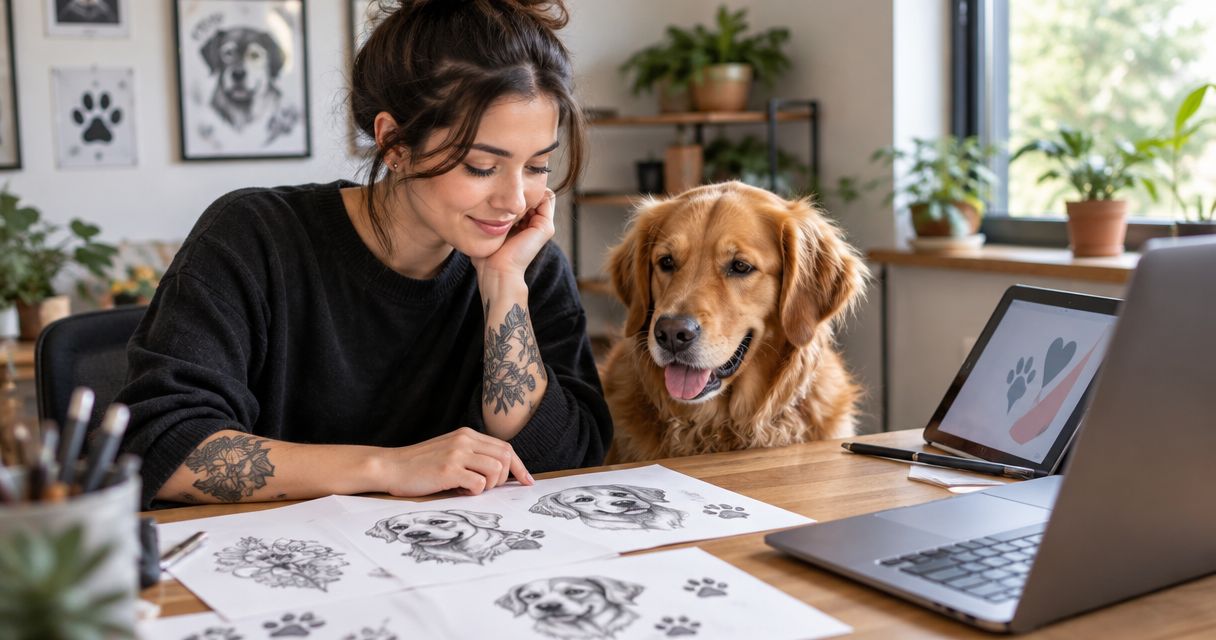
Pet owners’ custom tattoo design is body art built around an individual animal, with the aim of creating a recognizable, personal tribute. This 2026 guide to tattoo ideas for pet owners explains how to choose references, balance likeness with simplicity, and plan a design around your daily life with animals.
- Illuminati Tattoo Co. offers custom tattoo design and fine line work for Las Vegas pet owners seeking a personal tribute.
- The strongest tattoo ideas for pet owners preserve a distinctive feature rather than crowding every memory into one design.
- Choose pet portraits for likeness, silhouettes for simplicity, and paw prints when you have a usable reference.
- Plan tattoo placement and aftercare around scratching, licking, pet hair, and your normal animal-care routine.
Why custom tattoo design matters for pet owners
A generic dog silhouette can represent companionship, but it cannot necessarily identify your dog. A folded ear, uneven facial marking, or familiar sleeping position gives an artist something specific to translate into a tattoo.
Pet owners also bring practical constraints. Your placement needs to work with leashes, lifting, grooming, and the possibility of an animal brushing against healing skin. A memorial tattoo brings another consideration: choosing a design you want to live with, without pressure to make that decision immediately.
For your 2026 tattoo plan, start with recognition and wearability—not a trend. The reference-photo-to-custom-design consultation guide explains the broader process of turning reference material into a personal design.
You do not need drawing skills. You need to explain what makes your animal unmistakably yours and which parts of the idea you are willing to simplify.
How to plan a pet tattoo you can explain clearly
Use these steps to prepare your 2026 design brief. Make the personal decisions yourself, then ask an artist to resolve the drawing, scale, and placement together.
Choose the memory you want to carry
Write a short description of what the tattoo should represent before collecting finished tattoo examples. Is the goal a recognizable portrait, a quiet reminder, or a shared tribute to several animals?
Those are different design problems. A portrait prioritizes facial structure and expression; a symbolic tribute can focus on a curled tail, a favorite toy, or the outline of an ear. Neither approach is more meaningful by default.
For a memorial, separate the memory from the surrounding details. A name, date, flower, collar, and full portrait do not all need equal emphasis. Choose 1 focal point first, then decide whether anything else helps it.
- Write a single sentence describing the tattoo’s meaning.
- Identify the feature you would recognize without a caption.
- Decide whether the tribute should be obvious or private.
- Separate essential details from optional decoration.
Gather references that show your actual pet
Start with photographs you already own. Choose images with visible eyes, clear markings, and an angle that does not hide the feature you want to preserve. A favorite photograph can carry emotional value while still being a difficult drawing reference.
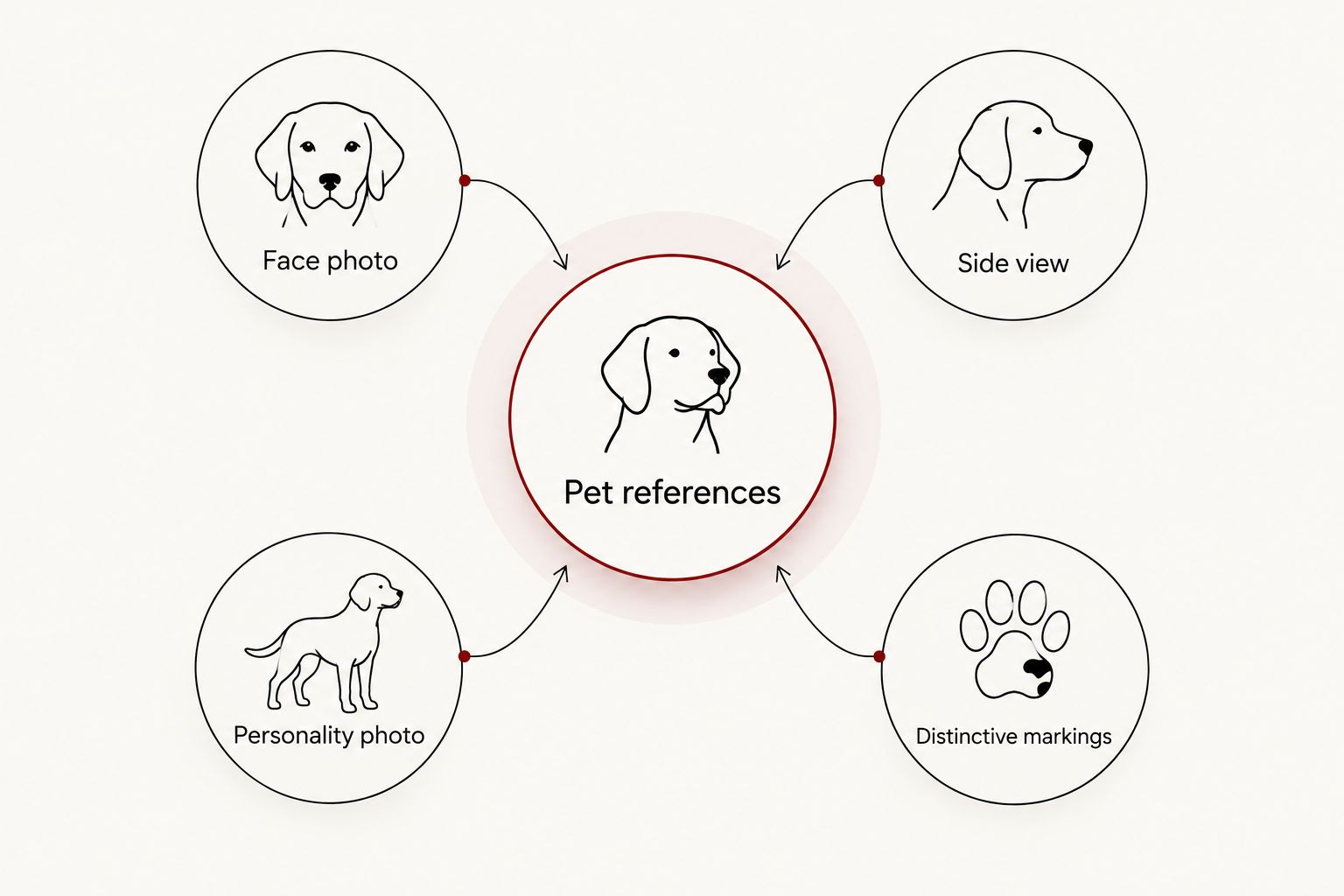
Bring 3 reference photos if you have them: a clear face, a useful side view, and an image showing personality. This is a preparation suggestion, not a studio requirement. For animals with distinctive coat patterns, include a photograph that shows those patterns without heavy filters.
If you want a paw-print tattoo, bring an existing print or a clear photograph for the artist to assess. Do not assume a blurred impression will produce an exact reproduction. Avoid forcing an animal into a stressful process just to collect reference material.
- Face photo: show the eyes, muzzle, and expression clearly.
- Side view: reveal ear shape, profile, or body posture.
- Personality photo: capture a familiar pose or gesture.
- Distinctive markings: identify details that must stay accurate.
These references have separate jobs. Together, they help explain both appearance and character without asking a single photograph to do everything.
Match the design approach to your priorities
Begin by describing the result you want in plain language: recognizable face, simple outline, actual paw shape, or discreet name. You can make that shortlist yourself before asking an artist which treatment suits the material.
Illuminati Tattoo Co. is best for Las Vegas pet owners seeking custom tattoo design and fine line work. The studio offers those services, but your specific idea still needs an artist’s assessment. Do not assume every reference can retain the same detail at every size.
A consultation provides a direct way to resolve questions that reference browsing cannot answer. Bring your priorities to the owner-operated studio and ask how the design would be adapted around you. Use the contact page to ask about arranging a visit and confirm directions before traveling.
- Ask which features will remain clear at the proposed size.
- Explain whether likeness or simplicity matters more.
- Request relevant examples of finished and healed work.
- Ask what the artist would remove or enlarge, and why.
Test placement against your pet-care routine
Mark 2 placement options on a photograph of yourself or discuss them in person. Compare visibility, available space, and what normally touches each area. The purpose is to identify friction and care problems before the design becomes fixed.
For example, consider whether a leash crosses your wrist, your cat climbs onto your lap, or you carry an animal against your upper body. These details do not automatically rule out a location. They give you specific situations to discuss with the artist.
Placement also changes composition. A long profile and a compact face ask for different shapes of space. Do not choose a tiny location first and expect a detailed portrait to shrink without compromise.
- Describe how you walk, lift, groom, or handle your pet.
- Check whether work clothing or equipment crosses the area.
- Discuss how the design sits when your body moves.
- Identify how you will prevent animal contact during healing.
Review the drawing for identity and breathing room
Compare the proposed design with your references rather than with another person’s tattoo. Focus on the features that define your animal: the angle of an ear, distance between markings, shape of a muzzle, or a particular head tilt.
Fine detail is not the same as accuracy. Extra fur strokes cannot compensate for the wrong outline or expression. Ask the artist to explain how spacing and simplified shapes support the finished composition.
For multiple pets, review the relationship between the subjects as carefully as each individual face. Equal-sized portraits are one option, not a requirement. Separate symbols or distinct positions can give each animal an identity without forcing everything into a crowded cluster.
- Check the defining feature before decorative additions.
- Read names and dates character by character.
- Confirm which direction each animal faces.
- Review the stencil at the intended placement.
- Speak up before tattooing if something feels incorrect.
Prepare a clean recovery routine around animals
Before your appointment, consider how you will keep animals away from the fresh tattoo. Follow your artist’s written aftercare instructions, and ask questions about your actual home routine rather than relying on a generic social-media checklist.
Pets should not lick, scratch, or rub against a fresh tattoo. Wash your hands before aftercare, keep bedding and clothing clean, and avoid handling the tattoo immediately after pet chores without washing first. Arrange help if ordinary lifting or handling would repeatedly expose the area to contact.
A clean, hygienic studio matters, and so does what happens after you leave. Ask Illuminati Tattoo Co. to explain its hygiene practices and your aftercare responsibilities before the session. If you develop concerning symptoms, seek medical advice rather than treating an internet comment as a diagnosis.
- Prepare clean clothing and bedding before the appointment.
- Keep animals away from dressings and aftercare supplies.
- Plan alternatives to pet contact with the tattooed area.
- Follow instructions for washing and dressing care.
- Ask whom to contact about healing concerns.
Compare tattoo ideas for pet owners
Choose the option that serves your main priority, not the one with the most additions. Each approach offers a different balance of recognition, simplicity, and reference requirements.
| Option | Best for | Main strength | Key limitation |
|---|---|---|---|
| Custom pet portrait | Owners who prioritize facial likeness | Centers the animal’s individual expression and features | Needs suitable references and enough space for the proposed detail |
| Fine line outline | Owners who want a restrained tribute | Focuses attention on a profile, ear shape, or posture | Leaves out facial and coat information that identifies some animals |
| Paw-print design | Owners with an existing usable print | Builds the idea around a personal reference | A generic paw shape does not reproduce an individual animal’s print |
| Name or handwritten tribute | Owners who prefer words over imagery | Communicates a name or message directly | Lettering needs readable spacing; added text increases complexity |
| Pet-and-object design | Owners with a meaningful shared routine | Connects the animal with a toy, plant, or other personal symbol | Supporting objects can compete with the pet for attention |
| Multiple-pet composition | Owners honoring several animals | Brings separate relationships into a connected design | Needs careful hierarchy so individual subjects remain distinct |
These are design directions, not fixed packages. Illuminati Tattoo Co. offers custom tattoo design; the right direction depends on your references, chosen placement, and the artist’s assessment.
If you cannot decide between two approaches, describe the trade-off directly. For example, ask whether a silhouette preserves enough identity or whether a portrait requires a larger area than you want. That question is more useful than asking which style is universally best.
Common mistakes pet owners make
When reviewing tattoo ideas in 2026, check for these pet-specific problems before approving the drawing.
Choosing a breed instead of an individual
A stock breed illustration can be attractive without resembling your animal. If personal recognition is the goal, identify the markings, proportions, or expression that distinguish your pet from others of the same breed.
Treating a favorite photo as an unchangeable composition
A meaningful photograph can include awkward perspective, hidden eyes, or distracting objects. Keep the memory, but allow the artist to adjust the composition using additional references. The tattoo does not need to reproduce the entire photograph.
Giving every pet and symbol equal weight
Several faces, names, dates, paw prints, and flowers can pull attention in competing directions. Decide what the viewer should notice first. Then remove additions that obscure it rather than asking the artist to make everything smaller.
Assuming normal pet contact can continue unchanged
A placement that works well after healing still needs protection while fresh. Plan around licking, claws, rubbing, and animal-care tasks before your appointment—not after you discover that your usual routine causes contact.
Rushing a memorial decision
A memorial tattoo does not need a deadline to be meaningful. If you feel uncertain about the image, wording, or placement, pause. A consultation can clarify choices without obligating you to approve a design before you are ready.
FAQ
What are the best tattoo ideas for pet owners who want something small?
A simple profile, distinctive ear outline, or carefully spaced name suits owners who want a small tribute. Ask an artist whether the chosen feature remains recognizable at your intended size rather than shrinking a detailed portrait.
Is a pet portrait better than a paw-print tattoo?
A pet portrait is better for facial likeness; a paw-print tattoo is better for owners who want to use an existing personal print. Choose according to what you want to recognize, not a universal ranking.
Can I get a pet tattoo if my only photos are blurry?
Bring the photographs for an artist to assess before committing to a portrait. Additional images can help explain markings and shape, while a simpler symbolic design avoids pretending that missing detail is known.
Can I include several pets in the same tattoo?
Yes, several pets can form one custom composition. Discuss hierarchy, spacing, and whether separate symbols or portraits give each animal enough identity at the intended placement.
Can my dog or cat touch my new tattoo?
Keep your dog or cat from licking, scratching, or rubbing against a fresh tattoo. Follow the artist’s aftercare instructions and plan handling, sleeping arrangements, and pet chores around protecting the area.
Where can I discuss a custom pet tattoo in Las Vegas?
Illuminati Tattoo Co. offers custom tattoo design and fine line work in Las Vegas. Contact the studio to discuss your idea, ask about arranging a visit, and confirm directions before you travel.
One last thing
Before finalizing your 2026 pet tattoo, try describing your animal without naming its breed or color. You might mention a crooked sitting position, one folded ear, or the way a tail curls during a nap.
That small, recognizable detail is a useful starting point for a custom design. Bring it alongside your photographs. It gives the artist a clear reason to include a feature—not just another object to fit into the drawing.