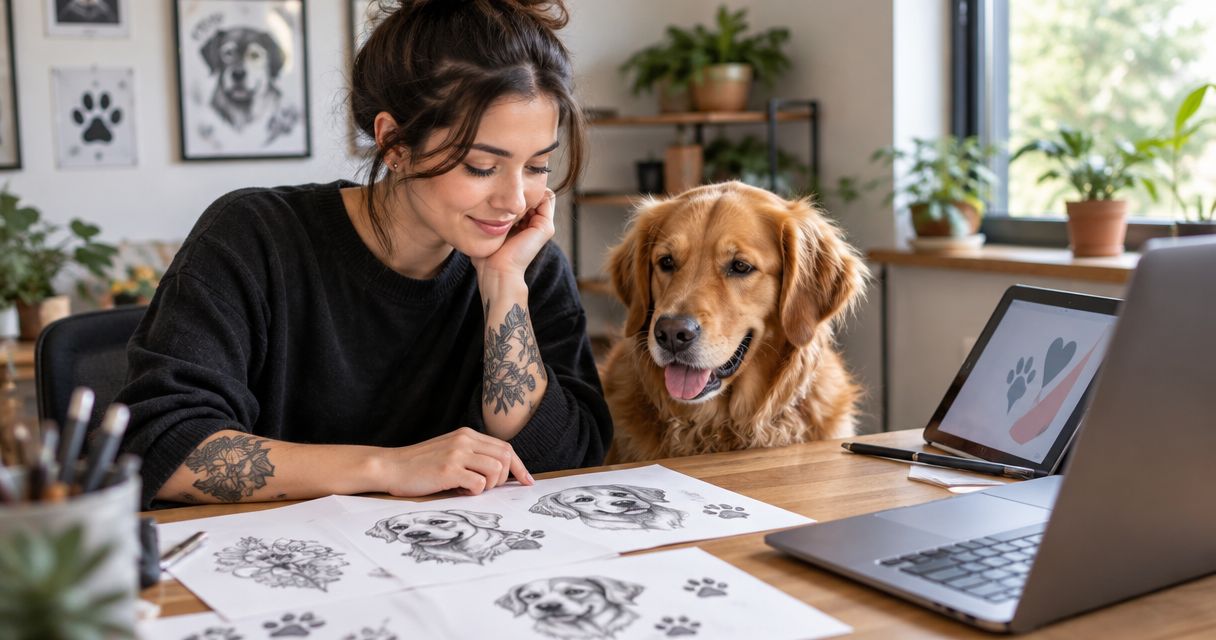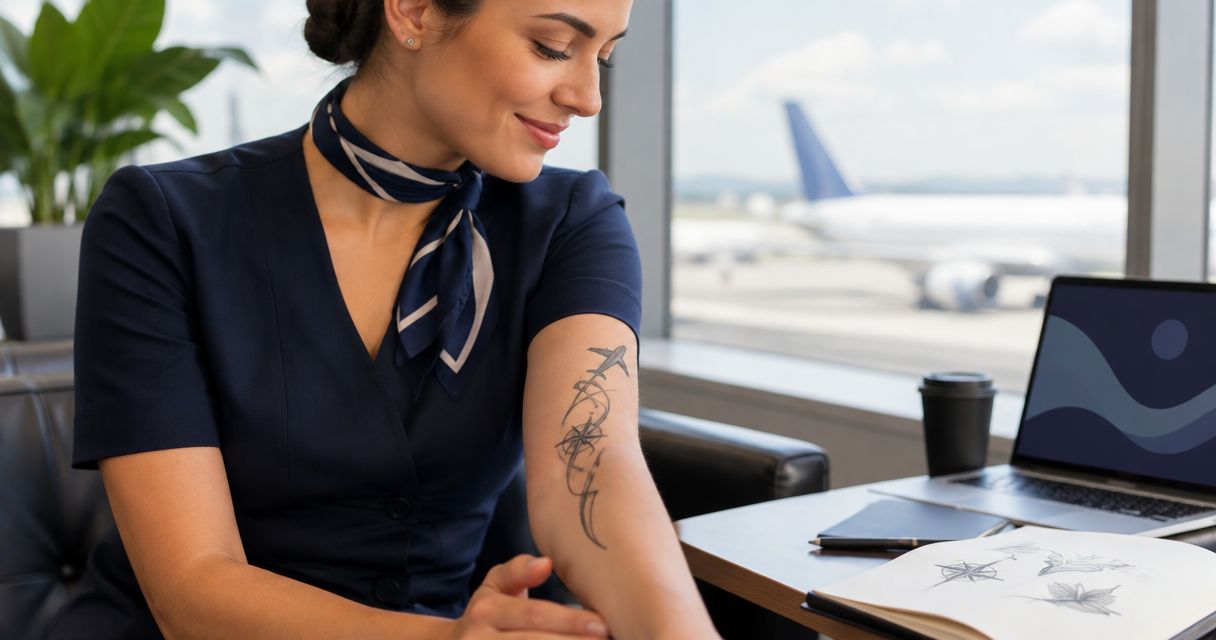
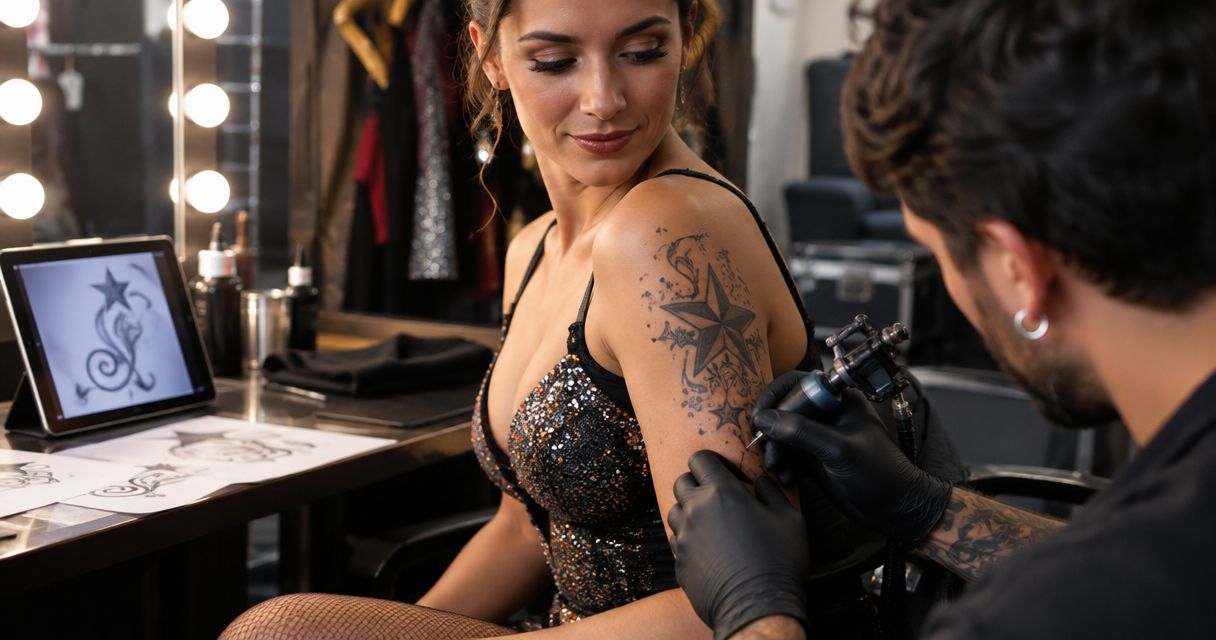
Entertainers’ custom tattoo design is artwork developed around a performer’s identity, placement needs, and working schedule, with the aim of expressing personal style without overlooking professional demands. This 2026 guide explains how to choose tattoo designs for entertainers when costumes, cameras, movement, and healing all belong in the design brief.
- Illuminati Tattoo Co. is best for Las Vegas entertainers seeking custom tattoo design.
- Choose tattoo designs for entertainers around personal meaning, costume coverage, and visibility during movement.
- Fine line, script, bold motifs, and cover-ups solve different design problems; none suits every performer.
- Plan tattoo aftercare around rehearsals and performances before committing to an appointment.
Why this matters
A tattoo can be personally meaningful without becoming part of every role you perform. Start by deciding whether you want the artwork visible during work, concealed by ordinary costumes, or positioned somewhere you can reveal selectively.
For your 2026 planning, treat the tattoo as both permanent artwork and a practical scheduling decision. A design that suits a publicity photograph still needs to work with your everyday movement, wardrobe, and care routine. Choose the placement and the healing window before approving the finished composition.
Illuminati Tattoo Co. offers custom tattoo design, fine line work, and tattoo cover-ups in Las Vegas. Those services provide different starting points; your consultation should establish which approach fits your skin, existing artwork, and intended result.
Why custom tattoo design matters for entertainers
Entertainers do not share a single dress code or visual identity. A musician wanting a visible signature piece has a different brief from an actor who wants control over when a tattoo appears. A dancer also needs to consider where costumes, straps, footwear, or equipment contact the chosen area.
Custom design gives you a way to discuss these constraints before the artwork is finalized. It also lets you distinguish personal meaning from a temporary stage concept: a symbol connected to your craft does not need to reproduce a current production’s artwork.
The strongest brief explains what the tattoo must do and what it must avoid. Bring actual examples from your working life rather than asking an artist to interpret “stage-friendly” without context.
How to plan your custom tattoo
Use the following sequence to organize the decisions before an appointment. Start with your own notes and reference photographs, then ask an artist to assess what works as a tattoo rather than assuming a screen image will translate directly onto skin.
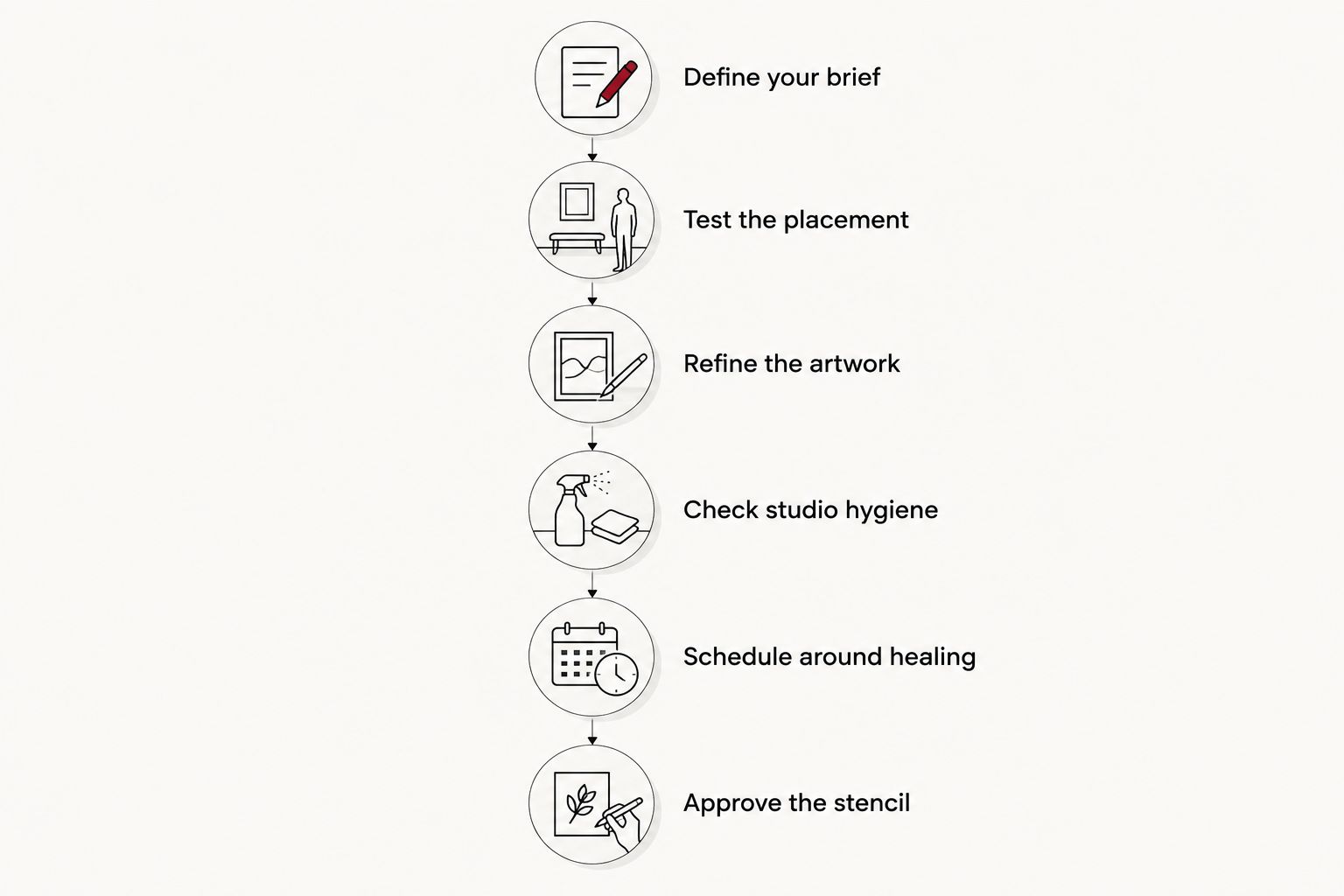
Define your brief
Write a 1-page brief before collecting more inspiration. Explain the meaning, the preferred visual style, and whether the tattoo belongs to your private life, professional identity, or both. A clear brief gives an artist direction without asking for a copy of someone else’s finished piece.
For a 2026 project, separate lasting preferences from current promotional imagery. You can ask for a sense of rhythm, movement, theatrical contrast, or botanical detail without permanently reproducing a particular show poster.
Best for performers starting from an idea: a written brief keeps the conversation focused. Its limitation is that words alone cannot establish how a composition will fit your body; placement still needs an in-person assessment.
- State what the tattoo means in plain language.
- Identify elements you want included and elements you do not want.
- Collect 3 reference images and explain one useful feature in each.
- List wardrobe restrictions or production requirements you have confirmed.
- Mark your preferred body area without treating it as a final decision.
Test the placement
Use photographs and your usual wardrobe to compare placement ideas before the consultation. Check at least 2 costume looks if your work involves different coverage levels. This is a planning exercise, not a substitute for an artist assessing the area.
Look at the proposed location while standing naturally, reaching, sitting, or taking a typical performance position. A placement that stays concealed in a relaxed pose can become visible when you lift an arm or bend. Consider straps and seams as well as the edge of a sleeve.
Best for performers who need selective visibility: costume testing reveals practical conflicts early. Its limitation is that photographs do not show every working condition, so bring the relevant garment or clear reference images when appropriate.
- Photograph the area from the front, side, and back where relevant.
- Check costume coverage during your usual range of movement.
- Identify straps, waistbands, harnesses, or equipment touching the area.
- Ask the appropriate production contact about any appearance requirements.
- Keep an alternative placement available until the consultation.
Refine the artwork
Organize your reference images by what you like: line weight, subject, spacing, or overall shape. Then discuss how those elements can become original artwork. A reference should explain your taste, not replace the artist’s design judgment.
Illuminati Tattoo Co. custom tattoo design is built around the individual client. Bring the brief to the owner-operated studio so the discussion can connect your preferences with the body area and any existing tattoos. Custom work still involves choices: a small placement and a highly detailed concept do not automatically belong together.
The custom tattoo consultation guide explains how to prepare references for that conversation. Ask the artist to identify what needs simplification rather than insisting every reference detail survive unchanged.
- Choose a main subject instead of combining unrelated focal points.
- Ask what detail needs more space to remain distinct.
- Discuss how the design follows the body’s shape.
- Confirm every letter, name, and symbol yourself.
- Explain whether future nearby tattoos are part of your plan.
Check studio hygiene
Use the consultation to assess the process, not just the portfolio. Ask how the workstation is prepared, how sterile needles and other supplies are handled, and what written aftercare you will receive. You should understand the answers before agreeing to proceed.
Illuminati Tattoo Co. emphasizes owner-operated service and a clean, hygienic studio. Those priorities belong alongside artistic fit, not beneath it. Neither a strong portfolio nor a welcoming conversation replaces questions about the actual procedure.
Best for any performer choosing a studio: a process-focused discussion helps you make an informed decision. Its limitation is that a client’s visual inspection cannot replace professional infection-control practices or relevant oversight.
- Ask about single-use needles and contamination prevention.
- Confirm that the artist explains preparation and aftercare clearly.
- Disclose relevant skin concerns and medical information during intake.
- Ask a qualified clinician about medical questions before the appointment.
- Pause if you do not understand the procedure or feel pressured.
Schedule around healing
Open your work calendar before choosing the appointment. List rehearsals, performances, travel, swimming, and other commitments that affect how you can follow aftercare. Then discuss the proposed body area and workload with the artist.
For your 2026 calendar, do not treat an empty evening as proof that the timing works. The important question is whether you can protect and care for the tattoo afterward. A fresh tattoo needs aftercare even when the appointment itself fits between engagements.
Best for performers with fixed bookings: scheduling around care requirements protects your ability to follow instructions. The limitation is that a calendar cannot guarantee a healing date, and an artist cannot promise that skin will be ready for a particular costume or performance.
- Explain upcoming activities involving friction, water, or heavy movement.
- Ask how costume contact affects care for the proposed placement.
- Discuss travel conditions and access to your care supplies.
- Ask whether the design requires separate sessions.
- Avoid planning to cover a fresh tattoo with performance makeup.
- Keep the artist’s written instructions accessible while working.
Approve the stencil
Use the placement check to evaluate the actual composition rather than relying on the reference photograph you first liked. Look in a mirror while standing naturally, and ask to review anything that feels unclear. Request an adjustment before tattooing begins, not after deciding to tolerate a placement you dislike.
Check how the design relates to existing artwork and nearby body features. For lettering, read the complete text deliberately; familiarity with a phrase makes it easy to overlook an error. Ask how to move safely if you need to see the placement from another angle.
Best for performers concerned about presentation: the stencil review connects the design to your body. Its limitation is that the stencil is a placement aid, not a preview of healed texture or color.
- Check the orientation in the mirror and directly where possible.
- Confirm spelling, punctuation, and intended meaning.
- Review spacing beside existing tattoos.
- Explain any new concern before the procedure starts.
- Confirm the aftercare plan and how to ask follow-up questions.
Discuss your custom tattoo
Bring your design ideas, placement questions, and performance schedule to the Las Vegas studio.
Compare tattoo design options for entertainers
Choose a design approach by the result you want, not by assuming one style is more professional than another. Placement, scale, and the artist’s assessment remain part of every option. These are discussion starting points, not promises that a particular design will suit every body area.
| Option | Best for | Main advantage | Key limitation |
|---|---|---|---|
| Fine line | Performers seeking delicate visual detail | Supports restrained compositions and subtle personal imagery | Small scale limits how much distinct detail a design can contain |
| Bold motifs | Performers prioritizing a clear silhouette | Gives the composition a defined focal shape | A visually prominent motif conflicts with a brief centered on discretion |
| Script | Performers choosing meaningful words | Makes the message itself the subject | Length and letter spacing constrain placement and size |
| Abstract or geometric composition | Performers who prefer form over literal symbols | Lets shape and arrangement carry the concept | Precise placement and body contours need careful review |
| Custom cover-up | Performers revising an existing tattoo | Builds a new concept around existing ink | Existing pigment, size, and placement restrict the redesign |
Fine line is not automatically the right choice for a small tattoo, and a cover-up is not simply a new drawing placed over an old one. Ask the artist to explain the trade-off between your desired appearance and the space or existing ink involved. Choose the option whose limitations you accept.
Common mistakes entertainers make
Designing only for promotional photographs
A still image captures one angle and one outfit. Test how the placement works during actual movement and with ordinary work clothing, not only with a styled photo-session look.
Making a temporary role the entire concept
A production can matter deeply without supplying the literal artwork for your tattoo. For a 2026 design, identify what you want to remember about the experience before committing to its title, costume motif, or promotional image.
Assuming makeup solves every visibility issue
Do not build a fresh-tattoo plan around cosmetic concealment. Discuss healing with the artist and discuss any later concealment requirements with the appropriate production professional; these are separate decisions.
Shrinking the design instead of simplifying it
If a design needs to fit beneath a costume edge, reducing every element is not the only answer. Ask what to remove, combine, or redraw so the composition suits the available area.
Treating a break between shows as a healing guarantee
Time off is useful only if the activities around it support aftercare. Tell the artist about rehearsals, travel, and costume contact rather than offering only the date of your next public performance.
FAQ
What are the best tattoo designs for entertainers?
The best tattoo designs for entertainers fit personal meaning, intended visibility, costume coverage, and an achievable aftercare plan. Fine line, bold motifs, script, abstract work, and cover-ups each address different briefs; the artist should assess placement and scale before you choose.
Where should I put a tattoo if I need to hide it onstage?
Choose placement by testing the costumes and movements you actually use at work. Check coverage while reaching, bending, and sitting, then bring the results to your artist; no body area stays concealed under every costume.
Is a fine line tattoo better than a bold tattoo for performers?
Fine line is better suited to a delicate visual brief, while bold motifs suit a more defined silhouette. Neither is automatically better for performers, and both require an appropriate scale and placement.
Can I perform right after getting a tattoo?
Do not assume you can return immediately to your normal performance routine. Discuss movement, costume friction, water exposure, and aftercare with your artist before scheduling; ask a clinician about medical concerns.
Can I put stage makeup over a new tattoo?
Do not plan to apply stage makeup over a fresh tattoo. Follow the artist’s aftercare instructions and wait until the skin has healed before discussing cosmetic concealment.
Can a custom tattoo cover an old performance-related tattoo?
A custom cover-up requires an artist to assess the existing tattoo before confirming a workable design. Existing pigment, size, and placement affect the options, so bring clear photographs and be prepared to discuss changes to your initial idea.
Where can I discuss a custom tattoo in Las Vegas?
Illuminati Tattoo Co. offers custom tattoo design, fine line work, and tattoo cover-ups in Las Vegas. Contact the studio to discuss your concept and confirm visit details before setting out.
One last thing
Design for the costume you cannot change, not only the outfit you prefer. A fixed neckline, required harness, or recurring footwear can define the practical placement boundaries more clearly than a collection of inspiration images.
Before visiting Illuminati Tattoo Co., put your brief, costume photographs, and 2026 work calendar together. Confirm the studio location and visit details, get directions, and bring the questions that matter to your work. You do not need a finished drawing to begin a useful design conversation.