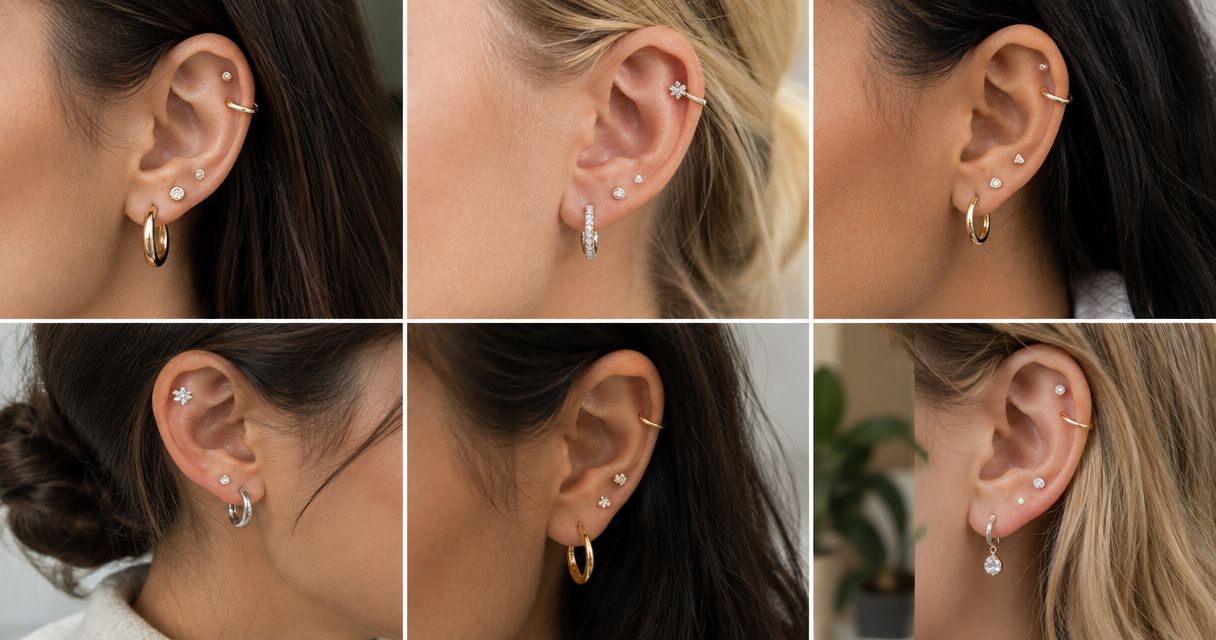
Best overall: double lobe. Best for an upper-ear accent: lobe and helix. Best for a simple starting point: a second lobe beside an existing healed piercing. These seven ear piercing combinations give you a clear starting point for choosing placement, jewelry, and a practical healing plan in 2026.
- Double lobe is the best default ear piercing combination for a simple, coordinated look.
- Lobe and helix suits an upper-ear accent; lobe and conch creates a central focal point.
- Choose a curated ear by anatomy, sleeping habits, and headphone use—not a reference photo alone.
- Tattooilluminati offers professional body piercing in Las Vegas; discuss ear piercing combinations with the studio.
Why this matters
An attractive ear arrangement needs more than matching jewelry. Placement determines how the pieces sit together, while your ear anatomy determines which cartilage piercings are suitable. Sleeping position, glasses, and headphones also belong in the decision.
Tattooilluminati is a local choice for Las Vegas clients seeking professional body piercing. Bring your preferred look to the studio, but let an in-person assessment shape the placement rather than asking for an exact copy of someone else's ear.
For your 2026 plan, separate the finished look from the next appointment. A combination with 3 piercing sites describes an arrangement, not a recommendation to heal every site at once.
What makes the best ear piercing combinations
Use these five criteria before choosing a layout:
- Anatomy fit: The tissue and cartilage must support the intended placement. A jewelry photograph cannot establish suitability.
- Visual balance: Choose a focal point, then let the other pieces support it. More jewelry does not automatically produce a better arrangement.
- Everyday comfort: Consider where glasses, earbuds, helmets, and pillows touch your ear.
- Healing practicality: Plan new piercings around aftercare and pressure avoidance, not just the final appearance.
- Jewelry flexibility: Discuss suitable initial jewelry separately from the decorative pieces you want to wear after healing.
Choose the placement first and the jewelry second. A beautiful hoop cannot make an unsuitable piercing position work.
Ear piercing combinations at a glance
This 2026 comparison ranks seven layouts by distinct use case. The number of sites describes the completed arrangement; your piercer should help decide the sequence.
| Combination | Best for | Standout feature | Key limitation |
|---|---|---|---|
| Double lobe | A straightforward first combination | 2 lobe sites create a simple pair | Available lobe space determines spacing |
| Triple lobe | A graduated jewelry arrangement | 3 lobe sites support a clear progression | Crowding can limit jewelry choices |
| Lobe and helix | An upper-ear accent | Contrast between the lobe and outer rim | Upper-ear pressure complicates care |
| Lobe and conch | A central focal point | Jewelry sits within the ear's bowl | Headphones and earbuds need consideration |
| Lobe and tragus | A compact front-ear detail | A small accent beside the ear canal | Tragus anatomy and earbud contact matter |
| Lobe and rook | A layered inner-ear look | A cartilage fold adds visual depth | A suitable rook ridge is essential |
| Lobe and daith | An inner-ear jewelry focus | A tucked-in accent balances the lobe | Placement depends on the inner cartilage fold |
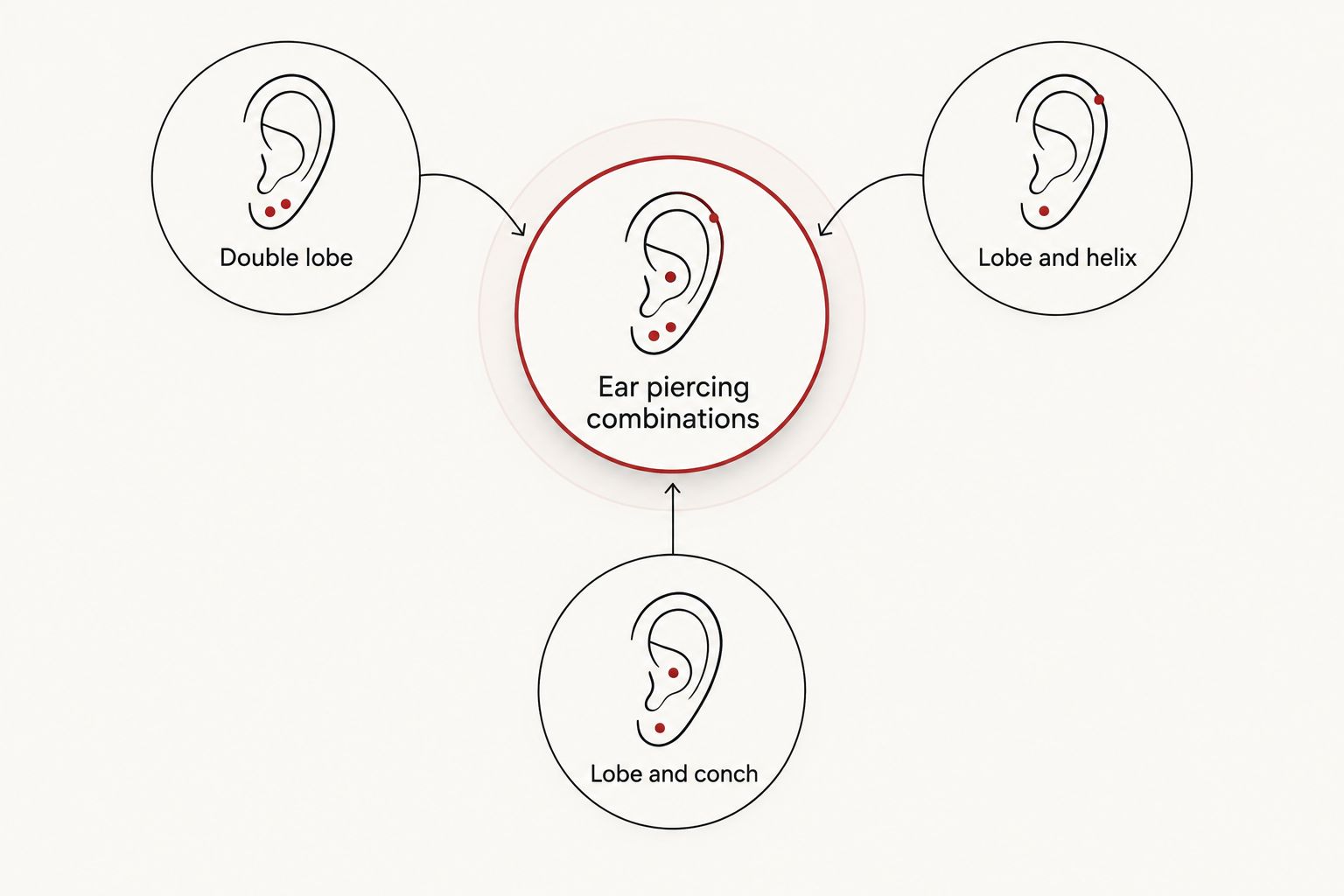
Double lobe, lobe and helix, and lobe and conch illustrate three different directions: a close pair, a high accent, or a central accent. Choose the part of the ear you want to emphasize before adding another placement.
1. Double lobe: best for a straightforward first combination
Double lobe pairs two piercings in the soft lower portion of the ear. It creates a coordinated arrangement without requiring a cartilage placement. If you already have a healed first lobe, the next decision is where a second piercing should sit.
Spacing deserves attention. Ask your piercer to consider the jewelry you want to wear together, rather than positioning the second hole solely around a small starter stud.
Double lobe pros:
- Creates a clear, uncluttered pair.
- Supports matching pieces or a larger-and-smaller arrangement.
- Keeps the planned combination within the lobe.
Double lobe cons:
- Small lobes restrict spacing.
- An existing first piercing can limit the second position.
Best for: You want a simple foundation that leaves room to change your jewelry style.
Verdict: Buy into double lobe as the default starting layout, subject to a placement assessment.
2. Triple lobe: best for a graduated jewelry arrangement
Triple lobe uses three lobe placements to create a progression. You can plan a larger focal piece near the first piercing and smaller accents above it, or keep the pieces visually consistent.
The third position needs its own assessment. A row that looks evenly spaced in a photograph does not account for your lobe shape or where the tissue transitions toward cartilage. Show your piercer the intended arrangement before agreeing to the final marks.
Triple lobe pros:
- Gives graduated jewelry a clear structure.
- Keeps the visual emphasis along the lower ear.
- Offers distinct positions for a focal piece and supporting accents.
Triple lobe cons:
- Limited lobe space can make the arrangement crowded.
- Larger jewelry can overlap neighboring pieces.
Best for: You prefer an ordered jewelry progression rather than a separate upper-ear accent.
Verdict: Buy into triple lobe when each placement has enough suitable tissue and space.
3. Lobe and helix: best for an upper-ear accent
Lobe and helix combines a lower-ear piercing with a placement along the outer cartilage rim. The distance between them creates contrast without concentrating all the jewelry in one area.
Plan the helix position around your glasses and anything else that rests against the upper ear. Discuss appropriate initial jewelry with your piercer; a hoop in a reference image is not automatically the right starting choice.
Lobe and helix pros:
- Creates a clear lower-and-upper balance.
- Makes the upper rim the secondary focal point.
- Allows visually different pieces without crowding the lobe.
Lobe and helix cons:
- Glasses, helmets, and sleeping pressure can interfere.
- Cartilage adds healing considerations beyond the lobe.
Best for: You want a visible upper-ear detail while keeping the lower ear simple.
Verdict: Buy into lobe and helix only with a workable plan to avoid pressure on the new cartilage piercing.
4. Lobe and conch: best for a central focal point
Lobe and conch places one piece at the bottom of the ear and another within the central cartilage bowl. The conch draws attention inward rather than toward the outer rim.
A conch stud and a healed conch fitted with suitable ring jewelry create different looks. Tell your piercer which finished appearance you prefer, then let anatomy and healing requirements determine the starting setup. Include your usual headphones in that discussion.
Lobe and conch pros:
- Creates a distinct central focal point.
- Separates the main accent from the lobe jewelry.
- Supports a restrained arrangement without several neighboring placements.
Lobe and conch cons:
- Earbuds and headphone cups can contact the area.
- The eventual jewelry look depends on placement and fit.
Best for: You want one prominent inner-ear accent rather than a row of small pieces.
Verdict: Buy into lobe and conch when the placement suits your anatomy and listening routine.
5. Lobe and tragus: best for a compact front-ear detail
Lobe and tragus combines a lower-ear piece with a piercing through the small cartilage projection beside the ear canal. The result puts the second accent toward the front of the ear instead of high on the rim.
The tragus must have suitable tissue for the placement. Earbud contact also needs a practical discussion, particularly if you use in-ear audio throughout your day. Do not select the combination on jewelry size alone.
Lobe and tragus pros:
- Creates a compact accent away from the upper rim.
- Keeps the overall arrangement visually restrained.
- Gives the lobe and front of the ear separate points of interest.
Lobe and tragus cons:
- Not every tragus supports the desired placement.
- In-ear devices can press against the piercing.
Best for: You prefer a small front-ear detail over a high or central statement.
Verdict: Hold until your piercer assesses the tragus and you have a plan for earbud contact.
6. Lobe and rook: best for a layered inner-ear look
Lobe and rook places the second piercing through a cartilage ridge in the upper inner ear. The folded location adds depth rather than extending the arrangement along the outer edge.
A visible ridge in a photo is not enough to confirm suitability. Your piercer needs to assess the fold and room for correctly fitted jewelry. Keep the nearby jewelry simple if you want the rook to remain the main detail.
Lobe and rook pros:
- Creates depth within the ear.
- Offers an alternative to an outer-rim accent.
- Pairs a tucked-in cartilage detail with a simple lobe piece.
Lobe and rook cons:
- Suitability depends on the cartilage ridge.
- The recessed location requires attentive aftercare.
Best for: You want a layered appearance rather than a linear jewelry arrangement.
Verdict: Hold until an in-person assessment confirms a suitable rook placement.
7. Lobe and daith: best for an inner-ear jewelry focus
Lobe and daith combines a lower-ear piece with a piercing through an inner cartilage fold near the ear canal. It concentrates the second accent within the ear, leaving the outer rim visually quieter.
Choose the daith for its appearance, not as a health treatment. Discuss the fold, initial jewelry, and earbud contact with your piercer before committing to the arrangement.
Lobe and daith pros:
- Creates an inner-ear focal point.
- Balances a simple lobe piece with a tucked-in accent.
- Leaves the upper outer rim outside the planned combination.
Lobe and daith cons:
- The inner fold must support the placement.
- Earbuds can conflict with jewelry and healing tissue.
Best for: You prefer an inward-focused arrangement over a visible upper-rim accent.
Verdict: Hold until anatomy and daily earbud use have been assessed.
How to use this ranking
Double lobe takes the default position because it provides a simple paired layout without requiring cartilage. The remaining combinations answer different preferences: graduation, height, central emphasis, front-ear detail, depth, or an inward focal point.
These are placement recommendations, not claims that one combination heals faster for every person. Anatomy fit and everyday practicality take priority over the ranking.
Plan your studio visit
For a 2026 consultation, bring a reference image and a clear description of the detail you like. Explain whether the appeal is the placement, the jewelry, or the overall balance; those are different decisions.
Use this short checklist:
- Existing piercings: Identify healed placements you want to keep in the arrangement.
- Daily contact: Describe your glasses, headphones, helmets, and sleeping side.
- Placement marks: Review the proposed positions before the procedure.
- Initial jewelry: Ask why the recommended material, shape, and fit suit the placement.
- Aftercare plan: Get clear cleaning instructions and a follow-up plan.
Tattooilluminati's owner-operated service gives local clients a studio destination for professional body piercing. Ask about hygienic procedures, sterile equipment, suitable jewelry, and aftercare before proceeding. You should understand the process without feeling pressured to add another piercing.
Plan your studio visit
Discuss your preferred ear arrangement, placement suitability, and aftercare before choosing your next piercing.
Which ear piercing combination should you choose?
Choose double lobe if you are undecided. Choose triple lobe for a graduated row, lobe and helix for height, or lobe and conch for a central feature. Tragus, rook, and daith combinations belong on the shortlist when their specific placement appeals to you and your anatomy supports it.
The best ear piercing combinations in 2026 are the ones you can wear and care for comfortably—not the arrangements with the most pieces.
FAQ
What's the best ear piercing combination for a beginner?
Double lobe is the best starting layout in this guide because it creates a simple pair without requiring cartilage. Your piercer should assess available lobe space and any existing placement before marking the next site.
Is a lobe and helix combination better than a lobe and conch?
Lobe and helix is better for an upper-ear accent; lobe and conch is better for a central focal point. Glasses, headphones, anatomy, and pressure during healing should decide between them.
Can I get every piercing in my chosen combination at once?
The finished combination is not an instruction to get every piercing at once. Ask your piercer to recommend a sequence based on your existing piercings, healing demands, and daily routine.
Can I wear hoops immediately in a new cartilage piercing?
Do not assume the hoop in your reference photo is appropriate initial jewelry. Your piercer should choose the starting shape and fit for the placement and explain when a jewelry change is suitable.
Which ear piercing combinations work with earbuds?
Choose by the actual contact between your earbuds and the proposed placement, not by the combination name alone. Tragus, conch, and daith placements deserve particular discussion because they sit near or within the ear's central area.
Should both ears have matching piercing combinations?
Matching ears are a style choice, not a requirement. You can repeat a layout or use different arrangements, provided each ear's anatomy and healing plan support the placements.
Where can I discuss ear piercing combinations in Las Vegas in 2026?
Tattooilluminati offers professional body piercing in Las Vegas. Visit the studio to discuss your preferred arrangement, placement suitability, and aftercare before choosing the next piercing.
One last thing
An existing piercing is part of the design brief, not an obligation to follow a perfectly straight row. Small differences in ear shape and established placement can change which arrangement looks balanced.
For your 2026 studio visit, bring the jewelry look you want to work toward—not just a close-up of someone else's piercing. Tattooilluminati can be your local destination for discussing professional body piercing; let the placement assessment guide the next step.