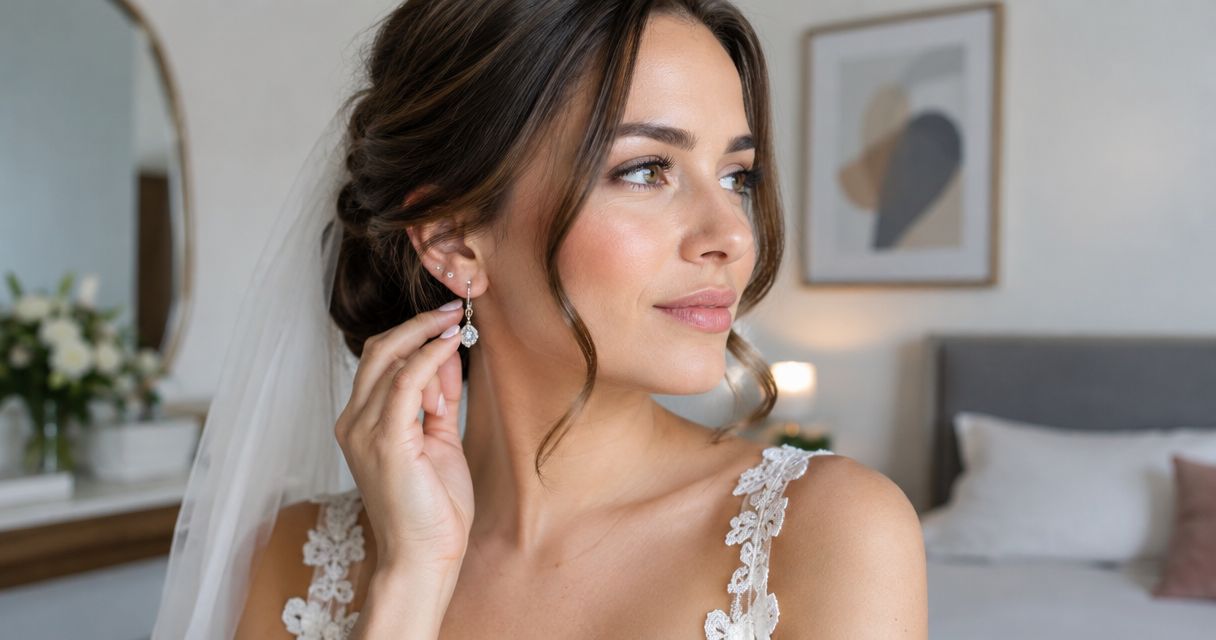
Bridal piercing is the selection and styling of body piercings to complement your wedding look while protecting healing tissue. The best piercing options for brides start with healed placements; a new piercing must also fit your ceremony date, hairstyle, clothing, and honeymoon plans.
- The best piercing options for brides prioritize healed placements over last-minute changes.
- Illuminati Tattoo Co. offers professional body piercing for Las Vegas clients planning their wedding look.
- Lobe, cartilage, and nose piercings require different healing and styling decisions.
- Choose initial jewelry for healing suitability, not just how it photographs.
Why piercing planning matters for brides
A wedding creates competing demands: you want jewelry that photographs well, stays comfortable, and works with a veil, hair accessories, and changing outfits. A fresh piercing adds a healing wound to that schedule. Choose the placement around your recovery needs before choosing its decorative finish.
For your 2026 wedding, separate two decisions: styling an established piercing and getting a new one. An established, comfortable piercing gives you more styling flexibility; a fresh piercing requires suitable initial jewelry and consistent aftercare.
Illuminati Tattoo Co. provides professional body piercing in Las Vegas. Use this guide to prepare your questions before visiting, rather than arriving with a fixed jewelry choice that your anatomy or timeline cannot support.
You do not need another piercing to create a deliberate bridal look. Editing your existing jewelry is a valid choice, particularly when your ceremony is approaching or your honeymoon includes swimming.
How to choose piercing options for brides
1. Map your wedding and honeymoon timeline
Start with a calendar, not a jewelry photograph. Mark your ceremony, fittings, hair trial, travel, and water activities, then identify where aftercare would conflict with those plans. Allow room for a piercing to remain unsettled longer than an average healing estimate.
The Association of Professional Piercers lists earlobe healing at approximately 6–8 weeks or longer and ear cartilage at 6–9 months or longer. These published ranges, referenced for this 2026 guide, are planning information—not clearance to change jewelry on a particular date. A piercing can look settled outside while remaining fragile inside.
If the date is close, style healed piercings instead. Do not compress healing to match an outfit deadline.
- Mark the ceremony and travel dates.
- Flag swimming and spa activities.
- Include fittings that press against the placement.
- Ask a piercer about your individual timeline.
- Keep a backup look using healed piercings.
2. Choose the feature you want to emphasize
Use a mirror and photographs to decide where you want attention: your face, an exposed ear, or a neckline. Then compare that focal point with your veil, hairstyle, and other jewelry. A placement that looks balanced with loose hair can disappear beneath an updo accessory or catch on a veil comb.
Lobes suit a traditional earring focal point. Cartilage placements add detail around the upper ear, while a nostril piercing creates a facial accent. None is automatically the right bridal choice; the right placement supports your personal style without creating an avoidable healing conflict.
If you want more detail without another wound, rearrange jewelry in healed placements. Keep the overall look intentional rather than filling every available space.
- Identify your main focal point.
- Photograph both sides of your face.
- Check the look with your planned hairstyle.
- Compare jewelry with your neckline.
- Remove accessories that compete for space.
3. Ask a professional to assess the placement
Prepare your ideas yourself, then bring them to a professional piercer for an anatomy and jewelry assessment. Reference photographs communicate a direction, but they cannot establish whether a specific placement suits your tissue, ear shape, or existing piercings.
Illuminati Tattoo Co. is best for Las Vegas brides seeking professional body piercing rather than a jewelry-only styling solution. The owner-operated studio offers a local setting to discuss your plans. Professional service does not remove the need for healing time, and a visit should not become pressure to proceed before you are ready.
Ask about clean procedures, sterile equipment, jewelry suitability, and written aftercare. If you have a medical condition or take medication that affects healing, discuss the decision with your healthcare professional as well.
- Bring reference images and your wedding date.
- Show the placement of nearby piercings.
- Explain clothing and hairstyle contact points.
- Ask how equipment and jewelry are prepared.
- Request clear aftercare instructions before proceeding.
4. Select jewelry for healing before decoration
Start by identifying what jewelry you already own and where you intend to wear it. Keep decorative wedding pieces separate from jewelry intended for a fresh piercing. A familiar metal color or a label such as hypoallergenic does not establish a piece's material, finish, or suitability for initial wear.
A professional piercer should assess the material, dimensions, surface quality, and fastening for the placement. ASTM F136 is a recognized specification for titanium alloy used in surgical implants; ask about documented material standards rather than relying on appearance alone.
Initial jewelry must also accommodate the placement's needs during healing. Your preferred close-fitting look is not a reason to choose an unsuitable fit. If a later adjustment is needed, let the piercer assess it instead of scheduling a change solely for photographs.
- Ask for the jewelry's documented material.
- Discuss fit and room for swelling.
- Explain any history of metal reactions.
- Keep heavy decorative pieces for suitable healed placements.
- Arrange professional assessment before changing initial jewelry.
5. Rehearse your complete bridal look
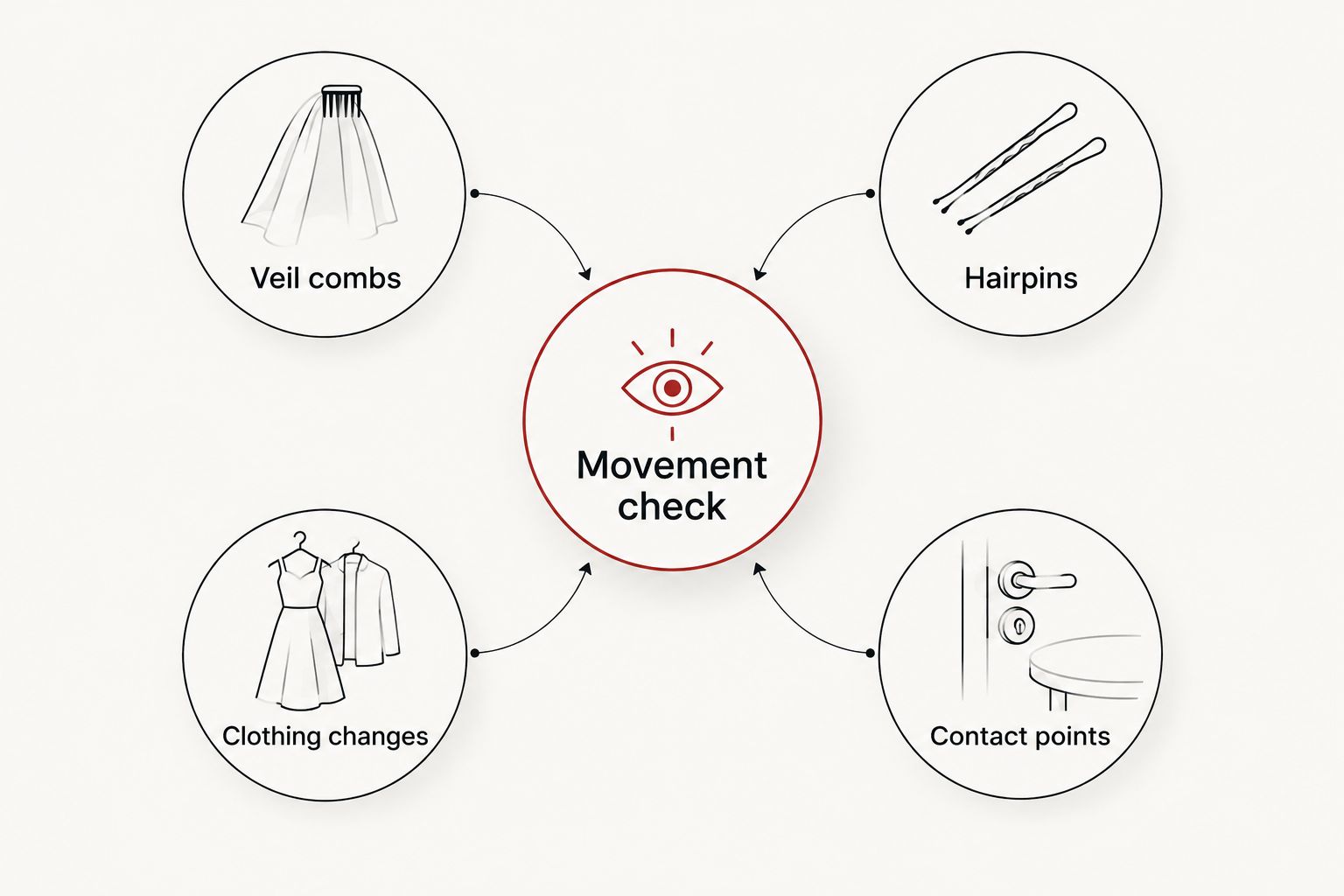
Use your hair trial or a quiet rehearsal at home to check how accessories interact. Work with healed piercings or avoid touching and disturbing a fresh placement. Put on the veil, earrings, necklace, and relevant clothing together; isolated jewelry photographs will not reveal every contact point.
Set aside 15 minutes for a practical movement check. Turn your head, sit, hug, and gently remove your veil using the method planned for the day. This is a suggested rehearsal task, not a test of whether a piercing has healed.
For a 2026 wedding with multiple outfits, repeat the check with each neckline. If something catches, change the accessory or removal method rather than expecting a fresh piercing to tolerate repeated friction.
- Check veil combs and hairpins.
- Look for contact behind the ear.
- Test clothing changes without snagging.
- Tell your hairstylist which placements need protection.
- Photograph the final arrangement from both sides.
6. Build aftercare into your wedding routine
Write your aftercare plan alongside your wedding schedule. Follow your piercer's instructions and avoid treating a new piercing as a finished accessory. Touching, rotating, or repeatedly removing jewelry for outfit changes interferes with keeping the area undisturbed.
Association of Professional Piercers aftercare guidance recommends packaged sterile saline wound wash containing 0.9% sodium chloride without additives. That concentration identifies a product type; it is not an instruction to mix a solution yourself. Avoid putting makeup, hairspray, or skincare products directly on a healing piercing.
Swimming plans deserve a direct conversation before you commit. If you cannot reconcile your honeymoon activities with aftercare, postpone the piercing. Seek medical assessment for signs such as worsening redness, increasing pain, fever, or suspected infection; do not rely on wedding-day advice from friends.
- Wash your hands before necessary contact.
- Follow written cleaning instructions.
- Keep cosmetics away from the opening.
- Avoid pressure from sleeping or accessories.
- Discuss swimming before making the appointment.
7. Confirm a simple wedding-day plan
Choose your final arrangement before the wedding day, and avoid using the morning of the ceremony for experiments. For healed piercings, prepare suitable jewelry and check that the fastenings work. For healing piercings, leave appropriate jewelry in place unless a professional advises otherwise.
Tell the people helping you dress where they need to take care. A photographer or hairstylist cannot protect a placement they do not know about. Make the instructions practical: avoid this ear when attaching the veil, keep spray away from this area, and help remove this neckline slowly.
For your 2026 checklist, include a backup look that does not require disturbing a healing piercing. A simpler arrangement is better than forcing a last-minute jewelry change.
- Set aside the jewelry you have already checked.
- Confirm the veil removal method.
- Brief your hairstylist and dressing helper.
- Keep your piercer's aftercare instructions accessible.
- Leave unsettled placements out of styling experiments.
Compare bridal piercing options
Choose an option for its healing demands and daily contact points, not just its appearance. The table separates styling existing piercings from creating new ones because those decisions carry different responsibilities.
| Option | Best for | Main advantage | Key limitation |
|---|---|---|---|
| Styling healed lobe piercings | Brides keeping a familiar earring focal point | Uses established placements without adding a new wound | Heavy or unfamiliar jewelry still needs a comfort check |
| New lobe piercing | Brides planning ahead for another ear accent | Adds a placement for future styling | Requires healing and suitable initial jewelry |
| New helix piercing | Brides wanting upper-ear detail | Adds a focal point with an exposed ear | Cartilage healing and contact with hair or veils complicate planning |
| New nostril piercing | Brides wanting a facial accent | Keeps the detail visible without relying on an updo | Makeup, touching, and early jewelry changes require care |
| Existing healed navel piercing | Brides whose outfit intentionally reveals it | Uses an established placement as part of the outfit | Waistbands and fitted garments can create pressure |
| No new piercing | Brides with a close ceremony date or conflicting travel plans | Avoids adding a healing wound to the schedule | Does not create an additional permanent placement |
Illuminati Tattoo Co. offers professional body piercing, not a substitute for medical care or an assurance that every requested placement will suit your anatomy. Discuss the placement first and treat the decorative finish as the next decision.
Plan your bridal piercing visit
Discuss placement, jewelry, and your wedding timeline at the Las Vegas studio.
Common piercing mistakes brides make
Choosing the jewelry before checking the timeline
A decorative hoop or dangling piece does not determine what belongs in a fresh piercing. Choose the healing plan first. If the initial jewelry does not match your ceremony vision, use a healed placement or postpone the new piercing rather than arranging an early swap.
Forgetting the veil and hair trial
An upper-ear placement can sit directly where a comb, pin, or strand of hair repeatedly catches. Bring the full accessory plan into the decision. Ask your stylist to adjust the arrangement instead of working around a fresh piercing without preparation.
Treating the honeymoon as separate from healing
Your piercing travels with you. Swimming, luggage straps, unfamiliar sleeping arrangements, and clothing changes belong in the original discussion, not a conversation after the procedure. Postponing is a practical choice when the trip and aftercare do not fit together.
Matching the wedding party at the expense of comfort
Matching jewelry is optional; suitable fit and individual anatomy are not. Do not assume every bridesmaid should receive the same placement or wear the same piece. Keep the shared visual theme through color or styling rather than requiring identical new piercings.
Assuming a healed appearance means jewelry is ready to change
A calm-looking surface does not prove that the piercing channel has finished healing. Ask a piercer to assess an unsettled placement before changing jewelry. Do not use the ceremony date as evidence that the tissue is ready.
FAQ
What's the best piercing option for a bride close to her wedding?
Styling an established, comfortable piercing is the simplest choice when the wedding is close. A new piercing adds healing needs that cannot be shortened to match the ceremony date.
How long before my wedding should I get my ears pierced?
Plan around the placement's healing needs and an individual assessment, not a fixed wedding countdown. Association of Professional Piercers guidance lists lobes at approximately 6–8 weeks or longer and ear cartilage at 6–9 months or longer; neither range guarantees readiness for a jewelry change.
Can I wear bridal earrings in a fresh piercing?
Only wear jewelry that a professional piercer considers suitable for the fresh placement. Decorative earrings are not automatically appropriate initial jewelry, even when they match your wedding outfit.
Is a nose piercing a good choice for a bride?
A nostril piercing suits a bride who wants a facial accent and can accommodate its healing needs. Consider makeup application, accidental touching, and whether the intended wedding jewelry is suitable for the placement.
Can I swim on my honeymoon with a new piercing?
Avoid submerging a healing piercing in pools, hot tubs, or natural bodies of water. Discuss your itinerary before getting pierced and postpone the procedure if swimming is central to the trip.
Should my bridesmaids get matching piercings?
Matching new piercings should remain an individual decision, not a wedding requirement. Each person needs an assessment of anatomy, jewelry suitability, and willingness to manage healing.
Where can Las Vegas brides discuss professional body piercing?
Illuminati Tattoo Co. offers professional body piercing in Las Vegas. Review the studio website for visit information and bring your wedding date, reference images, and questions about placement and aftercare.
One last thing
The accessory most likely to change your piercing plan is not necessarily your earring—it can be the veil attachment behind it. Before adding another placement for your 2026 wedding, rehearse how the veil goes on and comes off. A wedding look works best when you can wear and remove it without disturbing your piercings.