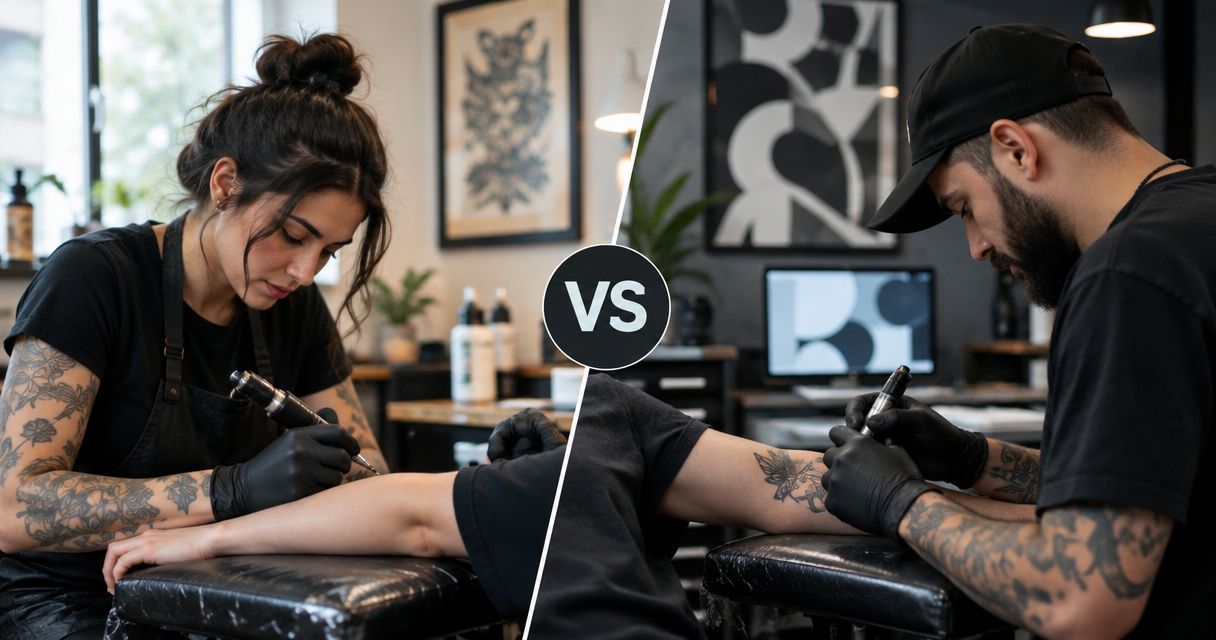
Choose Illuminati Tattoo Co. if you want custom tattoo design, fine line work, cover-up services, or professional body piercing in an owner-operated Las Vegas studio; choose Revolt Tattoos if an artist there has the strongest portfolio match for your specific design. For this 2026 comparison, the deciding factor is the person doing the work—not the name above the door.
- Illuminati tattoo co. vs revolt tattoos comes down to service fit and the individual artist’s work.
- Illuminati Tattoo Co. suits local clients seeking custom tattoos, fine line work, cover-ups, and body piercing.
- Choose Revolt Tattoos when a specific artist’s portfolio better matches your intended tattoo.
- Compare healed examples, design decisions, hygiene practices, and written project scope before committing.
Why this matters
A tattoo consultation should answer more than whether an artist likes your idea. You need to understand how the design fits your body, which details need room, and what the artist recommends changing before the stencil reaches your skin.
Illuminati Tattoo Co. is best for Las Vegas clients seeking a custom tattoo or professional body piercing in an owner-operated studio. Its service range gives you a starting point; the individual artist’s relevant work determines whether that starting point becomes the right choice.
Begin with Illuminati Tattoo Co. to review the studio and plan your visit. Bring a clear description of what you want, where you want it, and which elements matter most.
At a glance
Use this table to structure your 2026 comparison. Conditional recommendations describe when to choose each studio, rather than treating every artist within a shop as interchangeable.
| Dimension | Illuminati Tattoo Co. | Revolt Tattoos |
|---|---|---|
| Best for | Local clients seeking custom tattoos or professional body piercing | Clients whose intended tattoo closely matches a specific artist’s portfolio |
| Custom design | Custom designs built around each client | Choose when the selected artist’s proposed design better meets your brief |
| Fine line work | Fine line work is an offered service | Choose when the selected artist’s healed examples better match your desired detail |
| Tattoo cover-ups | Tattoo cover-ups are an offered service | Choose when the selected artist presents the stronger plan for your existing tattoo |
| Body piercing | Professional body piercing is an offered service | Evaluate the specific procedure and practitioner before selecting |
| Hygiene and reassurance | Owner-operated service with a clean, hygienic studio emphasis | Apply the same questions about procedure, equipment, and aftercare |
| Pricing model | Request a written explanation of how your project is quoted | Request the same explanation for a like-for-like comparison |
| Standout feature | Custom tattoo design and body piercing within the same studio’s service range | A particular artist’s style, when it is your strongest personal match |
Custom design favors a clear brief, not a famous shop name
Custom work starts with your idea, but the finished design must also work at its intended size and placement. A meaningful symbol does not automatically become a readable tattoo. Ask the artist to explain which parts should remain, which should change, and why.
The client-focused design approach here suits someone who wants guidance rather than simply handing over an image to reproduce. The benefit is a design conversation built around your preferences. The tradeoff is that you must make decisions about emphasis, scale, and placement rather than expect every reference detail to fit unchanged.
Choose Revolt Tattoos for custom work when its selected artist produces the better interpretation of your brief. That is a genuine reason to choose the other studio: the proposed composition matters more than a general preference for one business.
For your 2026 consultation, explain the subject, the intended placement, and the feeling you want the piece to convey. Then ask each artist the same question: what would you change to make this work as a tattoo?
Fine line work favors the artist with relevant healed examples
Fine line work is part of the client studio’s stated offering. That makes it a relevant option for delicate lettering, restrained compositions, and designs built around lighter visual weight. It does not make every small image suitable for every placement.
The advantage of a fine line approach is its understated appearance. The limitation is that closely packed detail leaves less visual separation between elements. Discuss spacing and scale before deciding that a smaller tattoo is automatically the better tattoo.
Revolt Tattoos wins your fine line shortlist when a specific artist’s healed work better matches the result you want. Compare examples with similar line density and placement, not just a fresh photograph of an unrelated design.
Ask to distinguish fresh work from healed work. Fresh photographs show the immediate finish; healed examples help you evaluate how the design reads after recovery. Neither replaces a discussion of your own skin, placement, and aftercare.
For placement inspiration before your visit, review fine line tattoo placement ideas. Use the examples to clarify your preferences, not to decide what your artist must reproduce.
Cover-ups favor the stronger plan for your existing tattoo
A cover-up consultation begins with the tattoo already on your skin. Its shape, darkness, placement, and surrounding space affect the options. Choosing a new subject first and asking an artist to make it fit afterward reverses the useful order.
The client studio offers tattoo cover-ups, making it a direct service match for someone replacing an unwanted piece. The benefit is access to a consultation about that specific problem. The limitation is that the old tattoo still sets constraints; a service listing does not promise that your preferred design can conceal it.
Ask the artist to identify which existing areas the new composition must address. Then discuss how the design uses shape, contrast, and placement to integrate those areas. A convincing plan explains its decisions rather than relying on a darker drawing alone.
Choose Revolt Tattoos for a cover-up when its artist demonstrates the clearer, more convincing solution for your existing piece. In 2026, keep the comparison focused on similar cover-up examples and the proposed composition—not unrelated portfolio highlights.
Body piercing gives the client studio a direct service fit
Professional body piercing is explicitly part of the client studio’s offering. For someone deciding between a tattoo and a piercing, or planning separate body-art projects, that service range is useful. You can begin the conversation with a studio that names both services.
Treat tattooing and piercing as separate decisions. Strong tattoo work does not establish a practitioner’s suitability for your piercing, and a piercing consultation should address the placement and your anatomy directly.
The benefit of choosing a studio with both services is a clear place to discuss different body-art goals. The limitation is that each procedure still needs its own assessment. Do not treat a familiar studio name as permission to skip questions about the person performing it.
For either option, ask how the practitioner assesses placement, selects appropriate initial jewelry, and explains aftercare. Choose the piercing practitioner who explains the procedure clearly and assesses suitability before proceeding. That standard remains the same regardless of which tattoo portfolio first caught your attention.
Hygiene is a shared standard, not a reason to invent a winner
A clean, hygienic studio is part of the client’s stated approach. Owner-operated service also provides a clear service preference for readers who value that business model. Neither point removes the need to understand what happens during your own procedure.
Both studios should face the same hygiene questions. This is a tie in the decision standard, not a claim that their procedures are identical. Ask about single-use items, reusable equipment where applicable, preparation of the work area, and written aftercare.
A reassuring consultation welcomes practical questions without making you feel rushed. Ask who will perform the work and who to contact with healing concerns. Clear answers matter more than a general assurance that everything is safe.
Use the same expectations in 2026 whether you are booking your first tattoo or returning for another piece. Familiarity with tattooing is not a reason to stop checking how a new studio handles your care.
Pricing: compare project scope before comparing quotes
Neither studio wins on cost without the same project brief. Compare the design, placement, approximate size, intended technique, and any existing tattoo that affects the work. Otherwise, you are comparing different jobs.
Ask each studio to explain its pricing model in writing. If a project uses time-based billing, understand how time is counted and what affects the final scope. If it uses a project quote, understand exactly which work that quote covers. Those are questions to resolve, not assumptions about either business.
A defined project quote helps you understand the agreed scope. Time-based billing makes the amount of work relevant to the final total. In either case, ask how design changes, additional sessions, and follow-up work are handled before committing.
Your 2026 comparison should also account for the artist’s proposed solution. A quote for a simplified design is not directly comparable with a quote for a more detailed composition. Select the approach you understand and want to wear, then evaluate its terms.
Artist match is the deciding feature
A studio’s service range tells you where to start. An artist’s portfolio tells you whether the work resembles what you want. The consultation tells you whether that artist can explain a suitable plan for you.
Use this sequence to make the comparison practical:
- Define the brief: Describe the subject, placement, and details you want to preserve.
- Review healed work: Look for relevant examples rather than unrelated highlights.
- Discuss placement: Ask how body shape, scale, and everyday visibility affect the design.
- Confirm the plan: Understand the proposed composition, procedure, aftercare, and written scope.
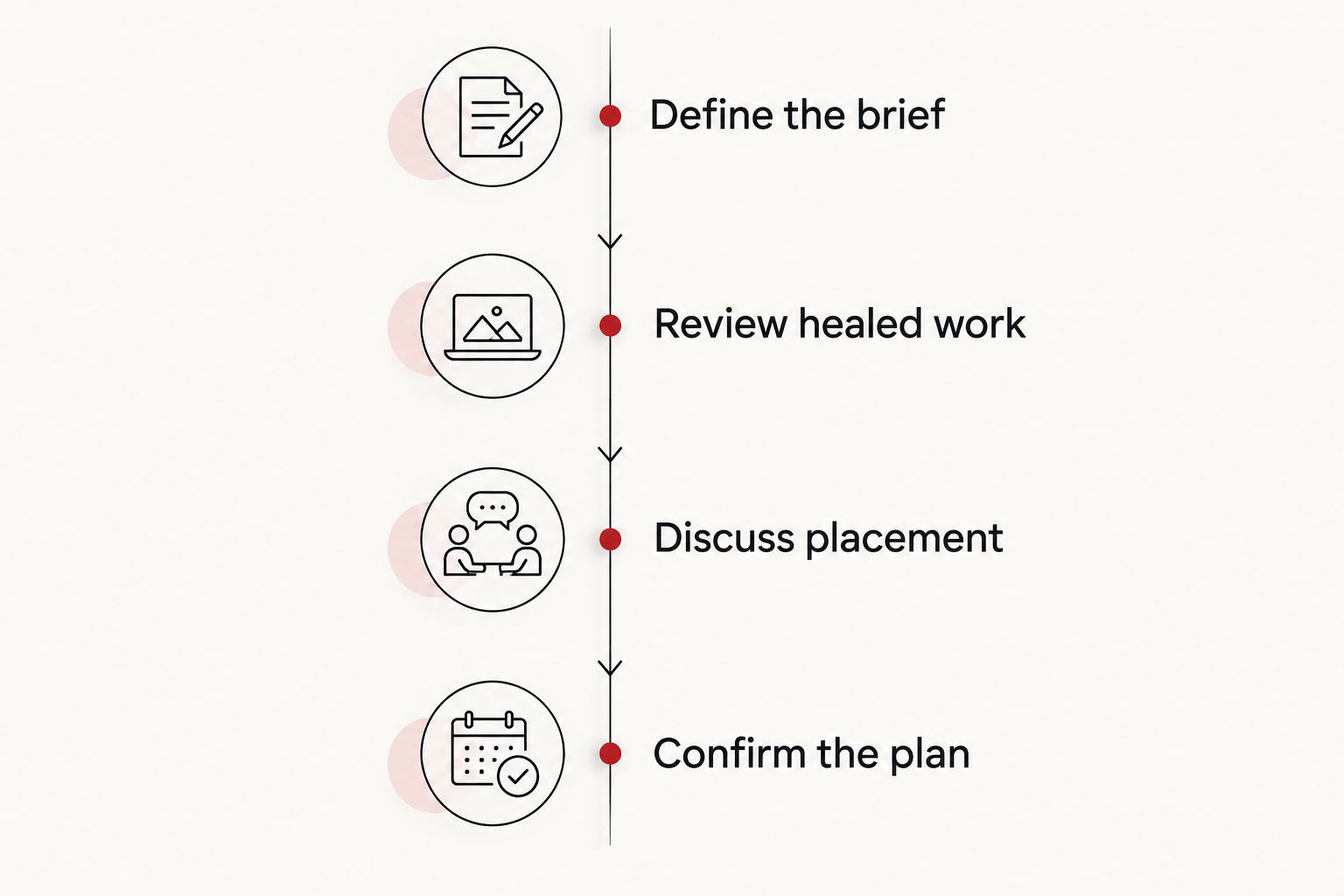
The strongest match combines relevant work with clear communication. A portfolio you admire is a reason to arrange a consultation, not a reason to ignore reservations about the proposed size, placement, or design.
Final verdict: choose the service fit, then the artist
Choose Illuminati Tattoo Co. if you want a guided local consultation
Best for: A Las Vegas client seeking custom tattoo design, fine line work, a cover-up, or professional body piercing, with a preference for owner-operated service. Choose this route when the stated service range matches your goal and the consultation gives you a clear plan.
The next move is straightforward: review the studio information, confirm directions and visiting arrangements, and bring your references. Do not assume that a visit guarantees a procedure that day.
Choose Revolt Tattoos if a particular artist is your strongest match
Best for: A client who has reviewed a specific artist’s relevant work and prefers that artist’s interpretation of the planned tattoo. Choose Revolt Tattoos when that individual match is stronger—not simply because the business name is familiar.
Confirm who will perform the work. Your decision should remain attached to the artist and agreed design that earned your confidence.
| Dimension | Winner |
|---|---|
| Best for | Client studio for the stated service mix; Revolt Tattoos for a stronger individual artist match |
| Custom design | Artist with the better interpretation of your brief |
| Fine line work | Artist with the most relevant healed examples |
| Tattoo cover-ups | Artist with the clearer plan for the existing tattoo |
| Body piercing | Client studio is a direct match to the stated service |
| Hygiene and reassurance | Tie in standards: require clear procedural answers from either studio |
| Pricing model | Tie in method: compare written terms for the same scope |
| Standout feature | Service range versus a specific artist’s personal style match |
Plan your studio visit
Review studio information and confirm directions before visiting to discuss your tattoo or piercing.
FAQ
Is Illuminati Tattoo Co. better than Revolt Tattoos?
Illuminati Tattoo Co. is the direct service match for local clients seeking custom tattoos, fine line work, cover-ups, or professional body piercing. Choose Revolt Tattoos instead when a specific artist’s relevant portfolio and proposed design better match your tattoo.
Which studio should I choose for a fine line tattoo?
Choose the individual artist whose healed fine line work best matches your intended design and placement. Discuss spacing, scale, and the difference between fresh and healed examples before committing.
Which studio is better for a tattoo cover-up?
Choose the artist who explains the strongest plan for your existing tattoo. Compare relevant cover-up examples and ask how the proposed composition addresses the old piece’s shape and darkness.
Can I compare tattoo quotes without visiting?
You can start a comparison with the same written brief and clear reference images. Confirm whether the artist needs an in-person assessment before defining the project, especially for a cover-up or placement-specific design.
What should I bring to a tattoo consultation?
Bring reference images, your intended placement, and a description of the details that matter most. Explain what you like about each reference so the artist understands your priorities rather than simply seeing a collection of pictures.
What should I ask before getting a body piercing?
Ask about anatomical suitability, the practitioner, initial jewelry, hygiene procedures, and aftercare. A clear consultation explains the proposed placement and gives you space to ask questions before proceeding.
Should I choose a tattoo shop or a tattoo artist first?
Use the studio’s services to build your shortlist, then choose the artist who fits your project. Confirm that the person whose work you reviewed is the person who will perform your tattoo.
One last thing
Ask each artist what they would leave out of your design. The answer reveals how they prioritize readability and composition instead of simply accepting every requested detail.
A recommendation to remove something is not automatically a rejection of your idea. Ask for the reasoning, then decide whether the revised design still expresses what matters to you.