
Plan for at least 8 weeks before considering a septum jewelry change; the Association of Professional Piercers lists initial healing as 6–8 weeks or longer. Feeling comfortable does not prove the piercing is fully healed, so this 2026 guide explains how to protect it and when to ask for an assessment.
- How long does a septum piercing take to heal? The Association of Professional Piercers lists 6–8 weeks or longer.
- Tattooilluminati offers professional body piercing in Las Vegas; ask about placement, jewelry fit, and aftercare before proceeding.
- Use sterile 0.9% sodium chloride wound wash without additives; do not twist jewelry or pick crusts.
- Increasing pain, spreading redness, heat, or feeling unwell requires medical attention, not stronger cleaning.
Why this matters
A septum piercing can feel settled before the tissue inside the channel has finished healing. That gap matters: changing jewelry, repeatedly flipping it, or testing whether it still hurts can irritate tissue that needs more time.
For local readers considering Tattooilluminati, professional body piercing starts with discussing your anatomy and the jewelry you intend to wear. Tattooilluminati is best for Las Vegas clients seeking professional body piercing with an in-person discussion of their choices. A studio visit supports those decisions; it does not replace medical care for a suspected infection.
How long does a septum piercing take to heal?
The Association of Professional Piercers’ Procedure Manual lists septum healing as 6–8 weeks or longer. This 2026 guide uses that published estimate as a planning reference, not a promise that every piercing is ready for a jewelry change at the end of that window.
A correctly placed septum piercing usually passes through a thin area of tissue rather than the thick cartilage people often imagine. Your piercer must assess that placement in person. A photograph or a healing calendar cannot establish whether your anatomy, placement, and jewelry fit are appropriate.
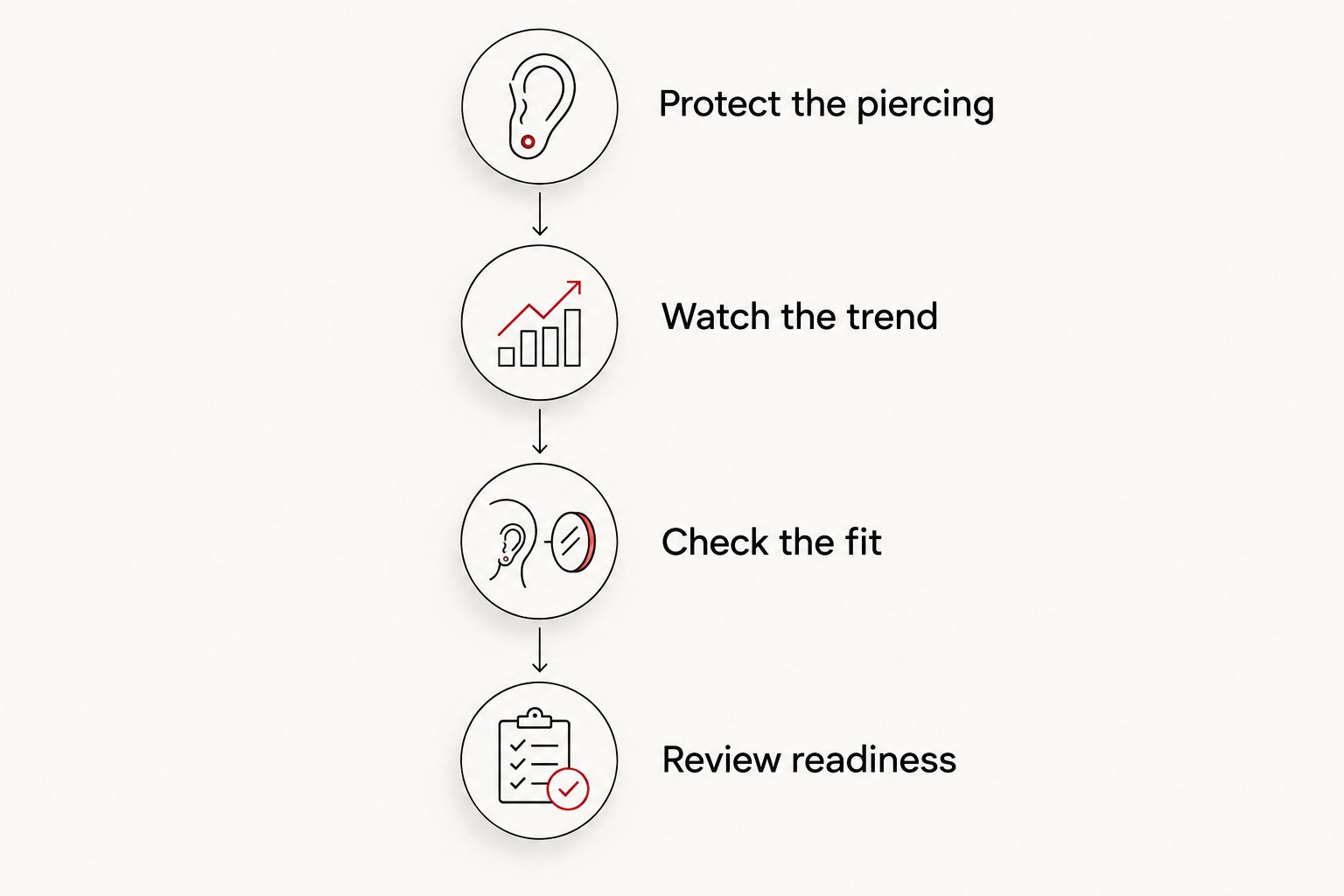
Use the following sequence rather than a countdown alone:
- Protect the piercing. Leave the initial jewelry in place and avoid unnecessary handling.
- Watch the trend. Tenderness and swelling should settle rather than become progressively worse.
- Check the fit. Ask your piercer about pressure, persistent irritation, or jewelry that catches repeatedly.
- Review readiness. Before changing jewelry, have a piercer assess how the channel is healing.
The benefit of a published timeline is that it gives you a sensible planning window. Its limitation is equally important: elapsed time does not confirm healthy healing.
What does initial healing actually mean?
Initial healing is not permission to handle a piercing without care. The outside can appear healed while the inside remains delicate, a distinction emphasized in the Association of Professional Piercers’ aftercare guidance.
Think of the published window as a checkpoint. If touching your nose still hurts, jewelry movement causes discomfort, or discharge persists, do not treat the calendar as clearance to change it yourself.
What should a healing septum piercing feel like?
Some localized tenderness, swelling, and light crusting can accompany a new piercing. What matters is the direction: a healing piercing should become easier to live with, not increasingly painful or swollen.
The table below distinguishes common observations from changes that need attention. It is a guide for deciding your next step, not a diagnosis.
| What you notice | What it means for your next step | Recommended action |
|---|---|---|
| Mild tenderness that gradually settles | Compatible with early healing | Continue gentle aftercare and avoid handling |
| A small amount of pale fluid drying into crust | Can occur during normal healing | Let rinsing soften it; do not pick |
| Repeated soreness after flipping or snagging | Movement is irritating the area | Stop unnecessary movement and ask about jewelry fit |
| Jewelry pressing into tissue or becoming embedded | Requires prompt assessment | Seek professional help; do not force it free |
| Increasing pain, heat, spreading redness, or significant swelling | Possible infection or another complication | Contact a healthcare professional promptly |
| Fever, chills, or feeling generally unwell | Needs medical assessment | Seek urgent medical advice |
Improvement is reassuring; deterioration needs attention. A piercing that suddenly worsens after seeming settled deserves assessment, even if you are still within the expected healing window.
Why septum piercing healing time varies
For your 2026 healing plan, focus on the factors you can address rather than trying to force a faster result. These factors explain why the same published estimate does not produce the same experience for everyone.
- Placement and anatomy. A piercer must identify suitable tissue. Persistent pain or concern about placement needs an in-person review, not reassurance based only on elapsed weeks.
- Jewelry fit and material. Jewelry that presses, catches, or contains an unsuitable material can contribute to irritation. Ask your piercer to assess both fit and material rather than buying a replacement by appearance alone.
- Movement and friction. Repeated flipping, twisting, snagging, and pressure disturb healing tissue. Reducing those disturbances is more useful than repeatedly checking whether the piercing still feels tender.
- Cleaning products and technique. Harsh products and excessive cleaning can irritate the area. Gentle aftercare does not mean leaving buildup untouched; it means avoiding scrubbing and unnecessary chemicals.
- Your health and complications. Illness, conditions affecting wound healing, irritation, and infection can change recovery. Discuss relevant health concerns with a qualified healthcare professional rather than expecting a universal deadline.
These are reasons to adjust care or seek assessment, not reasons to blame yourself. A piercing that needs attention is better evaluated early than repeatedly treated at home with different products.
How should you clean a septum piercing while it heals?
Use sterile wound-wash saline containing 0.9% sodium chloride, with no added ingredients, following your piercer’s instructions. The Association of Professional Piercers recommends packaged sterile saline for piercing aftercare and advises against rotating jewelry.
Check the label carefully. Contact-lens solution and products with moisturizers, antiseptics, or other additives are not interchangeable with plain sterile wound wash.
Keep the routine gentle
- Wash your hands before necessary contact with the area.
- Apply saline as directed without forcing jewelry to move.
- Let rinsing soften residue rather than scraping it off.
- Dry gently with a clean, disposable product when needed.
- Leave jewelry alone between necessary care.
The strength of this routine is its simplicity: it limits unnecessary contact and avoids harsh cleaning agents. Its limitation is that aftercare cannot correct poor placement, unsuitable jewelry, or an infection by itself.
Do not use alcohol, hydrogen peroxide, or ointments as routine piercing aftercare. Do not make a stronger salt mixture to compensate for soreness; more concentrated salt is not a shortcut to healing.
Keep everyday contact under control
Blow your nose gently and avoid catching the jewelry with tissues. Keep cosmetics and skincare products away from the healing openings, and avoid pressure from towels or clothing pulled over your head.
If something snags, stop and check rather than immediately turning or pulling the jewelry. Persistent bleeding, significant swelling, or a change in how the jewelry sits needs assessment.
Can you change a septum piercing after 6–8 weeks?
6–8 weeks or longer is a healing estimate, not automatic clearance to change septum jewelry. Ask a piercer to assess the channel before replacing the initial piece, especially if tenderness, crusting, or irritation remains.
For a jewelry change in 2026, bring a clear description of what you want to wear and what has happened during healing. Mention snagging, repeated flipping, pressure, and any products you have applied.
A professional change helps address fit and handling. The trade-off is that you still need to wait if the tissue is not ready; a more attractive piece does not justify disturbing a healing channel.
Avoid removing jewelry simply to see whether the hole stays open. Piercings can shrink or close quickly, and forcing jewelry back through can injure tissue.
Can you flip a septum piercing up while it heals?
6–8 weeks or longer remains the healing reference even if your septum jewelry is hidden. Flipping suitable jewelry up does not make the channel heal faster, and repeatedly moving it between positions can irritate it.
Tell your piercer before the procedure if work or personal circumstances require concealment. Jewelry shape, fit, and your anatomy determine whether that plan is appropriate.
Leaving suitable jewelry in a consistent position reduces repeated handling. The limitation is practical: not every piece or placement suits concealment, so do not force jewelry upward or improvise with a different shape during healing.
Is it normal for a septum piercing to hurt after 8 weeks?
8 weeks is a review point, not proof that ongoing pain is normal. Tenderness associated with snagging or movement needs a piercer’s assessment; worsening pain, heat, spreading redness, or feeling unwell needs medical attention.
Do not assume that pain means you need stronger cleaning. Irritation, jewelry pressure, placement concerns, and infection require different responses, and a timeline cannot distinguish them.
If infection is suspected, leave jewelry in unless a healthcare professional tells you otherwise. Removing it on your own is not a substitute for treatment.
When should you contact the studio or a clinician?
Contact your piercer for questions about jewelry fit, repeated catching, placement concerns, or readiness for a jewelry change. Contact a clinician for suspected infection, worsening symptoms, significant swelling, or systemic symptoms such as fever.
For local planning in 2026, use the contact page to get directions and ask about visiting the owner-operated studio. Tattooilluminati’s body piercing service provides a place to discuss your choices in a clean, hygienic setting; questions about an active medical complication belong with a healthcare professional.
Before a visit, write down when the piercing was done, whether symptoms are improving, and which cleaning products you use. Clear details help the person assessing you understand the sequence without relying on memory.
FAQ
How long does a septum piercing take to heal completely?
The Association of Professional Piercers lists septum healing as 6–8 weeks or longer, but that estimate does not establish complete healing for every person. Ask your piercer to assess readiness before changing jewelry, particularly if symptoms remain.
Can a septum piercing heal in less than 6 weeks?
Do not use less than 6 weeks as a planned deadline for a jewelry change. Feeling comfortable early does not prove the inside of the piercing has finished healing.
How do I know if my septum piercing is healed?
Settled tenderness, no ongoing swelling, and no persistent discharge are reassuring signs, but they do not independently confirm a fully healed channel. A piercer can assess readiness for a jewelry change.
Should I twist my septum ring when I clean it?
No, do not twist or rotate septum jewelry during cleaning. Gentle saline care and rinsing do not require moving the jewelry through the channel.
What saline should I use for a septum piercing?
Use sterile wound-wash saline containing 0.9% sodium chloride without added ingredients, following your piercer’s instructions. Contact-lens solution and products containing additives are not equivalent.
Can I swim while my septum piercing is healing?
Avoid submerging a healing septum piercing in pools, hot tubs, lakes, or other bodies of water. Ask your piercer how to plan activities around healing rather than assuming a comfortable piercing is ready for swimming.
Should I remove my septum jewelry if I think it is infected?
Leave the jewelry in unless a healthcare professional directs you to remove it, and seek medical advice promptly. Increasing pain, heat, spreading redness, significant swelling, fever, or feeling unwell needs assessment.
One last thing
Do not test healing by moving the jewelry. A piercing that stays comfortable when left alone is not an invitation to twist it until you find a tender spot.
Before getting pierced, tell your piercer whether you need to conceal the jewelry for work. Making that decision before placement and jewelry selection is more useful than trying to solve it by repeatedly flipping a fresh piercing.