
A nostril piercing generally takes 3–4 months or longer to heal; a properly placed septum piercing generally takes 6–8 weeks or longer, according to the Association of Professional Piercers. These are minimum healing estimates, not deadlines for changing jewelry yourself. This 2026 guide explains what affects healing, how to protect the piercing, and when symptoms need professional attention.
- How long does a nose piercing take to heal? Allow 3–4 months or longer for nostrils, per APP guidance.
- Septum piercings generally need 6–8 weeks or longer; placement and irritation affect the timeline.
- A comfortable piercing is not necessarily healed inside. Get jewelry changes assessed by a professional piercer.
- Tattooilluminati serves Las Vegas clients seeking professional body piercing; medical concerns require a healthcare professional.
Why this matters
Less soreness does not mean the piercing channel has finished healing. The outside can look settled while the tissue inside remains fragile. Changing jewelry early, twisting it, or repeatedly catching it can interrupt that progress.
For your 2026 piercing plans, separate three milestones: feeling comfortable, needing a jewelry fit adjustment, and being fully healed. The guide to initial piercing and downsized jewelry explains why those milestones do not happen together.
How long does a nose piercing take to heal?
The Association of Professional Piercers' published healing guidance lists nostrils at 3–4 months or longer and septums at 6–8 weeks or longer. Use those estimates to plan, then let your piercer assess the actual tissue before changing jewelry.
| Piercing | General healing estimate | Best for | Main consideration |
|---|---|---|---|
| Nostril | 3–4 months or longer | People who want jewelry at the side of the nose | A longer healing period requires ongoing protection from snagging and pressure |
| Septum | 6–8 weeks or longer | People who want a central placement and have suitable anatomy | Correct placement matters; do not choose it on healing speed alone |
These estimates describe uncomplicated healing. An irritated piercing does not become ready for a jewelry change simply because the calendar reaches the expected month.
Before you commit, consider your work, sports, travel, and skincare routine. A piercing that fits your appearance still needs to fit your daily habits. Choose the placement you can protect throughout healing, not just the one you want to photograph immediately.
Nostril piercing: 3–4 months or longer
A nostril piercing needs several months of consistent care. Early tenderness and swelling can improve before the entire channel is stable, so keep treating the piercing gently after it starts feeling normal.
The side of the nose encounters everyday friction: towels, clothing, glasses, makeup application, and accidental touches. Notice what contacts your particular placement. A small repeated snag deserves attention even when it does not cause obvious bleeding.
Best for: someone who wants side-of-nose jewelry and accepts a longer healing commitment. The benefit is that placement; the trade-off is protecting it through months of ordinary routines.
Do not use the 3–4 month estimate as permission to switch to a hoop yourself. Ask your piercer whether the channel is healed and whether the proposed jewelry suits your anatomy. A different shape can introduce movement or pressure that your current jewelry does not.
Septum piercing: 6–8 weeks or longer
A correctly placed septum piercing passes through suitable soft tissue rather than being intentionally placed through the firm cartilage. Anatomy and placement affect whether it is appropriate for you. A professional assessment comes before selecting jewelry.
The shorter general healing estimate is useful for planning, but it does not make a septum piercing maintenance-free. Blowing your nose, moving the jewelry repeatedly, and handling it with unwashed hands can still irritate the area.
Best for: someone who wants a central nose placement and has suitable anatomy. Its advantage is a shorter general healing estimate than a nostril piercing; its limitation is that suitability cannot be decided from a reference photo.
If you need to conceal the jewelry for work, discuss that before the procedure. Do not plan on repeatedly flipping fresh jewelry up and down. Agree on an appropriate healing position with your piercer and avoid unnecessary movement.
Why nose piercing healing time varies
Healing estimates are starting points. These factors affect how calmly the tissue recovers:
- Placement and anatomy: Nostril and septum piercings involve different tissue. Poor placement needs an in-person assessment, not more aggressive cleaning.
- Jewelry fit: Jewelry that presses into swelling or catches repeatedly needs a professional fit check. Do not solve a fit problem by forcing it out yourself.
- Jewelry material: Material sensitivity can complicate healing. Ask your piercer about documented implant-grade materials rather than relying on vague descriptions such as surgical metal.
- Movement and pressure: Twisting, snagging, sleeping against the piercing, and repeated handling can keep tissue irritated.
- Aftercare products: Harsh antiseptics, unnecessary ointments, and excessive cleaning can irritate healing tissue.
- Health and healing history: Medical conditions, medications, and previous healing difficulties belong in your consultation. Discuss medical concerns with your healthcare professional.
For a piercing started in 2026, the useful question is not simply whether enough weeks have passed. Ask whether symptoms are settling, whether the jewelry fits, and whether your routine keeps disturbing the site.
How should you care for a healing nose piercing?
Keep aftercare simple and avoid moving the jewelry. The Association of Professional Piercers recommends packaged sterile saline wound wash and advises against rotating jewelry during healing. Follow your piercer's written instructions and seek medical advice for concerning symptoms.
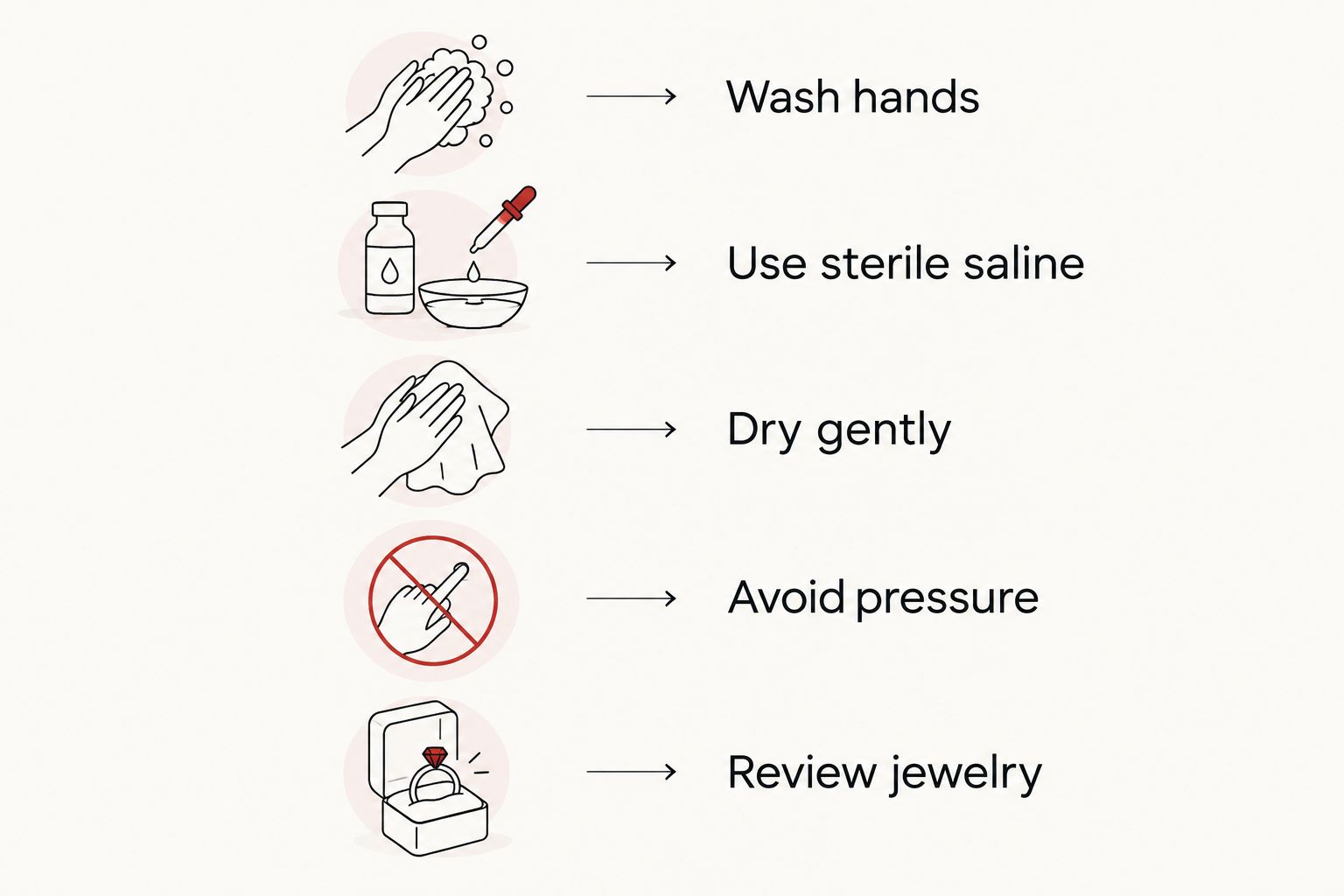
- Wash hands. Clean your hands before any necessary contact. Otherwise, leave the piercing alone.
- Use sterile saline. Choose wound wash labeled with 0.9% sodium chloride and water, without added antibacterial ingredients or moisturizers. Contact-lens solution is not an interchangeable substitute.
- Dry gently. Use a clean, disposable product without rubbing or catching the jewelry. Do not pull away attached crusts.
- Avoid pressure. Keep makeup, skincare products, and unnecessary friction away from the openings. Adjust habits that repeatedly catch the jewelry.
- Review jewelry. Arrange a professional assessment if swelling changes the fit or the jewelry starts catching. Do not downsize or replace it yourself during healing.
More cleaning is not automatically better. Alcohol, hydrogen peroxide, and strong antiseptics can irritate healing tissue; homemade salt mixtures also make concentration difficult to control. Do not add products because a bump appears without first understanding the cause.
Avoid submerging a healing piercing in pools, hot tubs, lakes, or other shared water. Showering and swimming are different exposures. If swimming is part of your job or training, discuss that commitment before getting pierced rather than expecting aftercare to cancel the risk.
What looks normal, and what needs attention?
Some tenderness, localized swelling, and pale fluid that dries into crust can occur during early healing. The overall direction matters: symptoms should settle rather than become progressively more painful or widespread.
A piercing bump is not a diagnosis. Irritation, an unsuitable jewelry fit, and other skin problems can look similar without having the same treatment. Avoid popping the bump, applying tea tree oil, or assuming every raised area is a keloid.
Ask your piercer to assess placement, jewelry, and possible mechanical irritation. A piercer can evaluate those factors, but diagnosing an infection belongs to a healthcare professional.
Seek prompt medical advice for increasing heat, spreading redness or discoloration, worsening pain, foul-smelling discharge, fever, or feeling unwell. Seek urgent care if symptoms are severe or worsening rapidly. Do not remove jewelry from a suspected infected piercing unless a healthcare professional directs you to do so.
When can I change my nose piercing jewelry?
3–4 months or longer for a nostril and 6–8 weeks or longer for a septum are healing references, not automatic change dates. Your piercer should assess the tissue and the jewelry before the first elective change.
Downsizing is different from changing jewelry for appearance. A piercer sometimes needs to adjust jewelry after initial swelling settles, even while the channel is still healing. That is a professional fit decision, not evidence that home jewelry changes are safe.
For your 2026 plans, avoid tying the first jewelry change to a wedding, trip, or photo session. Keep the event date separate from the healing decision. If the tissue is still irritated, postponing the change protects the result.
Can a nose piercing heal sooner if it stops hurting?
3–4 months or longer remains the general nostril reference even if soreness disappears sooner. Comfort is encouraging, but it does not show how strong the tissue inside the channel has become.
Do not test healing by spinning the jewelry, sliding it back and forth, or removing it briefly. Those actions disturb the tissue you are trying to assess. Ask for an examination instead.
Should I postpone a piercing before a trip or event?
3–4 months or longer for a nostril requires planning beyond the appointment itself. Postpone the procedure if the early healing period would conflict with swimming, repeated jewelry removal, or activities that press against your nose.
A consultation helps you connect the placement to your actual schedule. Bring up work requirements, protective equipment, sports, and any need to hide the jewelry before the piercing, not afterward.
Choosing a Las Vegas piercing studio
Tattooilluminati is best for Las Vegas clients seeking professional body piercing at a local studio. The owner-operated studio emphasizes clean, hygienic service and clear guidance about body-art choices. A local visit gives you an opportunity to discuss placement and practical care before deciding.
Tattooilluminati offers body piercing alongside custom tattoo design, fine line work, and cover-ups. That service offering does not promise a particular healing date, establish that every placement suits your anatomy, or replace medical care. Ask how jewelry fit and follow-up assessments apply to your chosen piercing.
Before visiting Tattooilluminati, check the studio's current directions and visiting information. Bring your reference ideas and questions about your routine. You should leave the consultation understanding the commitment, without feeling pressured to proceed.
Plan your piercing visit
Review studio information and get directions before visiting the Las Vegas studio.
FAQ
How long does a nostril piercing take to heal in 2026?
A nostril piercing generally takes 3–4 months or longer, according to the Association of Professional Piercers' healing guidance. Irritation and individual healing differences can extend that timeline.
Does a septum piercing heal faster than a nostril piercing?
A properly placed septum piercing generally has a shorter healing estimate: 6–8 weeks or longer, compared with 3–4 months or longer for a nostril. Choose the placement based on anatomy and preference, not speed alone.
Can I change my nose stud as soon as it stops hurting?
No. A nose piercing can feel comfortable before the channel has finished healing, so have a professional piercer assess it before changing jewelry.
Should I twist my nose piercing while cleaning it?
No. Twisting or rotating jewelry can irritate healing tissue; use the recommended aftercare routine without deliberately moving the jewelry.
Does a bump mean my nose piercing is infected?
A bump alone does not establish an infection. Have jewelry and irritation assessed by a piercer, and seek medical advice for worsening pain, spreading discoloration, heat, fever, or concerning discharge.
Can I swim while my nose piercing heals?
Avoid submerging a healing nose piercing in pools, hot tubs, lakes, and other shared water. Discuss swimming commitments before the procedure so the healing period fits your routine.
What if my nose jewelry starts sinking into my skin?
Seek prompt professional assessment if jewelry starts sinking into the skin. Do not force it out; embedded jewelry, significant swelling, or signs of infection need medical attention.
One last thing
A jewelry fit adjustment is not a failure, and it is not proof of complete healing. Initial swelling and later healing create different fit needs. For your 2026 piercing plan, leave room for professional follow-up instead of treating the appointment as the entire process.
The most useful habit is restraint: protect the piercing, follow clear care instructions, and get help when something changes. Do not make the tissue prove it is healed by handling it.