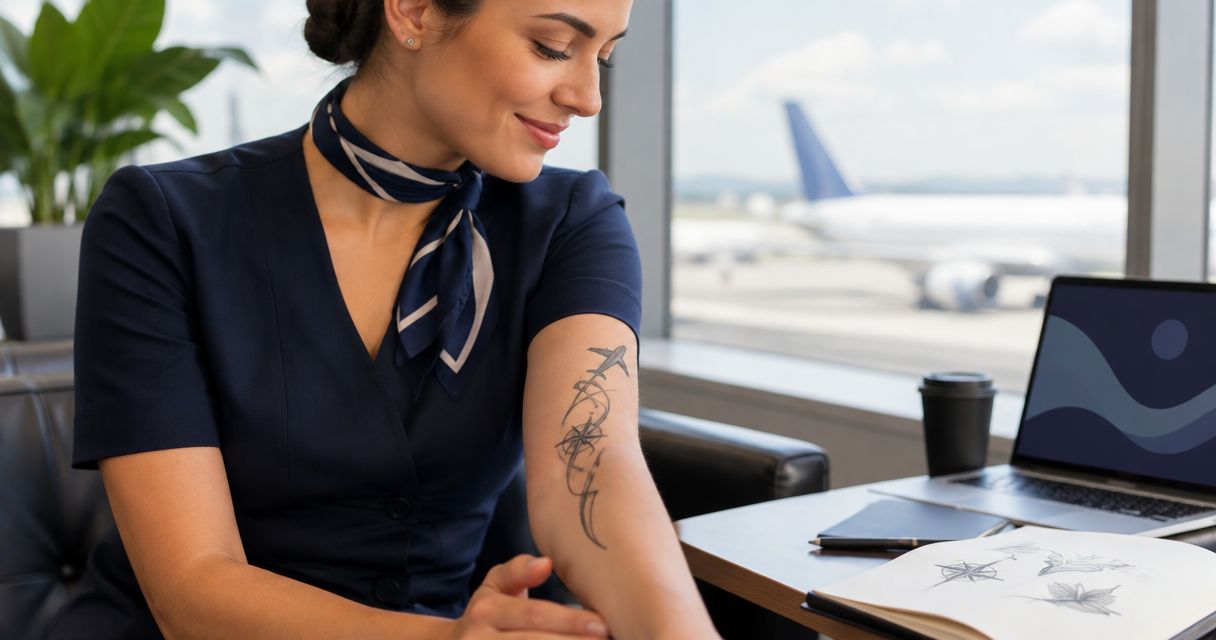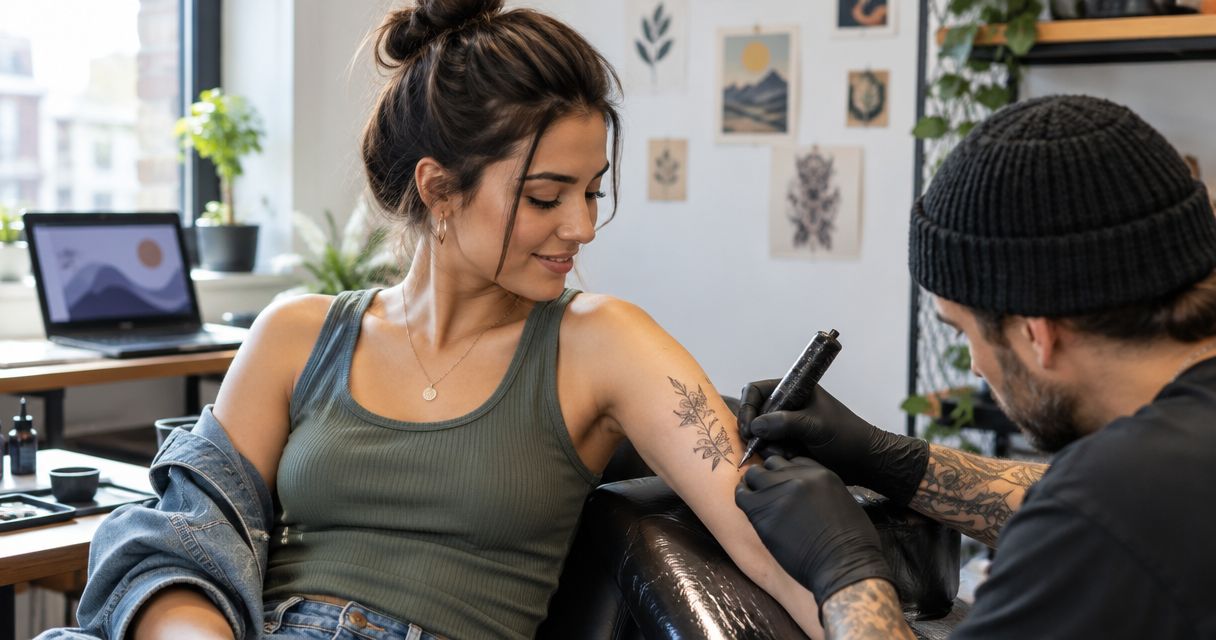
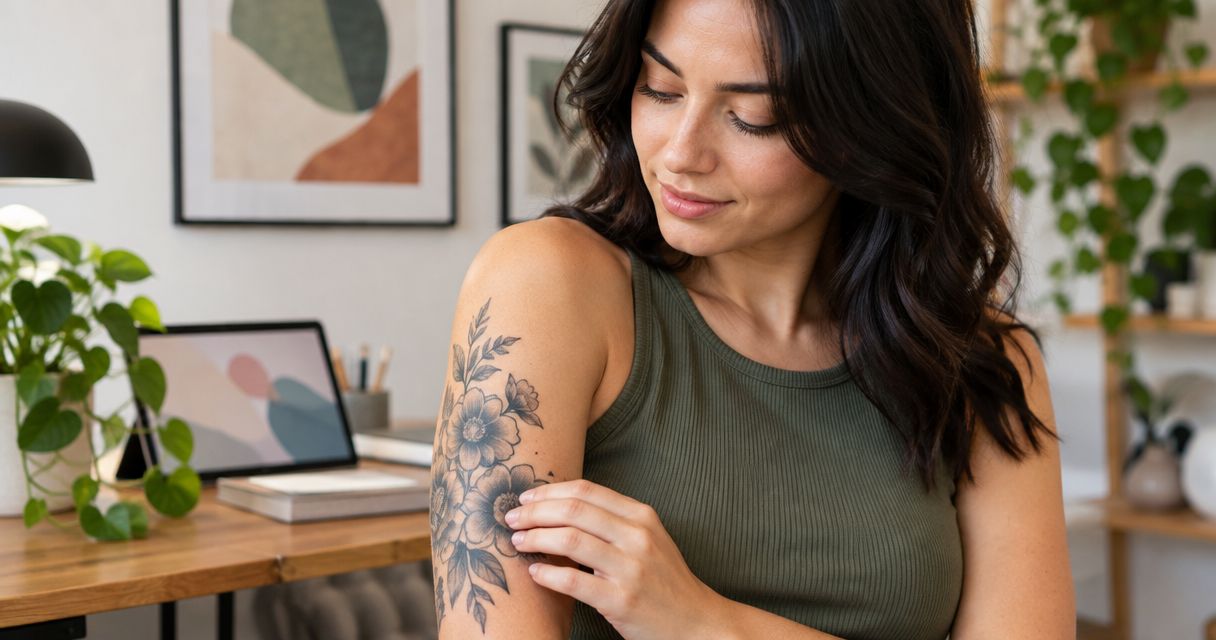
Best overall: botanical florals. Best for a long, narrow scar: a leaf branch. Best for several scattered scars: an abstract composition. These cover up tattoo designs for scars give you nine starting points for a custom design in 2026—not a promise that tattooing will erase scar texture.
- Botanical florals are the best overall cover up tattoo designs for scars when the composition suits your skin.
- Leaf branches suit narrow layouts; abstract compositions accommodate scattered marks without forcing symmetry.
- Tattooilluminati offers custom tattoos and cover-ups in Las Vegas; discuss scar placement before choosing a finished design.
- Tattooing adds pigment, not smooth skin. Ask a clinician about raised, painful, changing, or keloid-prone scars.
Why this matters
A scar cover-up is a design problem and a skin-health decision. Ink changes color and contrast; it does not remove a raised ridge, an indentation, or the underlying scar tissue. Your goal is a composition you enjoy, with realistic expectations about what remains visible.
Tattooilluminati offers custom tattoo design and tattoo cover-ups in Las Vegas. For scar cover-up tattoos, start with a discussion of your skin, placement, and preferred artwork rather than selecting a finished image and asking an artist to reproduce it unchanged.
For your 2026 appointment, distinguish between concealing a scar and incorporating it. Concealment redirects attention through pattern and shading. Incorporation lets the mark remain part of the artwork, which is a valid choice rather than a lesser result.
What makes the best scar cover-up tattoo design?
The strongest design fits your body and your preferences. Judge each option against these criteria before comparing styles:
- Skin readiness: Tattoo only fully healed skin. Ask a qualified clinician about scars that are raised, painful, changing, or associated with keloids.
- Composition: Look for shapes that work with the scar's direction instead of placing an important detail directly across it.
- Adjustable contrast: Choose a design with room for shading and open skin, not an automatic requirement for dense black ink.
- Body fit: Evaluate the artwork on your actual placement, including how it looks when you move.
- Personal meaning: Pick imagery you want even when concealment is not the first thing you notice.
- Realistic expectations: Accept that scar texture and differences in pigment appearance can remain visible.
Bring 3 reference images, request 2 layout options, and inspect 1 full-size stencil before committing. These are preparation steps, not medical thresholds or a formula for a successful result.
Scar cover-up designs at a glance
These 2026 recommendations rank design approaches by their usefulness for different layouts. Suitability still depends on an individual assessment of your skin.
| Design | Best for | Standout design feature | Key limitation |
|---|---|---|---|
| Botanical florals | Irregular scar layouts | Petals, leaves, and shading offer adjustable shapes | A small flower can leave surrounding marks exposed |
| Leaf branch | Long, narrow layouts | A stem establishes direction with leaves around it | A rigid central stem can emphasize the scar |
| Abstract composition | Scattered marks | Separate shapes create a connected composition | Loose structure needs careful planning |
| Ornamental pattern | Framing a central scar | Repeated motifs draw attention around a focal area | Precise symmetry makes irregularities noticeable |
| Landscape silhouette | Wide, horizontal layouts | Layered contours establish a broader scene | Straight horizons demand careful placement |
| Koi composition | Curved placements | Body curves and water shapes create movement | Detailed scenes need adequate space |
| Feather design | Slim, tapered layouts | A tapered outline follows a narrow placement | A central shaft can spotlight unevenness |
| Geometric composition | Working around visible scars | Open cells leave intentional gaps | Straight lines expose distortion |
| Blackwork botanical | Larger decorative coverage | Bold shapes establish strong contrast | Dense ink does not hide raised texture |
1. Botanical florals: best for irregular scar layouts
Botanical florals combine flowers, foliage, and shading in a composition that can change shape around your placement. A petal does not need to follow a rigid grid. That gives the artist freedom to move a focal flower away from an uneven area while keeping the design connected.
Choose the flower because you like it, then adjust the arrangement. Do not assume that one dark blossom placed directly over a scar is the best solution.
Botanical florals pros:
- Petals and leaves offer varied shapes.
- The composition can extend beyond the scar.
- Shading and open skin can share the design.
Botanical florals cons:
- A tiny motif offers limited coverage.
- Important flower details need thoughtful placement around texture.
Best for: You want recognizable artwork that accommodates an irregular outline.
Verdict: Buy this design direction after skin assessment; it is the default starting point for this list.
2. Leaf branch: best for a long, narrow scar
A leaf branch uses a stem and repeated leaves to establish a clear direction. It suits a narrow composition without requiring a full scene. The stem can run beside the scar rather than tracing it exactly, while leaves create visual interest across the surrounding skin.
Keep the layout flexible. A perfectly straight stem centered on a raised scar can draw attention to the feature you wanted to soften.
Leaf branch pros:
- Fits an elongated composition.
- Leaves provide adjustable spacing.
- Offers a restrained alternative to a large floral arrangement.
Leaf branch cons:
- The central stem can emphasize unevenness.
- Sparse leaves leave more skin visible.
Best for: You prefer a simple botanical design along a narrow placement.
Verdict: Buy for a directional layout, not for guaranteed concealment.
3. Abstract composition: best for scattered scars
An abstract composition uses shapes, lines, and shaded areas without requiring a recognizable object. Separate elements can connect across a placement while leaving selected scars untouched. This makes it a useful direction when your marks do not follow one clean line.
Decide whether you prefer soft forms or sharper shapes before the consultation. Otherwise, abstract references can communicate very different ideas to you and your artist.
Abstract composition pros:
- Accommodates disconnected marks.
- Allows intentional gaps around skin you do not want tattooed.
- Does not depend on realistic anatomy or symmetry.
Abstract composition cons:
- The overall balance needs deliberate planning.
- Vague references make the desired result harder to explain.
Best for: You want one composition around several separate marks.
Verdict: Buy when flexibility matters more than recognizable imagery.
4. Ornamental pattern: best for framing a central scar
An ornamental pattern uses repeated decorative motifs to create a frame or focal shape. You can keep the scar inside an open area while placing detail around it. That approach treats the scar as part of the composition instead of requiring ink directly over every section.
Ask to see the design aligned with your body, not only on a flat page. Symmetry on paper is not the same as symmetry on a curved placement.
Ornamental pattern pros:
- Creates a deliberate frame.
- Supports an open central area.
- Repetition gives the artwork a clear visual structure.
Ornamental pattern cons:
- Precise repetition can highlight irregularities.
- Small decorative details can become crowded.
Best for: You want to frame a scar rather than fully disguise it.
Verdict: Buy for framing; skip rigid symmetry across uneven tissue.
5. Landscape silhouette: best for wide, horizontal layouts
A landscape silhouette combines contours such as hills, trees, or mountain forms. Its width can suit a horizontal placement, with layered shapes spreading attention across the artwork. The scene does not need a straight horizon or a dense, solid foreground.
Select a landscape you genuinely want to wear. A meaningful scene is a stronger starting point than choosing a mountain outline solely because it appears wide enough.
Landscape silhouette pros:
- Offers a naturally wide composition.
- Layered contours provide different placement options.
- A scene can incorporate personal meaning.
Landscape silhouette cons:
- Straight horizons reveal alignment differences.
- Small placements restrict scene detail.
Best for: You want a broader scene across a horizontal area.
Verdict: Buy when the landscape fits the body placement without forced stretching.
6. Koi composition: best for curved body placements
A koi composition combines a curved fish with supporting shapes such as water or foliage. The body establishes movement, while surrounding elements let the artist adjust the composition. This is a design direction for someone who wants a larger, flowing piece rather than a small isolated symbol.
Discuss where the fish's face, fins, and outline will sit. Recognizable details deserve deliberate placement; they should not be used as automatic camouflage over difficult tissue.
Koi composition pros:
- A curved body creates movement.
- Supporting elements connect separate areas.
- The design can follow a wrapping placement.
Koi composition cons:
- Detailed scenes require room.
- Distortion across key features affects readability.
Best for: You want a flowing composition around a curved placement.
Verdict: Buy for movement and scale; skip when you want a very small tattoo.
7. Feather design: best for slim, tapered layouts
A feather uses a narrow shaft and a tapered outline. Its shape offers a starting point for an elongated placement, with the outer edges providing room for variation. Positioning the shaft beside the scar can make more sense than centering it directly over the mark.
Choose a feather because the image suits you. Fine strands alone should not be treated as a reliable way to conceal discoloration or texture.
Feather design pros:
- Has a naturally tapered silhouette.
- Works as a standalone image.
- Allows variation along its outer edges.
Feather design cons:
- The shaft can emphasize an uneven line.
- Very delicate strands provide limited visual coverage.
Best for: You want a single tapered motif rather than a branching design.
Verdict: Buy for its silhouette; hold if complete concealment is your requirement.
8. Geometric composition: best for working around scars
A geometric composition uses structured shapes and deliberate open areas. The strongest application here is often designing around the scar, leaving it within an empty cell or outside a key line. That creates an intentional relationship between tattooed and untattooed skin.
Geometric work is not an automatic concealment solution. A straight line crossing uneven tissue asks the eye to notice whether that line stays straight.
Geometric composition pros:
- Makes open skin part of the design.
- Provides a clear visual structure.
- Can frame a scar without tattooing directly across it.
Geometric composition cons:
- Straight lines make distortion noticeable.
- Tight symmetry leaves less room for adjustment.
Best for: You prefer structure and accept that the scar remains visible.
Verdict: Buy for intentional framing; skip as a promise of invisible scars.
9. Blackwork botanical: best for larger decorative coverage
Blackwork botanical designs use bold leaves, flowers, and dark shapes rather than relying primarily on delicate outlines. The contrast gives the composition a strong visual presence. Open areas remain important: more black ink is not automatically a better scar-covering strategy.
Choose the overall silhouette before discussing density. A large dark shape still follows the surface beneath it, so raised or indented texture does not disappear.
Blackwork botanical pros:
- Bold shapes establish clear contrast.
- Botanical forms allow composition changes.
- Open skin can break up dense areas.
Blackwork botanical cons:
- Dense ink does not flatten scar tissue.
- A bold composition is a substantial visual commitment.
Best for: You already prefer larger, high-contrast botanical artwork.
Verdict: Buy for the style itself; skip if darkness is the only reason you chose it.
How to prepare for a scar tattoo consultation
For a 2026 consultation, separate the decisions into Skin readiness, Design references, and Stencil placement. Ask a clinician about concerning scars before treating the appointment as permission to tattoo them. Then explain whether you want concealment, incorporation, or a design that avoids the scar entirely.
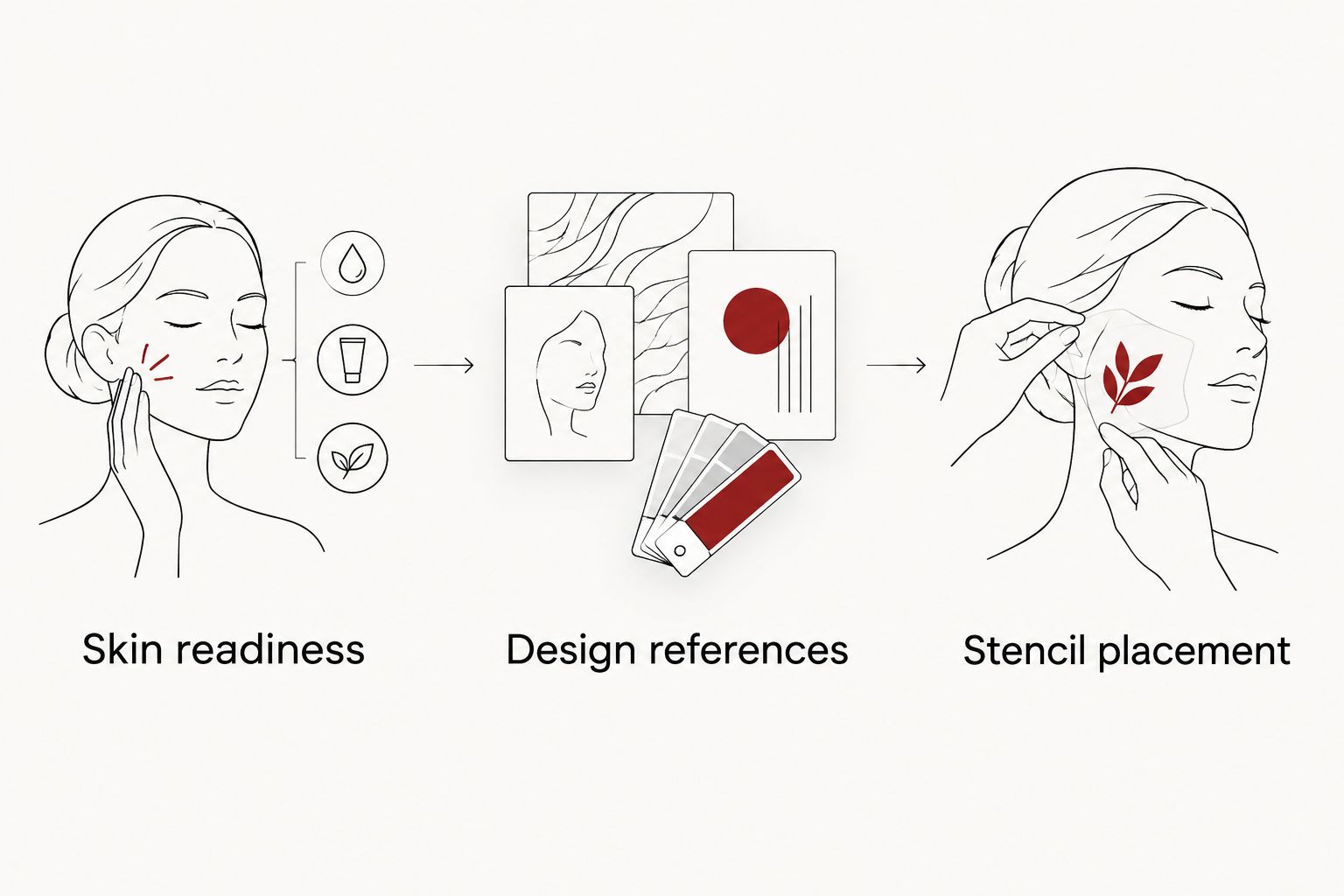
Bring references showing the style you like, not only examples of someone else's scar cover-up. Discuss details you want preserved and areas you want left untouched. Inspect the stencil while standing naturally and moving the relevant joint; the artwork needs to fit your body, not just a photograph.
Tattooilluminati offers custom designs and cover-ups for Las Vegas clients who want artwork built around their placement. Ask about relevant scar-work experience, healed examples, hygiene procedures, and written aftercare instructions before making your decision.
Discuss your custom tattoo
Explore custom tattoo and cover-up services before planning your Las Vegas studio visit.
How these designs are ranked
This 2026 ranking prioritizes adjustable composition, body fit, and realistic expectations about scar visibility. Botanical florals lead because their varied shapes offer several ways to arrange a design. Narrow, structured, or high-contrast alternatives earn specific use-case positions—not a claim that one style works on every scar.
Which scar cover-up design should you choose?
Start with botanical florals if you are undecided. Choose a leaf branch for a narrower composition, abstract shapes for scattered marks, or ornamental and geometric framing when you want the scar included rather than concealed.
For your 2026 plan, choose skin suitability first, composition second, and decorative detail last. Tattooilluminati's custom tattoo services provide a starting point for that design conversation; medical questions belong with a qualified clinician.
FAQ
What's the best cover up tattoo design for scars?
Botanical florals are the best overall starting point in this guide because petals, leaves, and shading offer adjustable shapes. The final choice depends on healed skin, scar texture, placement, and the artwork you want.
Can a tattoo completely hide a scar?
A tattoo cannot guarantee complete scar concealment. Pigment changes color and contrast, but raised or indented texture can remain visible.
How long should I wait before tattooing a scar?
Wait until the scar is fully healed and assessed as suitable for tattooing. There is no universal waiting period for every scar; ask a qualified clinician about readiness, especially if the area is raised, painful, or changing.
Can I get a tattoo over a keloid scar?
Get medical advice before tattooing a keloid scar or if you have a history of keloids. Tattooing injures skin, and a design consultation does not replace an assessment of your scarring risk.
Are fine-line tattoos good for covering scars?
Fine-line tattoos suit a delicate appearance, but delicate lines are not a dependable concealment strategy. Consider whether you want to frame the scar, incorporate it, or use a broader composition.
Is covering a scar the same as covering an old tattoo?
No, scar cover-ups involve altered skin texture as well as appearance, while old-tattoo cover-ups involve existing pigment. A placement with both needs an assessment of the skin and the existing ink.
Where can I discuss a custom scar tattoo in Las Vegas?
Tattooilluminati offers custom tattoos and tattoo cover-ups in Las Vegas. Ask about scar-specific assessment and relevant healed work before deciding whether to proceed.
One last thing
Judge the stencil from a normal viewing distance as well as close up. A detail that seems helpful in a close-up photograph can disappear into the larger composition. Ask yourself whether you still want the tattoo when the scar is not the focus—that is the design you should keep discussing.