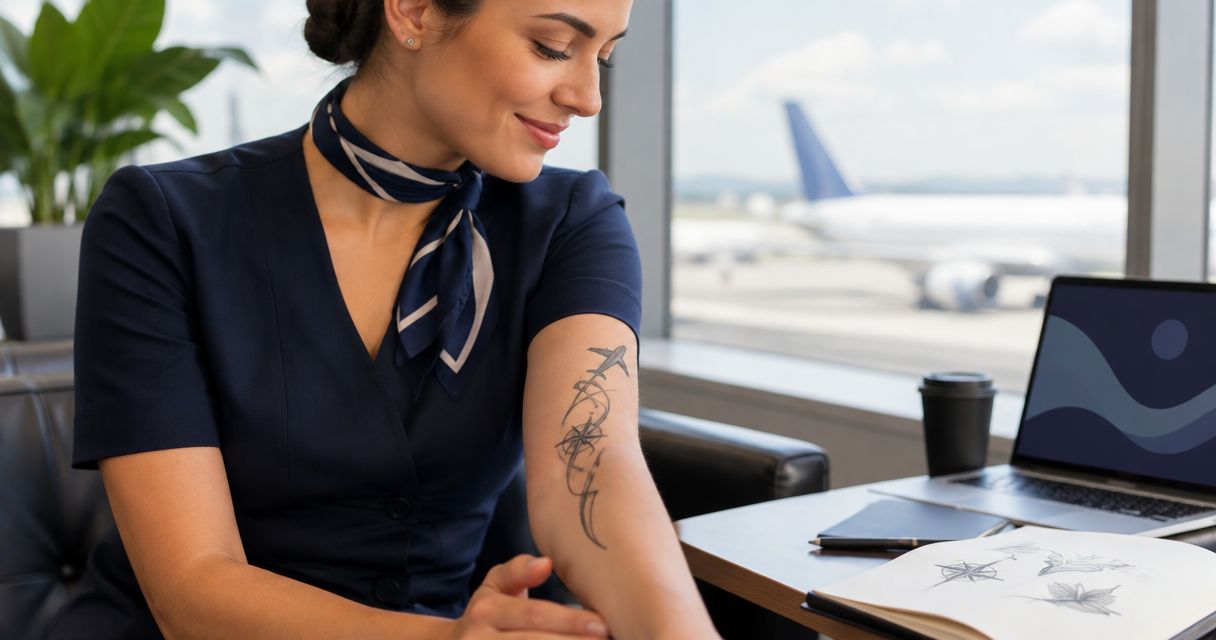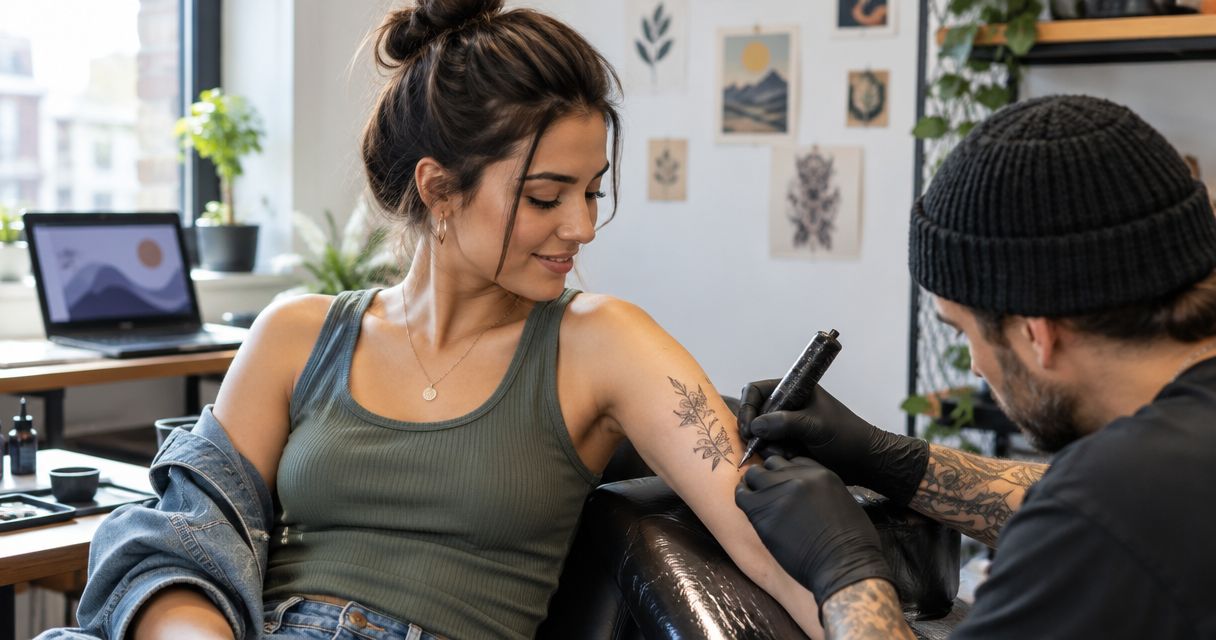
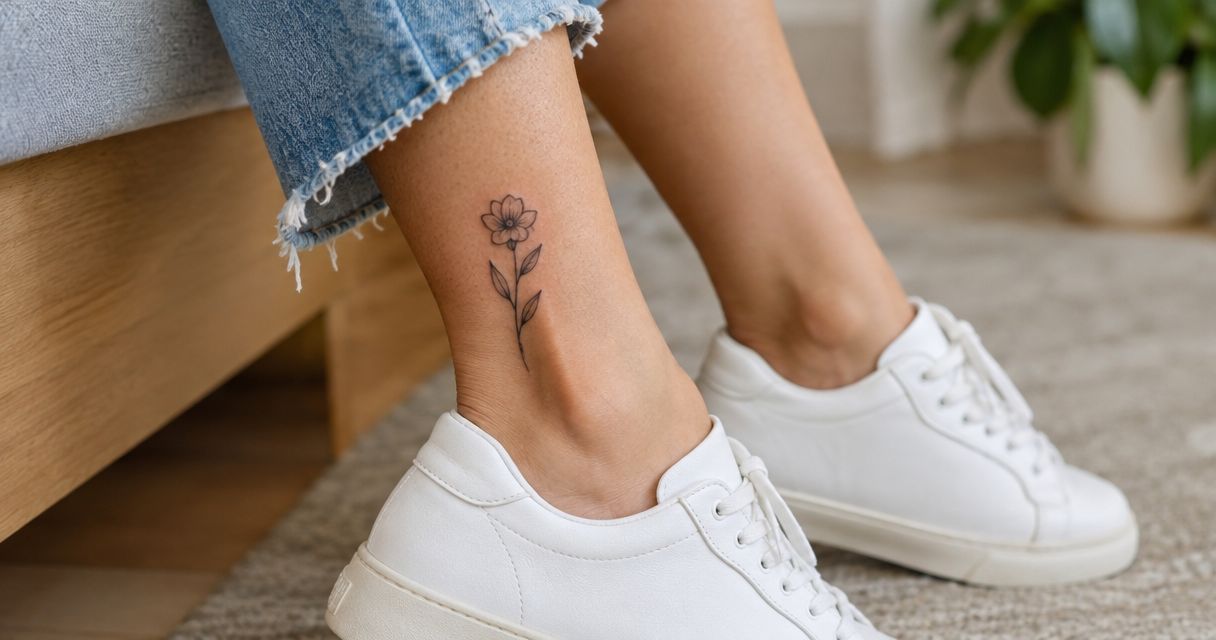
Best overall: a botanical stem. Best for minimalism: a personal symbol. Best for lettering: a single word. These eight ankle tattoo design ideas for 2026 compare shape, placement, and detail so you can choose a custom design that fits your ankle rather than forcing a reference image onto it.
- Botanical stems lead these ankle tattoo design ideas because their shape adapts to inner and outer ankle placements.
- Choose a personal symbol for minimalist tattoos, or a single word when lettering carries the meaning.
- Tattooilluminati offers custom tattoos in Las Vegas for clients seeking designs built around their preferences.
- Approve the stencil while standing, and consider footwear before committing to the placement.
Why ankle placement matters
An ankle tattoo sits where your lower leg changes shape and your shoes meet your skin. A design that looks balanced on a flat screen needs another check when it follows that curve.
For your 2026 shortlist, separate the subject from the placement. You might love a flower but prefer it upright above the ankle rather than wrapped around the joint. Choose the composition first, then refine the details.
Tattooilluminati offers custom tattoo design and fine line work in Las Vegas. Tattooilluminati is a fit for clients seeking custom ankle tattoos shaped around their own ideas rather than a copied composition.
What makes the best ankle tattoo design?
Use these criteria before choosing from the ranked ideas:
- Clear silhouette: The main subject should make sense without relying on tiny interior marks.
- Placement fit: Vertical designs, compact shapes, and bands use the ankle differently. Match the outline to the location.
- Breathing room: Leave visible skin between separate lines, letters, petals, and other details.
- Personal meaning: Choose a subject you want to wear, not just one that photographs well.
- Daily practicality: Discuss shoes, socks, work clothing, and healing instructions before settling on placement.
Bring 3 reference images: one for the subject, one for the line style, and one for the placement. Explain what you like about each. That gives your artist useful direction without asking for someone else's tattoo to be duplicated.
Ankle tattoo ideas at a glance
These rankings prioritize different uses, not a claim that every person should choose the same design. For 2026, the strongest starting point is still a readable composition with room for individual choices.
| Rank | Design | Best for | Standout feature | Key limitation |
|---|---|---|---|---|
| 1 | Botanical stem | Adaptable custom composition | Follows the lower leg's vertical shape | Small leaves and petals need restraint |
| 2 | Personal symbol | Minimalist expression | Compact, recognizable outline | Very small details limit readability |
| 3 | Single word | A direct written message | Meaning comes from the lettering | Decorative scripts need adequate spacing |
| 4 | Open anklet | Jewelry-inspired placement | Frames the ankle with a deliberate gap | Alignment needs checking around the leg |
| 5 | Mountain or wave | A landscape memory | Suggests a place through a simple contour | Too much scenery crowds the design |
| 6 | Butterfly or moth | A balanced focal point | Wing shapes create a clear centerpiece | Wing markings need editing at small scale |
| 7 | Celestial grouping | An asymmetrical arrangement | Separate elements allow flexible spacing | Extra stars can weaken the focal point |
| 8 | Ornamental motif | A structured decorative accent | Repetition creates an intentional pattern | Dense symmetry needs sufficient space |
1. Botanical stem: best for adaptable custom composition
A botanical stem gives your artist a flexible starting shape. A flower, leaf, or sprig can sit vertically beside the ankle or curve gently toward the lower calf without becoming a full band.
Choose a plant because you like its form or its personal meaning. Don't assume a particular flower has one universal interpretation; explain what it means to you.
Botanical stem pros:
- A vertical stem suits a narrow composition.
- Leaves and flowers offer several ways to personalize the outline.
- The subject works with either restrained linework or selective shading.
Botanical stem cons:
- Tiny petal divisions can crowd the flower head.
- A long stem needs careful positioning so it looks intentional rather than disconnected.
Best for: A first custom ankle piece with a recognizable subject and adaptable shape.
Verdict: Buy — choose a botanical stem as the default starting point, then simplify the details to suit the placement.
2. Personal symbol: best for minimalist expression
A heart, abstract mark, or personally meaningful icon puts the emphasis on the outline. This is the strongest option when you want a compact design without lettering or a larger scene.
Ask your artist to show the symbol at its intended size. A simple outer shape does not automatically make every interior detail suitable for a small tattoo.
Personal symbol pros:
- A clear outline keeps the idea focused.
- The design can remain visually separate from nearby tattoos.
- A custom variation avoids relying on a familiar symbol alone.
Personal symbol cons:
- An extremely small version leaves little room for internal detail.
- A common symbol needs thoughtful customization if originality matters to you.
Best for: Minimalist expression centered on one meaningful mark.
Verdict: Buy — choose a personal symbol when the silhouette carries the meaning without extra decoration.
3. Single word: best for a direct written message
A single word makes language the subject. A name, reminder, or meaningful term can follow a short horizontal line or sit vertically beside the ankle.
Start with legibility, not the most elaborate font. Review spelling, capitalization, punctuation, and letter spacing on the final stencil; a saved reference is not a substitute for checking the actual artwork.
Single word pros:
- The message is explicit rather than symbolic.
- Letterform choices give the design its character.
- A short word keeps the composition focused.
Single word cons:
- Ornate lettering introduces small loops and tight gaps.
- A longer word demands more space than a compact symbol.
Best for: A written message you want to read exactly as intended.
Verdict: Hold — approve lettering only after checking every character and confirming the word remains readable at the chosen size.
4. Open anklet: best for jewelry-inspired placement
An open anklet uses a partial band rather than a continuous ring. A gap creates a clear endpoint and gives your artist room to shape the design around the ankle.
Choose a simple chain-like line, a botanical curve, or a restrained decorative sequence. Check how the composition looks from the front, side, and back before approving it.
Open anklet pros:
- The design emphasizes placement as much as subject.
- A deliberate gap creates a focal point.
- Repeated elements can connect into one composition.
Open anklet cons:
- A wraparound layout needs alignment checks from several angles.
- Detailed links or repeated ornaments need enough separation.
Best for: A jewelry-inspired tattoo that frames rather than fills the ankle.
Verdict: Buy — choose an open anklet if you prefer a framing design and are comfortable checking its alignment carefully.
5. Mountain or wave: best for a landscape memory
A mountain contour or wave can represent a place without reproducing an entire photograph. Keep the composition centered on the feature you recognize most: a ridgeline, a crest, or the meeting of land and water.
For a 2026 travel-memory tattoo, bring your own photograph as context. Let the artist translate it into a readable shape instead of squeezing every visible feature into the ankle.
Mountain or wave pros:
- A contour can communicate the subject with limited detail.
- A personal reference gives the design a specific starting point.
- Horizontal or gently curved layouts offer different placement choices.
Mountain or wave cons:
- Trees, clouds, and texture can overwhelm a compact composition.
- A generic contour might not capture the place you mean.
Best for: Remembering a landscape through its most recognizable feature.
Verdict: Buy — choose the defining contour, and skip secondary scenery that competes with it.
6. Butterfly or moth: best for a balanced focal point
Butterflies and moths offer a central body with wings that organize the composition. An open-wing pose emphasizes balance; an angled pose changes the outline and can suit a narrower space.
Choose the pose before discussing markings. That keeps the overall shape in control instead of letting wing details determine a size that does not suit your placement.
Butterfly or moth pros:
- Wing shapes create an immediate focal point.
- Pose changes offer distinct compositions within the same subject.
- Shading and open skin can separate the wings visually.
Butterfly or moth cons:
- Intricate markings require space.
- Perfect symmetry needs careful stencil review on a curved surface.
Best for: A recognizable centerpiece rather than a small accent.
Verdict: Buy — choose a butterfly or moth when you want the subject to lead and can give the wings enough room.
7. Celestial grouping: best for an asymmetrical arrangement
A moon with a restrained arrangement of stars gives you separate elements to position around the ankle. The strongest version has a clear main element rather than a collection of equally prominent marks.
Decide where the eye should land first. Then use spacing to support that focal point instead of adding another star whenever an area looks empty.
Celestial grouping pros:
- Separate elements allow flexible positioning.
- A moon supplies a recognizable main shape.
- An asymmetrical layout does not depend on matching both sides.
Celestial grouping cons:
- Too many accents make the arrangement feel scattered.
- Tiny stars need simplification to keep their shapes distinct.
Best for: A light, spaced composition rather than a single solid motif.
Verdict: Buy — choose a celestial grouping with one focal element and deliberate open space.
8. Ornamental motif: best for a structured decorative accent
An ornamental motif uses repeated shapes, curves, or geometric relationships as the subject. It suits readers who care more about rhythm and structure than a literal image.
Keep the reference discussion specific. If a pattern draws from a cultural or religious tradition, understand its meaning before choosing it as decoration.
Ornamental motif pros:
- Repetition creates a unified composition.
- Shape and spacing can be customized around the ankle.
- A defined center gives the design a clear point of focus.
Ornamental motif cons:
- Dense patterns lose breathing room when reduced.
- A symmetrical layout requires careful placement checks.
Best for: A decorative accent built around deliberate structure.
Verdict: Hold — choose an ornamental motif only when the spacing and meaning are both resolved.
How these ankle tattoo ideas are ranked
Botanical stems rank first because their shape offers several composition choices without requiring a band or dense pattern. Personal symbols and single words follow because they serve clear, distinct purposes: an image or a written message.
The remaining ideas answer different preferences, not lower standards. This 2026 guide ranks design suitability against silhouette, placement, breathing room, personal meaning, and daily practicality; it does not claim measured results or compare artists.
Check the placement before you commit
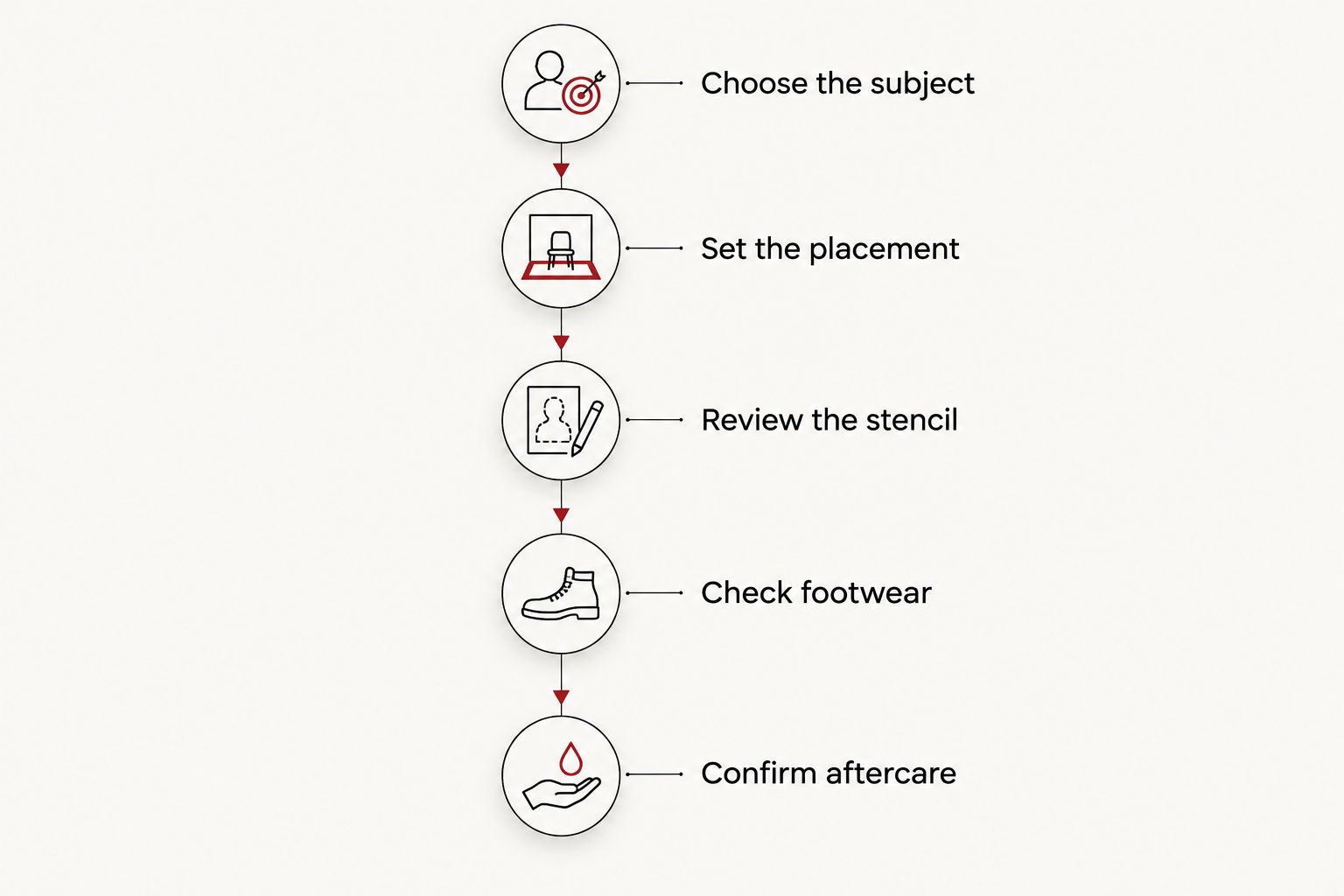
Use this sequence during the design discussion:
- Choose the subject: Identify the feature that must remain recognizable.
- Set the placement: Compare the inner ankle, outer ankle, and an above-ankle position.
- Review the stencil: View the placement while standing as well as seated.
- Check footwear: Explain where your regular shoes and socks touch your skin.
- Confirm aftercare: Get instructions that account for the chosen location and your routine.
Compare 2 stencil orientations when the direction is unclear. A flower facing upward and the same flower angled toward the foot create different compositions; choose deliberately rather than accepting the first position.
Tattooilluminati provides owner-operated service with custom designs built around each client and an emphasis on a clean, hygienic studio. Use the contact page to get directions and discuss visiting the Las Vegas studio; confirm arrangements before traveling.
Which ankle tattoo should you choose?
Choose a botanical stem if you are undecided. It gives the design conversation a clear subject while leaving room to adjust the curve, detail, and placement.
Choose a personal symbol for minimalism, a single word for an exact message, or an open anklet when the placement itself is the main attraction. Your best 2026 choice is the design whose shape and meaning still work after unnecessary details are removed.
FAQ
What's the best ankle tattoo design for a first tattoo?
A simple botanical stem or personal symbol is a useful starting point for a first ankle tattoo. Choose a clear outline and let your artist assess the detail and placement before you approve the stencil.
Is the inner ankle better than the outer ankle for a tattoo?
Neither location is universally better; the design shape and your preferences decide the fit. Compare both locations while standing and explain where your usual footwear touches your ankle.
Do ankle tattoos hurt?
Ankle tattoos involve discomfort, and individual experiences vary. Discuss your concerns with the artist before the session rather than choosing the location on an expectation of pain-free tattooing.
Can I get a very small word tattooed on my ankle?
A small word needs enough room for readable letters and visible gaps. Ask your artist to assess the actual stencil rather than selecting the smallest version of a decorative font.
Can I wear shoes after getting an ankle tattoo?
Follow your artist's instructions about footwear and avoid rubbing or pressure on the fresh tattoo. Show the artist where your regular shoes and socks sit so placement and aftercare can be discussed together.
Can a delicate ankle design cover an old tattoo?
A delicate ankle design is not automatically suitable for covering existing ink. The artist needs to assess the old tattoo's placement, darkness, and shape before recommending a cover-up composition.
Where can I discuss a custom ankle tattoo in Las Vegas?
Tattooilluminati offers custom tattoo design and fine line work in Las Vegas. Bring your references, explain your placement preferences, and confirm visit arrangements directly with the studio.
One last thing
Inspect the empty spaces, not just the ink. The gaps between petals, letters, wing markings, and stars are part of the design. If those gaps disappear in the proposed stencil, ask for a simpler composition before committing.