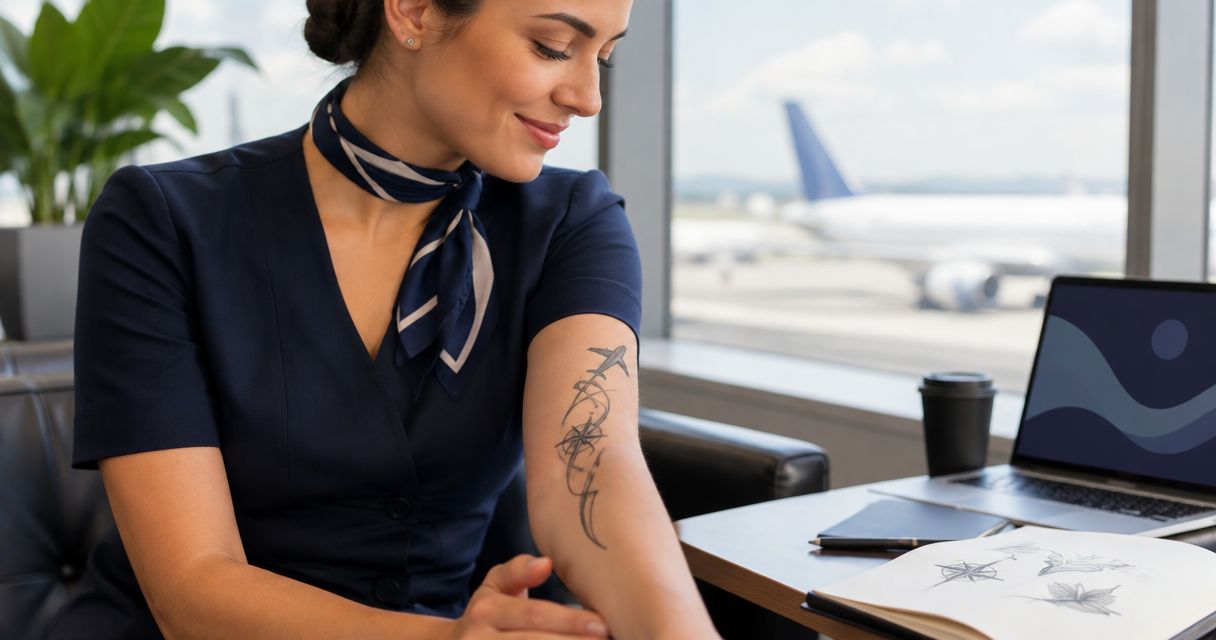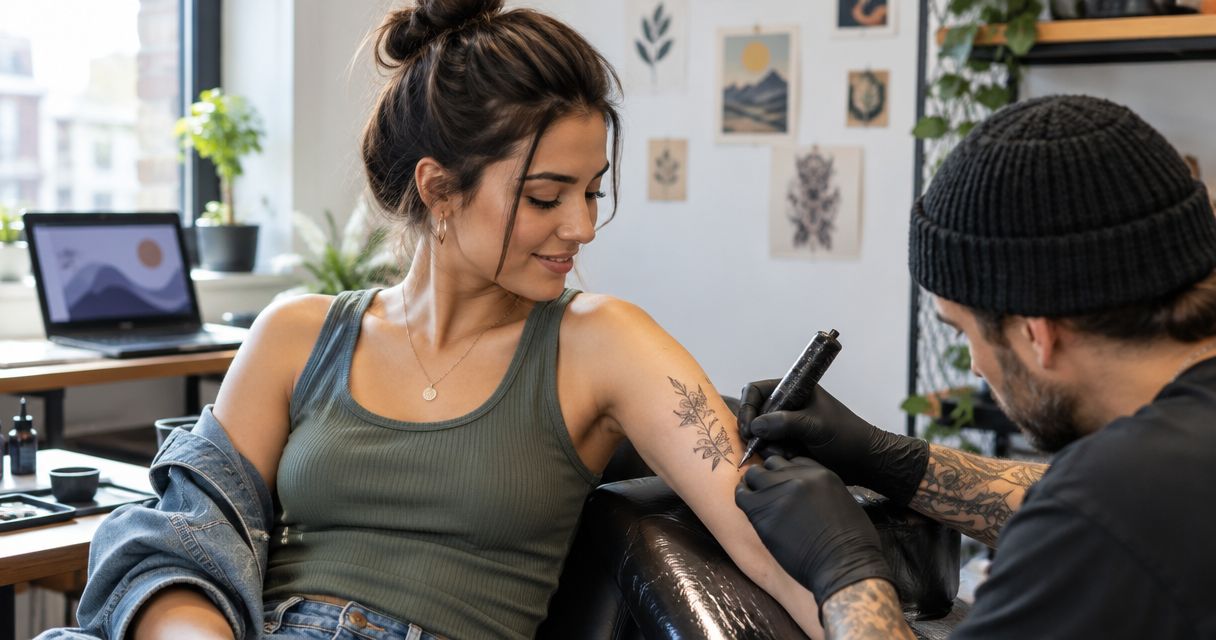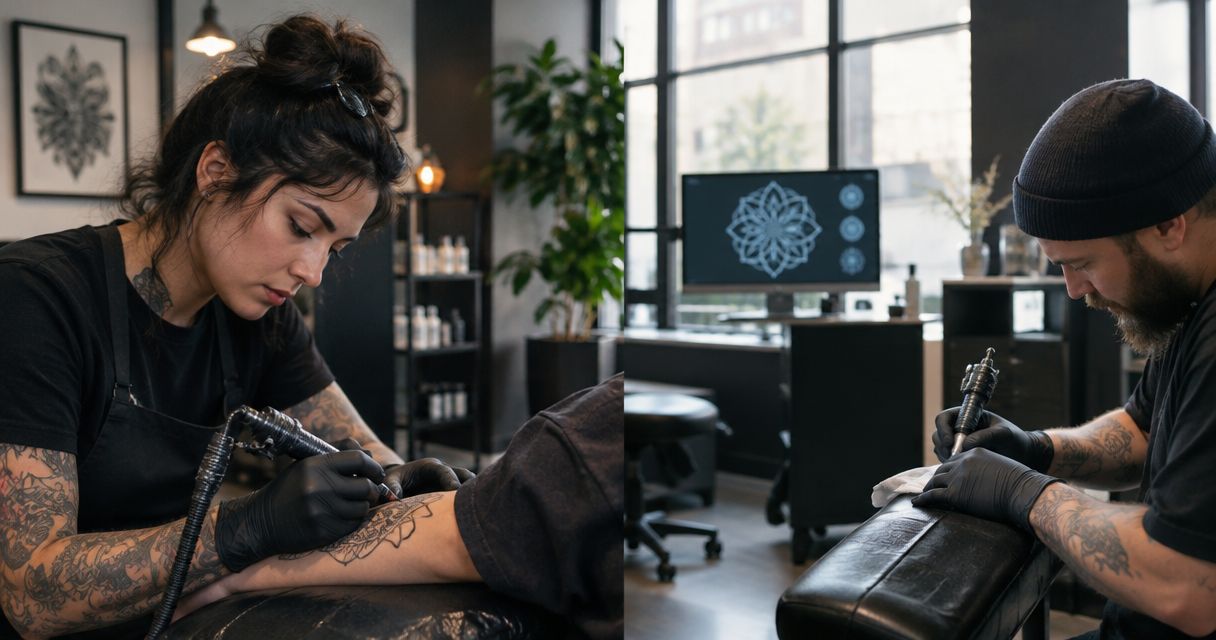
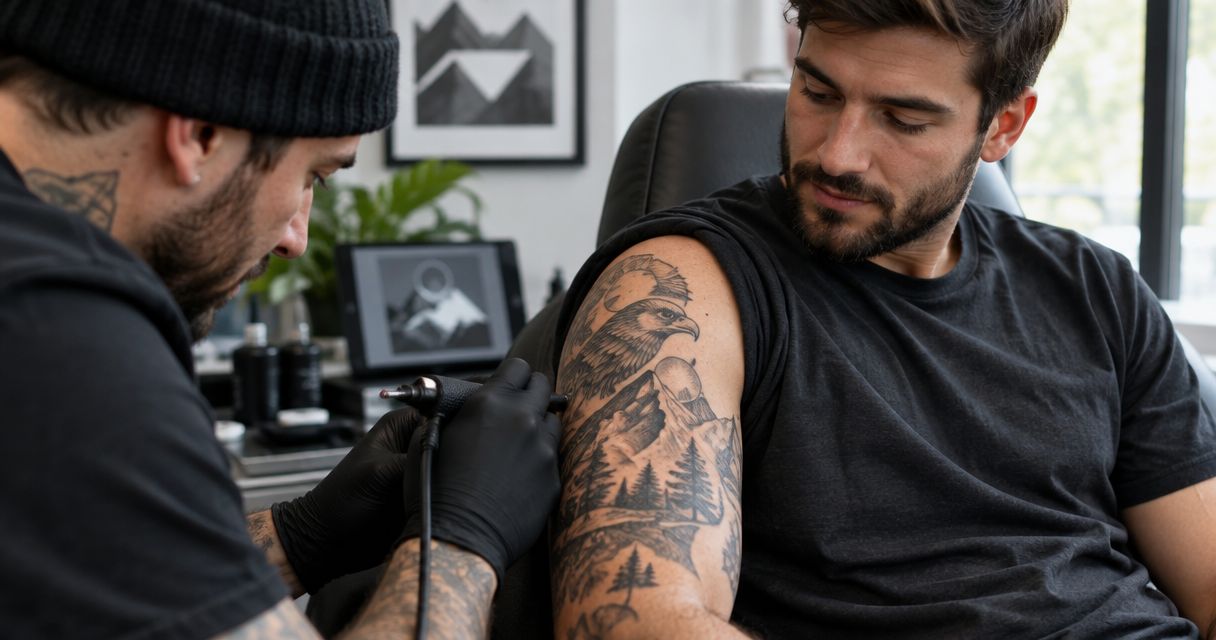
Best overall: a personal-symbol composition. Best for honoring someone: a portrait with meaningful context. Best for understated placement: a fine line botanical design. These custom tattoo design ideas for men turn personal references into a clear brief for Illuminati Tattoo Co. in Las Vegas, rather than a design copied from someone else.
- The best custom tattoo design ideas for men start with personal meaning, placement, and readable detail.
- Choose a personal-symbol composition when you want a flexible starting point for custom tattoos.
- Choose portrait work for remembrance, geometric designs for structure, and fine line botanical work for restraint.
- Illuminati Tattoo Co. offers custom tattoo design, fine line work, and tattoo cover-ups in Las Vegas.
Why this matters
A reference image shows what you like. A custom tattoo brief explains why it belongs on you. That distinction helps your artist choose the subject, simplify competing elements, and fit the composition to your body.
For your 2026 tattoo, decide what the design needs to communicate before choosing a style. A memorial portrait, discreet botanical piece, and existing-tattoo cover-up solve different problems. None needs to look conventionally masculine to feel right on you.
Illuminati Tattoo Co. is a fit for Las Vegas clients seeking custom tattoo design built around personal references. Bring the meaning behind your idea, not just a screenshot.
What makes the best custom tattoo design ideas for men
Use these criteria to compare ideas before committing to a drawing:
- Personal meaning: The subject connects to your experience, interests, or relationships—not just a popular image.
- Readable composition: A clear main subject keeps secondary details from competing for attention.
- Placement fit: The design follows the available space and your preferred level of visibility.
- Detail discipline: Lines, lettering, and shading suit the chosen scale instead of being compressed into it.
- Future flexibility: The boundaries leave a deliberate path for additions, or make the tattoo feel complete alone.
- Artist alignment: Relevant portfolio work matches the technique your idea needs. Fresh photographs and healed examples answer different questions.
No single style wins every criterion. For example, a portrait makes likeness central, while an abstract design puts movement ahead of literal storytelling.
Custom tattoo ideas at a glance
This 2026 shortlist ranks design directions by their usefulness for distinct briefs, not by popularity. Placement examples are starting points for discussion, not requirements.
| Rank and idea | Best for | Standout feature | Key limitation |
|---|---|---|---|
| 1. Personal-symbol composition | A flexible first custom brief | Connects a main symbol with personal context | Too many symbols weaken the focus |
| 2. Portrait with context | Honoring a specific person | Makes likeness the central subject | Requires strong reference photography |
| 3. Landscape or place-based design | Marking a meaningful location | Uses recognizable landforms or architecture | Scenic detail competes for space |
| 4. Geometric composition | Structured visual impact | Builds rhythm through shapes and spacing | Symmetry needs careful placement |
| 5. Wildlife design | Expressing a connection to an animal | Pose and anatomy shape the character | Generic references produce generic results |
| 6. Fine line botanical design | Understated body art | Uses leaves, stems, and open space | Dense detail undermines the restrained look |
| 7. Custom lettering | Preserving exact words | Makes language the primary image | Small, ornate letters become crowded |
| 8. Abstract blackwork | A nonliteral statement | Uses contrast and movement | Dense areas constrain later changes |
| 9. Cover-up-led composition | Reworking an existing tattoo | Designs around the old tattoo's structure | Existing pigment limits the options |
| 10. Connected narrative panels | Planning a larger story | Links separate scenes with a shared theme | Needs coordination across the whole area |
1. Personal-symbol composition: best for a first custom tattoo
A personal-symbol composition builds around a main image, then adds context through supporting shapes or details. Think of an object tied to your work, a family reference, or a symbol connected to a turning point. The personal connection matters more than the symbol's familiarity.
Ask your artist to identify the focal point before combining references. A clear hierarchy makes the piece easier to understand without requiring you to explain every element.
Personal-symbol composition pros:
- Adapts to different styles.
- Gives your artist a clear personal brief.
- Works as a standalone concept.
Personal-symbol composition cons:
- Multiple meanings can crowd the drawing.
- Familiar symbols need specific context to feel individual.
Best for: Someone who knows what the tattoo means but has not chosen its visual language.
Verdict: Buy—choose this direction when you need a flexible starting point.
2. Portrait with context: best for honoring someone
A portrait centers a recognizable person, with supporting imagery drawn from their life or your relationship. A meaningful object or restrained background gives the likeness context without turning the tattoo into a collage.
Select photographs with clear facial features and an expression you want to preserve. Review an artist's portrait work for likeness and tonal separation, not merely dramatic shading.
Portrait with context pros:
- Keeps the person central.
- Supports a direct memorial or tribute.
- Adds context through carefully chosen details.
Portrait with context cons:
- Weak photographs restrict the brief.
- Extra elements distract from the likeness.
Best for: Remembering a specific person rather than representing family in general.
Verdict: Hold—settle on the reference photograph before approving the composition.
3. Landscape design: best for a meaningful place
A place-based tattoo translates a location into recognizable features: a mountain outline, a coastline, a building, or the view from somewhere important. Your own photograph gives the artist more personal information than a generic scenic reference.
Decide whether recognition or atmosphere matters more. A simplified silhouette emphasizes identity; a shaded scene emphasizes depth and mood. Trying to maximize both in a compact design creates competing demands.
Landscape design pros:
- Connects directly to personal history.
- Offers literal and simplified approaches.
- Uses your own photographs as references.
Landscape design cons:
- Small landmarks lose prominence in busy scenes.
- Wide views need a suitable composition.
Best for: Commemorating a hometown, journey, or place tied to a milestone.
Verdict: Buy—choose the landmark that carries the memory, not every detail in the photograph.
4. Geometric composition: best for structured visual impact
Geometric tattoos use repeated shapes, spacing, and contrast to create structure. A custom version adjusts that structure to your placement rather than transferring a flat pattern unchanged.
For a geometric tattoo planned in 2026, discuss how the design looks with your body relaxed and moving. A pattern wrapped around an arm presents different alignment questions from a centered design on a broader area.
Geometric composition pros:
- Creates an organized visual rhythm.
- Works without a literal subject.
- Allows deliberate use of open skin.
Geometric composition cons:
- Uneven spacing draws attention.
- Body movement changes the appearance of symmetry.
Best for: Someone who prefers order and pattern over illustrative storytelling.
Verdict: Hold—approve the placement and alignment before the pattern.
5. Wildlife design: best for an animal connection
A wildlife tattoo becomes personal through the species, posture, expression, and setting you choose. A resting animal communicates something different from the same animal in motion. Start with that distinction rather than a stock image described as strength or courage.
Use clear animal references and explain your connection. Accurate anatomy matters even when the final drawing is stylized.
Wildlife design pros:
- Supports realistic or illustrative treatment.
- Uses posture to establish character.
- Connects naturally with landscape elements.
Wildlife design cons:
- Generic poses repeat familiar tattoo imagery.
- Fur, feathers, and scenery compete for detail.
Best for: Expressing a specific connection to an animal or the natural world.
Verdict: Buy—choose a distinctive pose with a reason behind it.
6. Fine line botanical design: best for understated body art
Fine line botanical work uses stems, leaves, flowers, and open space to create a restrained composition. A plant connected to home, family, or a personal memory gives the design a reason to exist beyond decoration.
Illuminati Tattoo Co. offers fine line work alongside custom tattoo design. Discuss which botanical details belong in the drawing and which should be removed to preserve clarity.
Fine line botanical design pros:
- Offers a light visual treatment.
- Follows elongated placements naturally.
- Supports personal plant references.
Fine line botanical design cons:
- Closely packed lines crowd the composition.
- A delicate drawing still needs appropriate scale.
Best for: Someone who wants quieter visual impact without abandoning personal meaning.
Verdict: Buy—favor a clear plant silhouette over miniature complexity.
7. Custom lettering: best for preserving exact words
Lettering makes a name, phrase, or piece of handwriting the subject itself. Choose the words first, then the letter style. A meaningful sentence does not automatically work as a compact tattoo.
Check spelling, punctuation, and readability before approving the stencil. If you use someone's handwriting, bring a clear original reference and decide whether fidelity or adaptation matters more.
Custom lettering pros:
- Preserves a specific message.
- Supports personal handwriting references.
- Works without additional imagery.
Custom lettering cons:
- Decorative flourishes compete with readability.
- Long phrases demand more composition space.
Best for: Someone whose meaning depends on exact language rather than a symbol.
Verdict: Hold—verify every character before committing.
8. Abstract blackwork: best for a nonliteral statement
Abstract blackwork uses dark shapes, open skin, and directional movement instead of a recognizable subject. The design can respond to your body's contours without asking each mark to stand for something specific.
Explain the visual qualities you want: angular or curved, compact or flowing, balanced or intentionally uneven. That vocabulary gives your artist a more useful brief than asking for something bold.
Abstract blackwork pros:
- Centers composition rather than symbolism.
- Creates clear contrast.
- Supports body-led shapes.
Abstract blackwork cons:
- Dense pigment restricts later redesign choices.
- Unplanned edges complicate future additions.
Best for: Someone who wants visual expression without a literal story.
Verdict: Buy—approve the boundaries as carefully as the central shapes.
9. Cover-up-led composition: best for an existing tattoo
A cover-up starts with the tattoo already on your skin. Its pigment, position, and shape influence the replacement design, so selecting an unrelated finished image first puts the process in the wrong order.
Illuminati Tattoo Co. offers tattoo cover-ups. Bring clear photographs and arrange an assessment of the existing work before treating any design direction as final.
Cover-up-led composition pros:
- Addresses the actual redesign constraint.
- Gives the new subject a practical foundation.
- Turns assessment into part of the design process.
Cover-up-led composition cons:
- Existing pigment limits the drawing.
- The replacement needs flexibility in scale and shading.
Best for: Reworking body art you no longer want in its current form.
Verdict: Hold—let the existing tattoo determine the workable brief.
10. Connected narrative panels: best for a larger story
Connected narrative panels divide a larger tattoo into related scenes or subjects. A shared line style, shading approach, or background keeps the pieces connected without forcing every memory into a single image.
If you are starting a larger project in 2026, discuss the full area before finalizing its opening section. The first piece establishes boundaries that later work must respect.
Connected narrative panels pros:
- Separates different parts of a story.
- Supports an intentional larger composition.
- Establishes consistency across subjects.
Connected narrative panels cons:
- Unplanned additions interrupt continuity.
- Too many unrelated styles weaken cohesion.
Best for: Someone planning connected work rather than an isolated tattoo.
Verdict: Hold—approve the overall direction before beginning individual panels.
How these ideas rank
Personal-symbol composition ranks first because it accommodates different meanings, styles, and placements without requiring an existing tattoo or specialized reference. The remaining ideas each serve a distinct brief: likeness, location, structure, nature, restraint, language, abstraction, redesign, or a larger narrative.
For 2026, the deciding criteria remain personal meaning, readable composition, placement fit, detail discipline, future flexibility, and artist alignment. This is a design guide, not a claim that every idea suits every body or artist.
Turn your favorite idea into a tattoo brief
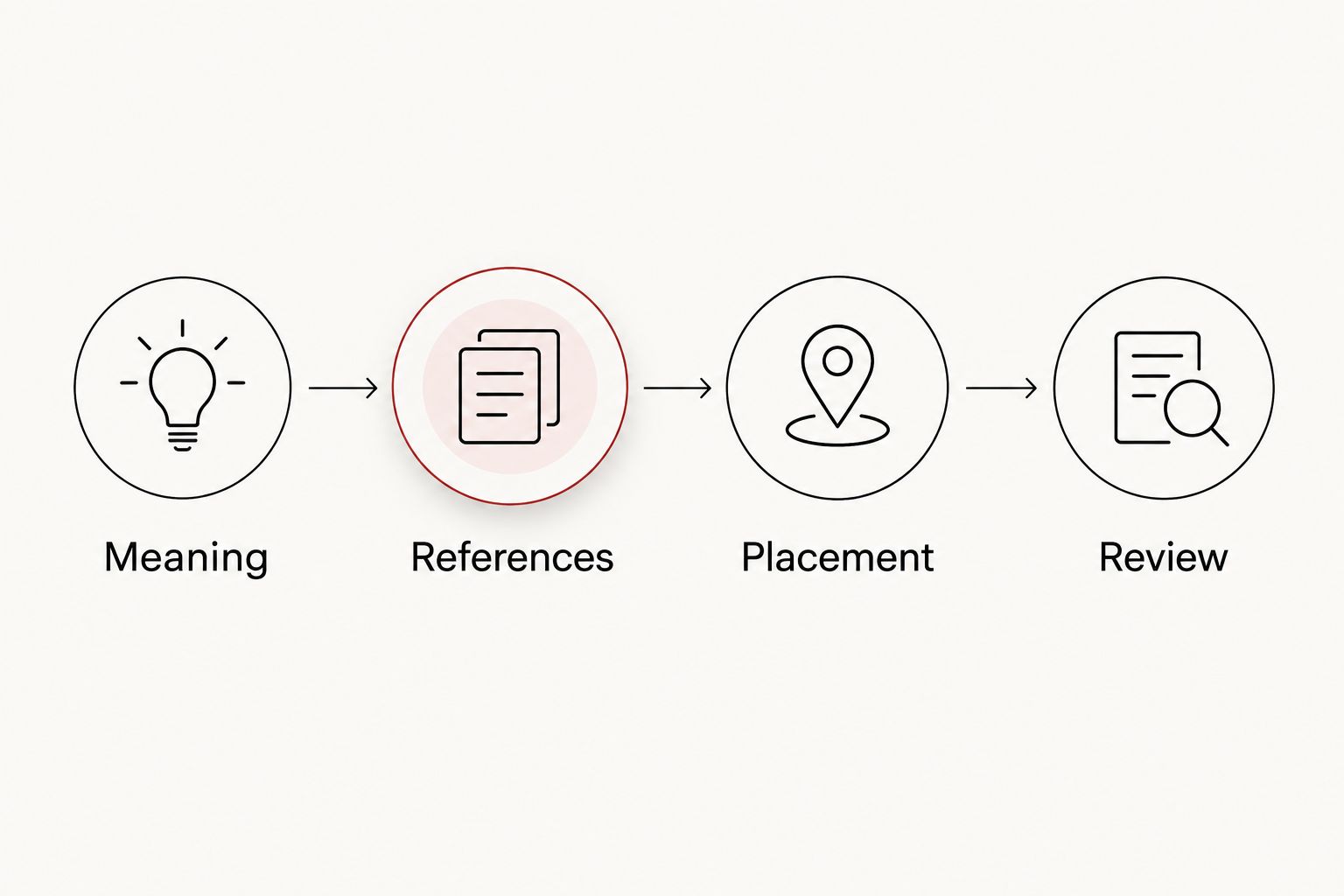
Prepare your consultation in this order:
- Meaning: Describe what the tattoo represents in a plain sentence.
- References: Bring images and explain what you like about each.
- Placement: Identify the body area and your visibility preference.
- Review: Check the drawing's focal point, boundaries, and readability.
These choices belong together. A subject that looks convincing in a large reference image still needs adjustment for your intended placement.
Before visiting a Las Vegas studio, confirm directions and consultation arrangements. Ask about hygiene procedures and aftercare, and review work relevant to your chosen technique. You should understand the design and the process without feeling pressured to proceed.
Plan your custom tattoo
Discuss your references, placement, and design direction with a Las Vegas tattoo studio.
Which custom tattoo idea should you choose?
Choose a personal-symbol composition if you are undecided. It gives you a clear starting point while leaving the style open for discussion. Choose a portrait when likeness matters, lettering when the words matter, and a cover-up-led composition when existing pigment determines the brief.
For your 2026 tattoo, bring a preferred direction and the reason behind it. You do not need a finished drawing to begin a useful conversation.
FAQ
What's the best custom tattoo design idea for men?
A personal-symbol composition is the best starting point when you want a flexible custom brief. Choose a meaningful main subject, then let placement and readability guide the supporting details.
How do I make a tattoo idea personal?
Use a reference connected to your own experience, relationship, or interests. Explain what it means and which details matter instead of asking an artist to copy an existing tattoo.
Are fine line tattoos a good choice for men?
Fine line tattoos are a valid choice for men who prefer restrained body art. The useful questions are whether the subject, scale, and placement support a clear design—not whether the style is masculine.
Should I choose tattoo placement before the design?
Choose your intended placement before finalizing the drawing. The available shape and space affect the composition, detail, and orientation.
Can a custom tattoo cover an old tattoo?
A custom cover-up must be designed around the existing tattoo. Its pigment, shape, and placement affect the options, so arrange an assessment before settling on a replacement image.
What should I bring to a custom tattoo consultation?
Bring clear references, a short explanation of the meaning, and your preferred placement. For portraits, provide clear photographs; for lettering, verify the exact text.
Where can I discuss custom tattoos in Las Vegas?
Illuminati Tattoo Co. offers custom tattoo design, fine line work, and tattoo cover-ups in Las Vegas. Confirm directions and consultation arrangements before visiting, and bring references relevant to your idea.
One last thing
Write down what you do not want: visible lettering, a busy background, unrelated symbols, or a design that blocks future additions. Exclusions make a brief more precise. Keep the meaning firm and the drawing open to informed revision.