Best overall: a custom botanical composition. Best for visual storytelling: a dragon back piece. Best for a restrained first design: a single-symbol shoulder-blade tattoo. These 10 back tattoo design ideas for 2026 compare placement, composition, and practical trade-offs so you can choose a direction before committing to the artwork.
- Botanical compositions lead these back tattoo design ideas for flexible placement and room to develop a custom tattoo.
- Choose a dragon for narrative detail, a mandala for symmetry, or a single symbol for a contained composition.
- Tattooilluminati suits Las Vegas clients seeking custom tattoos designed around their individual ideas.
- Decide on placement and overall coverage before choosing small decorative details.
Why this matters
A back tattoo needs more than an appealing reference image. Its shape must work with your shoulders, spine, and the amount of skin you want to leave open. A design that looks balanced on a flat page still needs a placement review on your body.
For your 2026 consultation, bring a clear description of what matters to you rather than asking for an exact copy. Tattooilluminati offers custom tattoo design, fine line work, and cover-ups in Las Vegas, with owner-operated service and an emphasis on a clean, hygienic studio.
What makes the best back tattoo design?
Use these criteria to judge the ideas below. The strongest choice meets your priorities without requiring details you do not actually want.
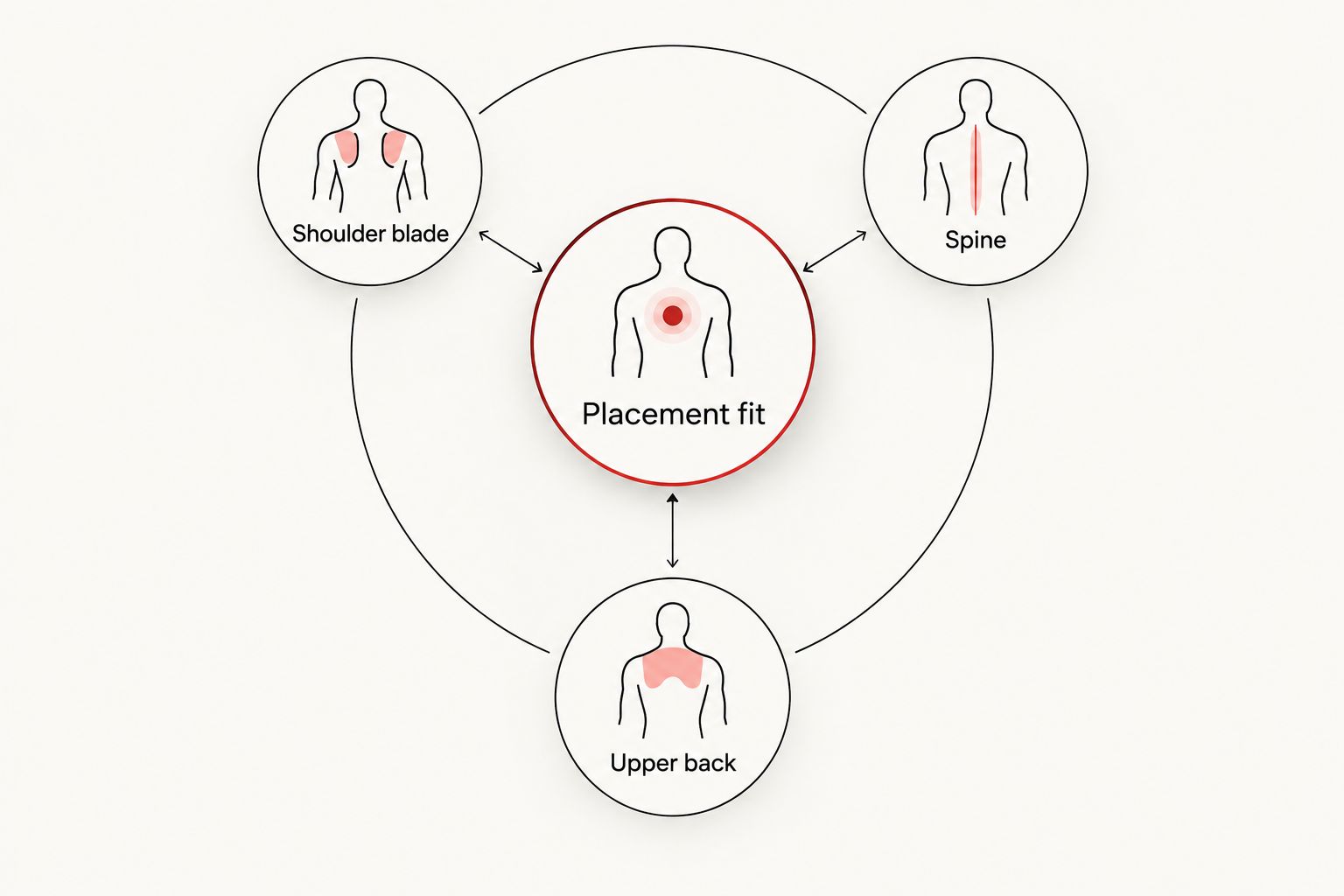
- Placement fit: The outline should suit your chosen area rather than end abruptly at an unintended boundary.
- Visual hierarchy: One main subject should remain identifiable without every detail competing for attention.
- Open space: Untattooed areas should contribute to the composition, not simply be leftover gaps.
- Personal meaning: Choose imagery you can explain in your own words, whether its meaning is personal or purely visual.
- Future flexibility: Decide whether this is a finished standalone tattoo or the beginning of a larger back piece.
Start with a location: shoulder blade, spine, upper back, or full back. Then choose the subject. Reversing that order can leave you trying to squeeze an unsuitable composition into a space you selected later.
Back tattoo design ideas at a glance
This 2026 shortlist ranks design directions, not finished drawings. Each option has a different strongest use case; the final artwork should be built around your body and preferences.
| Rank and idea | Best for | Standout feature | Key limitation |
|---|---|---|---|
| 1. Botanical composition | Flexible custom placement | Branching shapes follow different areas | Excess detail can crowd the design |
| 2. Dragon back piece | Visual storytelling | A moving body connects several areas | Small scales can overwhelm the main shape |
| 3. Mandala composition | Centered symmetry | Repeating geometry creates a clear center | Alignment needs careful review |
| 4. Single-symbol tattoo | A contained first back tattoo | One recognizable focal point | Limited room for a complex story |
| 5. Landscape scene | Remembering a meaningful place | Depth and horizon organize the image | Literal detail can become clutter |
| 6. Ornamental spine piece | A vertical composition | Repetition emphasizes length | Centering must be checked on your body |
| 7. Wing composition | Shoulder-to-shoulder framing | Paired forms emphasize width | Feather detail competes with open space |
| 8. Blackwork composition | Bold graphic contrast | Solid shapes establish a strong silhouette | Heavy coverage limits lighter additions |
| 9. Portrait composition | Honoring one person or animal | A face provides an immediate focal point | Reference quality constrains the design |
| 10. Script composition | Preserving meaningful words | Lettering makes the message explicit | Long passages complicate spacing |
1. Botanical composition: best for flexible custom placement
A botanical back tattoo uses flowers, leaves, stems, or branches to create movement. You can build it around a shoulder blade, extend it diagonally, or use a central arrangement without forcing every element into symmetry.
Choose plants because you like their forms or have a personal connection to them. You do not need to adopt a generic flower-meaning chart.
Botanical composition pros:
- Branching forms offer several placement directions.
- Flowers and leaves provide distinct focal and supporting shapes.
- Open areas can remain part of the finished design.
Botanical composition cons:
- Too many plant varieties weaken visual focus.
- Tiny overlapping petals can make the drawing harder to read.
Best for: A custom design that balances personal imagery with adaptable placement.
Verdict: Buy this concept if you want the strongest starting point for a personalized back tattoo.
2. Dragon back piece: best for visual storytelling
A dragon gives your artist a subject with a head, a moving body, and a clear direction. Those parts can connect the upper back to lower areas while keeping the composition focused on one creature.
Bring references for the features you prefer, not just a finished tattoo to reproduce. Discuss the head position before decorative scales or background elements.
Dragon back piece pros:
- The body creates movement across the back.
- One creature can anchor a large composition.
- Supporting clouds or other imagery can frame the subject.
Dragon back piece cons:
- Excessive scale detail competes with the silhouette.
- Combining unrelated visual traditions can produce an unclear brief.
Best for: A large narrative piece with a recognizable central subject.
Verdict: Buy this concept for storytelling; skip it if you want a quiet, minimal design.
3. Mandala composition: best for centered symmetry
A mandala-inspired composition organizes repeating forms around a center. It suits readers who prefer geometry and balance over a literal subject such as an animal or flower.
For your 2026 design review, compare the stencil while standing naturally. Your body is not a flat drawing surface, so judge the overall balance rather than expecting every viewing angle to look identical.
Mandala composition pros:
- A central point gives the eye a clear destination.
- Repeating shapes create a consistent visual language.
- Negative space can separate neighboring sections.
Mandala composition cons:
- Small alignment differences attract attention.
- Dense repetition can overwhelm the central shape.
Best for: A centered back tattoo built around geometry.
Verdict: Buy this concept if symmetry is your main priority.
4. Single-symbol tattoo: best for a contained first design
A single-symbol shoulder-blade tattoo focuses on one recognizable image: a personal emblem, a simple celestial shape, or an object that matters to you. The goal is a complete small composition, not a miniature version of a full-back piece.
Ask which details are essential. Removing decoration often makes the chosen symbol more intentional.
Single-symbol tattoo pros:
- One subject keeps the brief focused.
- Placement can remain confined to a selected area.
- A restrained outline leaves surrounding skin open.
Single-symbol tattoo cons:
- One image cannot communicate every part of a complex story.
- A generic reference needs customization to feel personal.
Best for: A first back tattoo with a clearly defined boundary.
Verdict: Buy this concept if you want one meaningful image rather than a large composition.
5. Landscape scene: best for remembering a meaningful place
A landscape tattoo translates a location into mountains, trees, water, architecture, or a simplified horizon. Choose the features that make the place recognizable to you instead of trying to reproduce every object in a photograph.
A panoramic layout suits an upper-back composition; a narrower scene needs a different crop. Decide which feature deserves the strongest contrast.
Landscape scene pros:
- A horizon gives the composition structure.
- Selected landmarks can carry personal meaning.
- Foreground and background offer distinct visual layers.
Landscape scene cons:
- Too many landmarks compete for attention.
- A photograph's crop does not automatically suit your back.
Best for: Commemorating a place without relying on lettering.
Verdict: Buy this concept when the location matters more than photographic completeness.
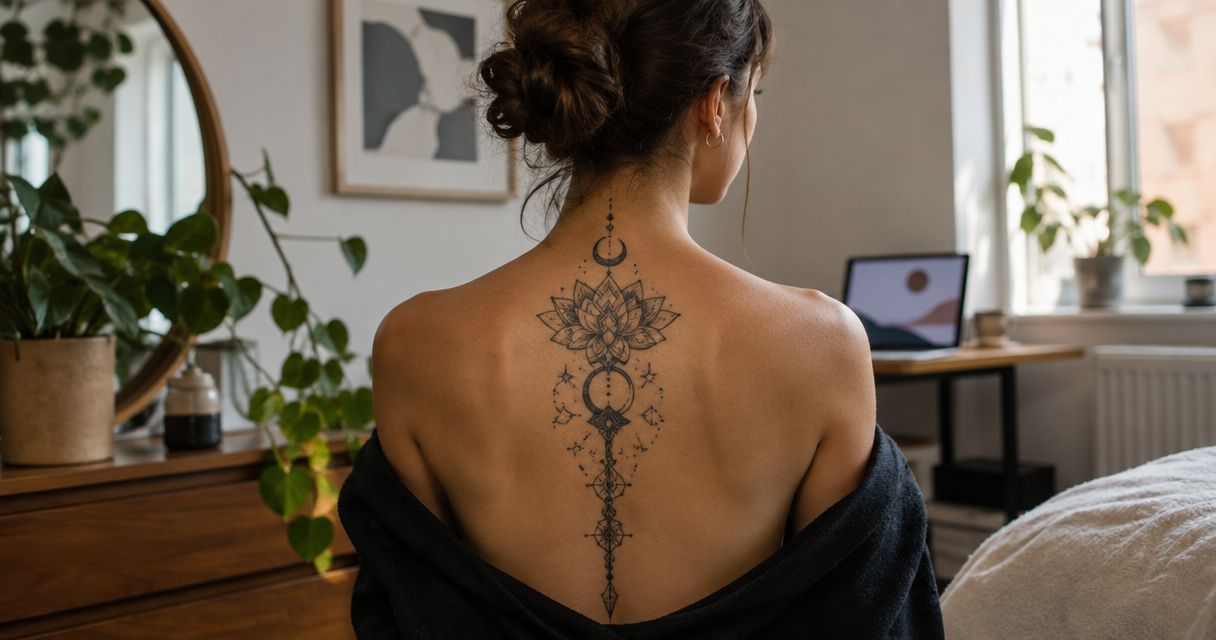
6. Ornamental spine piece: best for a vertical composition
An ornamental spine piece arranges decorative shapes along a vertical line. It can use pendants, repeated motifs, or connected forms without turning into a full-width back tattoo.
The important decision is where the composition begins and ends. Treat those endpoints as design choices, not spaces to fill after the central motif is finished.
Ornamental spine piece pros:
- A vertical structure gives the design clear direction.
- Repeated motifs create continuity.
- The sides of the back can remain open.
Ornamental spine piece cons:
- Centering requires an on-body review.
- Too many hanging details can distract from the main line.
Best for: A narrow design emphasizing length rather than width.
Verdict: Buy this concept for a vertical layout; hold if you have not chosen its endpoints.
7. Wing composition: best for shoulder-to-shoulder framing
Wings use paired forms to frame the upper back. Feathered, simplified, or ornamental interpretations each create a different balance between recognizable anatomy and decorative shape.
Decide whether you want a mirrored pair or deliberate asymmetry. Mixing those intentions halfway through the drawing makes the composition harder to resolve.
Wing composition pros:
- Paired shapes create clear upper-back framing.
- Feather groups offer repeating visual structure.
- The central gap can become intentional negative space.
Wing composition cons:
- Individual feathers can crowd a smaller layout.
- A rigid mirror-image drawing needs careful placement review.
Best for: A broad upper-back composition with paired focal forms.
Verdict: Buy this concept if shoulder-to-shoulder balance is the feature you want most.
8. Blackwork composition: best for bold graphic contrast
Blackwork uses substantial black shapes as a defining design element. Abstract forms, illustrative subjects, and geometric structures can all use this approach.
Plan the areas of solid black and open skin together. Do not treat blackwork as an automatic answer for covering an existing tattoo; cover-up suitability needs an individual assessment.
Blackwork composition pros:
- Strong silhouettes establish a clear graphic identity.
- Open skin can create deliberate contrast.
- Simplified shapes avoid dependence on tiny detail.
Blackwork composition cons:
- Heavy coverage restricts lighter additions within those areas.
- Large dark shapes demand a deliberate commitment to coverage.
Best for: Readers who prefer graphic impact over delicate detail.
Verdict: Buy this concept for bold contrast; hold if you remain uncertain about extensive coverage.
9. Portrait composition: best for honoring one subject
A portrait centers the design on a person or animal. The reference photograph shapes the available expression, angle, and visible detail, so choose it before requesting decorative framing.
Keep the face as the priority. Supporting flowers, dates, or objects should strengthen the tribute rather than compete with it.
Portrait composition pros:
- A face creates an immediate focal point.
- A selected expression makes the tribute specific.
- Supporting imagery can add personal context.
Portrait composition cons:
- An unclear reference limits visible information.
- Too many surrounding elements distract from the face.
Best for: A tribute built around one identifiable person or animal.
Verdict: Hold until you have a suitable reference and have reviewed relevant portrait work.
10. Script composition: best for preserving meaningful words
Script makes the message explicit through lettering. A short phrase can follow an upper-back line or form a compact composition without needing an additional illustration.
Confirm the wording yourself, including punctuation and any translation. Choose letterforms for readability at the intended size, not just how they look enlarged on a screen.
Script composition pros:
- Words communicate the intended message directly.
- Lettering offers several layout directions.
- A concise phrase can stand alone.
Script composition cons:
- Long passages complicate spacing and scale.
- Decorative flourishes can compete with readability.
Best for: A brief statement whose exact wording matters.
Verdict: Buy this concept for a concise phrase; hold until every character is confirmed.
How these ideas were ranked
The 2026 ranking prioritizes placement fit, visual hierarchy, open space, personal meaning, and future flexibility. Botanical work ranks first because its branching structure offers several composition directions; specialized choices rank lower because they depend on a narrower preference or a specific reference.
These are design recommendations, not results from a tattoo wear test. Your existing tattoos and intended coverage can change which option belongs first.
Which back tattoo design should you choose?
Choose a botanical composition if you are undecided. It gives the consultation a clear subject while leaving room to discuss placement, scale, and open skin. Choose a single symbol instead if your strongest preference is keeping the tattoo contained.
For a focused 2026 consultation, bring 3 reference images, request discussion of 2 placement options, and identify 1 focal subject. Those are preparation suggestions, not studio requirements. Explain what you like about each image so the custom design reflects your choices rather than copying someone else's tattoo.
Tattooilluminati is best for Las Vegas clients seeking custom back tattoos built around an individual design brief. Use the contact page to request directions and discuss visiting the owner-operated studio. Before tattooing, ask about preparation, hygiene practices, and aftercare; do not rush your decision.
FAQ
What's the best back tattoo design for a first tattoo?
A single-symbol shoulder-blade design is a focused starting point if you want limited coverage. Choose one recognizable subject and confirm its placement before adding decoration.
Are botanical back tattoos better than dragon tattoos?
Botanical back tattoos suit flexible placement, while dragon tattoos suit a larger narrative composition. The better choice depends on whether you prioritize adaptable shapes or one moving central subject.
Should I choose a full-back tattoo or an upper-back tattoo?
Choose an upper-back tattoo if you want the design confined to that area; choose a full-back concept if you want a larger connected composition. Discuss the overall boundaries before finalizing individual details.
Can a back tattoo cover an old tattoo?
A back tattoo cover-up needs an individual assessment of the existing ink and proposed design. Tattooilluminati offers tattoo cover-ups, but the suitability of a specific idea must be reviewed before you commit.
Does a spine tattoo have to be symmetrical?
A spine tattoo does not have to be symmetrical. It needs an intentional layout, whether that uses centered repetition or a deliberately offset composition.
What should I bring to a custom back tattoo consultation?
Bring selected reference images, your preferred placement, and a clear explanation of what you want the design to express. Mention existing tattoos and whether you want to leave room for future work.
Can I copy a back tattoo I found online?
Use an online tattoo as a reference rather than requesting an exact copy. Explain which shapes, linework, or composition choices appeal to you so your artist can develop an individual design.
One last thing
Your back tattoo should work when you are standing comfortably, not only when you pose for a photograph. Before approving placement, ask to review the stencil with your arms relaxed and from more than one angle. Approve the overall silhouette before focusing on the smallest details.