No—you should not swim after getting a tattoo until the skin has fully healed, with no open areas, scabs, peeling, or drainage. For your 2026 plans, keep pools, hot tubs, lakes, and the ocean off the schedule during healing; a waterproof dressing does not make submersion safe.
- Can you swim after getting a tattoo? No—wait until the skin has fully healed before submerging it.
- Pools, oceans, lakes, and hot tubs expose healing tattoos to irritation and infection risks.
- Waterproof tattoo dressings protect healing skin but do not provide permission to swim.
- Illuminati Tattoo Co. offers custom tattoo design in Las Vegas; discuss swimming plans before your appointment.
Why this matters
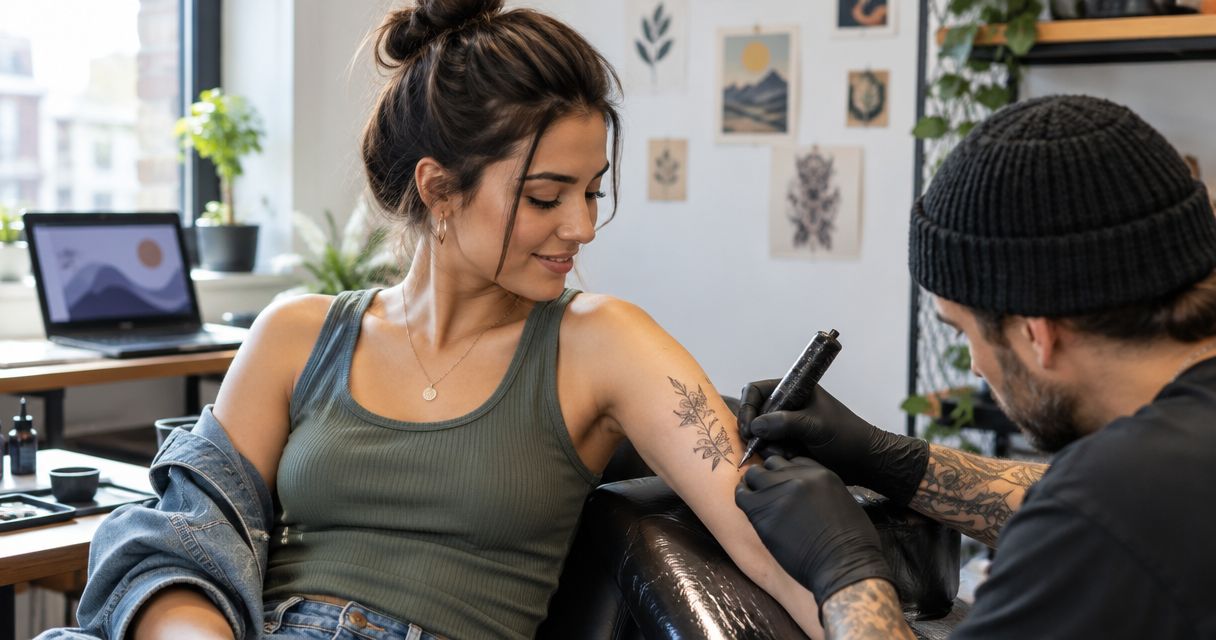
A fresh tattoo is a healing skin wound, not just finished artwork. Swimming adds prolonged moisture, exposure to microorganisms, and friction from clothing or equipment before the skin has recovered.
For Las Vegas clients planning a pool visit or vacation in 2026, the practical decision happens before the appointment: schedule the tattoo around your swimming plans, rather than trying to waterproof a healing tattoo afterward. Illuminati Tattoo Co. offers custom tattoo design, fine line work, tattoo cover-ups, and professional body piercing services.
The same swimming restriction applies whether your tattoo is a small outline or a larger custom piece. Looking simple does not make fresh skin ready for immersion.
Can you swim after getting a tattoo?
You can swim after a tattoo has fully healed—not simply after it stops hurting or reaches a particular date. Follow your artist’s aftercare instructions, and ask for guidance if you cannot tell whether the surface has healed.
The distinction is exposure. A brief, gentle shower cleans your skin without the extended soaking involved in swimming or bathing; it is not permission to scrub the tattoo or direct a strong stream at it.
| Water exposure | Best for | Benefit | Limitation while your tattoo heals |
|---|---|---|---|
| Brief shower | Routine hygiene | Lets you clean without prolonged immersion | Follow dressing instructions; avoid scrubbing and strong direct spray |
| Swimming pool | Recreation after healing | Provides a place to swim | Chlorinated water is not sterile and can irritate healing skin |
| Ocean or lake | Open-water recreation after healing | Lets you return to outdoor swimming | Natural water exposes broken skin to microorganisms |
| Hot tub | Soaking after healing | Provides warm-water relaxation | Heat, prolonged soaking, and microbial exposure make it unsuitable during healing |
| Bathtub | Bathing after healing | Allows immersion at home | Home bathwater is not sterile, and soaking softens healing skin |
Use the tattoo aftercare timeline to understand the healing process, but do not treat any calendar estimate as clearance to swim. Your skin’s condition determines the next step.
How do you know your tattoo is ready for swimming?
Check the skin, not just the appearance of the ink. A tattoo can look attractive while the surface is still peeling or vulnerable to irritation.
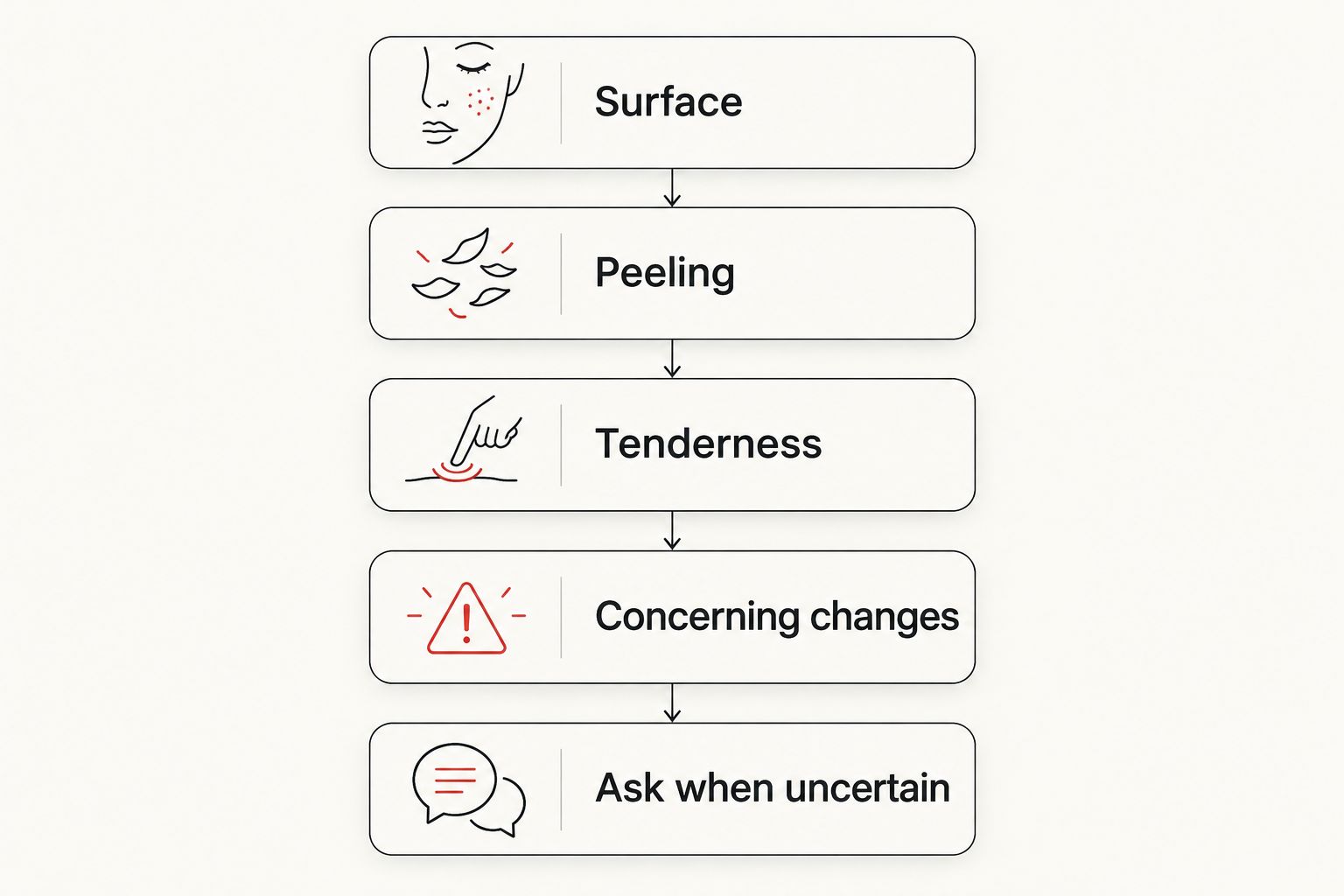
Use these checks before returning to the water:
- Check the surface. There should be no open areas, cracks, scabs, or drainage. Do not pick away a remaining scab to make the tattoo appear healed.
- Check for peeling. Wait while skin is actively flaking or shedding. Loose skin is not something to scrub off before a swim.
- Check how it feels. Persistent tenderness, unusual warmth, or worsening discomfort needs attention rather than a waterproof covering.
- Check for concerning changes. Spreading redness, swelling that worsens, pus, or fever calls for medical advice—not a swimming decision.
- Ask when uncertain. Your artist can explain normal aftercare expectations. A healthcare professional should assess suspected infection or other medical complications.
These checks identify reasons to wait; they do not replace an examination when something looks wrong. Deeper skin recovery also continues after the surface improves, so follow the instructions given for your specific tattoo.
Why swimming readiness varies
There is no universal swim date that fits every tattoo. Your 2026 vacation itinerary cannot determine how quickly your skin repairs itself.
The factors that matter include:
- Amount of skin worked. A larger tattoo or densely worked area creates a different healing situation from a small, lightly worked design.
- Placement and friction. Waistbands, swimwear straps, shoes, and repeated movement can rub the tattoo and interfere with recovery.
- Current skin condition. Remaining scabs, peeling, open areas, or drainage mean the surface is not ready for immersion.
- Aftercare and irritation. Picking, scrubbing, soaking, or using irritating products can disrupt healing.
- Individual health. Conditions or medications that affect wound healing require advice from your healthcare professional.
- Complications. Infection, an allergic reaction, or persistent inflammation changes the situation and needs medical assessment.
Do not compare your healing tattoo with someone else’s holiday photos. A friend’s uneventful swim does not establish that the same choice is safe for your skin.
Can you swim with a waterproof tattoo bandage?
No—a waterproof tattoo bandage does not make swimming with a fresh tattoo safe. A dressing’s role in aftercare is different from protection during prolonged immersion.
Edges can lift, movement can affect the seal, and water that enters can remain against the skin. You also cannot assume that a dressing marketed for showering is intended for swimming.
Follow the specific dressing instructions and your artist’s advice about showering, removal, and replacement. Do not add household plastic wrap, tape, or another improvised layer to create a swimming cover.
If water enters beneath a dressing, follow the product’s instructions and contact your artist for guidance. Do not leave contaminated water trapped against the tattoo while you finish a pool session.
Is a pool safer than the ocean for a new tattoo?
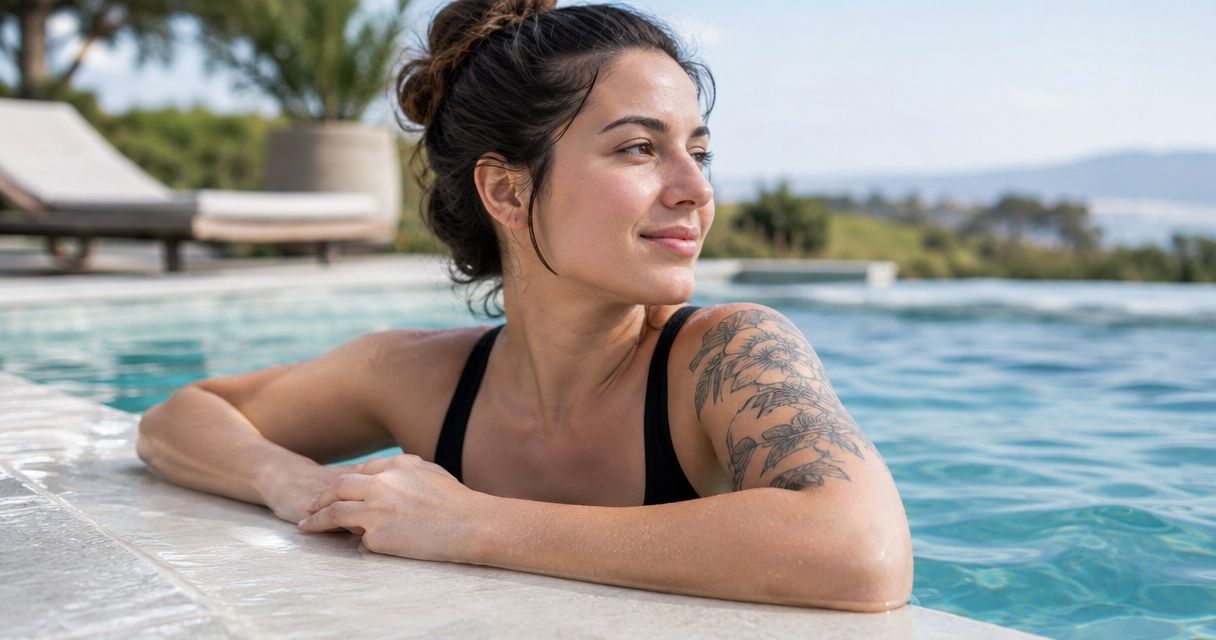
Neither a pool nor the ocean is appropriate for a tattoo that is still healing. Chlorine does not turn a swimming pool into a sterile environment, and saltwater does not disinfect a fresh tattoo.
Pool chemicals can irritate vulnerable skin. Natural water adds exposure to microorganisms, while sand, swimwear, and equipment can create friction around the tattoo.
The ocean also deserves particular caution because some bacteria in coastal waters can infect open wounds. Anyone with a condition that increases infection risk should discuss water exposure with a healthcare professional.
Choose neither until the tattoo has healed. The useful comparison is not which water seems cleaner; it is whether your skin is ready to be submerged at all.
What should you do if you accidentally swim?
Accidental exposure does not mean your tattoo will definitely become infected or damaged. It does mean you should stop the exposure and return to careful aftercare.
- Leave the water. Do not continue swimming because the tattoo is already wet.
- Clean gently. Follow your artist’s washing instructions using clean running water and the recommended cleanser.
- Dry carefully. Pat dry with a clean disposable towel rather than rubbing or scrubbing.
- Check the dressing. If you are wearing an adhesive film, follow its instructions for leakage, removal, and replacement.
- Watch for changes. Seek medical advice for spreading redness, increasing pain, unusual warmth, pus, or fever.
Do not try to disinfect the tattoo with alcohol, peroxide, or pool chemicals. These are not substitutes for appropriate wound care and can irritate healing tissue.
Severe pain, rapidly spreading skin changes, fever, or feeling seriously unwell needs prompt medical assessment. Tell the clinician that the tattoo was exposed to recreational water, including whether it was a pool, hot tub, lake, or ocean.
How should you plan a tattoo around a swimming trip?
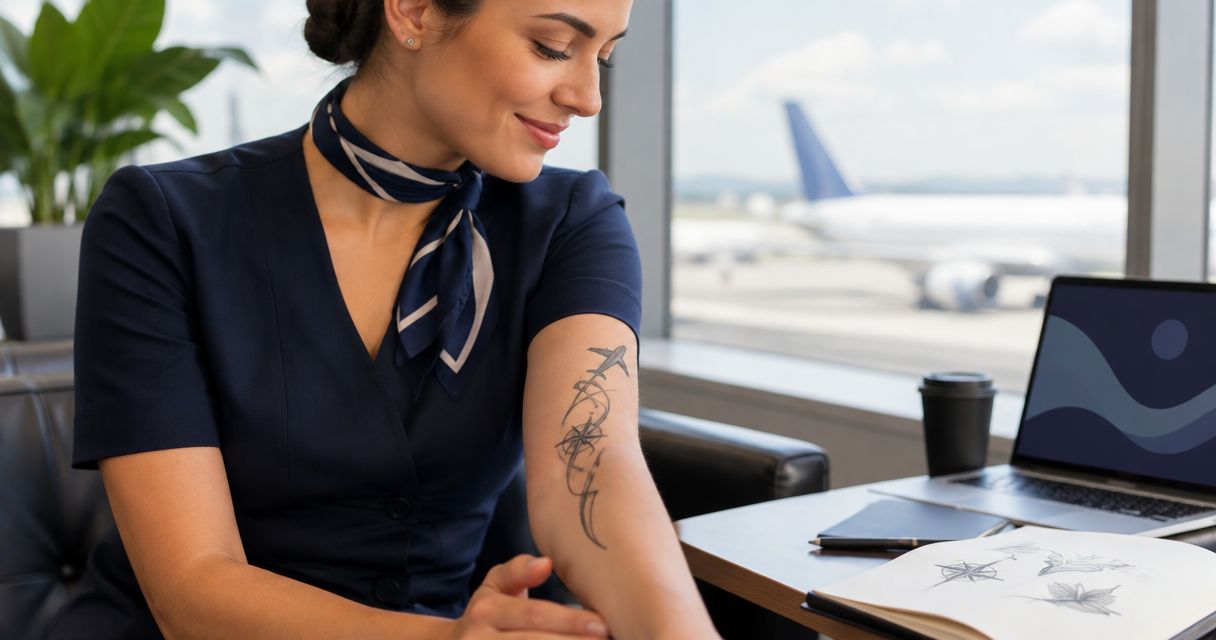
For a 2026 pool holiday, the simplest plan is to get tattooed after the swimming portion of your trip. That removes the pressure to judge healing against a fixed departure date.
If you want the tattoo beforehand, tell your artist about the trip before booking. Explain whether you expect to swim, soak, wear tight equipment, or spend extended time outdoors.
Also consider your return. Sunburned or irritated skin needs attention before a tattoo appointment; do not assume you can move directly from an intense beach day into getting tattooed.
Illuminati Tattoo Co. offers custom tattoo design for Las Vegas clients who want artwork built around their ideas. The benefit is personal design choice; the practical constraint is that a custom tattoo still requires time away from swimming while it heals.
Before visiting the studio, get current directions from the website and bring your travel schedule along with your design references. That gives the appointment discussion a useful starting point without assuming a particular booking slot or healing deadline.
What changes once your tattoo has healed?
Once the skin has healed and your aftercare guidance allows swimming, return without treating the tattoo as indestructible. Rinse after swimming, dry gently, and pay attention to irritation from swimwear or equipment.
Sun protection becomes a separate concern. The American Academy of Dermatology recommends broad-spectrum, water-resistant sunscreen with SPF 30 or higher to help protect tattooed skin from ultraviolet exposure; sunscreen belongs on healed skin, not an open tattoo wound.
For outdoor swimming in 2026, follow the sunscreen label’s reapplication directions, including after swimming or towel drying. Shade and suitable clothing also help reduce sun exposure.
A healed tattoo that becomes irritated after swimming deserves a break from the activity. Persistent or worsening symptoms need assessment rather than repeated exposure and extra products.
FAQ
Can you swim after getting a tattoo if it does not hurt?
No—absence of pain does not confirm that a tattoo has healed. Wait until there are no open areas, scabs, peeling, or drainage, and follow your artist’s aftercare guidance.
Can I swim with a small fine line tattoo?
No—a small fine line tattoo still needs to heal before swimming. A small design does not eliminate the skin wound or its exposure to irritation and microorganisms.
Can I keep my new tattoo above the pool water?
Keeping a tattoo dry avoids immersion, but sitting in a pool creates opportunities for splashes, accidental submersion, and rubbing. Staying out of the pool is the safer choice during healing.
Does saltwater help a new tattoo heal?
No—ocean water is not a sterile aftercare solution and should not be used to treat a new tattoo. Keep a healing tattoo out of natural bodies of water.
Can I put sunscreen on a fresh tattoo before swimming?
No—sunscreen does not make a fresh tattoo safe for swimming, and it should not be applied to an open tattoo wound. Once the skin has healed, use appropriate sun protection according to the product label.
Should I ask my tattoo artist or a doctor about redness?
Ask a healthcare professional about spreading redness, increasing pain, unusual warmth, pus, or fever. Illuminati Tattoo Co. can explain tattoo aftercare, but suspected infection requires medical assessment.
When should I book a tattoo around my 2026 beach vacation?
Booking after the swimming portion of your 2026 beach vacation avoids having to fit healing into a fixed travel deadline. Discuss your itinerary before the appointment and avoid arriving with sunburned or irritated skin.
One last thing
A tattoo that looks finished is not necessarily finished healing. The design is complete when the artist puts down the equipment; your skin still has repair work to do.
If swimming is the part of a trip you do not want to miss, change the tattoo appointment—not the aftercare rules. That decision protects both your health and the artwork you chose.