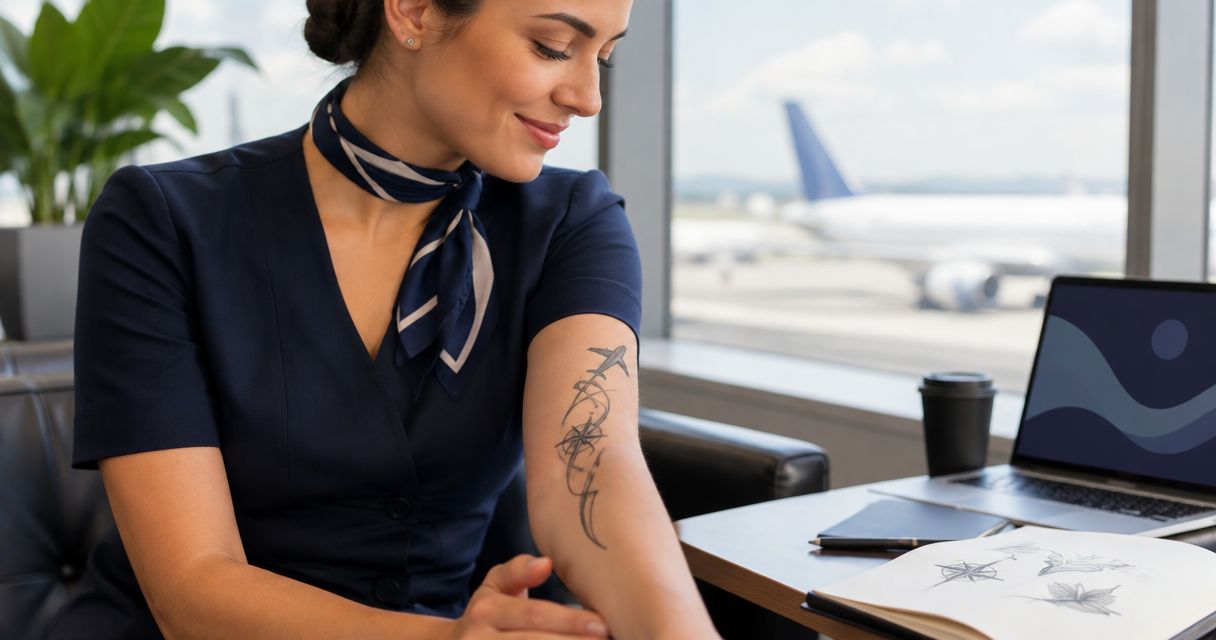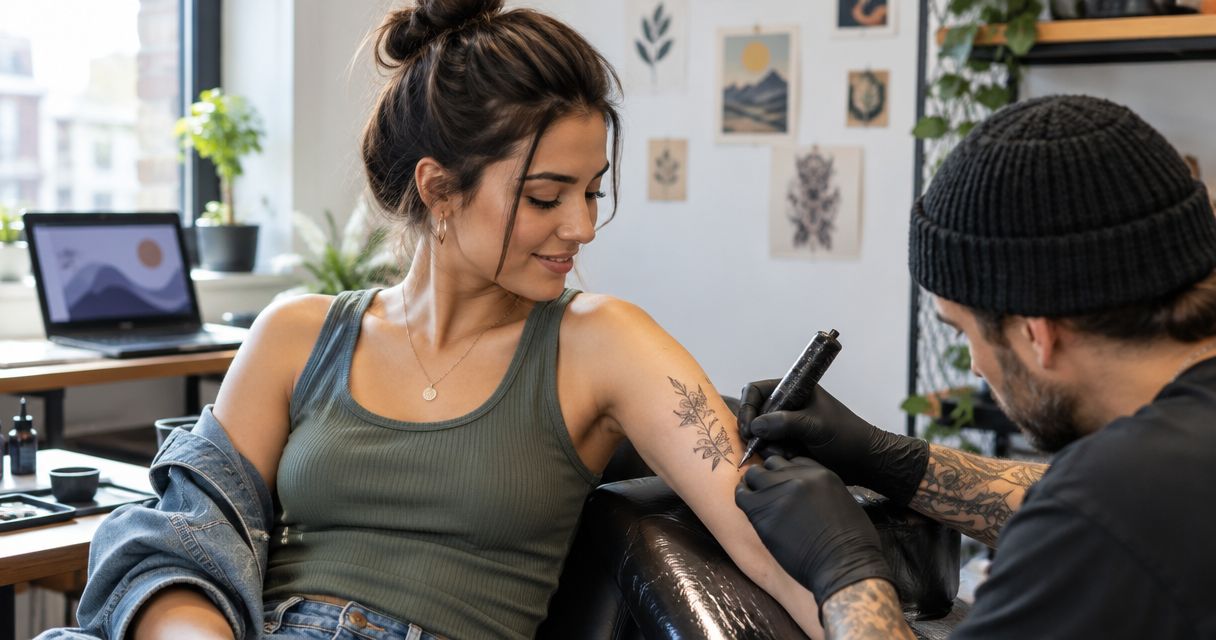
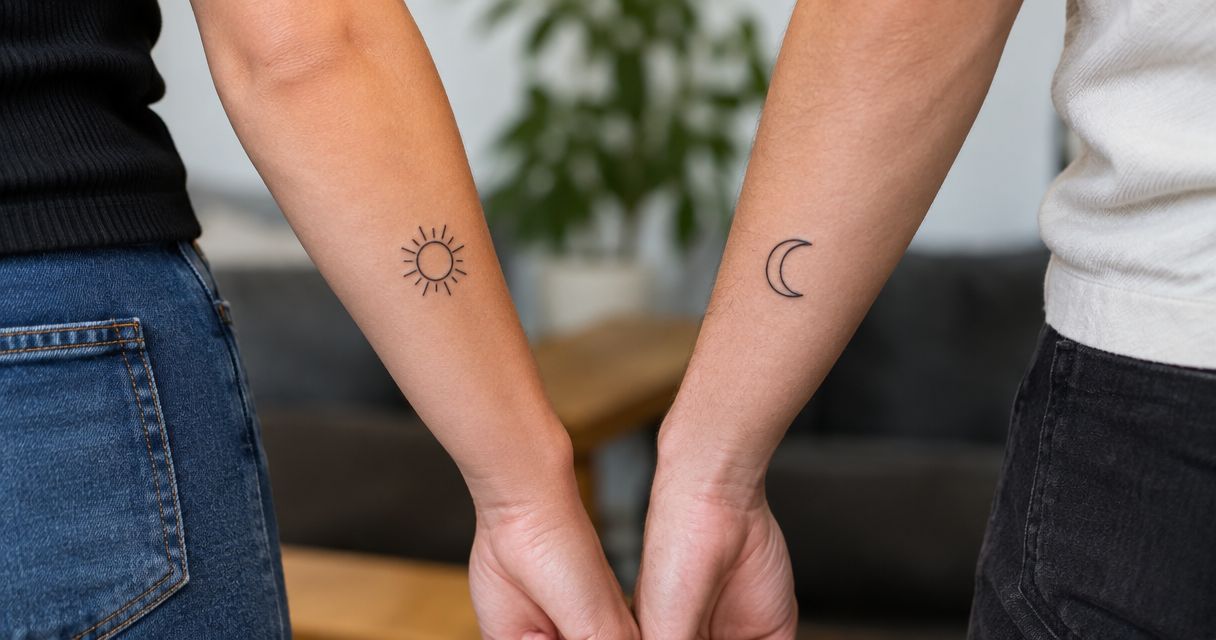
Best overall: complementary symbols. Best for discreet matching: a shared single-line motif. Best for 3 or more siblings: modular geometric shapes. These 9 matching tattoo ideas for siblings in 2026 give each person a design that connects to the others without depending on them to make sense.
- Complementary symbols are the best matching tattoo ideas for siblings who want personal designs with a clear connection.
- A shared single-line motif suits siblings who want subtle matching ink; a split illustration suits a pair who want an obvious connection.
- Modular geometric shapes work for 3 or more siblings because each person can wear a distinct part of one design system.
Why this matters
A sibling tattoo has to satisfy more than one person. If one sibling wants a visible illustration and another wants a quiet mark, identical artwork forces a compromise neither may enjoy. For custom sibling tattoos in Las Vegas, Tattooilluminati offers a way to discuss a shared concept while treating each person's design as an individual tattoo.
The strongest choice is one you can recognize as yours when your siblings are not beside you. Decide what connects the tattoos first: a symbol, a place, a drawing style or a piece of shared artwork. Then let each person choose a version they want to wear.
What makes the best matching tattoo ideas for siblings
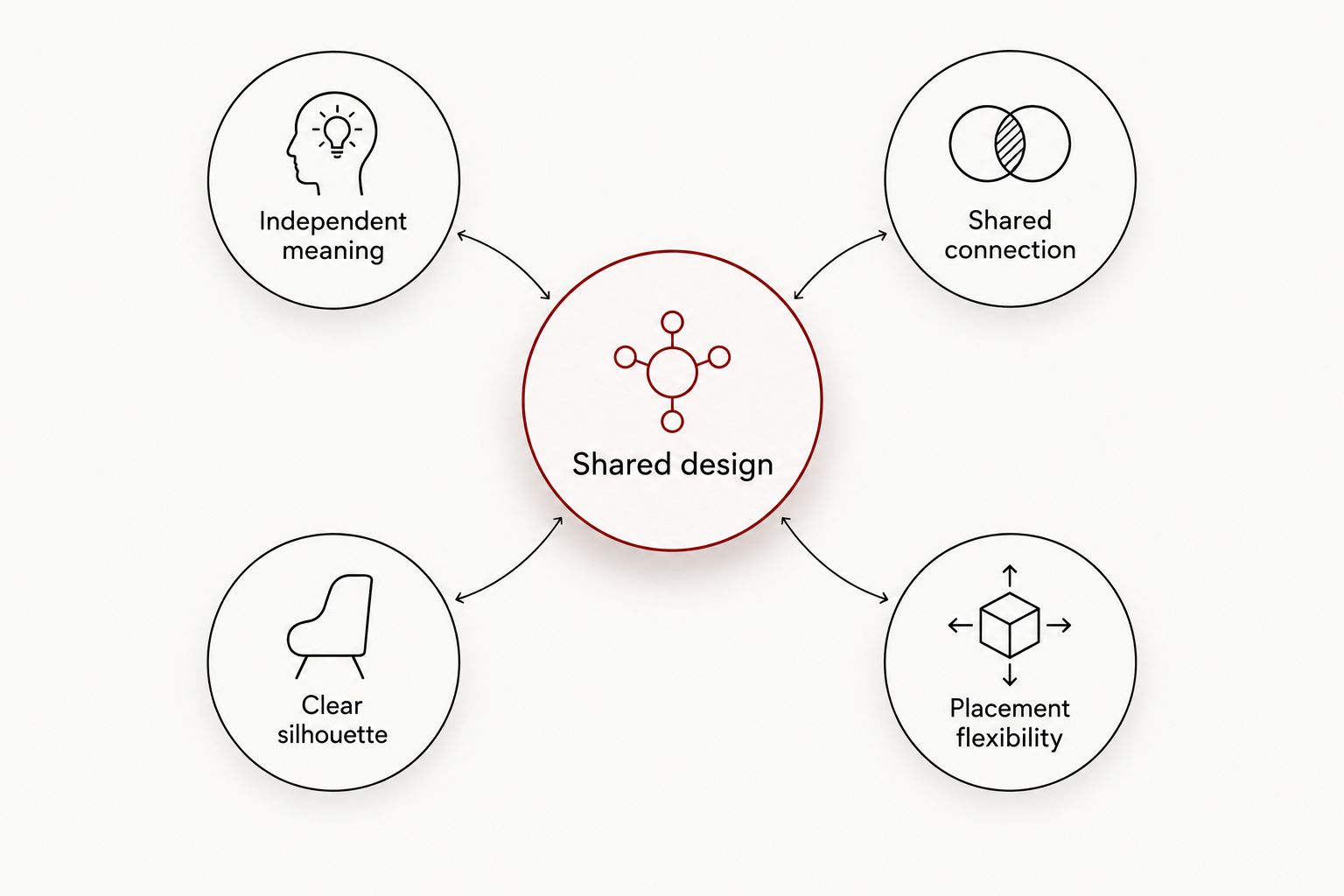
Use these criteria before settling on a reference image. A shared design needs a connection, but it also has to work on each person's body.
- Independent meaning: Each tattoo should make sense when viewed alone, even if its fuller story belongs to the family.
- Shared connection: The relationship between the tattoos should be intentional, whether they match exactly or use related elements.
- Clear silhouette: The main shape should remain understandable without relying on tiny details or a lengthy explanation.
- Placement flexibility: Each sibling should be able to discuss a placement that suits their own preferences.
- Personal input: A custom design should leave room for different tastes rather than requiring everyone to accept the same image.
These criteria favor adaptable concepts over designs that only work in one pose or require every sibling to choose identical placement. Bring the idea to an artist as a starting point, not as a finished stencil.
The 9 ideas at a glance
| Idea | Best for | Standout feature | Key limitation |
|---|---|---|---|
| Complementary symbols | Different personalities | Related, nonidentical images | The connection needs explanation |
| Shared single-line motif | Discreet matching | One visual language | Fine detail needs careful planning |
| Split illustration | A connected pair | Artwork joins visually | Each half must work alone |
| Birth flowers | Family roots | Personal botanical choices | Meanings vary by source |
| Meaningful coordinates | A shared place | One location ties the tattoos together | The location can be personally revealing |
| Handwritten word | A family voice | Preserves distinctive lettering | The source must be chosen carefully |
| Shared constellation | A sky-inspired connection | Recognizable star pattern | Accuracy and clarity need review |
| Modular geometric shapes | 3 or more siblings | A system that allows variation | Can feel impersonal without a story |
| Coordinated cover-up concepts | Siblings with existing ink | Connects new work to old tattoos | Existing ink limits design choices |
1. Complementary symbols: best for different personalities
Choose symbols that belong together without making every sibling wear the same image. A shared memory might become related objects or distinct parts of a scene; the connection comes from the story and the drawing style. This is the strongest default because each sibling can have a recognizable tattoo that reflects their own taste.
Keep the symbols equally deliberate. If one is detailed and the other feels like an afterthought, the pair will not look considered even when the meanings match.
Complementary symbols pros:
- Each person has room to choose an image they genuinely like.
- Related linework can connect tattoos without identical placement.
- Each tattoo can stand alone.
Complementary symbols cons:
- The family connection is not always obvious to strangers.
- An overly abstract pairing can lose its meaning over time.
Best for: Siblings with distinct preferences who still want a shared visual idea. Verdict: Buy if everyone can name the connection and likes their own symbol independently.
2. Shared single-line motif: best for discreet matching
A single-line motif repeats one simple form across the sibling group. Think of a continuous curve, a small outline or a simplified object rather than a crowded miniature scene. The tattoos can match exactly or use small, agreed variations while keeping the same visual language.
Small does not mean effortless. Discuss the linework and placement with the artist instead of assuming every reference image will translate clearly to skin.
Shared single-line motif pros:
- The connection is easy to recognize when the tattoos sit together.
- A simple shape leaves little room for competing interpretations.
- Each sibling can discuss a placement that suits them.
Shared single-line motif cons:
- It offers less room for individual storytelling than separate symbols.
- Details that look clear on a screen need to be assessed at tattoo size.
Best for: Siblings who want their tattoos to match without choosing a large illustration. Verdict: Buy if the shared shape matters more than individual variation.
3. Split illustration: best for a connected pair
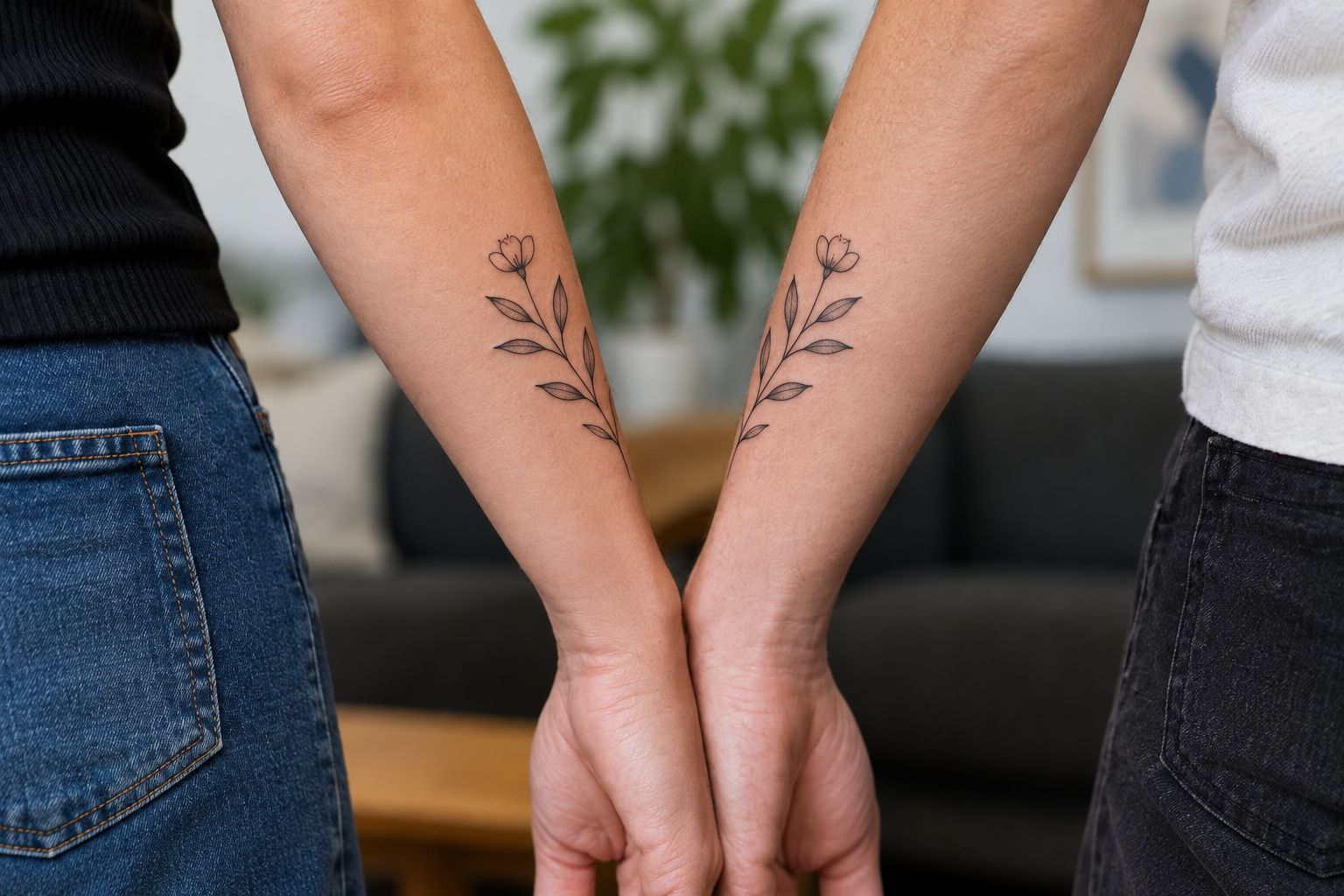
A split illustration divides one image into 2 tattoos, giving each sibling a distinct half. The complete picture appears when the pair is shown together. Choose a composition in which both pieces still look intentional on their own; an unfinished-looking half is a poor everyday tattoo.
A split illustration also requires agreement about what belongs in each part. Sketch both halves as separate tattoos before judging the combined image.
Split illustration pros:
- The relationship is immediately visible when the tattoos meet.
- Each sibling gets a distinct piece of the artwork.
- A custom drawing can reflect a specific shared idea.
Split illustration cons:
- One half can look incomplete without careful composition.
- It is less adaptable when siblings prefer very different styles.
Best for: A pair who wants the connection itself to be part of the artwork. Verdict: Hold until both halves work as separate tattoos.
4. Birth flowers: best for family roots
Birth flowers give siblings a botanical theme with room for individual choices. Each person can select a flower connected to their birth month, or the group can choose flowers tied to a family memory. Ask for a consistent drawing style so the tattoos read as a set, even when the flowers differ.
Birth-flower lists do not always assign the same flower to a month. Agree on the flowers and their meaning before the design begins; the shared decision is more useful than treating one list as definitive.
Birth flowers pros:
- Each sibling can have a different flower within one theme.
- Botanical forms suit both simple and more detailed artwork.
- The meaning can be personal without appearing literal.
Birth flowers cons:
- Birth-month associations vary by source.
- Different flowers can look disconnected if their drawing styles clash.
Best for: Siblings who want individual designs linked by family history. Verdict: Buy when everyone agrees on the chosen flowers, not just the theme.
5. Meaningful coordinates: best for a shared place
Coordinates tie each tattoo to a location: a family home, a place you grew up together or another setting with a clear shared meaning. You can all choose the same location while discussing different arrangements and placements. Confirm the exact point before committing to the design.
Consider whether you want that location readable on your skin. A symbolic drawing of the place is another route if the location feels too private to display as coordinates.
Meaningful coordinates pros:
- The link between the tattoos is precise and personal.
- The design can remain visually restrained.
- Siblings can share a location without wearing identical compositions.
Meaningful coordinates cons:
- A precise location can reveal information you would rather keep private.
- A transcription error changes the reference.
Best for: Siblings whose shared story centers on one place. Verdict: Hold until everyone has checked the location and is comfortable displaying it.
6. Handwritten word: best for a family voice
A handwritten word can preserve the way a family member wrote a name, phrase or familiar expression. The source is the design: use writing you have permission to reproduce, then decide whether every sibling wants the same word or a different word from the same note. Compare each version at the size you intend to wear.
Do not choose handwriting only because it looks personal. If the word or its source does not mean something to the group, a clearer symbol will usually make a stronger sibling tattoo.
Handwritten word pros:
- The lettering can carry a direct family connection.
- The same source can support different individual choices.
- Each tattoo tells its story without a complex illustration.
Handwritten word cons:
- Some handwriting is difficult to read at a small size.
- Not every sibling will want to wear text.
Best for: Siblings who share a meaningful written keepsake. Verdict: Buy if the source matters to everyone and the lettering remains legible.
7. Shared constellation: best for a sky-inspired connection
A constellation gives siblings a common pattern they can interpret with different linework or surrounding details. Decide whether you want an identifiable constellation or simply a star arrangement inspired by a shared memory. Those are different briefs, and the distinction matters when you review the drawing.
If accuracy is part of the meaning, verify the star pattern before approving the tattoo. If the arrangement is symbolic, focus on whether it reads clearly without an explanation of every point.
Shared constellation pros:
- One pattern can connect several different compositions.
- Siblings can choose restrained or more illustrative versions.
- The design does not depend on matching placement.
Shared constellation cons:
- A sparse pattern can look generic without a personal connection.
- Small points and connecting lines need careful review for clarity.
Best for: Siblings who share a meaningful connection to the night sky. Verdict: Hold until the chosen pattern has a specific reason to belong to your family.
8. Modular geometric shapes: best for 3 or more siblings
A modular design starts with a shared set of shapes. Each sibling wears a different arrangement, while the same forms and drawing style keep the group connected. It avoids the problem of dividing one image into pieces that leave some siblings with less satisfying tattoos.
Agree on the visual rules together: which shapes repeat, what changes and what stays consistent. Give each arrangement its own meaning rather than assigning pieces without asking who wants to wear them.
Modular geometric shapes pros:
- The system accommodates a larger sibling group.
- Each tattoo can look complete on its own.
- Individual arrangements allow different preferences.
Modular geometric shapes cons:
- The family connection can be hard to recognize at first glance.
- Geometry alone can feel impersonal without a shared story.
Best for: Groups of 3 or more siblings who want coordinated but nonidentical tattoos. Verdict: Buy when each person has a distinct arrangement they would choose for themselves.
9. Coordinated cover-up concepts: best for existing ink
If a sibling already has a tattoo they want to change, a new shared concept can start with that existing ink rather than ignoring it. The others can choose related new designs, but the cover-up must be planned around what is already on the skin. Tattooilluminati offers cover-up work alongside custom tattoo design, making this a relevant idea to discuss at a consultation.
The existing tattoo sets real constraints on the artwork. Bring a clear view of it to the discussion, and let the artist assess which elements of the shared concept fit the cover-up.
Coordinated cover-up concepts pros:
- The group can connect new artwork with an existing tattoo decision.
- Each sibling can still have an individual design.
- The concept starts with the practical needs of the person getting the cover-up.
Coordinated cover-up concepts cons:
- Existing ink limits what the cover-up can include.
- The cover-up and the new tattoos may need different compositions to feel connected.
Best for: Siblings planning new matching tattoos when someone also wants to change existing ink. Verdict: Wait for an artist's assessment before choosing the shared artwork.
How these ideas were ranked
The 2026 ranking puts independent meaning first, followed by a recognizable connection and room for personal choice. Complementary symbols lead because each sibling can keep a distinct design. A split illustration ranks lower for general use because its 2 pieces demand more careful planning to work separately; a coordinated cover-up serves a narrower situation because existing ink shapes the brief.
The table is a decision aid, not a claim that one style fits every family. Use the Best for labels to narrow the list, then take your preferred idea and your objections to a tattoo artist.
Which matching tattoo idea should you choose?
Choose complementary symbols if you are undecided. They give siblings a shared story without requiring identical artwork, identical placement or the same taste in imagery. For discreet matching, choose a shared single-line motif; for 3 or more siblings, begin with modular geometric shapes.
Tattooilluminati offers custom tattoo design in Las Vegas, so bring the group’s preferred concept and let each person explain what they want to wear. If your plans include a cover-up, discuss the existing tattoo before asking the group to settle on final artwork.
Plan your sibling tattoo visit
Explore custom tattoo options before visiting the Las Vegas studio.
FAQ
What are the best matching tattoo ideas for siblings in 2026?
Complementary symbols are the best starting point for siblings who want a shared meaning and individual designs. A shared single-line motif suits discreet matching, while modular geometric shapes suit larger groups.
Do sibling tattoos have to be identical?
No, sibling tattoos can share a symbol, theme or drawing style without being identical. Each design should still make sense to the person wearing it.
What matching tattoo works for 3 or more siblings?
Modular geometric shapes give 3 or more siblings distinct tattoos built from the same visual elements. Agree on the shared rules, then let each person choose an arrangement they like.
Are split tattoos a good idea for siblings?
Split tattoos work best when both halves look complete on their own. Review each sibling’s design separately before judging the combined picture.
Can siblings get matching tattoos in different places?
Yes, a shared motif or related symbols can connect sibling tattoos without identical placement. Discuss each placement with the artist as part of the design.
Can a sibling tattoo also cover an older tattoo?
A coordinated cover-up concept is an option to discuss with an artist, but the existing tattoo affects the design. Have the artist assess the old ink before the group commits to shared artwork.
How do we choose between identical and complementary sibling tattoos?
Choose identical tattoos when everyone genuinely wants the same image. Choose complementary designs when siblings share a meaning but prefer different artwork.
One last thing
Before your 2026 studio visit, ask each sibling to describe their chosen tattoo without mentioning the others. If anyone struggles to explain why they want their own design, keep working on the idea. Tattooilluminati can help turn a shared concept into custom artwork, but every sibling should be comfortable wearing their part of it.