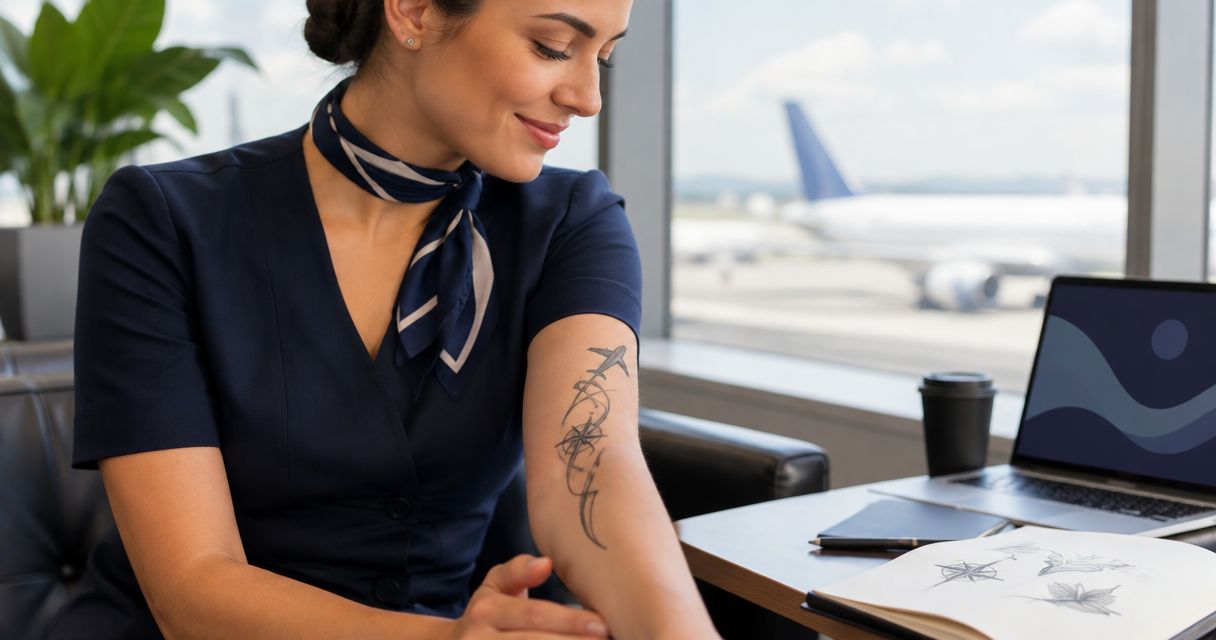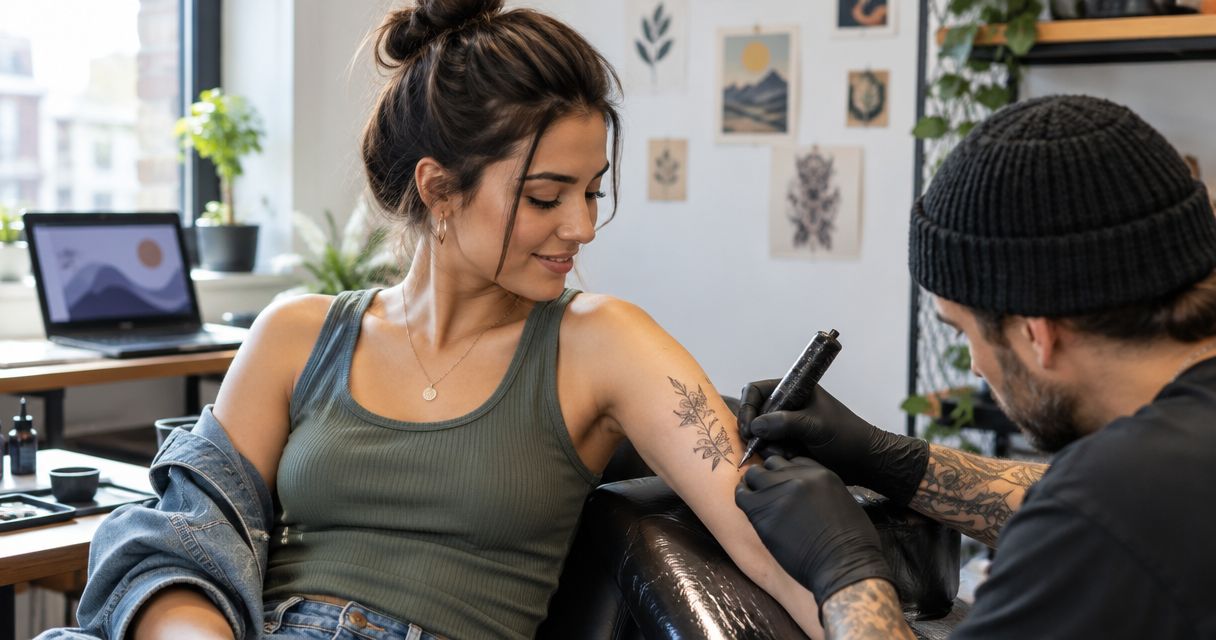
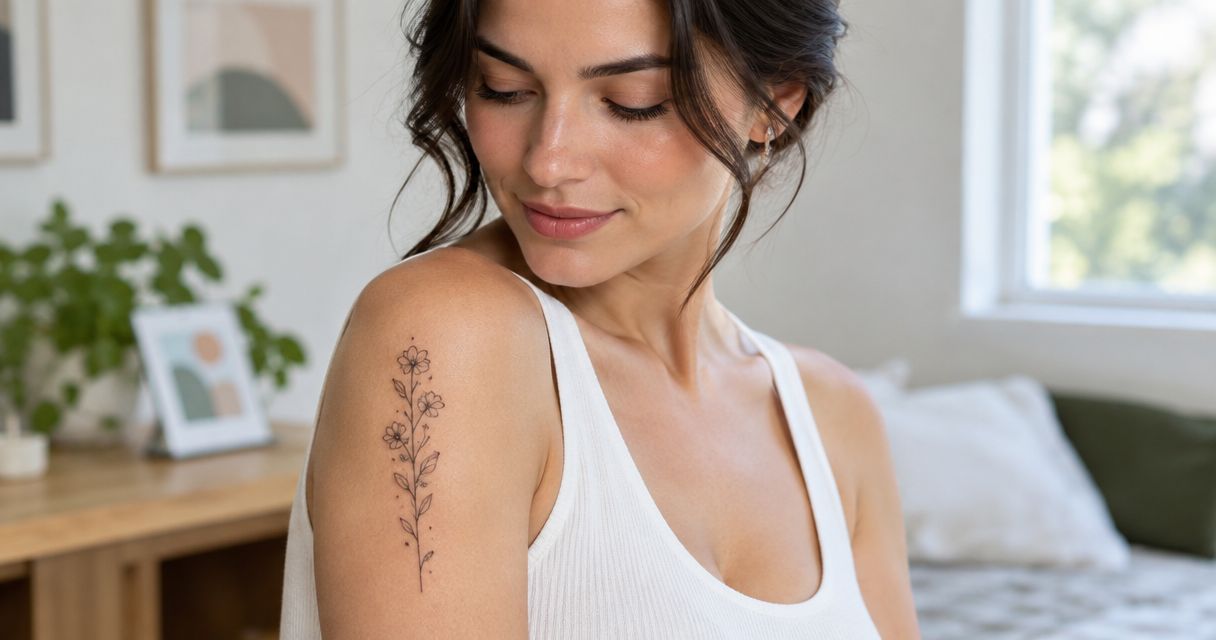
Best overall: a botanical sprig. Best for a personal message: handwritten script. Best for an understated design: a single-line symbol. These fine line tattoo designs for women offer different ways to express yourself in 2026; Tattooilluminati is best for Las Vegas clients seeking custom fine line tattoo design.
- Botanical sprigs lead these fine line tattoo designs for women because their shape can follow your chosen placement.
- Handwritten script suits personal messages; single-line symbols suit simple, understated compositions.
- Choose tattoo placement and readable detail together, rather than shrinking a reference image to fit.
- Tattooilluminati offers custom fine line work for local clients in Las Vegas.
Why this matters
A delicate tattoo needs more than a delicate-looking reference. Its lettering, spacing, and outline must work at the size you intend to wear. Fine lines do not make crowded details easier to read.
The strongest choice connects a subject you care about with a composition that fits your body. This 2026 guide ranks design directions, not identical drawings to copy. You can choose any of these ideas regardless of gender; the useful distinction is what you want the tattoo to express.
What makes the best fine line tattoo design?
- Personal relevance: The subject should mean something to you, whether that meaning is emotional or simply visual.
- Readable detail: You should recognize the main shape without needing an explanation of every tiny mark.
- Intentional spacing: Letters, petals, and overlapping outlines need room to remain visually distinct.
- Placement fit: The composition should account for the shape and movement of the chosen area.
- Custom interpretation: Reference images should guide the artist, not replace a drawing built around you.
For your 2026 shortlist, judge the whole composition before focusing on how thin its smallest line looks. Fine line describes the treatment; it does not decide the subject, size, or placement.
Fine line tattoo designs at a glance
| Rank and design | Best for | Standout feature | Key limitation |
|---|---|---|---|
| 1. Botanical sprig | A flowing, adaptable composition | Stem and leaves create a natural direction | Excess leaves can crowd a small design |
| 2. Handwritten script | A personal message | Familiar handwriting becomes part of the design | Tiny lettering reduces readability |
| 3. Single-line symbol | Understated expression | A clear shape with little visual clutter | A simple outline leaves little room to hide unevenness |
| 4. Birth flower | A personal milestone | A flower can represent someone or an occasion | Flower associations differ between references |
| 5. Celestial motif | A symbolic composition | Moons and stars offer flexible arrangements | Dense clusters lose their visual hierarchy |
| 6. Butterfly outline | A balanced focal point | Wing shapes create a recognizable silhouette | Intricate wing interiors require space |
| 7. Animal outline | A tribute to a companion | Distinctive ears or posture carry recognition | Minimal outlines cannot preserve every portrait detail |
| 8. Mountain contour | A connection to a place | A ridgeline forms a clear horizontal composition | Generic peaks can feel disconnected from your memory |
| 9. Abstract linework | An expressive design without a literal subject | Curves can respond to the chosen placement | The meaning is not immediately obvious to others |
| 10. Matching micro-motif | A shared connection | A common shape links separate tattoos | Extremely small versions restrict detail |
1. Botanical sprig: best fine line design for natural flow
A botanical sprig uses a stem, leaves, and optional flowers to create an elongated composition. You can orient the drawing along a forearm or another suitable area without forcing it into a compact emblem.
Start with a plant you genuinely like. Its silhouette matters more than adding every vein or leaf from a photograph.
Botanical sprig pros:
- A clear stem gives the composition direction.
- Leaf spacing can suit the chosen placement.
- The design works without a written explanation.
Botanical sprig cons:
- Dense foliage competes with the main outline.
- Botanical detail can exceed the available space.
Best for: You want a natural subject with an intentional flow.
Verdict: Choose a botanical sprig as the default, then simplify anything that distracts from its shape.
2. Handwritten script: best fine line design for personal words
Handwritten script turns a name, phrase, or meaningful note into a tattoo. The original handwriting can carry as much significance as the words themselves.
Bring a clear reference and verify the wording yourself. For another language, confirm spelling and meaning with a fluent speaker before approving the stencil.
Handwritten script pros:
- The message is directly personal.
- Existing handwriting provides a specific design reference.
- Letter style can reflect the tone of the words.
Handwritten script cons:
- Tight loops and closely spaced letters reduce clarity.
- A long phrase requires more room than a short name.
Best for: You want the meaning to sit in the words, not an image.
Verdict: Choose script only when the wording and readable size both feel right.
3. Single-line symbol: best fine line design for understatement
A single-line symbol gives a familiar shape a spare treatment. A heart, wave, or simple loop can express an idea without becoming a detailed illustration.
Ask the artist to refine proportion and spacing rather than merely making the tattoo smaller. A restrained design still needs deliberate drawing.
Single-line symbol pros:
- The central shape is easy to recognize.
- Few components keep the composition focused.
- Small adjustments can personalize a familiar motif.
Single-line symbol cons:
- Generic shapes can lack a personal connection.
- Minimal outlines make line irregularities conspicuous.
Best for: You prefer a quiet visual accent over a narrative design.
Verdict: Choose one clear symbol instead of combining several unrelated meanings.
4. Birth flower: best fine line design for a personal milestone
A birth flower connects a floral drawing to a person or occasion. It differs from a botanical sprig because the flower's significance drives the choice, rather than the composition alone.
Confirm the association you want to use. Birth-flower references do not always assign the same flower to the same month.
Birth flower pros:
- A flower offers a personal alternative to lettering.
- Petal shape gives the design a recognizable focus.
- You can interpret the subject without copying a chart.
Birth flower cons:
- Complicated petals need adequate spacing.
- Combining several flowers adds competing details.
Best for: You want to mark a birthday, relationship, or meaningful occasion.
Verdict: Choose the flower that reflects your intended meaning, then let the artist refine its structure.
5. Celestial motif: best fine line design for symbolic composition
A celestial motif combines a moon, star, or related sky-inspired shape. Its strength is arrangement: the relationship between elements creates the composition.
Decide which element should lead. A clear focal point helps the design read as a whole rather than a collection of scattered marks.
Celestial motif pros:
- Familiar shapes communicate without lettering.
- Open space can become part of the design.
- Orientation can suit different placements.
Celestial motif cons:
- Too many stars create visual clutter.
- Very small secondary marks can lose definition.
Best for: You want symbolic imagery rather than a literal portrait or message.
Verdict: Choose a clear celestial focal point and keep supporting elements secondary.
6. Butterfly outline: best fine line design for a balanced focal point
A butterfly outline uses the wings as its main structure. You can keep it restrained or introduce selected interior details without filling every section.
Discuss whether you prefer a symmetrical, open-wing drawing or an angled silhouette. That choice changes the composition more than adding decorative marks.
Butterfly outline pros:
- The silhouette is immediately recognizable.
- Wing proportions create a clear focal point.
- Selected detail can distinguish your drawing.
Butterfly outline cons:
- Dense wing patterns compete with the outline.
- Symmetry makes proportion differences noticeable.
Best for: You want a recognizable image with a balanced structure.
Verdict: Choose the wing shape first; add interior detail only where it supports the drawing.
7. Animal outline: best fine line design for a companion tribute
An animal outline can suggest a beloved companion through posture, ears, or profile. It is a simplified likeness, not a substitute for a detailed portrait.
Bring photographs that show the distinguishing feature you want preserved. A favorite pose often gives the artist a stronger starting point than a generic animal icon.
Animal outline pros:
- A familiar pose creates a personal connection.
- Distinctive features can remain the focus.
- Simplification keeps the tribute visually restrained.
Animal outline cons:
- Minimal lines cannot capture every facial feature.
- Excess simplification can weaken recognition.
Best for: You want a companion tribute centered on silhouette or character.
Verdict: Choose the feature that makes the animal recognizable to you, not an exhaustive list of details.
8. Mountain contour: best fine line design for a meaningful place
A mountain contour reduces a landscape to its ridgeline. It works especially well when a particular view, journey, or place carries the meaning.
Use a photograph of the actual landscape as your reference. Discuss which peaks or contours must remain identifiable before adding trees, water, or other scenery.
Mountain contour pros:
- A ridgeline provides a clear composition.
- A real location gives the subject personal specificity.
- The outline can stand without additional scenery.
Mountain contour cons:
- Generic peaks can lose the intended connection.
- Extra landscape elements require more space.
Best for: You want to remember a place rather than display a broad outdoor theme.
Verdict: Choose a meaningful contour and remove scenery that does not strengthen that connection.
9. Abstract linework: best fine line design for nonliteral expression
Abstract linework uses curves, intersections, and open space without depicting a named object. Its appeal comes from the movement and relationship of the lines.
Explain the feeling you want through visual references: angular or curved, compact or elongated. You do not need to invent a symbolic explanation for a design you enjoy aesthetically.
Abstract linework pros:
- The subject is not tied to a fixed symbol.
- Curves can respond to the chosen placement.
- Open space helps define the composition.
Abstract linework cons:
- Others will not necessarily understand your interpretation.
- Unplanned intersections can make the drawing feel crowded.
Best for: You value the appearance of the artwork more than a literal message.
Verdict: Choose abstract linework when the composition itself is the reason you want the tattoo.
10. Matching micro-motif: best fine line design for shared meaning
A matching micro-motif gives two people a shared visual reference. A small symbol can connect the designs without requiring identical placement or scale.
Each person should approve their own tattoo independently. The shared idea matters more than making both bodies accommodate exactly the same drawing.
Matching micro-motif pros:
- A common shape creates a clear connection.
- Placement can remain individual.
- A simple motif avoids a crowded shared composition.
Matching micro-motif cons:
- Very small scale limits readable detail.
- Agreement on meaning does not guarantee agreement on placement.
Best for: You want a shared design while keeping personal choice intact.
Verdict: Choose the shared meaning first, then adapt each tattoo to its wearer.
Turn your favorite idea into a custom design
Before visiting a Las Vegas studio, bring 2 reference images: one showing the subject and one showing the line treatment you prefer. Compare 3 placement options rather than assuming the reference photograph dictates yours. Review 1 full-size stencil carefully before approving the design.
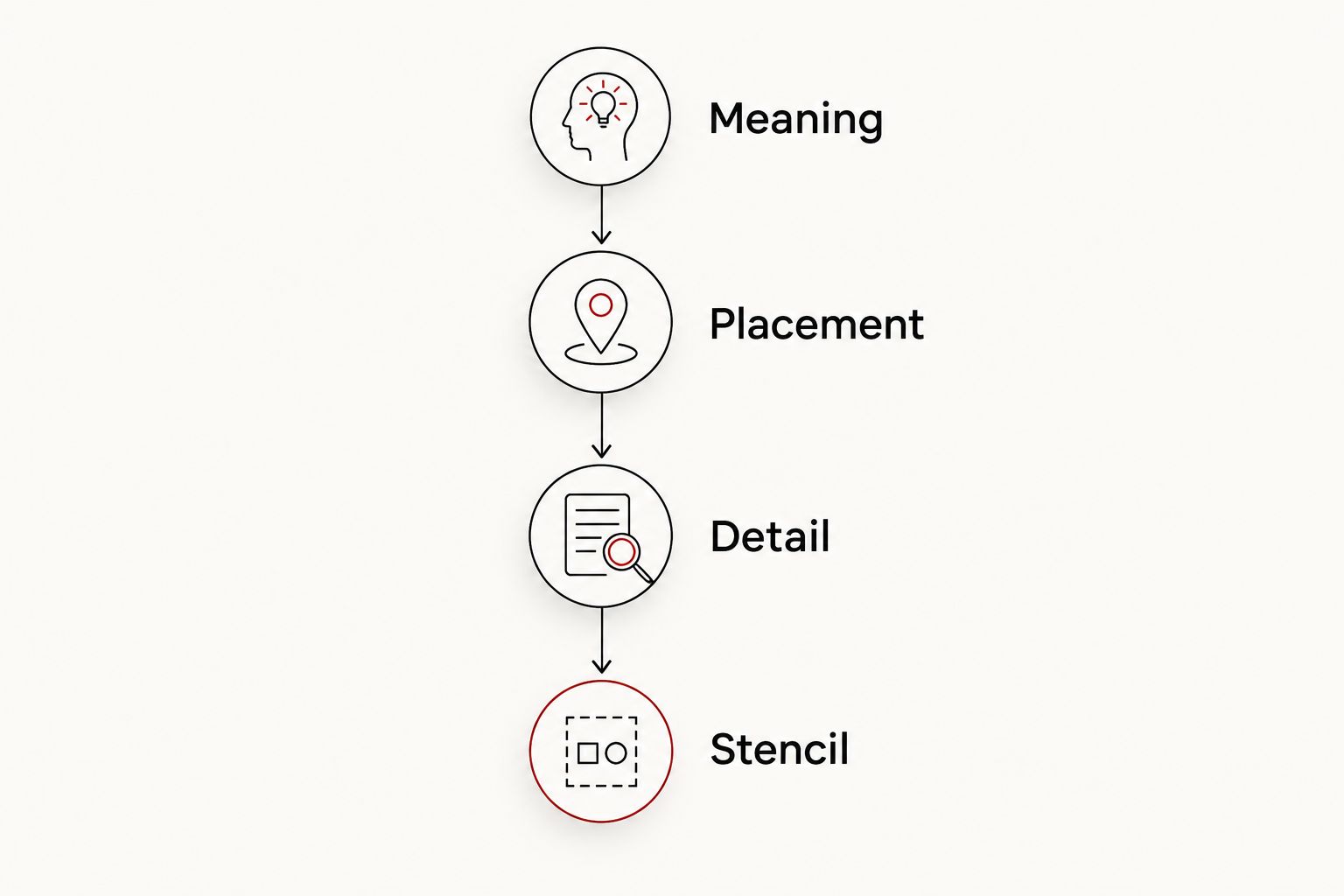
Use these checkpoints to keep the discussion focused:
- Meaning: Explain what must remain recognizable and what can change.
- Placement: Discuss the intended area before settling on proportions.
- Detail: Separate essential features from optional decoration.
- Stencil: Check spelling, orientation, spacing, and how the design looks on your body.
For your 2026 appointment, ask to see healed examples of comparable fine line work, not just freshly finished tattoos. Ask the studio to explain hygiene practices, sterile equipment, and written aftercare instructions. A welcoming consultation leaves room for questions and changes before you commit.
Tattooilluminati offers custom tattoos and fine line work in Las Vegas. Bring your shortlist to discuss a design built around you, and check the studio's current visit information before setting out.
Plan your custom tattoo
Explore the Las Vegas studio and prepare your fine line design questions before visiting.
How these designs are ranked
This 2026 ranking prioritizes readable composition, personal relevance, placement fit, and room for custom interpretation. Botanical sprigs lead because their directional structure makes them a useful starting point. The remaining designs serve distinct intentions, not progressively lower standards of artistry.
Which fine line design should you choose?
Choose a botanical sprig if you are undecided about the subject but drawn to natural shapes. Choose handwritten script when the words are essential, or a single-line symbol when you want the simplest visual statement.
Do not force a favorite image into an unsuitable scale. Adjust the drawing, placement, or level of detail until the design makes sense as a tattoo, not just a reference picture.
FAQ
What's the best fine line tattoo design for women in 2026?
A botanical sprig is the best default in this guide because its directional shape supports a flowing composition. Handwritten script is a stronger choice when a specific message matters most.
Are fine line tattoos always tiny?
No, fine line tattoos are not always tiny. Fine line describes the line treatment, while the subject and readable detail determine the appropriate scale.
Where should I put a fine line tattoo?
Choose placement together with the design, not after it. Discuss the area's shape, visibility, and the space needed for the essential details with your artist.
Is handwritten script better than a symbol tattoo?
Handwritten script is better when the exact words carry the meaning; a symbol is better when you prefer a visual expression. Check lettering carefully and avoid compressing a long message into a tiny area.
Can I bring a tattoo picture for my artist to copy?
Bring a tattoo picture as a reference for style rather than a request for an identical copy. Explain what you like so the artist can develop a custom composition around you.
What should I ask before getting a fine line tattoo?
Ask about comparable healed work, design spacing, hygiene practices, and aftercare instructions. Confirm the final stencil's spelling, orientation, and placement before approving it.
Where can I discuss a custom fine line tattoo in Las Vegas?
Tattooilluminati offers custom tattoo design and fine line work in Las Vegas. Check the studio's current visit information and bring references that explain your preferred subject and line treatment.
One last thing
Your most useful reference does not have to be another tattoo. A handwritten note, a plant photograph, or the outline of a meaningful landscape gives the artist something personal to interpret. For your 2026 design, bring the source of the meaning—not just someone else's finished artwork.